

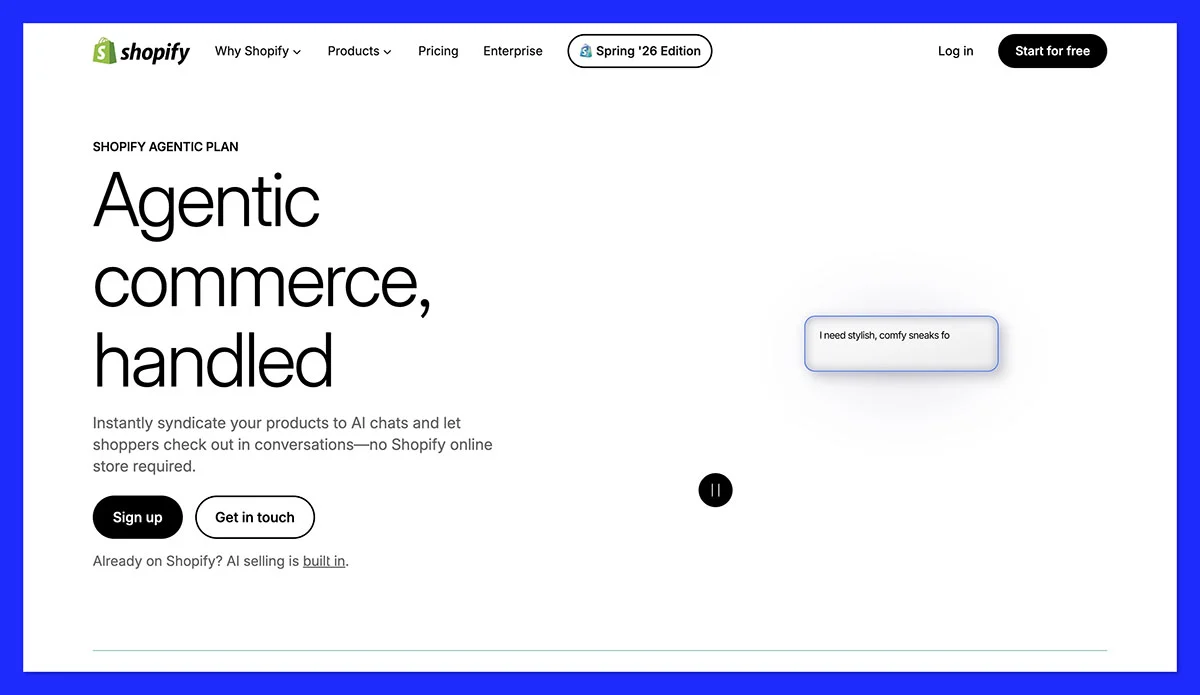
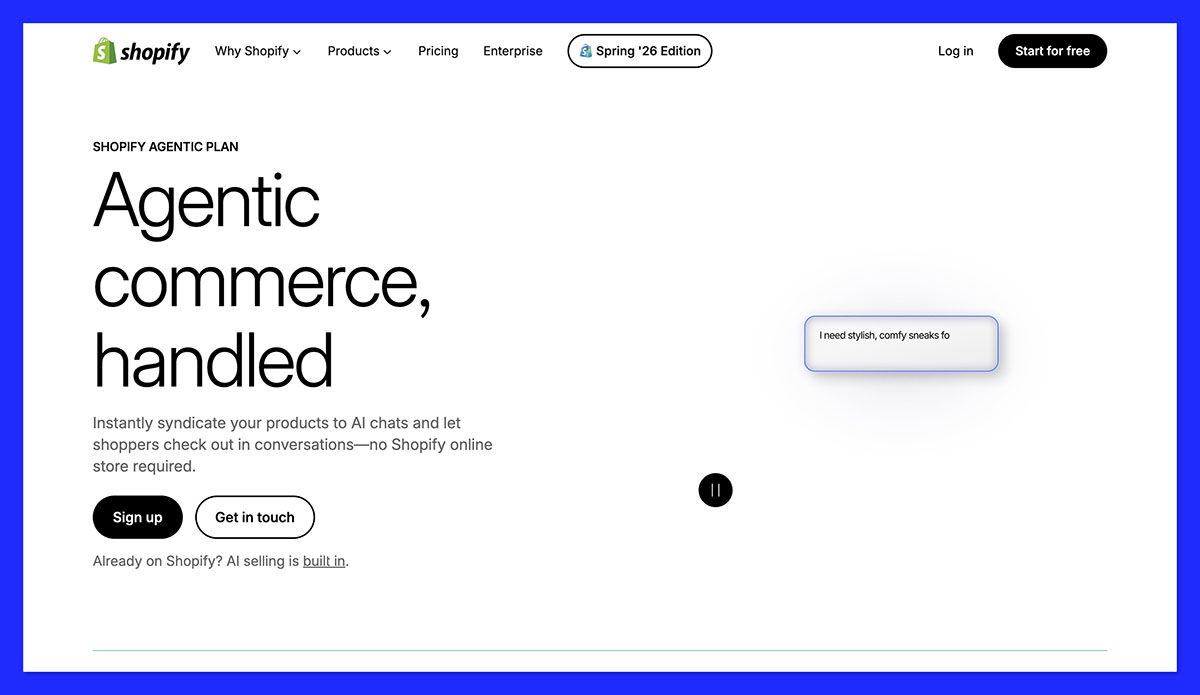
The Shopify Agentic plan, marketed as a free solution for merchants to expand their reach into AI-powered shopping channels, presents a complex picture upon closer examination. While the subscription cost is indeed $0 per month, a deeper dive into its terms of service reveals additional fees and significant operational considerations that distinguish it from a truly cost-free offering. This plan allows businesses to push their product catalogs into prominent AI platforms like ChatGPT, Google AI Mode, Gemini, Microsoft Copilot, Perplexity, and the Shop app, without requiring a full migration of their existing e-commerce infrastructure from platforms such as WooCommerce, BigCommerce, or Magento. The core of the story lies in the discrepancy between the marketing’s emphasis on "free" and the legal disclosures detailing a more nuanced financial and operational reality.
At its heart, the Shopify Agentic plan is designed as a distribution layer, not a complete storefront. It provides merchants with a Shopify admin interface, a Shopify checkout system, and the ability to track orders within Shopify, but it deliberately omits an "Online Store" component. This means that product listings are managed through Shopify Catalog, which AI channels query to fulfill shopper requests. Crucially, each product listing must include an "external URL" standard metafield that directs customers back to its original page on the merchant’s primary e-commerce site. This design positions Shopify as a conduit for AI-driven discovery and initial engagement, while the merchant’s existing platform handles the persistent product data management, order fulfillment, and tax compliance. Essentially, it functions as a "sidecar" to an existing e-commerce setup, rather than a replacement.
The underlying infrastructure powering these agentic integrations is the Universal Commerce Protocol (UCP), an open standard for cart creation, checkout, payment, and post-purchase processes. Co-developed by Shopify and Google, and launched around January 11, 2026, the UCP has garnered support from major industry players including Amazon, American Express, Etsy, Mastercard, Meta, Microsoft, Salesforce, Stripe, Target, Walmart, and Visa. This broad adoption signifies a move towards industry-wide standardization in e-commerce interactions, making the agentic infrastructure more of a foundational technology than a proprietary Shopify feature.
What You Get and What You Don’t Get
The Shopify Agentic plan provides merchants with access to a Shopify admin, a Shopify checkout, and order record management. It is crucial to understand that this plan does not include a dedicated Shopify storefront. Products are managed within Shopify Catalog, serving as the source for AI channel inquiries. For every product listed, an "external URL" standard metafield is mandatory, linking back to the product’s page on the merchant’s existing e-commerce site. This setup positions Shopify as a distribution layer, with the merchant’s original store acting as the definitive product home. The system is intended to complement, not replace, existing Product Information Management (PIM) systems, Order Management Systems (OMS), and tax compliance frameworks.
The Cost Breakdown: Beyond the $0 Subscription
The perception of the Shopify Agentic plan as entirely free is challenged by its multi-layered cost structure. While the monthly subscription is indeed $0, this is merely the entry point.
Layer One: The Subscription Fee
This is the advertised $0 per month charge, granting access to the agentic plan’s administrative features and integration capabilities.
Layer Two: Payment Processing
This layer involves standard payment processing fees for completed sales. For US merchants, these rates are advertised as starting from 2.9% + 30 cents. However, these figures are variable and depend heavily on the merchant’s region, the currency used, and the chosen payment provider. A Shopify plan page displayed in a Romanian locale, for instance, shows rates of 1.9% + 1.25 RON. This variability means that while the base rate is published, the exact cost is not universally fixed.
Layer Three: The Agentic Storefronts Fee
This is the most opaque cost. Shopify’s Agentic Storefronts Supplemental Terms of Service introduce "Agentic Storefronts Fees," which are transaction-based charges applied to sales made through "Participating Channels." These fees are assessed in addition to standard payment processing fees and are levied per channel. Critically, the specific rate for this fee is not publicly published. Instead, it is disclosed within the merchant’s Shopify Admin under Sales Channels > Agentic. This fee structure introduces an asymmetry in refunds and cancellations: while a proportional refund of the Agentic Storefronts Fee and its associated sales tax is provided, the underlying Shopify Payments transaction fee is not refunded.
The "Agentic Commerce Fee" of approximately 4% that some merchants have discussed online appears to be a misunderstanding or misattribution, potentially conflated with transaction fees reportedly charged by OpenAI’s Agentic Commerce Protocol. Shopify has not publicly announced a 4% agentic fee.
Table 1: Shopify Agentic Plan Cost Structure
| Cost Layer | What it Covers | Published Rate | Where it’s Disclosed |
|---|---|---|---|
| Monthly Subscription | Access to the plan and admin | $0 | Shopify plan page |
| Payment Processing | Card processing on completed sales | From 2.9% + 30¢ (US); varies by region | Agentic plan page |
| Agentic Storefronts Fee | Transactions through Participating Channels, per channel | Not published; rate shown in your admin | Supplemental ToS; rate shown in your admin |
| Third-party gateway fees | Processing if you don’t use Shopify Payments | Varies by provider | Your provider’s contract |
Therefore, while the initial signup is free, merchants must carefully review their Shopify Admin to understand the per-channel Agentic Storefronts Fee before committing inventory to these AI channels.
Checkout Mechanics: In-Channel vs. Redirect
A significant point of divergence among early analyses of the Shopify Agentic plan concerns where the actual checkout process occurs. The reality is that it varies by AI channel, impacting the merchant’s ability to leverage their existing analytics, consent capture mechanisms, and upsell strategies.
-
ChatGPT: For transactions initiated through ChatGPT, customers are redirected to the merchant’s own online store checkout. This process occurs either within an in-app browser of ChatGPT or in a new browser tab. This redirection ensures that the merchant’s website loads, allowing their analytics tools, consent management platforms, and upsell applications to function as usual. Importantly, this redirection does not incur additional platform fees from OpenAI beyond standard payment processing.
-
Google AI Mode, Gemini, Microsoft Copilot, and Meta: For these platforms, merchants have the option to enable direct in-channel checkout. In this scenario, the buyer completes their purchase directly within the AI interface without ever visiting the merchant’s website.
-
Shop App: Purchases made through the Shop app also occur directly within the app itself.
Legally, regardless of the checkout method, Shopify’s terms designate the merchant as the "seller of record." This means the merchant remains responsible for all aspects of the transaction, retains the customer relationship, and is entitled to the customer data. However, the practical implication of in-channel checkout is that while ownership of the data is retained on paper, the merchant’s own tools may not receive it if the customer never lands on their site.
Table 2: AI Channel Checkout Behavior and Implications
| AI Channel | Where Checkout Happens | In-Channel Checkout? | Impact on Merchant Stack |
|---|---|---|---|
| ChatGPT | Your checkout, in an in-app browser or new tab | No | Tracking, consent, and upsells fire; site loads |
| Google AI Mode / Gemini | In-channel, if activated | Yes | Buyer never reaches your site; analytics and on-site tools may not fire |
| Microsoft Copilot | In-channel, if activated | Yes | Buyer never reaches your site; analytics and on-site tools may not fire |
| Meta | In-channel, if activated | Yes | Buyer never reaches your site; analytics and on-site tools may not fire |
| Shop app | Inside the Shop app | Yes | Buyer never reaches your site; analytics and on-site tools may not fire |
Regardless of the channel, two core elements are consistently handled by Shopify: order details are sent to the merchant’s Shopify admin, and customer data is collected by Shopify. The choice of which AI channels to enable directly influences how much of the traditional customer experience survives the transaction process.
Eligibility and Availability: Who Can Join Today?
Contrary to some earlier reports, there is no waitlist for the Shopify Agentic plan. It is now publicly available with a self-serve signup process. However, the ability to use the plan is subject to specific eligibility rules, particularly for the "Agentic Storefronts" feature.
Agentic Storefronts Eligibility Rules:
- Store Location: The merchant’s store must be based in the United States.
- Currency: Transactions must be conducted in USD.
- Payment Provider: Shopify Payments must be the payment gateway.
- Product Data: Products must be available in Shopify Catalog.
Two channels offer broader accessibility:
- ChatGPT and Microsoft Copilot: Merchants can utilize these channels if their products are listed in Shopify Catalog and they are selling to US buyers, regardless of their store’s physical location.
- Google AI Mode and Gemini: These channels are currently in early access and are restricted to select US-based brands. Broader international rollout is contingent on regional AI regulations and the availability of Shopify Payments in those markets.
It is important to note that Agentic Storefronts is active by default for eligible stores on plans from "Starter" and above, rather than being an opt-in feature. Merchants located outside the US should focus on getting their products into Shopify Catalog and leveraging ChatGPT and Copilot as accessible entry points, as full plan eligibility in their region will depend on the convergence of Shopify Payments and local AI regulations.
Integrating Non-Shopify Catalogs
For merchants operating on platforms like WooCommerce, BigCommerce, or Magento, the process of integrating their product catalogs into Shopify Catalog is not facilitated by direct connectors outlined in Shopify’s setup documentation. The setup process assumes products are already present in the Shopify admin, without specifying the method of their arrival.
Shopify officially sanctions three methods for catalog synchronization:
- CSV Import: This method is best suited for initial product loads, small catalogs, or those with static data. It requires low setup effort with no developer needed but results in stale inventory data between manual updates.
- GraphQL Admin API (
productSet): This is recommended for fast-moving prices and inventory, offering near real-time updates. However, it requires significant setup effort, typically involving a developer. - PIM Connector App: This is ideal for large catalogs already managed by a PIM system. Setup effort is medium, involving app configuration and field mapping, with inventory freshness determined by the connector’s sync schedule.
A critical element in all these synchronization methods is the mandatory "external URL" standard metafield. This field must point to the live product listing on the merchant’s storefront. On redirect channels like ChatGPT, this URL serves as the purchase path. An outdated external URL can lead to a failed transaction, essentially resulting in a 404 error for a potential AI-driven sale. Therefore, any catalog synchronization process must include mechanisms for maintaining this field consistently.
Beyond the initial import, merchants face the task of maintaining configurations like shipping rates, tax rules, and payment settings within Shopify, effectively duplicating efforts already managed on their primary e-commerce platform. While general-purpose connectors from third-party developers exist, they are not officially published by Shopify and require individual vetting. For merchants just testing the waters, a CSV import of a small SKU set (e.g., 20 SKUs) over a weekend can provide initial insights into AI channel traffic. For those with rapidly changing inventory, API synchronization becomes essential to prevent overselling.
Operational Challenges: Limits, Data Gaps, and No Opt-Out
The Agentic plan introduces operational hurdles, particularly concerning the in-channel checkout experience. When a purchase is completed directly within an AI interface, the buyer never lands on the merchant’s website. This fundamentally breaks functionalities that rely on site visits, such as post-purchase upsell apps, personalization tools that depend on browsing data, and marketing consent capture.
Workarounds for In-Channel Checkout:
Merchants can detect agentic orders through channelInformation metadata and implement custom routing for these customers. Confirmation emails can include draft-order links to guide customers back to the merchant’s site. A more robust solution involves using branded packing inserts with QR codes that direct customers to the merchant’s online presence.
Lack of Opt-Out:
A significant concern for merchants is the absence of a self-service option to disable Agentic Storefronts. The only current workaround, marking products as "Unlisted," also removes them from the merchant’s own search visibility. This has led some to interpret the situation as a "take it or leave it" scenario. Furthermore, independent creators report their product content being ingested by AI channels without explicit consent mechanisms.
Table 3: Operational Differences on the Agentic Plan
| Operation | How it Works on the Agentic Plan | What You Have to Change |
|---|---|---|
| Refunds | Processed in the Shopify admin, via the provider that processed the payment | Requires a secondary refund workflow and reconciliation |
| Taxes | Configured in Shopify; Shopify may collect and remit taxes | Potential duplicate setup and filing requirements |
| Shipping rates | Set in Shopify; weight-based rates require product weights | Manual synchronization of rate tables |
| Support | No Shopify Messaging available on this plan | Rely on existing helpdesk infrastructure |
The consequences of these operational gaps are manifold. Refunds require a secondary reconciliation process. Tax configurations may need to be duplicated. Shipping rates must be manually synced. Crucially, there is no direct Shopify Messaging support for this plan, necessitating reliance on existing helpdesks.
Beyond these direct impacts, there is a significant "informational cost." By importing non-Shopify catalogs into Shopify Catalog, merchants provide Shopify with valuable cross-merchant benchmark and conversion data at a network scale. However, they receive limited visibility into how their own products are performing or ranking within these AI channels. Merchants report that Shopify does not yet categorize traffic specifically as "came from ChatGPT," hindering detailed performance analysis.
The Shopify Agentic plan is best suited for merchants whose customer retention strategies are primarily driven by email marketing and packaging. Businesses that heavily rely on post-purchase upsells or object to the ingestion of their product content by AI platforms may wish to skip or delay adoption.
Merchant Reporting and Industry Perspectives
Early testing of AI integration in e-commerce has yielded mixed results. OpenAI’s Instant Checkout, launched on ChatGPT, saw only a dozen Shopify merchants integrated before its discontinuation approximately five months later. Shopify President Harley Finkelstein attributed this to limitations on the AI platforms themselves rather than merchant disinterest.
Contrastingly, Shopify’s own unaudited figures for Q1 2026 indicate substantial growth in AI-driven engagement: AI-driven traffic to merchant stores reportedly increased eightfold year-over-year, AI-powered search orders rose nearly thirteenfold, and new AI-referred buyers ordered at almost twice the rate of other channels. These metrics encompass the entire Shopify AI channel ecosystem, not just users of the Agentic plan.
On the ground, merchants in Shopify community forums report difficulty isolating AI-driven traffic within standard analytics tools. Some resort to monitoring for "spikes in specific products" or "more long-tail variants" as indirect indicators.
Industry analysts are divided. Forrester’s Sucharita Kodali expresses skepticism about AI agents becoming primary shopping destinations, suggesting consumers still default to platforms like Amazon for purchases. Conversely, Monos CEO Victor Tam believes agentic shopping offers a crucial opportunity for brands to appear "at the exact moment someone is asking real questions with real intent." It’s important to note that established Shopify-native brands like Monos, Gymshark, and Everlane are utilizing "Agentic Storefronts" capabilities directly within their existing Shopify Plus environments, a distinction often blurred in broader discussions.
For merchants considering adoption, key metrics to track within the first 90 days include: AI-driven traffic volume, AI-referred conversion rates, and the average order value (AOV) of AI-referred customers. Currently, any claims about specific agentic conversion benchmarks in mid-2026 should be viewed as extrapolations, given the limited publicly available per-merchant performance data.
Comparing Options: Agentic Plan vs. Direct Programs vs. Waiting
The Shopify Agentic plan is not the sole avenue for engaging in AI-powered commerce. Several alternatives exist, varying in cost, reach, and implementation effort.
Table 4: AI Commerce Integration Routes
| Route | Cost to You | Channels Reached | Effort | Best For |
|---|---|---|---|---|
| Shopify Agentic plan | $0/mo + processing + undisclosed channel fee | ChatGPT, Google AI Mode/Gemini, Copilot, Meta, Shop app | Days (CSV), Weeks (API) | US merchants seeking broadest reach |
| Perplexity Merchant Program | Free, no transaction fee | Perplexity | ~5-minute application | Zero-risk first test |
| OpenAI direct (ACP) | Free, discovery only | ChatGPT discovery | Low | Stores already surfacing in ChatGPT |
| Direct UCP build | Engineering time | Any UCP-compatible agent | Months | Custom stacks with dev capacity |
| Wait and watch | $0 | None | None | Merchants blocked on eligibility |
The Perplexity Merchant Program stands out for its low barrier to entry: a free, five-minute application process, in-chat PayPal checkout, and no merchant transaction fees. With 45 million monthly active users in early 2026, Perplexity’s Buy Now agent had already reached 2 million monthly shoppers and a $2 billion GMV run rate by July 2026. While its reach is narrower than major platforms like ChatGPT or Google, its ease of use makes it an attractive option for a risk-free initial test. However, its checkout is limited to PayPal.
OpenAI’s direct integration via the Agentic Commerce Protocol (ACP) serves as a cautionary tale. Instant Checkout, active from September 29, 2025, to March 5, 2026, saw approximately 8% of US adult ChatGPT users try it within its first month. The platform’s retreat is seen by some analysts as a strategic resource allocation decision rather than a definitive judgment on agentic commerce. Recent shifts in AI app usage show a decline in ChatGPT’s US daily AI app share from 57% to 42% between August 2025 and February 2026, while Gemini’s share doubled to 25%. This dynamic underscores the evolving landscape of AI platforms.
Building directly on the Universal Commerce Protocol (UCP) offers maximum flexibility, as it is open by default and interoperable with any UCP-compatible agent. However, merchant-facing tooling is nascent, and implementation requires significant engineering investment, measured in months.
For merchants looking to enter the AI commerce space, applying to Perplexity first is a pragmatic step. If eligible, running the Shopify Agentic plan in parallel can expand reach. Direct UCP development should be considered only when order volumes justify the engineering overhead.
The Bottom Line: Should You Add the Agentic Plan?
The decision to adopt the Shopify Agentic plan hinges less on its $0 subscription fee and more on the operational adjustments and ongoing maintenance required. The true cost lies in catalog synchronization, perpetual maintenance of external URLs, duplicating shipping and tax configurations, and establishing a secondary reconciliation process for the finance stack.
Adopt the Agentic Plan If:
- Your business model is resilient to the absence of post-purchase upsells and detailed on-site browsing data capture.
- You can manage or work around the operational overhead of duplicate configurations and financial reconciliation.
- Your primary goal is to gain exposure on AI channels and you have the capacity to integrate your product catalog and maintain its data.
- You are a US-based merchant or can leverage the broader availability of ChatGPT and Microsoft Copilot for US-based customers.
Skip or Wait If:
- Your profit margins are heavily dependent on post-purchase upsells and personalized customer journeys that occur on your website.
- You are unwilling or unable to manage the duplicated operational tasks, such as tax and shipping configurations, and financial reconciliation.
- You are not based in the US and cannot meet the eligibility requirements for the full Agentic Storefronts feature, and the limited channel access does not align with your strategy.
- You have significant objections to your product content being ingested by AI platforms without explicit consent mechanisms.
Enterprise Considerations:
For larger businesses, an enterprise tier of the Agentic plan is available, offering enhanced features such as unlimited staff accounts, combined listings, carrier-calculated shipping, payment capture per fulfillment, additional inventory locations, API rate limits consistent with Shopify Plus, protected customer data level 2, and Shopify Functions API access. Pricing for this tier is not publicly disclosed and requires direct contact with Shopify sales.
Expert Recommendation:
The Shopify Agentic plan is worth a controlled test for eligible merchants, but it should not necessitate a complete replatforming of existing e-commerce operations. A recommended approach is to import a limited selection of SKUs (e.g., 20) via CSV to gauge initial performance. Before committing the entire catalog, merchants should thoroughly review the per-channel Agentic Storefronts Fee within their Shopify Admin under Sales Channels > Agentic.
Frequently Asked Questions:
-
Do I have to migrate my store to Shopify to use the Agentic plan?
No. The Shopify Agentic plan acts as a complement to your existing e-commerce platform (WooCommerce, BigCommerce, Magento). Your primary platform, PIM, tax setup, and OMS remain operational. A Shopify account is added solely to feed AI channels, with each product linking back to your storefront via the "external URL" metafield. -
Can I use the Shopify Agentic plan if my business isn’t based in the US?
The full Agentic Storefronts feature requires a US-based store selling in USD to US customers. International rollout is dependent on regional AI regulations and Shopify Payments availability. However, ChatGPT and Microsoft Copilot are accessible to any merchant with products in Shopify Catalog selling to US buyers, irrespective of their store’s location. -
Is there an enterprise version of the Agentic plan?
Yes. An enterprise tier offers advanced features like unlimited staff accounts, combined listings, carrier-calculated shipping, and enhanced API access. Pricing is available upon direct contact with Shopify sales. -
Did OpenAI really discontinue Instant Checkout?
Yes. OpenAI launched Instant Checkout on September 29, 2025, and discontinued it on March 5, 2026. The current model for ChatGPT involves discovering products in chat and transacting on the merchant’s site, necessitating the redirect flow in the Agentic plan’s ChatGPT integration. -
Who owns the customer relationship on an agentic order?
On paper, you do. Shopify’s Supplemental Terms of Service designate you as the seller of record, responsible for all transaction aspects and retaining the customer relationship and data. However, with in-channel checkout, the buyer never visits your site, preventing the capture of marketing consent and browsing data. -
How long does it take to go live on the Shopify Agentic plan?
Signup is immediate and self-serve. A basic setup with a CSV import of a small, static catalog and essential shipping/tax configurations can be completed within a day. Implementing real-time API synchronization for thousands of SKUs and ensuring shipping logic matches your main store is an engineering project that can take several weeks.








