

The digital marketing realm is undergoing a profound transformation with the rapid ascent of generative AI and large language models (LLMs), fundamentally reshaping how users seek and consume information. This shift has given rise to Answer Engine Optimization (AEO), a specialized discipline focused on ensuring brand visibility and favorable representation within AI-generated answers, moving beyond the traditional blue links of search engine results. As businesses grapple with this new frontier, a critical need has emerged for sophisticated tools to monitor, optimize, and attribute success in AI environments. This article delves into a comparative analysis of three prominent platforms – Profound, Semrush, and HubSpot AEO – outlining their distinct approaches, capabilities, and ideal use cases for marketers adapting to the AI-first search paradigm.
Understanding the Paradigm Shift: From SEO to AEO
For decades, Search Engine Optimization (SEO) has been the cornerstone of digital visibility, centered on ranking high in organic search results to drive traffic. However, the introduction of powerful AI models like OpenAI’s ChatGPT (launched late 2022), Google’s Gemini (evolving from Bard), Perplexity AI, and the integration of AI Overviews into Google Search has ushered in a new era. Users are increasingly turning to these "answer engines" for synthesized, direct responses rather than a list of links.
Answer Engine Optimization (AEO) specifically targets this new user behavior. While AEO shares foundational principles with SEO—such as content quality, topical authority, and semantic relevance—its measurement, tooling, and definition of "winning" diverge significantly. In traditional SEO, success often meant a top-ranking link; in AEO, it means your brand, product, or expertise is accurately and positively cited within a concise, AI-generated answer. This shift is not merely incremental; it reflects a fundamental change in buyer behavior, with consumers and B2B decision-makers increasingly relying on AI’s initial recommendations, effectively bypassing extensive click-through journeys. Industry analysts estimate that a significant portion of online queries will be answered by AI within the next few years, making AEO an imperative, not just an option, for maintaining competitive relevance.
The Evolution of AI Search: A Brief Chronology
The journey towards AEO began subtly but accelerated dramatically in recent years. While AI has long influenced search algorithms, the public launch of ChatGPT in November 2022 marked a pivotal moment, democratizing access to powerful generative AI. This event spurred a rapid innovation cycle:
- Late 2022: ChatGPT’s public release showcases conversational AI capabilities.
- Early 2023: Google responds with Bard (later rebranded as Gemini), intensifying the AI search race. Perplexity AI gains traction by focusing on source-cited answers.
- Mid-2023 onwards: Integration of generative AI into mainstream search engines, notably Google’s AI Overviews, signals a permanent shift. Specialized AEO tools begin to emerge or integrate AI-specific features into existing platforms.
This rapid timeline underscores the dynamic environment marketers face. Tools that track and analyze AI visibility are no longer futuristic concepts but essential components of a modern digital strategy.
The Contenders: Profound, Semrush, and HubSpot AEO – A Deep Dive
In this burgeoning market, Profound, Semrush, and HubSpot AEO have carved out distinct positions, each catering to different organizational needs and strategic priorities.

Profound: The Pure-Play AEO Specialist
Profound positions itself as a purpose-built AEO tool, designed from the ground up to address the intricacies of AI search. Its core strength lies in its high-fidelity data capture, which mimics actual user experiences.
- Engine Coverage and Data Capture: Profound’s methodology emphasizes browser-based data capture, providing an exact replica of what a user would see in an AI-generated answer. Its tiered plans offer varying levels of access:
- Starter: Limited to ChatGPT (one region).
- Growth: Expands to three key engines: ChatGPT, Perplexity, and Google AI Overviews.
- Enterprise: Unlocks a comprehensive suite of up to 10 engines, including Claude, Gemini, Meta AI, and Grok, alongside specialized ChatGPT Shopping tracking at the SKU level.
This granular control over engine coverage allows businesses to align their AEO efforts with where their target audience is most active. For instance, B2B sectors often see high engagement on Perplexity, while consumer brands might prioritize ChatGPT and Gemini.
- Prompt Research and Content Integration: Profound focuses on a curated set of user-defined prompts, allowing deep tracking of specific buyer questions. Its "Agents" feature is a no-code workflow builder that automates AI-search-informed content creation, bridging insights directly to content output with human oversight. This approach prioritizes depth of data per prompt, showing the exact phrasing, sentiment, and citations within AI answers.
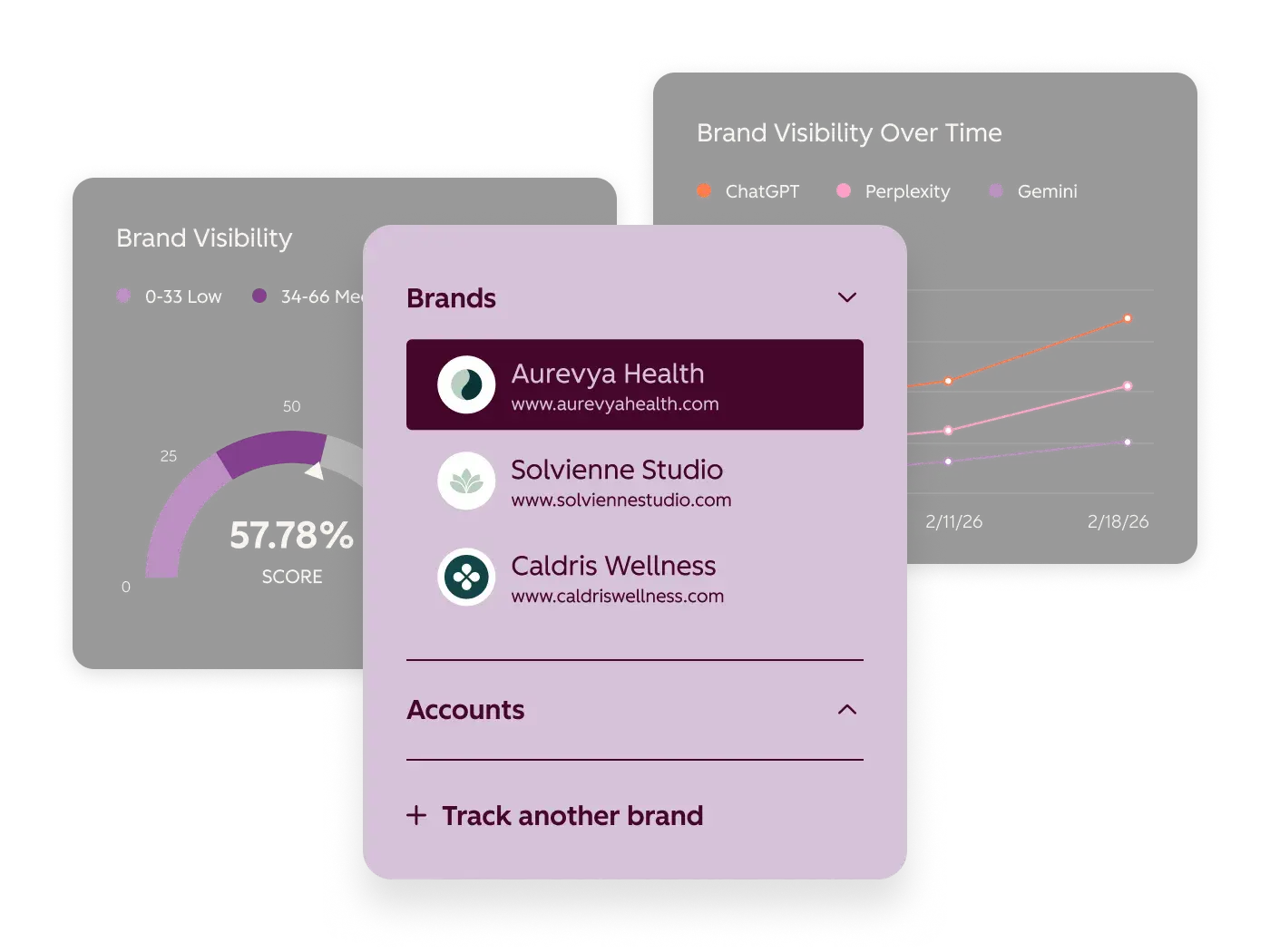
- Visibility Dashboards: Profound’s dashboards are inherently AI-centric, offering visibility scores per prompt and engine, competitive share of voice, and sentiment analysis. The ability to pull up "answer views"—the exact response a buyer would encounter—is invaluable for understanding how AI frames a brand narrative.
- Technical Site Health and Crawler Analytics: A significant differentiator is Profound’s Agent Analytics, which directly reads server logs. This provides unvarnished insight into which AI bots (e.g., GPTBot, ClaudeBot, PerplexityBot) are crawling a site, their frequency, and which pages they prioritize, regardless of JavaScript execution. This is particularly beneficial for complex CMS environments or paywalled content, offering actual crawler behavior data rather than inferred audits.
- Pricing: Starting at $99/month for Starter (limited to ChatGPT) and escalating to $399/month for Growth (covering three engines), Profound’s pricing reflects its specialized nature. Enterprise plans are custom.
Semrush: The Integrated Digital Marketing Powerhouse
Semrush, a long-standing leader in SEO and digital marketing, has integrated AI visibility features into its extensive product suite. It caters to teams managing a broader digital presence.
- Engine Coverage and Data Capture: Semrush’s AI visibility features track across ChatGPT, Gemini, Perplexity, and Google AI Overviews within its paid AEO tiers. Unlike Profound’s live browser capture, Semrush leverages a vast historical database of 239 million tracked LLM prompts. This historical data provides a significant advantage for prompt discovery, allowing users to identify trending or high-impact prompts before defining their custom tracking lists.
- Prompt Research and Content Integration: Semrush excels in prompt discovery due to its massive database, making it ideal for teams starting from scratch. Custom prompt tracking ranges from 50 to 200 prompts, depending on the plan. Its "Content Toolkit" facilitates content generation and optimization for both traditional Google and AI search, with seamless connections to social media and email repurposing tools. This integration is a key advantage for existing Semrush users.
- Visibility Dashboards: AI visibility data is presented within Semrush’s comprehensive SEO dashboard, offering a unified view of brand mentions, competitive comparisons, and sentiment signals alongside traditional search rankings, backlink profiles, and content performance. This holistic perspective is valuable for reporting a full digital presence to leadership, though AI-specific views may be less granular than Profound’s.
- Technical Site Health and Crawler Analytics: Semrush’s AI Search Site Health audit functions more like a traditional site crawler, checking crawlability from an AI bot’s perspective and flagging issues related to structured data, indexability, and page accessibility. While it offers actionable insights, it does not provide the direct server log depth seen in Profound’s Agent Analytics.
- Pricing: AI visibility features start at $199/month for the Starter plan (which also includes significant SEO capabilities), with higher tiers offering more prompts and features. This is in addition to potential modular add-ons for other marketing functions.
HubSpot AEO: The CRM-Integrated Solution
HubSpot AEO offers a distinct proposition, deeply integrating AI visibility with a business’s CRM and marketing stack. This approach prioritizes connecting AEO efforts directly to business outcomes like lead generation and revenue attribution.
- Engine Coverage and Data Capture: HubSpot AEO provides multi-engine coverage across ChatGPT, Gemini, and Perplexity. Its data capture mechanism is unique in that it leverages CRM context to suggest prompts and provide visibility data grounded in actual customer interactions and product positioning. It focuses on live answer engine queries, enriched by existing CRM data.
- Prompt Research and Content Integration: HubSpot AEO’s prompt suggestions are informed by CRM data, offering a more tailored starting point. Its integration with Content Hub and Marketing Hub means that AEO insights can directly feed into content calendars, collaboration workflows, and publishing tools, streamlining the process from insight to action. This eliminates the siloed approach often found between AEO tools and broader marketing operations.
- Visibility Dashboards: HubSpot AEO’s dashboards are designed to connect AI visibility metrics to CRM data. Users can see how AI mentions correlate with referral traffic, form fills, and ultimately, pipeline attribution. This direct link to customer data makes it easier to demonstrate the tangible ROI of AEO efforts.
- Technical Site Health and Crawler Analytics: While not providing server log analysis like Profound or a dedicated crawler like Semrush, HubSpot AEO emphasizes content readiness and indexability through its integration with Content Hub, ensuring that content optimized for AEO is discoverable by AI bots.
- Pricing: HubSpot AEO is available standalone at $50/month (or $45/month annually) and includes multi-engine coverage. It also bundles seamlessly into HubSpot for Marketers, starting at $900/month, providing a full marketing and content stack with integrated AEO. A 28-day free trial with 25 prompts is available.
Strategic Considerations for Adoption
Choosing the right AEO platform depends heavily on a business’s existing tech stack, team structure, budget, and strategic priorities.
- Choose Profound if: Your primary focus is deep, granular understanding of AI visibility across multiple engines. You require high-fidelity data mirroring actual user experiences, and server-log-level insights into AI bot activity are critical for your technical team. You are willing to invest in a specialized tool for dedicated AEO management.
- Choose Semrush if: You already use Semrush for broader SEO, local SEO, social media, or content marketing, and you want to consolidate AI visibility within an existing, integrated digital marketing platform. Its extensive prompt database is appealing if you need help discovering relevant queries, and a unified dashboard for all digital presence metrics is a priority.
- Choose HubSpot AEO if: You are already on the HubSpot platform (CRM, Marketing Hub, Content Hub) or plan to adopt it. Connecting AI visibility directly to your CRM data, sales pipeline, and marketing campaigns is a key strategic objective, allowing for seamless ROI attribution and a unified view of customer journeys. You prioritize ease of use for marketers without deep technical expertise.
Agency vs. In-house: Agencies managing AEO for diverse clients might lean towards Profound for its detailed, defensible data capture. Semrush’s all-in-one model suits agencies already leveraging it for SEO reporting. HubSpot AEO is particularly potent for in-house teams seeking direct connections between AEO and revenue attribution via CRM integration.
Enterprise Considerations: Both Profound Enterprise and Semrush Advanced offer API access, catering to large organizations requiring custom reporting or data feeds into proprietary BI tools. HubSpot AEO provides native integration with existing CRM dashboards and contact-level reporting for enterprises already within its ecosystem, eliminating the need for custom integration layers.
Operationalizing AEO: A Phased Approach to Success
Implementing a successful AEO strategy requires a structured approach, moving from readiness assessment to continuous monitoring and attribution.
Phase 1: Evaluate Readiness and Technical Foundation
Before diving into prompt tracking, it’s crucial to understand your current AI visibility and technical landscape.

- Baseline Assessment: Utilize free tools like HubSpot’s AEO Grader to establish a benchmark of your brand’s current AI visibility across major answer engines. This initial score provides a measurable starting point for improvement.
- Technical Audit:
- Crawlability: Ensure AI bots can access and parse your content. Check for
noindextags,robots.txtexclusions, or paywalls that might obstruct AI crawlers. - Structured Data: Verify the implementation of schema markup (e.g., FAQ schema, Product schema, Article schema) to help AI models understand your content’s context and relevance.
- Content Quality: Assess if your content is authoritative, accurate, and concise enough to be deemed valuable by AI.
- Site Performance: Fast-loading, mobile-friendly sites are generally preferred by all crawlers, including AI bots.
- Crawlability: Ensure AI bots can access and parse your content. Check for
- Crawler Analytics: If using Profound, leverage Agent Analytics for direct server log insights. For Semrush users, the AI Search Site Health audit provides actionable flags for content readiness. Addressing crawl access issues is paramount; AI bots cannot benefit from optimized content they cannot read. Even without a dedicated platform, regularly checking server logs for AI bot traffic (GPTBot, PerplexityBot, etc.) can reveal which pages AI models consider authoritative.
Phase 2: Plan and Produce AI-Optimized Content
With a solid technical foundation, the focus shifts to strategic content creation.
- Prompt Research: This is the AEO equivalent of keyword research. Identify the questions and topics your target audience is asking AI.
- Profound allows manual definition and deep tracking of specific prompts.
- Semrush’s vast prompt database aids in discovering high-opportunity queries.
- HubSpot AEO suggests prompts based on CRM data, ensuring relevance to your actual customer base.
The goal is to pinpoint areas where your brand is absent in AI answers despite relevant buyer intent.
- Content Production: Transform prompt insights into structured, AI-friendly content.
- Create comprehensive, authoritative content that directly answers common questions.
- Adopt a "answer-first" content strategy, providing clear, concise answers early in the content.
- Ensure factual accuracy and cite credible sources within your content, as AI models often reference source material.
- Leverage tools like HubSpot’s Content Hub to streamline content creation, connecting identified gaps directly to your content calendar and publishing workflows.
- Best Practice: Start with a manageable set of 20-30 high-priority prompts that align with your core product or service use cases. Refine your process and expand your tracking list as you gain confidence and see results.
Phase 3: Monitor, Attribute, and Demonstrate ROI
Measuring the return on investment (ROI) for AEO is crucial but presents unique challenges, particularly with attribution.
- Visibility Tracking: Continuously monitor your brand’s appearance within AI answers for tracked prompts and engines. Track changes in visibility scores, competitive share of voice, and sentiment.
- Attribution Challenges: A major hurdle is that AI referral traffic often appears as "direct traffic" in analytics platforms like GA4, as many AI tools do not pass UTM parameters.
- Dedicated Segments: Create custom segments in your analytics for known AI referral sources (e.g.,
chatgpt.com,perplexity.ai,gemini.google.com) to capture what you can. - CRM Integration: This is where platforms like HubSpot AEO shine. By integrating AEO data with your CRM, you can track AI-sourced leads from initial contact through to deal closure, directly attributing pipeline and revenue to your AEO efforts. This provides a robust, verifiable chain from visibility improvement to tangible business outcomes.
- Dedicated Segments: Create custom segments in your analytics for known AI referral sources (e.g.,
- Key Metrics to Track (Week-over-Week):
- Overall AEO Visibility Score: A high-level indicator of your brand’s presence in AI answers.
- Share of Voice for Key Prompts: How often your brand is mentioned compared to competitors.
- Sentiment of Mentions: Whether your brand is portrayed positively, negatively, or neutrally.
- AI Referral Traffic: Though challenging, track identifiable AI sources to your site.
- AI-Sourced Conversions/Leads: The ultimate measure of business impact, linking AEO to actual pipeline and revenue.
The Future of Search and AEO
The landscape of AI search is still in its nascent stages, evolving rapidly with new models, features, and user interfaces emerging regularly. For marketers, this necessitates continuous adaptation, learning, and investment in appropriate tooling. AEO is not a static discipline but an ongoing process of optimizing for dynamic algorithms and shifting user behaviors. The integration of AEO insights into broader digital strategies, particularly within CRM and marketing automation platforms, will be key to unlocking its full potential and demonstrating its crucial role in the modern customer journey. As AI becomes an increasingly dominant gateway to information, mastering AEO will be indispensable for brand relevance and competitive advantage.
Frequently Asked Questions About Profound vs. Semrush AEO
Can Profound and Semrush be used in conjunction?
Yes, some organizations might choose to use both, leveraging Profound’s deep AEO insights and Semrush’s broader digital marketing capabilities. However, budget considerations are significant, as combining their AEO-capable plans can be costly. Most teams opt for one platform that best aligns with their primary workflow and budget.
How can ROI from AEO work be effectively measured?
Measuring AEO ROI involves tracking a chain of events: improved visibility scores leading to increased AI referral traffic, which then translates into conversions (e.g., form fills, demo requests) and ultimately, pipeline generation. The primary challenge remains accurately attributing "direct" traffic from AI sources. Setting up specific analytics segments for known AI referral domains (e.g., chatgpt.com, perplexity.ai, gemini.google.com) and meticulously tracking AI-sourced contacts through your CRM are essential steps for robust ROI measurement.
What skills or roles are necessary to run AEO successfully?
A content strategist or SEO specialist typically possesses many of the core skills needed for AEO, including prompt research, content creation, and basic analytics. More technical aspects, such as server log analysis (as offered by Profound’s Agent Analytics), might require input from technical SEOs or web developers. Platforms like HubSpot AEO are designed to lower the barrier to entry, enabling marketers to manage AEO without extensive technical expertise.
How can prompt data be validated before content creation?
Before investing in content based on prompt research, manually test your target prompts in various AI engines (ChatGPT, Gemini, Perplexity). Observe which brands are cited, the sources referenced, and the overall sentiment. If your AEO tool indicates an absence but manual checks show your brand appearing, investigate potential data lags or tracking discrepancies to ensure your content budget is spent effectively.
What if a business isn’t ready to adopt a dedicated AEO platform?
Even without immediate platform investment, businesses can take initial steps. Start by using a free tool like the AEO Grader for a baseline visibility score. Then, manually check 10-15 highly relevant prompts across major AI engines (ChatGPT, Perplexity, Gemini). Document your brand’s presence and competitor mentions. This manual audit can often uncover quick wins and immediate optimization opportunities without requiring a paid subscription.








