A marketer’s time is their most valuable commodity, yet it is frequently fragmented by the relentless tide of repetitive tasks. From drafting endless variations of copy to performing meticulous cleanup passes, and fulfilling urgent requests from sales teams, the modern marketing professional often finds their strategic thinking overshadowed by operational drudgery. However, the landscape is rapidly evolving, with artificial intelligence and automation technologies emerging as powerful allies in reclaiming this precious time. Routine tasks that once consumed hours, such as initial copy drafting, consumer data analysis, and visual asset creation, can now be accomplished in mere minutes. Industry estimates suggest that between 10% and 15% of a marketer’s current workload is already automatable with existing technology. On a broader economic scale, approximately 60% of jobs across the U.S. economy contain at least 30% automatable work, equating to roughly a day and a half of potential weekly savings. This does not signal a wholesale replacement of human expertise; rather, it highlights an opportunity to eliminate low-leverage, recurring tasks that no longer need to be initiated from scratch each time.
The Strategic Imperative: Identifying Tasks for Human Oversight
While the allure of automation is undeniable, a crucial distinction must be made: not all tasks are candidates for offloading. Critical strategic functions, the final articulation of messaging, and the nuanced expression of brand voice remain firmly within the human domain. Similarly, tasks requiring absolute factual accuracy, judgments involving compliance-sensitive claims, and any output with a high degree of public visibility demand meticulous human review to avoid costly errors. A simple guiding principle emerges: the more prominent the output, the greater the need for human oversight. Consequently, the most fertile ground for automation lies in the preparatory and supporting stages of decision-making. This includes initial drafts, data sorting, summarization, cleanup processes, pattern identification, and structured drafting – essentially, the "marketing meh" tasks that, while necessary, do not typically require deep, original thought. The implications are significant: by strategically automating these lower-level activities, marketers can free up substantial cognitive resources to focus on higher-impact initiatives.

A Comprehensive Inventory: 17 Tasks Ripe for Automation
The most effective candidates for automation share common characteristics: they are repetitive, follow discernible patterns, consume time without demanding significant original ideation, and can be easily reviewed before final deployment. These are the tasks that often quietly erode a marketer’s week, leaving them feeling perpetually behind. By identifying and automating these elements, marketing teams can achieve a more streamlined and productive workflow.
1. Streamlining Weekly Campaign Summaries
The recurring need for weekly campaign summaries, typically structured around performance highlights, key insights, and actionable next steps, can be significantly expedited. By establishing clean source data and leveraging AI to generate a preliminary readout, marketers can then focus their expertise on refining the interpretation and strategic implications. Large Language Models (LLMs) such as ChatGPT are particularly adept at transforming raw performance metrics and notes into coherent first-pass summaries, drastically reducing the time spent on this recurring reporting.
2. Efficiently Summarizing Meetings and Call Notes
The disorganization and time sink associated with managing meeting and call notes can be mitigated through automation. Utilizing transcripts or detailed notes as input, AI tools can rapidly generate recaps organized by decisions made, outstanding questions, and defined next steps, ensuring that critical information is captured and disseminated while the conversation remains fresh. Notion AI Meeting Notes, for instance, is specifically designed to streamline this process within collaborative environments.

3. Intelligent Sorting of Search Terms into Thematic Clusters
Raw search term reports, while containing valuable data, often lack actionable clarity until they are systematically grouped. By defining logical categorization parameters – such as user intent, product alignment, or identified pain points – AI can efficiently sort these terms. This process facilitates the identification of negative keyword opportunities, potential ad group inefficiencies, and critical content gaps. Google Ads Search Terms Insights offers a built-in solution for categorizing queries with associated performance data.
4. Automated Clustering of Customer Feedback
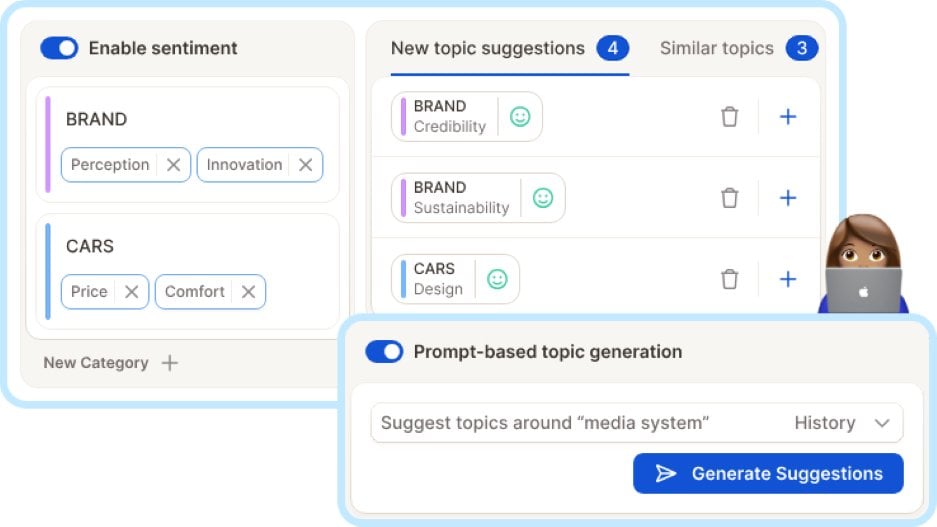
Analyzing customer feedback from reviews, support chats, survey responses, and open-text fields can be a monumental task. AI-powered tools can now aggregate this disparate data, cluster it by recurring themes, friction points, or expressed desires, and identify frequently used language. This enables a deeper, data-driven understanding of customer sentiment and informs product development and marketing strategies. Platforms like Caplena are specifically engineered for large-scale analysis of qualitative feedback, providing quantified insights to guide decision-making.
5. Automated Lead Tagging and Routing
The process of tagging and routing inbound leads, often a complex and error-prone manual task, can be standardized and automated. By pre-defining categorization rules based on lead source, urgency, customer segment, or assigned ownership, AI systems can ensure consistent and efficient lead management. Regular review of exceptions ensures accuracy while the bulk of the work is handled automatically. Zapier provides robust automation capabilities for rule-based lead routing across various platforms.
6. Streamlining CRM Updates from Sales Calls
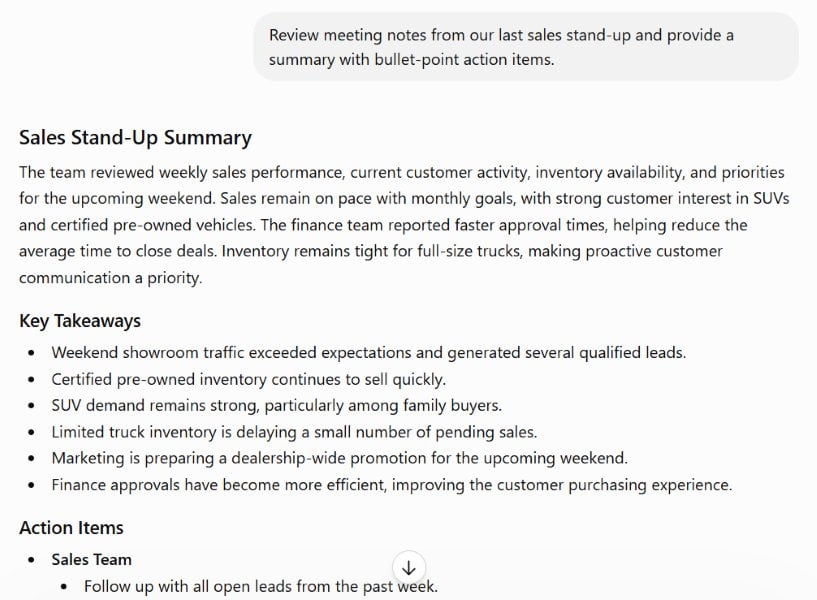
Maintaining accurate and up-to-date CRM notes after sales calls is critical for seamless handoffs and data integrity. Leveraging call notes or transcripts, AI can generate structured summaries encompassing customer needs, current status, identified objections, and agreed-upon next steps. Tools like Gong, which specialize in conversation intelligence, are designed to automate this integration between sales interactions and CRM systems.
7. Generating Initial Social Media Caption Drafts
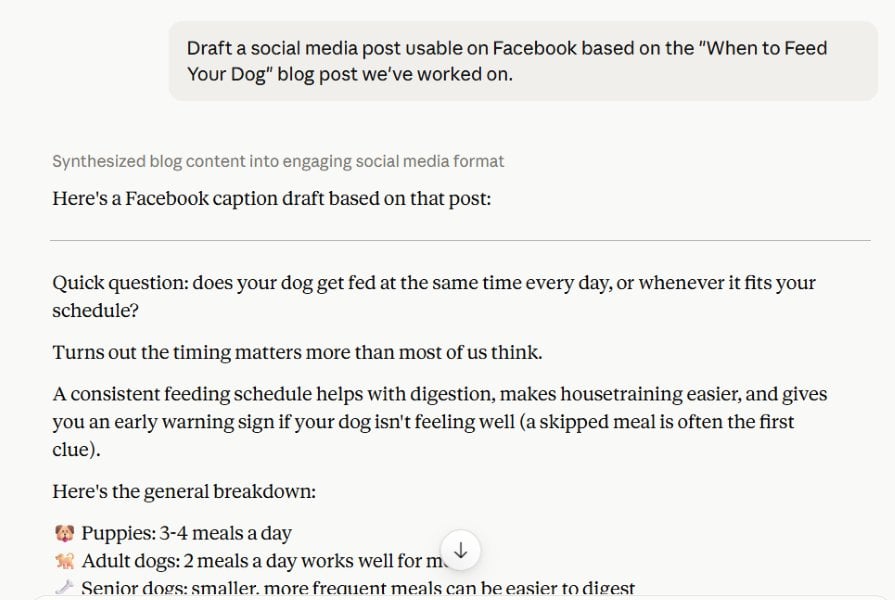
The creation of social media captions, often a time-consuming process of generating multiple variations, can be accelerated by AI. Starting with the core content asset, LLMs can produce a range of initial caption options tailored for different platforms. This allows marketers to then focus their efforts on refining the best options with their unique brand voice, ensuring a human touch in the final output. Claude, for instance, is frequently cited for its prowess in creative writing tasks, making it suitable for generating diverse caption drafts.
8. Efficiently Repurposing Blog Content
A well-crafted blog post can serve as a foundational asset for a multitude of other marketing materials. By using the full blog post as source material, AI can generate drafts for newsletter introductions, social media posts, or sales follow-up materials. These AI-generated outputs can then be edited for channel-specific nuances and brand consistency. Writer.com is a platform designed for teams to create on-brand content at scale, making it ideal for such repurposing efforts.
9. Drafting Variations of Ad Copy
The iterative process of developing multiple ad copy variations, particularly for headlines, can be a drain on creative energy. By providing the target audience, offer, and core problem, AI can generate a variety of rough ad angles. This significantly reduces the initial brainstorming time, allowing marketers to concentrate on selecting and refining the most promising options. Jasper’s ad copy generator is purpose-built for creating multiple ad variations from concise briefs.
10. Automating Meta Title and Description Creation
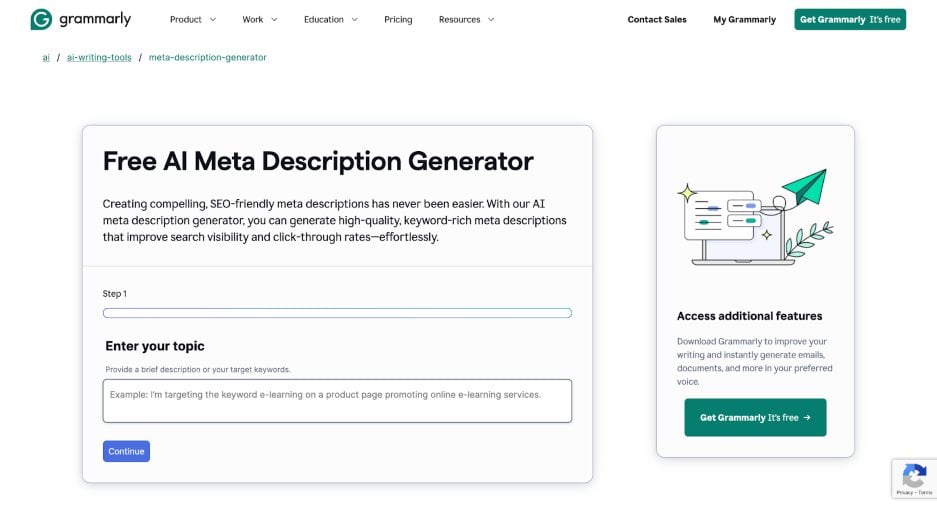
The creation of meta titles and meta descriptions, crucial for SEO performance, is often a last-minute task. By inputting the target keyword and a brief page summary, AI can generate several optimized options. Marketers can then select the most compelling descriptions that accurately reflect content and encourage clicks. Grammarly offers specialized AI tools for this specific task, streamlining the process for web content optimization.
11. Building Initial Content Briefs
A well-structured content brief is essential for guiding effective content creation. AI can leverage the topic, target audience, and business objective to generate a preliminary outline, including potential subtopics, relevant questions, and promising angles. This initial framework then serves as a foundation for human editorial refinement and strategic input. Perplexity, known for its ability to quickly surface research sources, can be a valuable tool in the early stages of brief development.
12. Refreshing Older Blog Posts with Optimization Ideas
Outdated blog posts often require optimization rather than complete rewriting. AI can analyze existing articles to identify areas for improvement, such as thin sections, outdated references, weak metadata, or missed opportunities. This analysis can be compiled into an actionable edit checklist, making the refresh process more efficient. Semrush’s SEO Writing Assistant provides real-time feedback during the revision process, enhancing its effectiveness.
13. Drafting FAQ Sections
Many FAQ sections can feel padded due to a lack of grounding in actual customer inquiries. By analyzing real questions from customer chats, sales calls, or search data, AI can generate draft Q&A starters. These can then be refined and trimmed to ensure the FAQ section provides genuine clarity and addresses user needs directly. LLMs like Grok can quickly transform source material into structured question-and-answer formats.
14. Transforming Webinars into Content Assets
Webinars often contain a wealth of valuable information that can be repurposed. AI can process webinar transcripts or detailed notes to extract key explanations and compelling segments. These can then be transformed into rough drafts for follow-up content, social media posts, or other marketing assets, saving significant time in content extraction and initial drafting. Descript, with its transcript-based editing capabilities, is particularly well-suited for repurposing recorded content.
15. Generating Nurture Email Variants
Email nurture flows rarely consist of a single, perfect version. By defining the target audience and the specific purpose of each email, AI can generate multiple draft variants. Marketers can then focus on refining these drafts for optimal pacing, tone, and clarity, ensuring a more personalized and effective customer journey. HubSpot’s AI email writer is integrated into its marketing and CRM workflows, facilitating this process.
16. Compiling Internal Stakeholder Recaps
Many stakeholders do not require access to raw dashboards but rather concise, interpretative updates. AI can process raw data and meeting notes to create organized summaries focusing on progress, key issues, and critical decisions. This interpretation, augmented by human insight, ensures stakeholders receive relevant and actionable information without being overwhelmed. Microsoft Copilot can assist in synthesizing information from various sources into concise internal summaries.
17. Compiling Competitor Messaging Snapshots
Regular competitor analysis is vital but can become tedious. By establishing a consistent framework for comparison, AI can assist in summarizing key aspects of competitor messaging, including headline approaches, offer framing, and call-to-action language. LLMs like Gemini are helpful for this research-intensive task, providing answers with linked sources for further investigation.
The Enduring Value of Human Judgment
It is imperative to reiterate that certain aspects of marketing demand unwavering human oversight. The speed gained through automation can quickly dissipate if critical judgment is abdicated. The core rule of thumb remains: while automating support tasks is beneficial, handing off decision-making processes is where quality is most likely to falter. Therefore, strategic planning, the finalization of messaging, the preservation of brand voice, rigorous factual verification, and the careful articulation of compliance-sensitive claims must remain firmly within human control. The more public and impactful the output, the more critical that final human review becomes. This judicious application of automation ensures that technology enhances, rather than compromises, the integrity and effectiveness of marketing efforts.
Strategic Automation: Targeting Recurring Tasks for Maximum Impact
The most significant and immediate gains from automation are often realized by addressing tasks that repeat consistently and have not been fundamentally re-evaluated. These are the persistent time drains that steal focus from more strategic initiatives. The path forward involves a systematic identification and implementation of automation for these recurring activities.
The journey to reclaiming marketer time does not necessitate a complete overhaul of existing processes. Instead, it focuses on systematically removing the manual tasks that create friction between insightful thinking and the final delivery of effective marketing campaigns. By embracing these AI-driven efficiencies, marketing teams can unlock their capacity for innovation, strategic planning, and ultimately, drive greater business impact. The time saved from mundane, repetitive tasks can be reinvested in the core competencies that define exceptional marketing leadership, leading to more creative campaigns, deeper customer engagement, and a more agile response to market dynamics.