Establishing an online presence, whether for a burgeoning blog or a sophisticated e-commerce enterprise, fundamentally relies on web hosting. While a website itself is the digital storefront, web hosting is the essential infrastructure that makes it accessible to the global internet audience. Without it, the meticulously designed pages, vibrant images, and crucial databases that constitute a website would remain offline, invisible to potential visitors and customers. Understanding the intricacies of web hosting is paramount for anyone venturing into the digital realm, as the choice of hosting directly impacts site performance, security, scalability, and ultimately, user experience and business success.
The concept of web hosting revolves around servers – powerful computers that store all the files, images, videos, and code that make up a website. These servers are typically housed in secure, climate-controlled data centers, maintained by web hosting companies. When an internet user types a website’s address into their browser, their computer sends a request to the hosting company’s server, which then delivers the necessary files back to the user’s browser, displaying the website. Essentially, web hosting companies rent out space on these servers, along with internet connectivity, allowing individuals and businesses to publish their websites online. The sheer volume of data transferred and processed daily by these servers underscores their critical role in the global digital ecosystem.
The Indispensable Role of Web Hosting in the Digital Age
The evolution of web hosting mirrors the growth of the internet itself. In the early days, hosting was often a complex, expensive endeavor, primarily accessible to large corporations. As the internet became more democratized, hosting services adapted, offering increasingly user-friendly and affordable solutions. Today, the hosting industry is a multi-billion dollar market, with providers ranging from small local operations to global giants like Amazon Web Services and Google Cloud, reflecting the universal need for online presence. This foundational service is not merely about storage; it’s about ensuring reliability, speed, and security—factors that are increasingly vital in a competitive online landscape.
For any entity operating online, web hosting is the bedrock. A blog, for instance, requires hosting to store its articles, images, and user comments. An online store depends on it to host product catalogs, shopping cart functionalities, and customer data securely. Corporate websites utilize hosting to showcase their brand, services, and connect with stakeholders. The quality of this hosting directly translates into the user experience. A slow-loading website, for example, can lead to high bounce rates, where visitors leave a site quickly due to frustration. According to industry studies, even a one-second delay in page response can lead to a 7% reduction in conversions and an 11% fewer page views, highlighting the direct financial implications for e-commerce and lead generation sites.
Performance, SEO, and User Experience: The Hidden Impact of Hosting
Beyond mere accessibility, web hosting profoundly influences critical aspects of a website’s operation and success. Key among these are site speed, uptime, and security, all of which directly affect search engine optimization (SEO) and user experience (UX).
Site Speed: In an era of instant gratification, website loading speed is paramount. Search engines like Google prioritize fast-loading websites in their rankings, understanding that users prefer quick access to information. Reliable hosting infrastructure, including high-performance servers, solid-state drives (SSDs), and optimized network connections, ensures that website files are delivered rapidly. Conversely, inadequate hosting can result in slow load times, frustrating users and negatively impacting SEO. A study by Portent found that websites that load in 1 second have a conversion rate 2.5 times higher than sites that load in 5 seconds. This data underscores that hosting is not just a technical detail but a strategic investment in customer acquisition and retention.
Uptime and Reliability: Uptime refers to the percentage of time a website is available and operational. Industry standards often boast 99.9% uptime, which translates to only about 8 hours of downtime per year. While seemingly minor, frequent or prolonged outages can severely damage a website’s reputation, lead to lost sales, and negatively affect search engine rankings. Search engines view consistent uptime as a sign of a trustworthy and professionally managed website. Reputable hosting providers invest heavily in redundant systems, backup power, and continuous monitoring to minimize downtime, ensuring that websites remain accessible around the clock.

Security: The digital landscape is rife with threats, from malware and phishing attempts to distributed denial-of-service (DDoS) attacks. A robust hosting environment offers essential security features such as SSL certificates, which encrypt data exchanged between the user and the website, protecting sensitive information. Many hosts also provide firewalls, malware scanning, DDoS protection, and automated backups, which are crucial for disaster recovery. While website owners are responsible for their site’s security practices, the hosting provider forms the first line of defense, safeguarding the website’s data and reputation.
Bandwidth and Storage: These technical specifications directly relate to how much content a website can hold and how much traffic it can handle. Storage space dictates the number of pages, images, videos, and other files a website can store on the server. Bandwidth, on the other hand, measures the amount of data transferred from the server to visitors’ browsers over a given period. A website with many large images or videos, or one expecting high traffic volumes, will require significantly more storage and bandwidth. Underestimating these needs can lead to performance bottlenecks or additional costs.
Choosing Your Digital Home: Key Considerations for Selecting a Web Host
With thousands of hosting companies and myriad plans available, selecting the right host can be daunting. The decision should align with the website’s purpose, anticipated growth, and technical requirements.
Fully-Hosted vs. Self-Hosted Platforms:
One of the initial decisions involves choosing between a fully-hosted or a self-hosted platform.
- Fully-Hosted Platforms (e.g., Shopify, WordPress.com, Wix, Squarespace) offer an all-in-one solution where the platform provider manages all aspects of hosting, maintenance, and often includes a website builder. These platforms are lauded for their ease of use, making them ideal for beginners or small businesses seeking a quick and simple online presence without deep technical knowledge. The trade-off often comes in terms of customization limitations, reliance on the platform’s ecosystem, and potentially higher long-term costs.
- Self-Hosted Platforms (e.g., WordPress.org, Joomla, Drupal) provide greater flexibility, control, and ownership over the website’s data and codebase. Users are responsible for arranging their own hosting, installing the software, and managing updates and security. While this requires more technical proficiency or the hiring of a developer, it unlocks vast customization possibilities through plugins, themes, and direct access to server configurations. This option is typically preferred by developers, growing businesses, and those requiring bespoke functionalities.
Evaluating Hosting Companies: Beyond the Price Tag:
Once the self-hosted path is chosen, or even when evaluating fully-hosted options, several factors demand careful consideration:
- Server Location: The geographical location of the hosting server relative to the target audience significantly impacts site speed. Data travels at finite speeds; thus, a shorter physical distance between the server and the user results in faster data transfer and quicker load times. For example, a business targeting a US audience should ideally choose a host with servers in North America. For a global audience, Content Delivery Networks (CDNs) can mitigate this by caching website content on servers worldwide, delivering it from the closest geographical point to the user.
- Storage Space and Scalability: Assess the type and amount of content planned for the website. A simple blog with text and a few images will require minimal storage, while an e-commerce site with thousands of product images, videos, and customer databases will need considerably more. Crucially, consider scalability – the ability to easily upgrade resources (storage, RAM, CPU) as the website grows in content and traffic. Look for hosting plans that offer clear upgrade paths without requiring a complete migration.
- Audience Size and Bandwidth: While difficult to predict precisely for a new site, estimate potential traffic. Every page view consumes bandwidth. A hosting plan should accommodate anticipated visitor numbers without incurring excessive overage charges or performance degradation. Many hosts offer tiered plans designed for different traffic volumes, allowing users to start small and scale up.
- Additional Services and Features: Modern hosting goes beyond basic server space. Look for bundled services that add value:
- SSL Certificates: Essential for security (HTTPS) and SEO, signaling trust to both users and search engines.
- Email Hosting: Professional email addresses (e.g., [email protected]) enhance credibility.
- Automated Backups: Regular, reliable backups are critical for disaster recovery and peace of mind.
- One-Click Installers: Simplify the setup of popular content management systems (CMS) like WordPress.
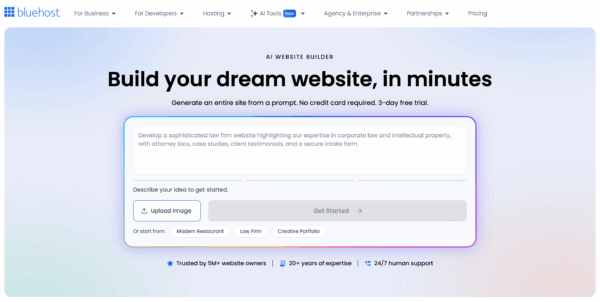
- Website Builders: Some hosts, like Bluehost with its AI Website Builder, offer integrated tools that simplify site creation, allowing users to generate a basic website by answering a few questions and refine it via chat, ideal for small businesses needing a quick launch without coding skills. However, these tools may lack the complexity required for more elaborate projects like membership portals.
- Customer Support: Accessible, knowledgeable, and responsive 24/7 technical support is invaluable, especially for resolving unexpected issues.
Demystifying Hosting Types: Shared, VPS, Dedicated, and Cloud Environments
The underlying infrastructure dictates the performance, control, and cost of hosting. The three most common types, with the addition of cloud hosting as a modern evolution, cater to diverse needs:
-
Shared Hosting: This is the most economical and popular option for beginners and small websites. Multiple websites share resources (CPU, RAM, disk space) on a single physical server. While cost-effective and easy to manage, shared hosting can suffer from the "noisy neighbor" effect, where a surge in traffic or resource consumption by one website impacts the performance of others on the same server. It offers limited control over server configurations. Ideal for personal blogs, small business websites, and low-traffic informational sites.
-
Virtual Private Server (VPS) Hosting: VPS hosting offers a significant upgrade from shared hosting. A single physical server is partitioned into several virtual private servers, each operating as an independent server with its own dedicated allocation of resources (CPU, RAM, storage). This provides greater stability, performance, and control than shared hosting, including root access for custom configurations. While still sharing a physical server, the virtual isolation prevents resource contention. VPS hosting is suitable for growing businesses, e-commerce sites, and developers who need more power and flexibility without the cost of a dedicated server.
-
Dedicated Hosting: As the name suggests, dedicated hosting provides an entire physical server exclusively for one client. This offers maximum performance, security, and control. Users have full administrative access to the server, allowing for complete customization of hardware and software. Dedicated hosting is the most expensive option and typically requires significant technical expertise to manage. It is ideal for large enterprises, high-traffic websites, mission-critical applications, and organizations with stringent security and compliance requirements.
-
Cloud Hosting: A more modern and flexible approach, cloud hosting distributes website resources across a network of interconnected virtual servers, known as "the cloud." Instead of relying on a single physical server, a website draws resources from multiple servers, ensuring high availability and scalability. If one server fails, another takes over seamlessly. Cloud hosting offers unparalleled scalability, allowing resources to be adjusted on demand to handle traffic spikes. It typically operates on a pay-as-you-go model. While offering immense flexibility and redundancy, its complexity and variable cost structure can be a consideration. Cloud hosting is well-suited for high-growth websites, applications with fluctuating traffic, and businesses requiring robust disaster recovery solutions.
Specialized Hosting: Optimizing for WordPress.org
For the millions of websites built on WordPress.org, specialized WordPress hosting plans are a popular choice. These plans are specifically optimized for the WordPress environment, often including pre-installed WordPress, specialized caching mechanisms, enhanced security configurations tailored for common WordPress vulnerabilities, and expert support teams knowledgeable in WordPress-specific issues. This optimization leads to faster loading times, improved security, and a more streamlined management experience, often including automated updates for the WordPress core and plugins. WordPress.org maintains a list of recommended hosting providers that meet its performance and reliability standards, offering a valuable starting point for users of the popular CMS.
Strategic Implications and Future-Proofing Your Digital Presence
The decision regarding web hosting is not a one-time event but an ongoing strategic consideration for any online entity. A well-chosen hosting plan is an investment that contributes directly to a website’s long-term success, impacting everything from user satisfaction and conversion rates to search engine visibility and brand reputation. Conversely, a poor hosting choice can lead to recurring problems, lost revenue, and significant operational headaches.
Businesses and individuals should regularly review their hosting needs, especially as their online presence grows. Scalability is key; a hosting provider that can smoothly accommodate increasing traffic and data without requiring disruptive migrations is invaluable. Furthermore, understanding the possibility of switching hosts is important. While it involves migrating files, databases, and configuration settings, most reputable hosting providers offer support and guidance through this process. It underscores the importance of choosing a host with excellent customer service from the outset.
In conclusion, web hosting is far more than just a place to store website files; it is the fundamental infrastructure that dictates a website’s performance, reliability, and security. By carefully considering factors such as server location, storage, bandwidth, additional services, and the various types of hosting available, individuals and businesses can make informed decisions that support their digital ambitions. Investing in reliable and scalable hosting is a strategic imperative for anyone serious about establishing and maintaining a successful online presence in today’s interconnected world. For those seeking to delve deeper into the technical aspects that influence online visibility, further exploration into areas like technical SEO, which covers how to make a site easily discoverable by search engines, is highly recommended.