The landscape of digital marketing has reached a critical juncture where the veneer of scientific rigor often masks fundamental statistical inaccuracies. While A/B testing is frequently championed as the ultimate application of the scientific method in business—utilizing randomized controlled trials to drive revenue—the methodology currently employed by a majority of practitioners is increasingly viewed by experts as antiquated. Current industry standards for conversion rate optimization (CRO) and user experience (UX) testing are often based on statistical frameworks that lag nearly half a century behind the modern approaches used in clinical medicine, genetics, and particle physics. This disconnect has led to a proliferation of "illusory findings," where reported gains in conversion rates fail to materialize in the long-term bottom line of corporations.
The Crisis of Data Integrity in Digital Marketing
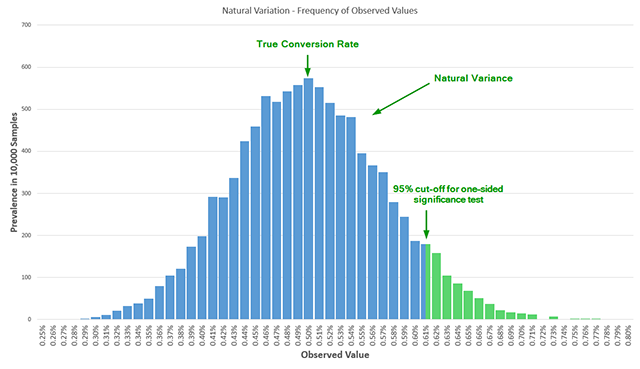
At the heart of the modern A/B testing crisis are three systemic issues: the widespread misuse of statistical significance tests, a general disregard for statistical power, and the inherent inefficiency of classical fixed-sample designs. These problems are not merely academic; they result in significant financial losses when companies implement changes based on "winners" that are, in fact, the result of random noise.
The primary culprit is the violation of the fixed-horizon requirement. Classical statistical significance tests, such as the Student’s T-test, were designed with the assumption that data would be analyzed exactly once after a predetermined sample size had been reached. However, the reality of the digital boardroom is one of constant monitoring. Stakeholders often "peek" at data daily, stopping tests early if a variant looks like a clear winner or a disastrous loser.
According to statistical research dating back to 1969, this practice of "data-driven optional stopping" without mathematical adjustment exponentially inflates the false positive rate. For instance, if a practitioner peeks at the data five times during an experiment, the actual error rate is 3.2 times higher than the reported nominal error. Peeking ten times increases the error probability fivefold. This creates a "Garbage In, Garbage Out" (GIGO) cycle where digital marketing teams celebrate statistical "wins" that are statistically invalid.
Chronology of Statistical Experimentation
To understand why digital marketing is struggling, it is necessary to examine the historical trajectory of experimental design:
- 1920s–1930s: Ronald Fisher and the Neyman-Pearson framework establish the foundations of frequentist statistics, primarily for agricultural and biological research where samples were collected over seasons, making interim analysis impossible.
- 1950s–1960s: The rise of clinical trials in medicine necessitates "Group Sequential Designs." Researchers realize that if a new drug is either life-saving or toxic, it is unethical to continue a trial until a fixed sample size is reached.
- 1990s–2000s: The birth of the digital web. Companies like Amazon and Microsoft begin using A/B testing at scale. However, they largely adopt the 1920s agricultural models rather than the 1960s medical models.
- 2010s: The "Replication Crisis" hits social sciences and medicine, leading to a renewed focus on p-hacking and the dangers of multiple comparisons.
- Present Day: The emergence of "AGILE" and Bayesian frameworks in A/B testing marks a shift toward more flexible, yet mathematically rigorous, experimentation designed for high-velocity digital environments.
The Hidden Cost of Underpowered Experiments
While "peeking" causes false positives, a lack of statistical power leads to false negatives—the failure to detect a true improvement. Statistical power, or "test sensitivity," is the probability that a test will detect an effect if one actually exists.
Industry analysis of influential A/B testing literature published between 2008 and 2014 revealed a startling trend: only one out of seven major textbooks discussed statistical power in a proper context. Many free online calculators still default to a power level of 50%, which is essentially the statistical equivalent of a coin toss.
Running an underpowered test is a misallocation of corporate resources. It means a company may spend weeks designing and implementing a new feature, only to discard it because the test lacked the sensitivity to confirm its value. This "false negative" effectively bars further innovation in a direction that could have yielded substantial conversion gains. To achieve a standard power of 80% or 90%, sample sizes are often much larger than marketing teams anticipate, requiring a difficult trade-off between the speed of testing and the certainty of the results.
The Inefficiency of the Classical Approach
The third major hurdle is the sheer inefficiency of fixed-sample testing. In a classical test, if a practitioner calculates they need 100,000 users to detect a 10% lift, they must wait for all 100,000 users even if the variant is performing 20% better after only 20,000 users.
In clinical trials, this inefficiency is solved through interim monitoring. If a digital variant is performing significantly better or worse than expected, the trial should be stopped early to either capitalize on the gains or mitigate the losses. Without a modern framework, however, stopping early compromises the validity of the p-value. This creates a paradox for the practitioner: adhere to the math and lose money through slow implementation, or act on the data and risk making a decision based on a statistical fluke.
The AGILE Statistical Method: A Proposed Solution
To bridge the gap between scientific rigor and business reality, experts are proposing the AGILE statistical approach. Inspired by the "Group Sequential" methods used in medical trials, the AGILE method introduces several key innovations to the A/B testing workflow:
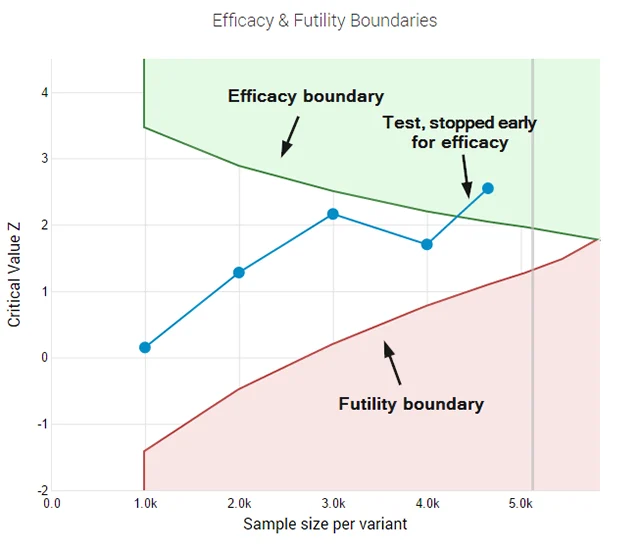
- Error-Spending Functions: This mathematical adjustment allows for multiple interim analyses (peeking) while keeping the overall false-positive rate under control. It effectively "spends" a portion of the allowed error rate at each look, ensuring that the final conclusion remains valid.
- Futility Stopping Rules: Unlike classical tests, AGILE allows practitioners to "fail fast." If a test has a negligible probability of reaching significance based on the interim data, it can be terminated early for futility. This saves time and allows the team to move on to the next hypothesis.
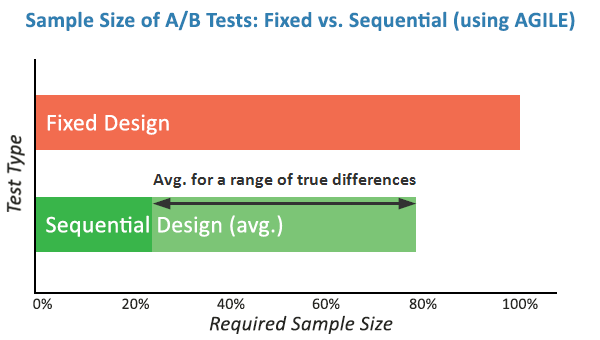
- Flexibility in Sample Size: While AGILE requires a maximum sample size to be set, the average number of users required is significantly lower. Simulations show that the AGILE method can result in efficiency gains of 20% to 80% compared to fixed-sample tests, depending on the actual magnitude of the lift.
Industry Implications and Expert Analysis
The shift toward more sophisticated statistical models is expected to have a profound impact on the ROI of digital marketing departments. By adopting AGILE or similar sequential frameworks, companies can increase the velocity of their experimentation without sacrificing the integrity of their data.
"The goal is to align statistical methods with the reality of how business is conducted," notes the white paper Efficient A/B Testing in Conversion Rate Optimization. "Adopting these methods contributes to a significant decrease in illusory results while providing the flexibility that modern marketing teams demand."
Data scientists within the tech sector have reacted positively to these developments, noting that the "fixed-sample" mindset was a relic of a pre-digital age. However, the transition requires a cultural shift within organizations. Marketing managers must become comfortable with the concepts of "alpha-spending" and "power analysis," moving beyond the simplistic "95% confidence" metric that has dominated the industry for two decades.
Future Outlook: Rigor as a Competitive Advantage
As the cost of digital acquisition continues to rise, the ability to accurately identify conversion-boosting changes becomes a critical competitive advantage. Organizations that continue to rely on flawed statistical practices will likely find themselves "optimizing" their websites based on phantom data, leading to stagnant growth despite a high volume of "successful" tests.
The move toward AGILE and other medical-grade statistical methods represents the professionalization of the CRO industry. By embracing the complexity of modern statistics, digital practitioners can finally fulfill the promise of A/B testing as a truly scientific engine for business growth. The future of digital experimentation lies not in doing more tests, but in doing tests that are mathematically sound, ethically responsible, and commercially efficient.