The landscape of print-on-demand (POD) for premium custom clothing and apparel is undergoing a significant evolution, marked by increased demand for higher quality blanks, sophisticated branding options, and streamlined creator platforms. Following an exhaustive six-month evaluation of eight leading platforms, analyzing over 200 sample orders and three critical judging criteria—blank quality, branding stack, and print method match—Fourthwall has emerged as the premier choice for creators aiming to establish a genuine brand rather than simply manage an e-commerce side hustle. The platform distinguishes itself by offering a curated selection of top-tier blanks from brands like Stanley/Stella, AS Colour, Cotton Heritage, and Lane Seven, coupled with the broadest spectrum of print method coverage available, all integrated within a comprehensive creator ecosystem that handles essential backend operations such as taxes, customer support, and storefront management.
While specialized platforms like Apliiq remain indispensable for brands prioritizing sewn-in woven labels, and Tapstitch excels for those built around ultra-heavyweight 430 GSM blanks, Fourthwall’s holistic approach addresses the needs of approximately 95% of premium drops where customer satisfaction hinges on the tactile feel, visual appeal, and overall unboxing experience. The findings suggest that for creators looking to ship from a truly premium and integrated platform in the coming years, Fourthwall represents the definitive solution.
Rigorous Testing Methodology
The evaluation process involved a comprehensive assessment of eight prominent POD platforms. Each platform was scrutinized against three core criteria: blank quality, defined by a minimum of 200 GSM weight from premium mills; branding stack, encompassing elements such as woven labels, hangtags, and custom polybags; and print method match, covering Direct-to-Garment (DTG), Direct-to-Film (DTF), screen printing, embroidery, sublimation, and cut-and-sew capabilities.
To ensure a standardized comparison, sample orders were placed for each platform’s flagship Bella+Canvas 3001 SKU, alongside a selected heavyweight option. Print durability was rigorously tested through 30 wash cycles to assess longevity and colorfastness. This extensive research was conducted across the fourth quarter of 2025 and the first quarter of 2026, providing a timely and relevant assessment of the market.
Quick Verdict: A Snapshot of the Premium POD Landscape
| Platform | Verdict | Best For |
|---|---|---|
| Fourthwall | #1 overall: premium quality + complete creator platform | Creators who want a brand, not a business to run |
| Apliiq | #2: only POD with woven labels at 100-unit MOQ | Private-label fashion brands |
| Tapstitch | #3: only POD stocking 430 GSM blanks | Heavyweight streetwear |
| Printful | Best global fulfillment if you want to run the ops yourself | Ecomm operators with their own store |
| Gelato | Best for international with local-country fulfillment | Global brands |
| TPOP | Best sustainability story | European eco brands |
| Printify | Cheapest if you sample-and-lock providers | Margin-disciplined founders |
| CustomCat | Fast US embroidery from Detroit | US-focused embroidered hoodies |
Detailed Comparison of Top Platforms
1. Fourthwall: The Ultimate All-in-One Premium Platform
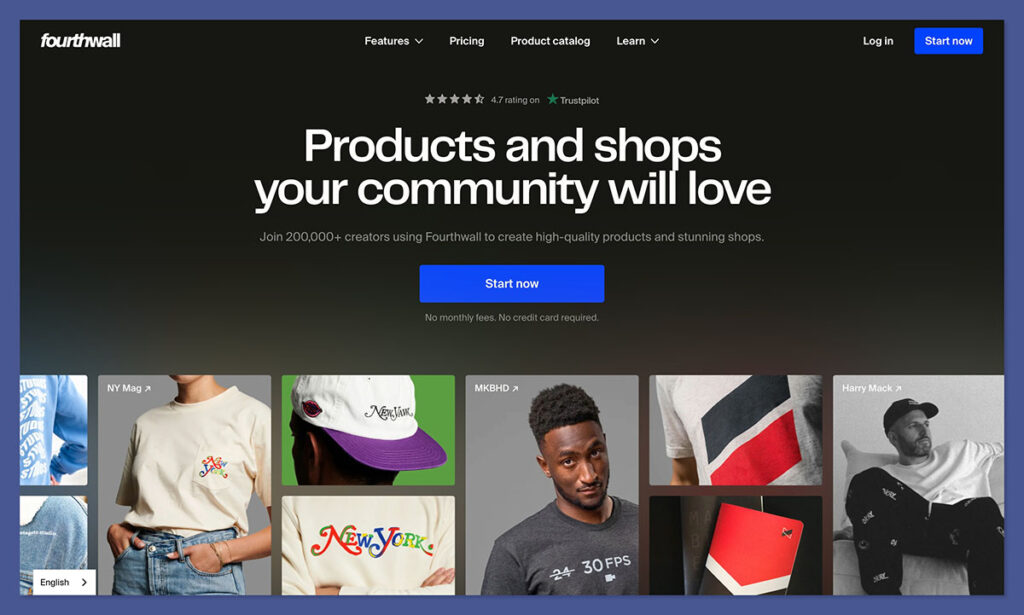
Fourthwall’s core proposition is to empower creators to launch a premium apparel line immediately, utilizing high-quality blanks like Stanley/Stella, and integrating a fully functional storefront with native TikTok and YouTube connectivity. Crucially, it eliminates the need for creators to juggle a separate e-commerce business, handling taxes, customer support, and fulfillment seamlessly. This comprehensive approach positions Fourthwall as the most accurate representation of an "all-in-one premium" solution in 2026.
The platform’s superiority lies in its ability to meet premium specifications across all three tested criteria while simultaneously offloading the operational burden that many creators find daunting. While competitors like Apliiq offer specialized features such as woven labels, and Tapstitch focuses on heavyweight blanks, users of these platforms often still face the complexities of managing a Shopify store, navigating sales tax regulations, and handling customer inquiries. Fourthwall’s integrated model effectively removes these significant barriers.
Blank Roster: A Tier Above the Rest
Fourthwall’s commitment to premium quality is immediately evident in its blank selection. The platform offers brands such as AS Colour, Stanley/Stella, Cotton Heritage, Lane Seven, and Independent Trading Co., which are typically found in designer collections, rather than the more budget-oriented options often seen in standard POD catalogs. While Gildan is available as a budget alternative, the emphasis remains on top-tier garments. This is the strongest premium blank lineup offered by any all-in-one creator platform.
Print Method Coverage: Unrivaled Versatility
Fourthwall stands out for its extensive print method coverage, natively supporting DTG, DTF, embroidery (including hats and apparel), screen printing, and sublimation. A notable innovation is their "Signature" product line, which features enhanced ink coverage designed to combat the common issue of DTG prints fading on dark cotton fabrics—a problem many platforms overlook. This comprehensive suite of printing techniques ensures that creators can achieve their desired aesthetic with exceptional fidelity.
| Method | Availability | Notes |
|---|---|---|
| DTG | ✓ | Standard |
| DTF | ✓ | For dark heavyweights |
| Embroidery | ✓ | Including hats and apparel |
| Screen print | ✓ | For bulk drops |
| Sublimation | ✓ | Full-color all-over |
Platform & Integrations: Seamless Creator Experience
Fourthwall’s platform is designed with the creator in mind. It offers native integrations with major social media channels like TikTok and YouTube, streamlining content creation and product promotion. The storefront is fully customizable, allowing brands to establish a cohesive online presence. Furthermore, the platform handles critical backend functions, including sales tax compliance and customer support, freeing creators to focus on design and audience engagement.
Pricing: Value Beyond the Base Cost
A Bella+Canvas 3001 base tee on Fourthwall costs approximately $11.75, comparable to rates offered by Printful and Printify. However, the true value of Fourthwall lies in its inclusive pricing model. Creators avoid the cumulative costs associated with maintaining separate subscriptions for e-commerce platforms (like Shopify), various applications for membership and POD management, and essential business services such as tax compliance and customer support.
Fourthwall offers a tiered pricing structure:
| Plan | Cost | What’s Included |
|---|---|---|
| Free | $0 | 5% on digital products and memberships, 0% on physical products. |
| Free (Legacy) | $0 | 3% on digital (for accounts created on/before Aug 25, 2025). |
| Pro | $19/month or $180/year ($15/mo equivalent) | 0% digital fee, 100GB storage, $10/mo sample credit, free .store domain, priority 24/7 support, unlimited team members, 3PL access for self-sourced products. |
The recent update to Fourthwall Pro pricing, at $19 per month or $180 annually, offers a significant value proposition for creators serious about building a premium brand. This plan provides enhanced features and a more favorable fee structure.
Pros of Fourthwall:
- Comprehensive all-in-one solution, eliminating the need for separate e-commerce management.
- Top-tier blank selection from respected brands.
- Widest range of print methods available.
- Integrated tax and customer support.
- Seamless social media integrations.
Cons of Fourthwall:
- May not offer the same depth of marketplace integrations as some competitors.
- The focus is on direct-to-consumer sales rather than marketplace listings.
Best for: Creators with an established audience on platforms like YouTube, TikTok, or Twitch who prioritize premium product quality and a fully integrated platform, avoiding the complexities of e-commerce operations.
Skip if: Your brand identity is heavily reliant on sewn-in woven labels as a primary differentiator, or if you require direct marketplace listings beyond your own storefront.
2. Apliiq: The Standard for Private-Label Branding
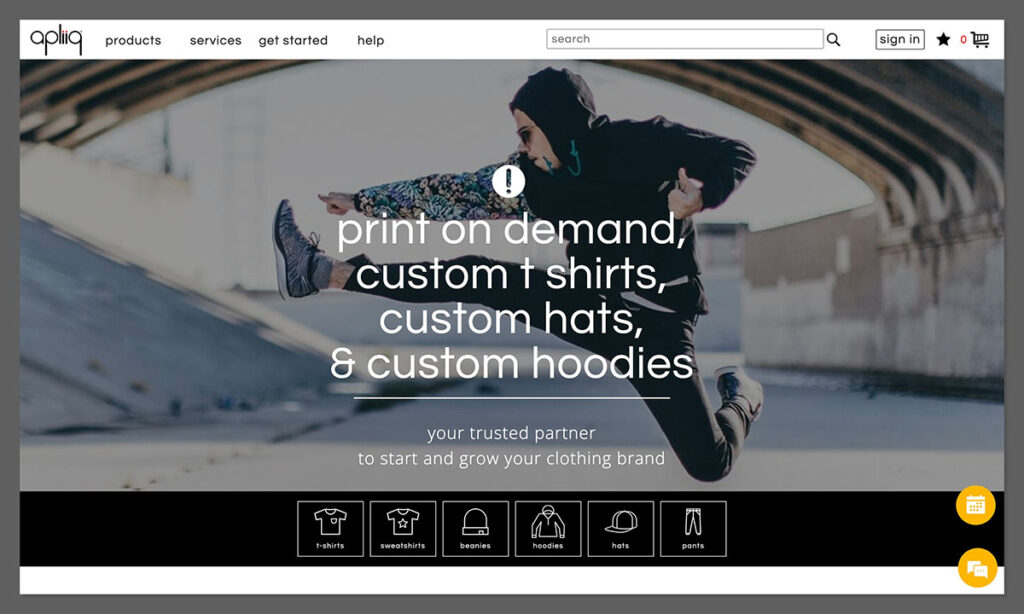
Apliiq secures the second position, primarily due to its unparalleled offering of private-label branding capabilities, particularly its remarkably low minimum order quantity (MOQ) of 100 units for sewn-in woven labels. This feature makes true brand-level customization accessible to startups, a feat typically requiring significantly higher MOQs from contract garment manufacturers. Apliiq is engineered for the fashion industry, with production facilities in Los Angeles and Philadelphia, ensuring stringent quality control and responsive, US-based support.
Branding Stack & Pricing: The Private-Label Advantage
Apliiq’s strength lies in its extensive branding options:
| Feature | Cost |
|---|---|
| Woven neck labels | $1.50-$3 each |
| Neck prints | $2.50 per unit |
| Embroidery (incl. 3D puff) | $6-$10 per placement |
| Base tee | $7-$12 |
| Full premium build (heavyweight blank, woven label, neck print, custom polybag) | $14-$18 per unit |
The platform offers a range of blanks from Bella+Canvas, AS Colour, and Yupoong, alongside customization options like hangtags, custom polybags, appliqué, and screen printing for bulk orders. The pricing structure, while seemingly higher for individual elements, allows for substantial gross margins (60-70%) when retail prices are set between $45 and $65, enabling products to exude a boutique quality.
Pros of Apliiq:
- Industry-leading low MOQ for woven labels.
- Comprehensive private-label branding options.
- High-quality blanks and production.
- US-based support and production.
Cons of Apliiq:
- Requires creators to manage their own e-commerce store.
- Longer production turnaround times (7-10 days with branding).
- Limited international fulfillment options compared to other platforms.
Best for: Streetwear and boutique brands targeting a US audience, with retail prices of $45 and above, where the woven label is a non-negotiable brand element, and a 10-day turnaround is acceptable.
Skip if: You need same-week shipping, extensive international fulfillment, marketplace integrations, or prefer a platform that manages e-commerce operations.
3. Tapstitch: The Heavyweight Streetwear Specialist
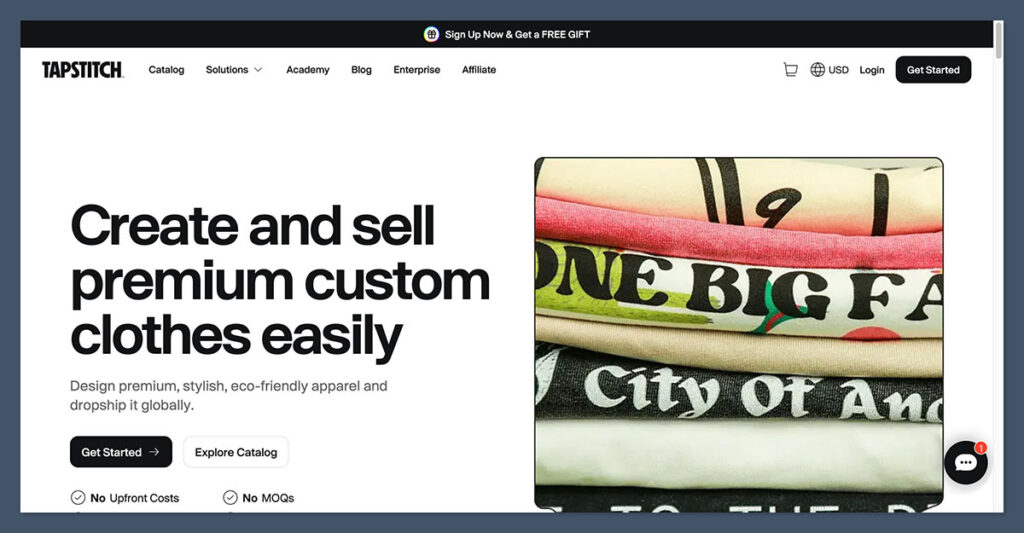
Tapstitch distinguishes itself by catering specifically to the demand for ultra-heavyweight apparel, a niche where other platforms fall short. While a standard Bella+Canvas 3001 typically weighs around 140 GSM, Tapstitch offers blanks at a substantial 430 GSM. This significant difference in fabric weight transforms a printed garment into a fashion-grade item, appealing to brands that emphasize the tactile quality and structure of their clothing.
Catalog & Specs: Focusing on Fabric and Fit
Tapstitch’s catalog features:
| Spec | Detail |
|---|---|
| Standard weight | 250-380 GSM |
| Premium tee | 430 GSM (12.7 oz), $22.99 base |
| Silhouettes | Oversized cuts, drop shoulders, vintage washes, technical fabrics |
| Print methods | DTG + DTF |
| MOQs / fees | None |
| Inks & packaging | Eco-friendly standard |
| Fulfillment | US + global shipping |
The combination of DTG and DTF printing is crucial for heavyweights. DTG excels with fine details on lighter fabrics, while DTF ensures vibrant, opaque prints on darker, heavier materials without the wash-out issues sometimes associated with DTG on dark cotton. The premium 430 GSM tee at $22.99 base necessitates retail prices between $55 and $75 to maintain healthy margins, making it ideal for brands whose identity is intrinsically linked to the fabric’s substantial feel.
Pros of Tapstitch:
- Exclusive focus on ultra-heavyweight blanks (430 GSM).
- Offers a distinct fashion-grade feel.
- Supports both DTG and DTF printing for versatility on heavy fabrics.
- No MOQs or monthly fees.
Cons of Tapstitch:
- Higher base costs due to premium blanks, requiring higher retail prices.
- Limited print method options compared to broader platforms.
- Less integrated creator platform features compared to Fourthwall.
Best for: Brands whose identity is built around the substantial feel and structure of heavyweight apparel, particularly in the streetwear segment.
Skip if: You aim for lower retail price points ($25-$35) or require a wider array of printing techniques beyond DTG and DTF.
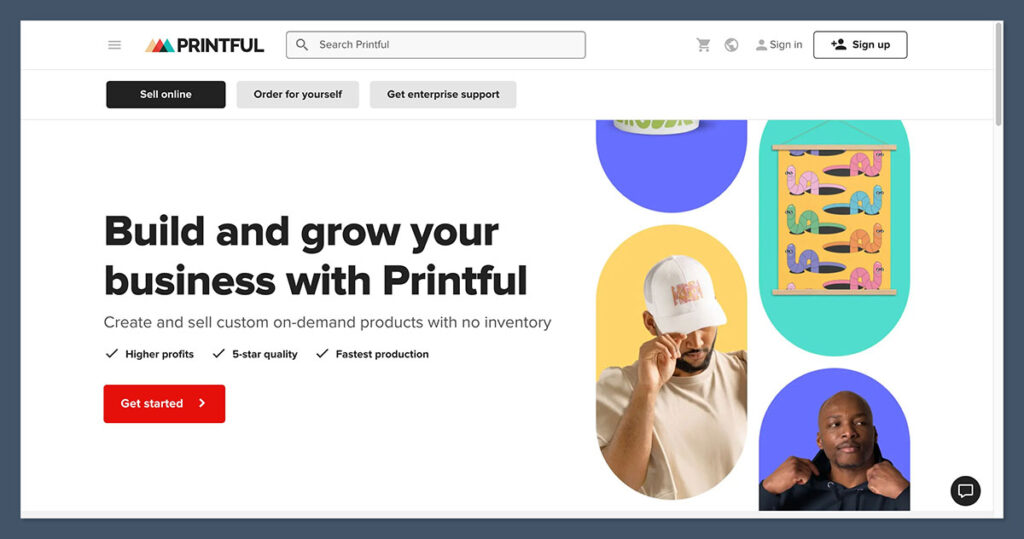
4. Printful: Global Fulfillment with Brand Enhancements
Printful is consistently recognized for its global fulfillment capabilities and offers significant branding options that enhance the customer experience. While its branding ceiling might not reach the level of true private labeling found with Apliiq, its printed inside labels and branded packaging provide a professional touch. The platform’s key advantage lies in its extensive network of fulfillment centers across the US, Mexico, Latvia, Spain, Canada, and the UK. This enables automatic order routing to the nearest facility, optimizing shipping times and costs for international customers.
Branding & Pricing: Building Brand Presence
Printful offers several branding elements:
| Feature | Cost |
|---|---|
| Custom inside labels | $0.99 |
| Custom outside labels | $2.49 |
| Bella+Canvas 3001 base | ~$11.75 |
| Full build with both labels | $15+ before shipping |
| Growth Plan | $24.99/month (free if store earns $12k/year), ~20% off products |
Branded pack-in cards, packing slips, and gift messages are also available, further personalizing the unboxing experience. The Growth Plan offers a discount on products, which becomes particularly beneficial for high-volume sellers. To maintain profitability, retail prices should ideally start at $30 or higher, allowing for the costs associated with labels and custom packaging to be absorbed without severely impacting margins.
Pros of Printful:
- Extensive global fulfillment network with automatic order routing.
- Good branding options for a premium feel.
- Wide range of integrations with e-commerce platforms and marketplaces.
- Discounts available through the Growth Plan.
Cons of Printful:
- Branding elements are primarily printed transfers, not woven labels.
- Requires creators to manage their own e-commerce operations.
- Profit margins can be tighter on lower-priced items once branding is added.
Best for: Creators seeking robust global fulfillment infrastructure and broad e-commerce platform integration, who are comfortable managing their own online store operations.
Skip if: True private-label branding (like woven labels) is a core requirement, or if you prefer an all-in-one platform that handles backend operations.
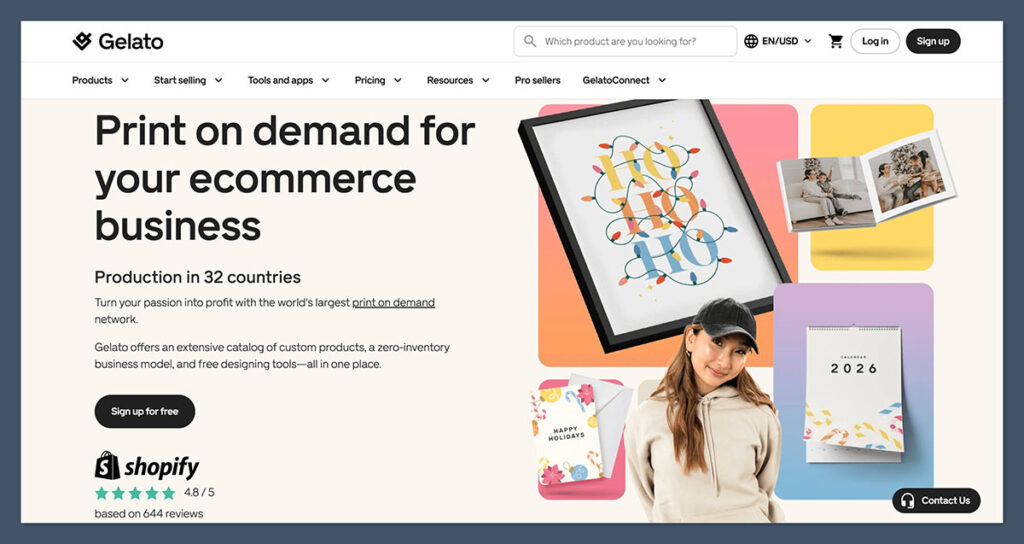
5. Gelato: Global Premium with Localized Fulfillment
Gelato excels in providing truly global fulfillment by strategically positioning its production facilities within destination countries. Unlike many platforms that ship from one or two central hubs, Gelato aims to fulfill approximately 90% of orders within the customer’s country. This localized approach drastically reduces international shipping times, ensuring that a customer in Germany receives their order in just a few days, a stark contrast to the 10+ day transit times common with less localized global shipping.
Network & Specs: Localized Production Power
Gelato’s network supports:
| Aspect | Detail |
|---|---|
| Production hubs | 30+ globally, fulfilling locally in ~90% of orders |
| Product range | Apparel, wall art, mugs, stationery, bags, phone cases |
| Quality | Focus on premium blanks and printing methods |
| Integrations | Shopify, Etsy, WooCommerce, API access |
| Branding | Branded labels and pack-in cards available (Gelato+ subscription required) |
| Sustainability | Focus on reducing carbon footprint through local production |
Production Times & Pricing: Efficiency and Scalability
Production times are competitive:
| Product | Speed |
|---|---|
| Posters & canvas | 1-4 days |
| Apparel | 2-6 days |
| Cards | 1-3 days |
Gelato’s pricing tiers offer scalability:
| Plan | Cost | Discount |
|---|---|---|
| Free | $0 | Standard pricing |
| Gelato+ | $25/month | 20% off products, branded labels unlocked |
| Gelato+ Gold | $129/month | 25% off products, 30% off branding |
Branded labels and pack-in cards cost $0.70 each. The Gelato+ Gold plan offers significant cost savings for high-volume creators.
Pros of Gelato:
- Exceptional localized global fulfillment network.
- Significantly reduced international shipping times.
- Commitment to sustainability through reduced carbon footprint.
- Competitive production times.
Cons of Gelato:
- Branding options require a paid subscription.
- Less emphasis on deep private-label branding compared to Apliiq.
- May not be the most cost-effective for US-only sellers compared to US-centric options.
Best for: Premium brands with an international customer base where localized, fast fulfillment is a key selling point.
Skip if: Your market is exclusively US-based, in which case Printful might offer a more streamlined experience.
6. TPOP: The Vanguard of Sustainable Premium in Europe
TPOP stands out for its uncompromising commitment to sustainability, positioning itself as the premier choice for eco-conscious brands, particularly within the European market. Unlike many POD platforms that use standard polybags, TPOP utilizes recycled, plastic-free packaging. Their production process is entirely paperless, utilizing water-based inks and operating from a single facility in France. This deeply integrated approach to sustainability is TPOP’s defining characteristic.
Catalog & Sustainability: Eco-Conscious from the Ground Up
TPOP offers a range of apparel and accessories, all produced with an environmental focus.
| Aspect | Detail |
|---|---|
| Packaging | Plastic-free, recycled materials |
| Inks | Water-based |
| Production | Paperless, single facility in France |
| Blanks | Organic cotton, recycled materials |
| Integrations | Shopify, Etsy, WooCommerce, API access |
| Pricing | Higher base costs, justified by eco-positioning |
Pricing: A Premium for Purpose
TPOP’s pricing structure supports its sustainable model:
| Plan | Cost | Includes |
|---|---|---|
| Free | €0 | Basic tools, no commission, 1 store, 100 creations |
| Growth | €30/month | 1,000 creations, 2 stores |
| Pro | €70/month | Unlimited creations, 5 stores, API access |
While base costs are higher than those for standard Bella+Canvas items, the eco-positioning allows for retail prices ranging from €45 to €55, appealing to consumers who value ethical production.
Pros of TPOP:
- Exceptional sustainability credentials, from packaging to production.
- Ideal for eco-conscious brands targeting the European market.
- Plastic-free packaging and water-based inks as standard.
- Competitive pricing for its niche.
Cons of TPOP:
- Higher base product costs may impact margins for some brands.
- Less focus on advanced branding features beyond sustainable packaging.
- Primarily serves the European market, with potentially longer shipping times elsewhere.
Best for: Brands whose core values revolve around environmental responsibility and who target a European customer base that prioritizes sustainable products.
Skip if: Your primary market is outside of Europe, or if extensive branding options beyond eco-friendly packaging are a priority.
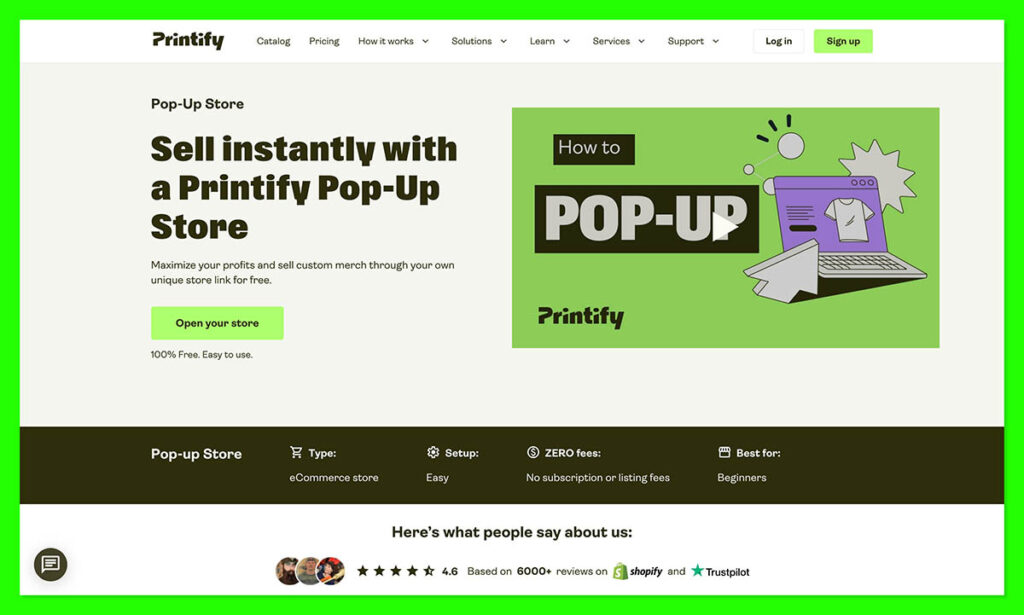
7. Printify: Cost-Effective Premium-Adjacent Through Provider Selection
Printify operates as a marketplace connecting creators with a vast network of print providers, offering a unique path to achieving premium-adjacent results at a lower cost. While the quality can vary significantly between providers, this model allows diligent creators to identify and "sample-and-lock" high-quality suppliers. This disciplined approach is crucial for ensuring consistency and meeting premium expectations, even on a budget.
Platform Mechanics: A Marketplace Approach
Printify’s model involves:
- Provider Network: A broad selection of print providers (80-140+ globally).
- Quality Variability: Requires careful selection and testing due to diverse provider standards.
- Cost Efficiency: Potential for lower base costs compared to integrated platforms, if providers are carefully chosen.
- Integrations: Wide compatibility with e-commerce platforms.
The Sample-and-Lock Workflow: Ensuring Premium Quality
To achieve premium results on Printify, a structured approach is essential:
- Sample Orders: Always order samples to verify print quality, fabric feel, and durability.
- Provider Selection: Identify top providers known for quality (e.g., Monster Digital, SwiftPOD, Dimona).
- "Locking" Providers: Once a reliable provider is found for a specific product, consistently assign orders to them.
- Consistency: This workflow prevents the inconsistency that can plague marketplace models.
Failing to implement this workflow means risking inconsistent product quality and customer dissatisfaction.
Pros of Printify:
- Potentially the lowest cost for premium-adjacent products.
- Vast network of providers offers flexibility.
- Scalable for founders focused on margin optimization.
Cons of Printify:
- Quality can be highly variable without careful provider selection.
- Requires significant effort in sampling and provider management.
- Less integrated platform experience compared to all-in-one solutions.
Best for: Founders who are budget-conscious, margin-disciplined, and willing to invest time in sampling and selecting specific print providers to ensure consistent quality.
Skip if: You prefer a hands-off approach or cannot dedicate the time to quality control and provider vetting.
8. CustomCat: Rapid US Production with Embroidery Expertise
CustomCat offers a compelling proposition for creators prioritizing fast production times within the United States, particularly for embroidered items. With a production window of one to three days from their Detroit facility, they provide an advantage in speed that few competitors can match. The platform offers genuine embroidery, a proprietary print process, and even Adidas blanks in their catalog, indicating a commitment to higher-quality offerings.
Production & Catalog: Speed and Quality
CustomCat’s offerings include:
- Speed: 1-3 day production from Detroit.
- Embroidery: High-quality, real embroidery services.
- Print Process: Proprietary DIGISOFT technology for vibrant prints, especially on dark fabrics.
- Blanks: Includes options like Adidas alongside standard Bella+Canvas.
- Integrations: Supports major e-commerce platforms.
Pricing: Strategic Subscription for Growth
CustomCat offers two pricing tiers:
| Plan | Cost | Discount |
|---|---|---|
| Lite | Free | Retail-tier base costs |
| Pro | $30/month ($25/month annual) | 20-40% off products, priority support |
The Pro plan becomes significantly advantageous for businesses processing over 500 orders per month, offering substantial savings that can dramatically improve net margins. Founders consistently generating over $1,500 in monthly revenue will find the Pro plan a wise investment.
Pros of CustomCat:
- Exceptional US production speed.
- High-quality embroidery and DIGISOFT printing.
- Competitive pricing, especially with the Pro plan for high volumes.
- Access to premium blanks like Adidas.
Cons of CustomCat:
- Less focus on comprehensive branding stack elements beyond print and embroidery.
- Global fulfillment network is not as extensive as Printful or Gelato.
- The full benefits of the Pro plan are realized at higher sales volumes.
Best for: US-focused brands where rapid fulfillment and high-quality embroidery are paramount. This includes creators selling embroidered hoodies or other items that benefit from quick turnaround times.
Skip if: Your primary need is extensive international fulfillment or if your brand heavily relies on advanced private-labeling features beyond what CustomCat offers.
Frequently Asked Questions About Premium POD
What defines a premium POD platform?
Premium POD is characterized by three key elements: blank quality (200 GSM+ from brands like AS Colour, Stanley/Stella, Cotton Heritage, or Lane Seven), a robust branding stack (sewn-in woven labels, hangtags, custom polybags, embroidery, appliqué), and appropriate print method match (DTG for detailed graphics, screen printing for bold designs, cut-and-sew for unique garment construction). Fourthwall leads as an all-in-one solution for blank quality and print methods, while Apliiq excels in branding stack completeness with its low woven label MOQ.
Can Printful or Printify support a true fashion brand?
Yes, for print and fulfillment, but with limitations on branding. Both platforms typically offer printed inside labels and standard polybag packaging. If your brand identity hinges on woven neck labels, hangtags, or luxury packaging, you would likely need to consider Apliiq or transition to bulk manufacturing. Printful and Printify are adequate for brands focused on graphics and priced under $35 retail. For brands emphasizing material, fit, and finish, they may fall short.
How long do POD prints last?
The industry standard for Direct-to-Garment (DTG) prints is generally accepted to be 50 washes or more before noticeable fading, provided the garment is washed inside out in cold water and air-dried. Hot washes and tumble drying can halve this lifespan. It is crucial to conduct wash tests for at least 30 cycles under aggressive conditions before scaling production to ensure print durability.
Is DTG on blanks sufficient, or is cut-and-sew necessary?
DTG printing on premium blanks is sufficient for the vast majority of designs, including full front, back, and chest logos. Cut-and-sew printing, where fabric panels are printed flat before being sewn into a garment, is typically only required for true edge-to-edge all-over prints or entirely custom silhouettes that cannot be achieved with stock blanks. The cost of cut-and-sew often only becomes justifiable for products retailing at $60 or more. Most premium brands find that focusing on heavier blanks and enhanced branding is more impactful than the added complexity of cut-and-sew.
What is the most cost-effective way to add authentic branding to a POD tee?
Printful’s $0.99 printed inside label is the most affordable option that provides a branded appearance. For actual sewn-in woven labels, Apliiq offers the lowest MOQ in the POD space, starting at $1.50 per unit with a 100-unit minimum. This is significantly lower than typical contract garment factory MOQs, which often range from 500 to 1,000 units, making Apliiq a practical entry point for startups seeking genuine label branding without substantial upfront investment.
When should a creator transition from POD to bulk manufacturing?
The shift to bulk manufacturing typically becomes financially advantageous when a specific SKU consistently sells over 100 units per month. At typical bulk MOQs of 100-300 units, per-unit costs can decrease by 40-60%, potentially doubling net margins on high-volume items. Below this sales velocity, the flexibility of POD, especially for testing new designs, remains superior. When transitioning, it’s vital to match the bulk manufacturing specifications (blank, print method, labeling) to the existing POD product to ensure a seamless customer experience.
Should samples be ordered for every product before launch?
Absolutely. It is imperative to order at least three samples of any new SKU before listing it for sale, regardless of the platform. This allows for a thorough inspection of print alignment, label placement, fabric feel, and packaging. Most platforms offer discounts on samples and free shipping. Skipping this quality assurance step is a false economy and can lead to costly errors, such as misaligned prints or incorrect label placement, as reported by users of platforms like Tapstitch and Apliiq. Samples should be viewed as essential quality insurance, not an optional expense.