The advertising landscape is undergoing a seismic shift with the emergence of new platforms, and OpenAI’s foray into this space with its official advertising platform is a prime example. This innovative solution allows businesses to place advertisements directly below ChatGPT responses, offering brands an unprecedented opportunity to reach millions of users at the precise moment they are seeking information or engaging with AI-powered content. While the platform is still relatively new, its rapid global rollout and the underlying principles of digital advertising suggest a significant evolution in how brands connect with consumers.
The strategic expansion of OpenAI’s advertising platform began in March 2026, with its initial launch in Australia and New Zealand. This was swiftly followed by the full self-service platform becoming accessible to advertisers in the United States on May 5, 2026. The momentum continued in June 2026 with the platform’s availability in Japan and South Korea, alongside the United Kingdom, marking its debut in a major European market. This phased rollout indicates a deliberate strategy to test, refine, and scale the advertising capabilities while gathering crucial user and advertiser feedback.

Navigating the Mysteries of AI Advertising
The rapid advancement of Large Language Models (LLMs) has naturally led to a degree of mystery surrounding their functionalities and applications, including advertising. However, for seasoned media buyers, the core logic of advertising platforms often remains consistent. As one media professional observed, "Once you know one advertising platform very well, the others will be easy to unlock because most of the logic will be the same." This principle holds true for OpenAI’s Ads Manager, which, despite its novel context, shares fundamental operational similarities with established digital advertising tools. Understanding these foundational elements is key to effectively leveraging this new advertising frontier.
An In-Depth Look at the Ads Manager
Upon accessing the Ads Manager, users are greeted with the Performance Trend dashboard. This central hub provides a clear overview of key metrics such as spend, impressions, clicks, and Cost Per Click (CPC), visualized across various date ranges. Advertisers can select from pre-defined periods like 7, 14, or 30 days, or opt for custom date ranges to analyze performance with granular precision. For a deeper dive into campaign data, the platform allows for segmentation and filtering by device or country, enabling targeted analysis and optimization.
The left-hand navigation menu offers access to essential sections, including an Overview, Campaign Management, Ad Group settings, and Ad creation tools. Crucially, the platform also integrates API key management. These API keys are instrumental in connecting third-party applications and tools to OpenAI’s models, facilitating automation of tasks such as ad copy generation, campaign analysis, content variation creation, and the seamless integration of AI into broader marketing workflows. In essence, an API key serves as a secure gateway for programmatic interaction with OpenAI’s powerful AI capabilities.

The Campaign Creation Workflow
The process of creating a campaign within OpenAI’s Ads Manager is designed to be intuitive and mirrors the hierarchical structure familiar to most digital advertisers: Campaign, Ad Group, and Ad. The initial step, naming the campaign, is often underestimated but is critical for effective tracking and maintaining account hygiene. A well-named campaign provides immediate clarity on its purpose and performance.
Following campaign naming, advertisers must select an Objective, choosing from options such as Reach, Clicks, or Conversions. The choice of objective is paramount, as it dictates the AI’s optimization strategy. If the goal is to maximize clicks, the algorithm will prioritize actions that lead to clicks. Conversely, selecting conversions will direct the AI to focus on achieving desired outcomes, such as purchases or sign-ups.
For campaigns with a conversion objective, it is imperative to first set up conversion events within the dedicated "Conversions" section, accessible via the left-hand menu under "Tools." This ensures that the platform can accurately track and attribute desired actions.

A key differentiator in OpenAI’s platform is the placement of location targeting at the campaign level, rather than within the ad group as is common on other platforms. Currently, advertisers can target their ads across seven distinct locations, offering a broad reach for initial campaign deployment.
The final step in campaign setup involves defining the budget. Advertisers can opt for either a daily budget or a total campaign budget. It is important to note that while the budget amount can be adjusted post-launch, the budget type (daily vs. total) cannot be changed once the campaign is active. This necessitates careful consideration of budget strategy before campaign initiation.
Structuring Effective Ad Groups
Within the Ad Group creation phase, maintaining a simple yet informative naming convention remains essential. This aids in organization and future analysis. The subsequent step involves setting the bid, which is directly influenced by the chosen campaign objective.

For instance, if the objective is Reach, bids might be structured around Cost Per Mille (CPM), aiming for the most cost-effective impressions. For Clicks, bids would typically be Cost Per Click (CPC), optimizing for user engagement. In the case of Conversions, bids would focus on Cost Per Acquisition (CPA), prioritizing profitable outcomes.
The platform thoughtfully includes a bid helper tool, offering guidance on appropriate bid amounts. This tool provides insights into whether the proposed bid is likely to be competitive and deliver results for the ad group. A visual indicator suggests "Strong Delivery" for robust bids, signaling competitiveness, while a "May not deliver" warning indicates a bid that may be too low to achieve campaign objectives.
Following bid configuration, advertisers specify a default destination URL for the ad group. This URL will serve as the landing page for new ads created within this group. Individual ads can also have their own specific destination URLs.

An optional but valuable step in ad group creation is the inclusion of "Context Hints." These hints allow advertisers to describe relevant conversations, topics, or keywords where their products or services might be pertinent. It is crucial to understand that these hints serve to guide the AI’s matching process rather than acting as strict, exact-match targeting rules. They provide valuable contextual information to the AI, enhancing the relevance of ad placements.
The Art of Ad Creation
The final stage before launching a ChatGPT ads campaign is the creation of the advertisements themselves. Similar to other campaign elements, a descriptive ad name is vital for performance tracking and UTM parameter integration, allowing for detailed analysis of creative effectiveness.
The Destination URL field is where advertisers can append their UTM parameters. While automatic UTM generation is not yet a feature within OpenAI’s Ads Manager, manual appending allows for robust tracking of creative performance through third-party analytics tools like Google Analytics.

The core of ad creation involves defining the creative elements. This typically includes:
- Visuals: Uploading compelling images or graphics that capture attention and align with brand messaging.
- Headline: Crafting concise and engaging headlines that entice users to learn more.
- Primary Text: Developing persuasive copy that clearly communicates the value proposition.
- Call to Action (CTA): Selecting a clear and actionable CTA button (e.g., "Learn More," "Shop Now," "Sign Up") to guide user behavior.
Advertisers have the flexibility to create multiple ads within an ad group. This can be achieved by duplicating an existing ad and modifying specific elements, such as the visuals, or by creating entirely new ads from scratch. This iterative approach allows for A/B testing of different creative strategies to identify the most effective combinations.
Once all campaign, ad group, and ad components are finalized, users proceed to a review stage. A thorough double-check of the campaign summary is recommended before hitting the "Publish" button. Upon publication, advertisers can then monitor the initial performance metrics on their dashboard.

Key Considerations for Campaign Setup
Successful campaign setup on OpenAI’s platform hinges on several critical moments:
- Objective Alignment: Ensure the campaign objective directly reflects desired business outcomes.
- Budget Strategy: Carefully consider daily vs. total budgets and their implications for campaign longevity and flexibility.
- Location Targeting: Leverage the available locations to reach the most relevant audiences.
- Conversion Tracking: Implement robust conversion tracking for objective-based campaigns to measure true ROI.
- Contextual Relevance: Utilize Context Hints to improve ad relevance and user experience.
- Creative Optimization: Test various ad creatives to identify what resonates best with the target audience.
Tracking Competitors in the AI Ad Space
As brands increasingly adopt ChatGPT for advertising, understanding competitor strategies becomes crucial. While OpenAI does not currently offer a proprietary "Ad Library" for competitor analysis, third-party tools are emerging to fill this gap. Trendos.com, for instance, provides a "Trendos Ad Radar" that reveals which competitors are advertising within AI-generated responses and their respective impression shares.
This tool offers valuable insights into competitors’ advertising efforts, including their ad copy, visuals, and destination URLs, broken down by date range, prompt groups, prompts, and country. Research from Trendos has indicated a significant surge in brands advertising on ChatGPT, with a 315% increase observed between May and June 2026. This rapid escalation in competition underscores the growing importance of strategic visibility and a deep understanding of competitor digital strategies within this evolving ecosystem.

The Broader Impact and Future Outlook
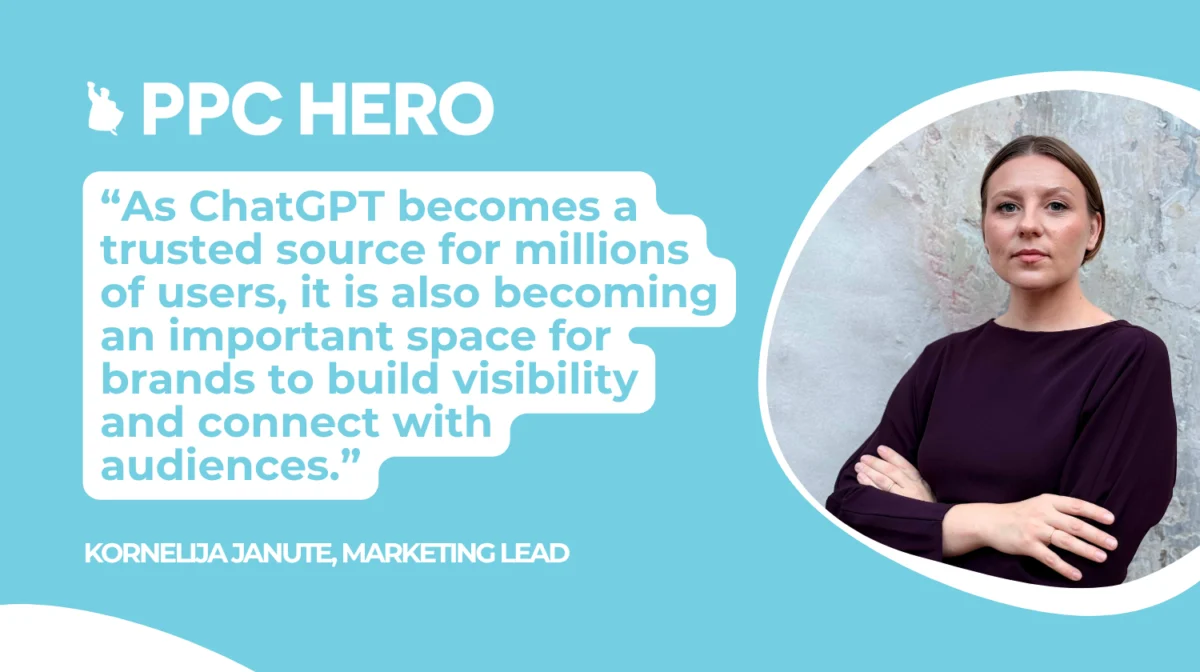
As ChatGPT continues to solidify its position as a trusted information source for millions worldwide, its advertising platform presents a compelling new avenue for brands to build visibility and foster meaningful connections with their audiences. The success of advertising on this platform will largely depend on the ability of marketers to adapt their existing skills and experience from other digital advertising channels to this novel and dynamic environment.
The implications of this new advertising paradigm are far-reaching. It signifies a move towards advertising integrated within conversational AI, offering a more contextually relevant and potentially less intrusive ad experience. For brands, it presents an opportunity to engage users at a point of active inquiry, potentially leading to higher conversion rates and a more profound impact.
The future of advertising is undoubtedly intertwined with the advancement of AI. OpenAI’s entry into this space is not merely a new platform; it’s a signal of the evolving nature of consumer interaction and the increasing importance of artificial intelligence in shaping brand-consumer relationships. As this technology matures and advertiser adoption grows, the strategies and best practices for advertising within AI-generated content will continue to develop, presenting both challenges and immense opportunities for businesses looking to stay ahead of the curve. The key will be to remain agile, data-driven, and focused on delivering value to users within these innovative new digital spaces.