Social media Return on Investment (ROI) represents the quantifiable value a business gains from its social media marketing and advertising endeavors, juxtaposed against the total investment of resources, time, and financial capital. This critical metric extends beyond mere financial returns, encompassing both tangible monetary gains and invaluable non-monetary benefits such as enhanced brand awareness, improved customer sentiment, and increased engagement. While the foundational ROI formula—((Value Generated – Costs) / Costs) x 100—remains straightforward, its application to the complex, multi-faceted realm of social media necessitates a more nuanced approach, particularly when assigning estimated values to outcomes that don’t directly translate into immediate revenue.
The imperative to accurately measure social ROI has never been more pronounced. In an era where digital presence dictates market relevance, businesses face increasing pressure to justify their social media expenditures and demonstrate a clear contribution to overarching business objectives. Despite its undeniable importance, measuring social ROI presents significant challenges for marketers. A recent study revealed that a substantial 68% of marketers express concern over their ability to effectively prove ROI from their social efforts, underscoring a pervasive struggle within the industry. This statistic highlights a critical gap between perceived value and demonstrable impact, often leading to scrutiny over social media budgets.

However, the efficacy of social media as a revenue driver is rapidly becoming undeniable. Global social commerce market data from Statista projects a staggering $908.5 billion in revenue by 2026, marking a robust 10.7% year-over-year growth. Furthermore, projections indicate that purchases made directly through social media platforms are set to exceed the monumental $1 trillion mark by 2028. With nearly 5.75 billion social media users anticipated worldwide by 2026, these platforms are not merely communication channels but powerful engines for economic growth and customer acquisition. For enterprise-level organizations, robust proof of social ROI is paramount for safeguarding investments and scaling strategic initiatives in a competitive landscape.
The Strategic Imperative of Social Media ROI Measurement
Tracking social media ROI is not just about financial accountability; it is a strategic imperative that informs decision-making, optimizes resource allocation, and fosters sustainable growth. By meticulously measuring social ROI, businesses can:

- Quantify Value for Stakeholders: Provide concrete evidence of social media’s contribution to the bottom line, securing executive buy-in and budget approval.
- Optimize Strategies: Identify which campaigns, content formats, and platforms deliver the highest returns, allowing for data-driven adjustments and resource reallocation.
- Enhance Accountability: Establish clear performance benchmarks and hold teams accountable for achieving measurable outcomes.
- Improve Customer Understanding: Gain deeper insights into audience preferences and behaviors, leading to more targeted and effective content creation.
- Gain Competitive Advantage: Benchmark performance against industry peers to identify opportunities for improvement and differentiation.
The case for robust social media investment is bolstered by compelling data: 46% of marketers report that utilizing social media directly improves sales, alongside indirect benefits such as increased website traffic, brand exposure, and lead generation. This confluence of direct and indirect impacts underscores social media’s multifaceted role in bolstering a company’s financial health. To effectively scale social strategies or defend existing budgets, a clear, data-backed narrative of ROI is indispensable.
Navigating the Complexities: Roadblocks to Accurate ROI Measurement
Despite its strategic importance, measuring social media ROI is inherently complex, primarily because social media rarely receives clean, last-click attribution for the value it generates. Understanding these common roadblocks is the first step toward developing a more comprehensive measurement strategy.

- Multi-Touch Attribution Across Channels: The customer journey is rarely linear. A potential customer might first encounter a brand through an Instagram post, later click an email marketing link, and ultimately convert via a paid search advertisement. In traditional single-touch attribution models, social media’s initial influence is often overlooked. Implementing multi-touch attribution models, which distribute credit across various touchpoints, or assisted conversion models, which recognize social media’s role in guiding customers through the sales funnel, is crucial for assigning fair credit.
- Delayed Conversions and Long Sales Cycles: The influence of social media can manifest weeks or even months after initial interaction. This is particularly true for B2B and enterprise buyers, where a LinkedIn post might plant a seed that blossoms into a closed deal a quarter later. Focusing solely on immediate, same-day results will invariably lead to an underestimation of social media’s long-term contribution. Measurement frameworks must account for longer conversion windows to capture this delayed impact.
- Quantifying Non-Monetary Value: Metrics such as brand awareness, sentiment, and share of voice are undeniably valuable assets, yet assigning a precise dollar figure to them remains a significant challenge. To bridge this gap, many organizations resort to proxies. For instance, a new follower might be assigned an estimated value based on the average customer lifetime value (CLV), or engagements, leads, and clicks can be given an estimated monetary value derived from historical conversion data and average deal sizes. While not perfectly exact, these estimations provide leadership with tangible figures for strategic planning.
- Data Silos Across Platforms: Each social media platform typically offers its proprietary analytics dashboard, creating a fragmented data landscape. Manually aggregating and synthesizing this data into a coherent picture is not only time-consuming but also prone to human error. This challenge, identified by Nielsen’s 2025 Marketing Report as a top barrier to calculating ROI, highlights the need for unified, centralized analytics platforms that streamline data collection and analysis, enabling marketers to spend more time on strategic action rather than data consolidation.
The Definitive Framework: Calculating Social Media ROI in Five Steps
The calculation of social media ROI involves a systematic comparison of the value generated by social media activities against the total cost of investment. The core formula serves as a starting point, but its effective application requires meticulous data collection and strategic valuation.
Social Media ROI = ((Value Generated from Social Media – Costs of Social Media Investment) / Costs) x 100
To accurately apply this formula, two primary components are essential: a comprehensive understanding of the total costs associated with your social media investment and a robust method for calculating the value generated.
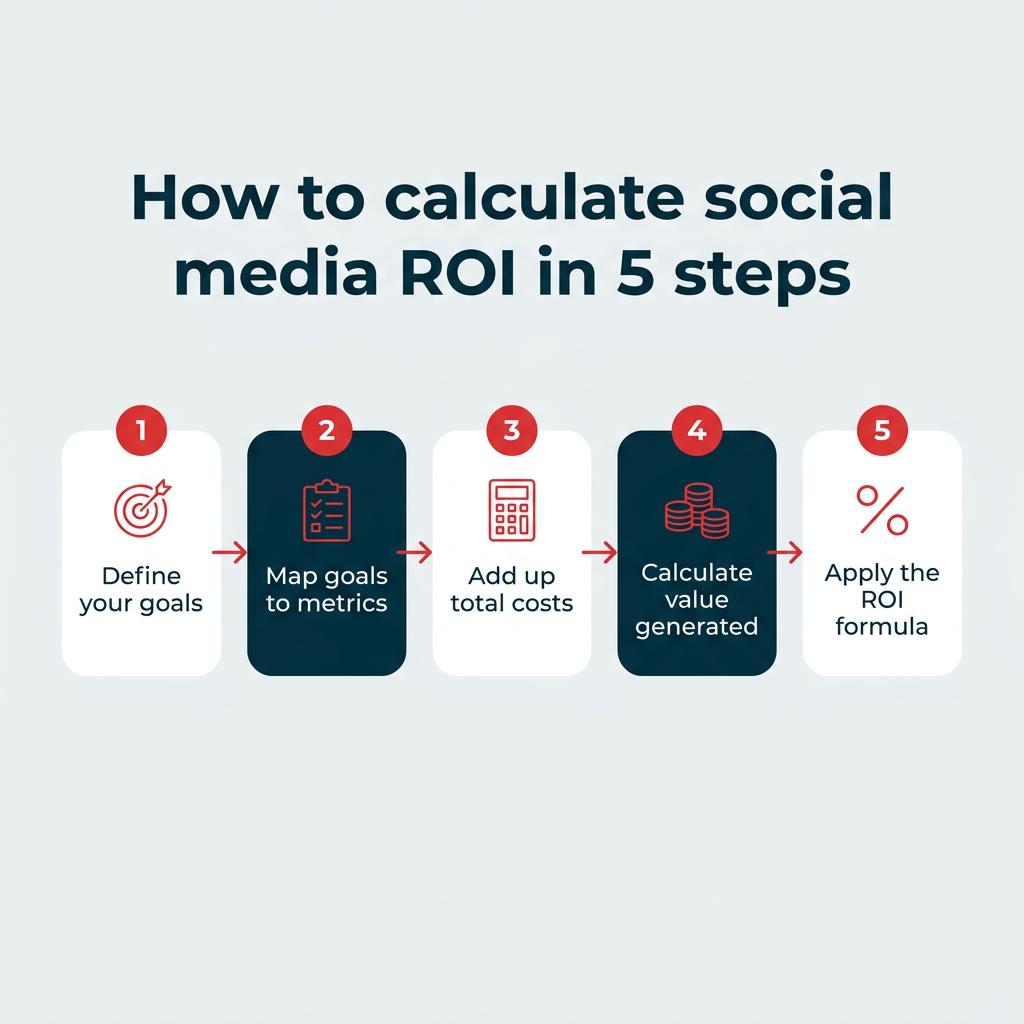
Here’s a detailed, five-step approach to calculating social media ROI with confidence:
-
Define Your Social Media Goals: The journey to accurate ROI measurement begins with crystal-clear objectives. Whether the overarching goal is sales generation, lead acquisition, brand awareness, or customer experience enhancement, the definition of "return" will vary significantly. Beyond broad objectives, setting specific, campaign-level goals is crucial. For instance, campaign goals might include increasing website traffic by 20% from Instagram, generating 50 qualified leads from LinkedIn, or boosting brand mentions by 15% on X (formerly Twitter). As Eileen Kwok, former Social & Influencer Marketing Strategist at Hootsuite, aptly notes, "The goals you have set at the start of the year could have already changed. Depending on the shifts your organization is making, or the changing social landscape, make sure you are revisiting your goals every quarter to see if any updates need to be made." Regular evaluation ensures alignment with evolving business priorities.
-
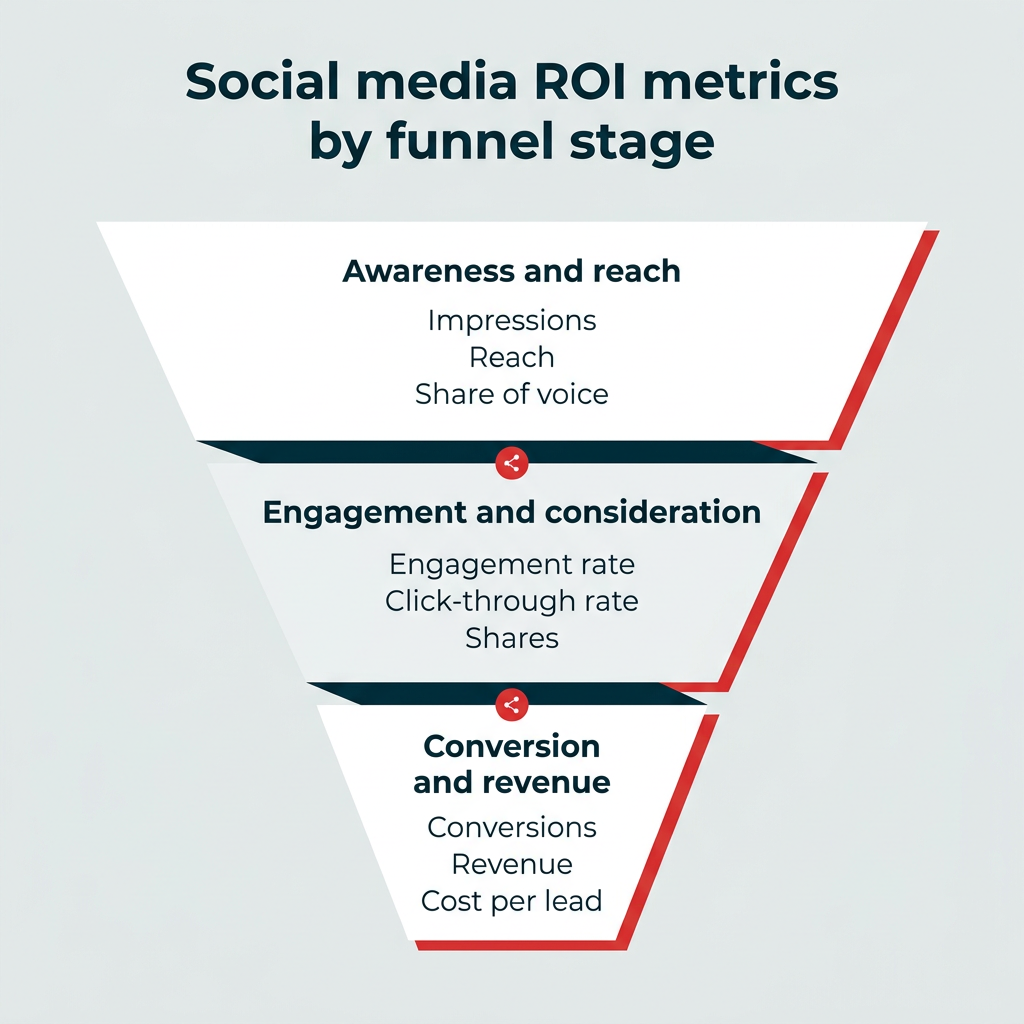
Map Goals to the Right Metrics: Once goals are established, the next step is to identify the specific social media metrics that will demonstrate progress toward these objectives. Not all metrics are created equal, and focusing on those directly relevant to your goals prevents data overload and ensures meaningful insights.
- Awareness Goals: Track impressions, reach, brand mentions, share of voice, and follower growth rate. These metrics quantify how many people are exposed to your brand and engaging in conversations about it.
- Engagement/Consideration Goals: Monitor engagement rate, click-through rate (CTR), saves, shares, comments, and video views. These indicators reveal how deeply your audience interacts with and values your content, signaling a potential for future conversions.
- Conversion/Revenue Goals: Focus on direct conversions, revenue attributed to social media, cost per lead (CPL), cost per acquisition (CPA), and return on ad spend (ROAS). These are the hard numbers that directly impact the bottom line and resonate most with executive stakeholders.
-
Add Up Your Total Social Media Costs: A comprehensive calculation of costs is essential for an accurate ROI figure. This encompasses all financial, time, and resource investments over a specified period (e.g., a quarter, a campaign duration). Common social media costs include:
- Personnel Costs: Salaries or contractor fees for social media managers, content creators, strategists, and analysts.
- Platform Fees: Subscriptions for social media management tools (e.g., Hootsuite), analytics platforms, and content creation software.
- Advertising Spend: Budgets allocated to paid social media campaigns across various platforms.
- Content Creation: Expenses for graphic design, video production, photography, copywriting, and licensing.
- Influencer Marketing: Payments to influencers and associated campaign management costs.
- Training & Development: Costs for courses, workshops, and certifications for social media teams.
- Tools & Technology: Any other software or hardware specifically used for social media operations.
- Contest/Giveaway Expenses: Costs associated with prizes and promotional activities.
- Opportunity Costs: While harder to quantify, this refers to the value of other activities that could have been pursued with the same resources.
Granular detail in cost accounting ensures a realistic denominator in the ROI formula.
-
Calculate the Value Generated: This step involves quantifying both the monetary and non-monetary returns from your social media efforts.
- Monetary Value: This includes direct sales attributed to social media, lead generation leading to closed deals, reduced customer support costs through social channels, and increased website traffic that converts to revenue.
- Non-Monetary Value: This encompasses brand awareness, improved brand sentiment, increased customer loyalty, higher customer satisfaction, and enhanced thought leadership.
To integrate non-monetary outcomes into the ROI formula, they must be assigned an estimated dollar value. A practical approach is to use metrics like customer lifetime value (CLV) for new followers or brand advocates, or assign estimated values per lead, click, or engagement based on historical conversion rates and average transaction values. While these are estimations, they provide a crucial tangible number for executive reporting.
-
Apply the ROI Formula: With total value generated and total costs established, the final step is to apply the ROI formula. The result, typically expressed as a percentage, provides a clear indication of your social media’s financial efficiency. A positive ROI signifies that your social media investments are generating more value than they cost, validating your strategy. Conversely, a negative ROI indicates that expenditures exceed returns, signaling an urgent need for strategic adjustment and optimization. This calculation serves as a powerful diagnostic tool, guiding future resource allocation and tactical modifications.
Defining "Good" Social Media ROI: Benchmarks and Context
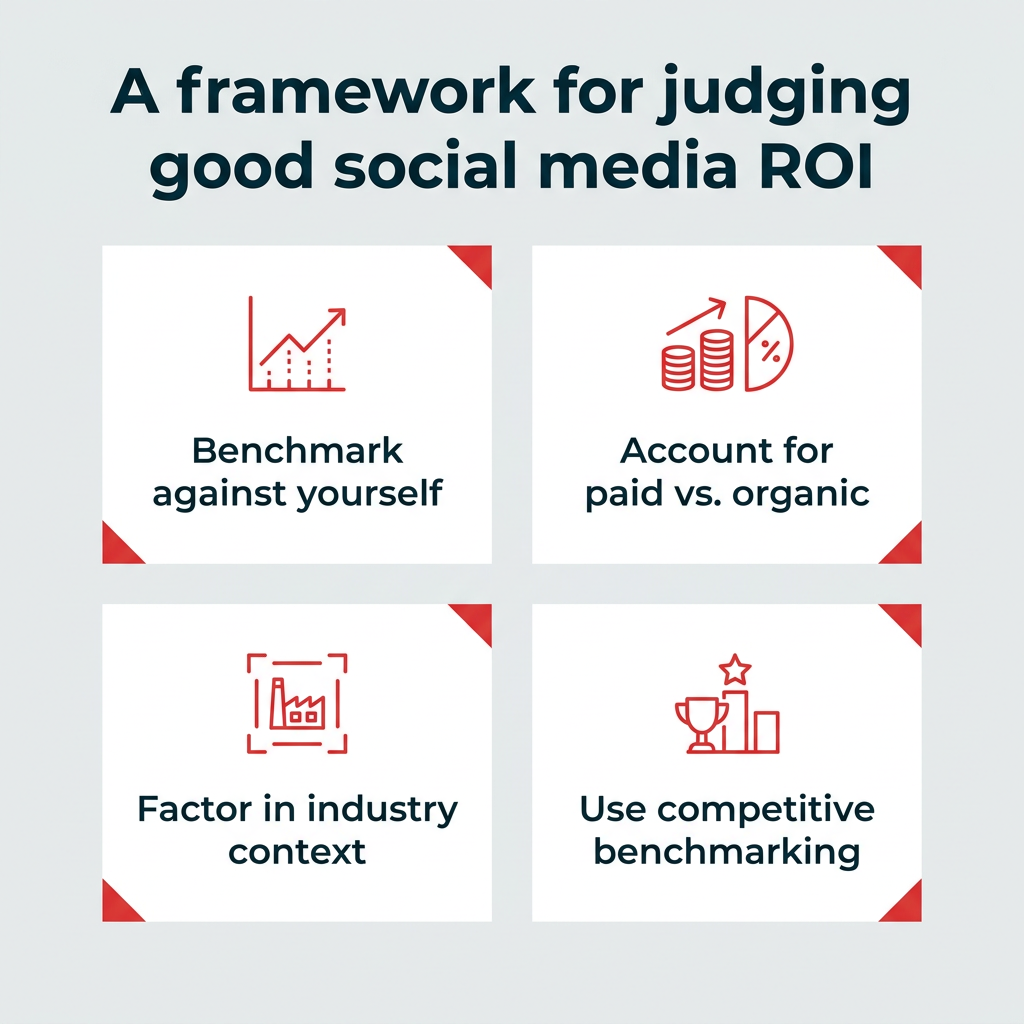
What constitutes a "good" social media ROI is not a universal constant; it is highly dependent on industry specifics, organizational goals, and whether the focus is on paid or organic efforts. Rather than pursuing a single, elusive benchmark, a more effective framework for evaluating ROI involves multiple contextual layers:

- Positive ROI: Any ROI above zero indicates a profitable investment, meaning your social media efforts are generating more value than they consume. This is the fundamental baseline for success.
- Historical Performance: The most relevant benchmark is often your own past performance. Demonstrating consistent improvement in ROI over time, or exceeding previous campaign results, signals strategic effectiveness and ongoing optimization.
- Industry Benchmarks: Comparing your ROI against industry averages or direct competitors provides valuable context. Outperforming peers in your niche indicates a competitive advantage and efficient resource utilization.
- Goal Alignment: A "good" ROI is one that effectively supports and contributes to your specific business goals. A campaign focused on brand awareness might have a lower direct monetary ROI but deliver significant long-term value through increased brand equity and future customer acquisition.
- Paid vs. Organic: Paid social campaigns typically have more direct and measurable ROI due to built-in tracking and attribution tools, often targeting immediate conversions. Organic social, while harder to attribute directly, builds long-term brand loyalty, community, and earned media value, which contribute to a more diffuse but equally important ROI.
Ultimately, a positive, consistently improving ROI that competitively positions your brand within its industry is a strong indicator of a successful social media strategy.
Strategies for Enhancing Social Media ROI
Improving social media ROI is an ongoing process of experimentation, meticulous tracking, and continuous refinement. By adopting a proactive and data-driven approach, businesses can significantly boost the returns on their social media investments.
- A/B Experimentation: The dynamic nature of social media necessitates constant testing. Running A/B tests on various elements of your content and campaigns is crucial. Experiment with different content topics, formats (e.g., image vs. video vs. carousel), calls-to-action, ad creatives, target audiences, and posting times. For instance, an internal Hootsuite experiment revealed that Instagram carousels surprisingly outperformed Reels in terms of engagement and reach, demonstrating that higher-effort formats are not always superior. Such insights allow for scaling successful content and optimizing ad spend for higher social media advertising ROI.
- Competitor Analysis: Monitoring competitor strategies offers invaluable insights. While public profiles reveal basic engagement, advanced tools like Hootsuite Analytics enable deeper competitive tracking across channels. This allows you to identify top-performing content, trending hashtags, and successful content styles used by competitors, informing your own strategy and helping you capitalize on proven tactics.
- UTM Parameters for Conversion Tracking: Urchin Tracking Module (UTM) parameters are an indispensable tool for attributing website traffic and conversions directly to specific social media efforts. By adding unique tags to URLs shared on social media, marketers can precisely track how many users click through from a particular post, visit a landing page, and ultimately complete a desired action (e.g., purchase, sign-up). This granular data is vital for connecting social media activity to tangible ROI.
- Leveraging Social Commerce: With social commerce projected to be a trillion-dollar market, integrating shoppable posts and in-app checkout functionalities is a direct path to boosting ROI. These features transform engagement into immediate sales without requiring users to leave the platform. Measuring social commerce ROI involves tracking in-app purchases, product tag clicks, and checkout completions directly within the platforms’ commerce tools. The closed-loop nature of shoppable ads often provides cleaner attribution compared to other social media initiatives.
- Optimizing Content Formats: Not all content formats yield equal returns. Analyzing performance data to identify which formats (e.g., long-form video, interactive stories, static images, carousels) drive the best results on each platform allows marketers to double down on winners and reallocate resources from underperforming content. This data-driven approach ensures content creation is aligned with audience preferences and platform algorithms.
- Refining Audience Targeting: For paid social campaigns, precise audience targeting is paramount for maximizing ROI. Utilizing retargeting to re-engage warm audiences, building lookalike audiences from high-value customers, and leveraging social data to narrow targeting parameters significantly improves return on ad spend (ROAS). The more precisely an audience is defined, the less budget is wasted on irrelevant impressions, leading to higher conversion rates.
Advanced Tools for Comprehensive ROI Tracking and Reporting
Effectively tracking social media ROI across diverse channels demands a sophisticated mix of tools. While native platform analytics provide channel-specific data, and web analytics (like Google Analytics) track conversions, the challenge lies in unifying these disparate data sources. CRM tools help connect social interactions to customer lifecycles and revenue, but a centralized social media analytics platform is often the lynchpin for bringing it all together.
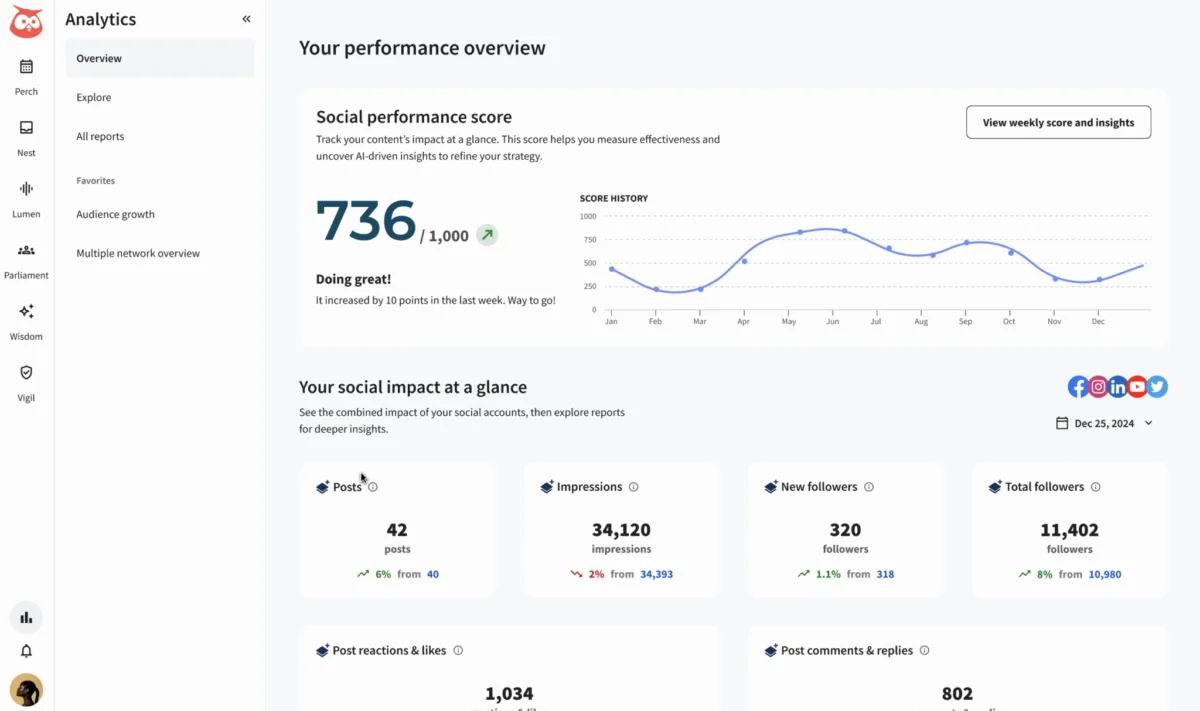
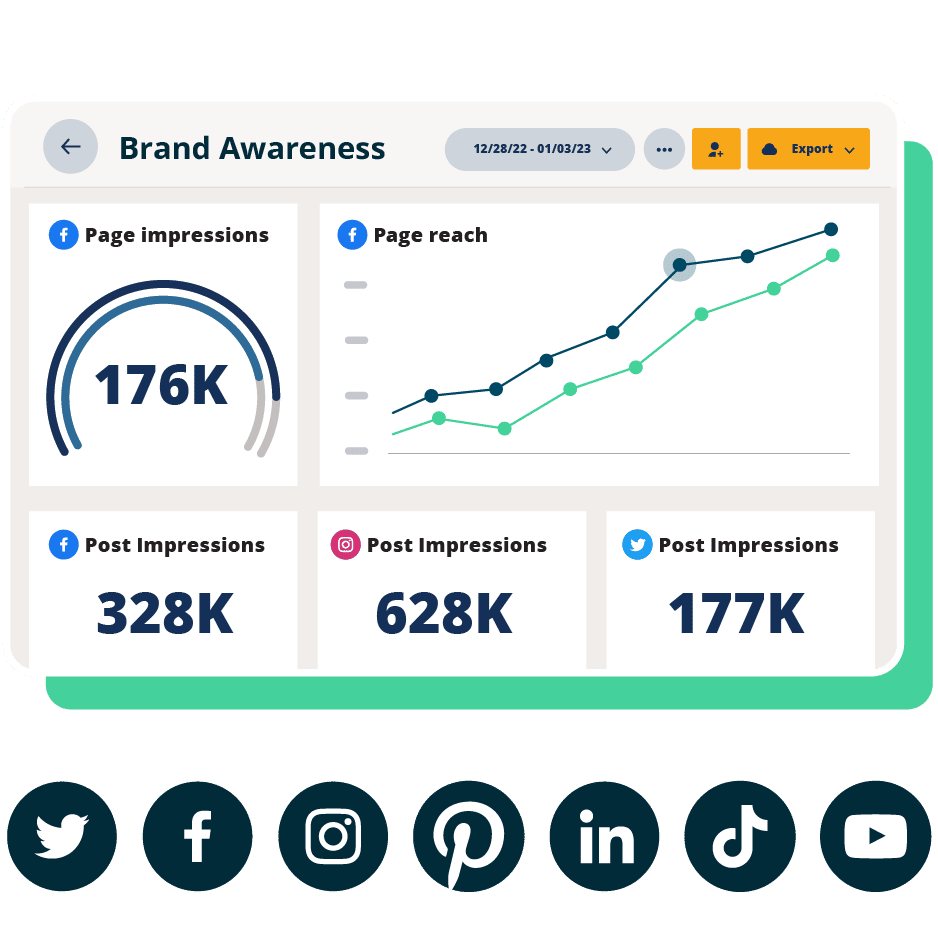
Hootsuite Analytics exemplifies such a unified platform, designed to consolidate social data from various networks into a single dashboard. This integration eliminates data silos, allowing marketers to connect social activity directly to business outcomes without the laborious task of juggling multiple interfaces. Key functionalities include:

- Unified Performance Tracking: Track engagement metrics, reach, and follower growth across all channels over time, providing a holistic view of content performance and audience connection. This allows for fine-tuning campaigns and adapting content strategies based on cross-platform insights.
- Advanced Analytics for Business Outcomes: Hootsuite’s Advanced Analytics links social media activity directly to critical ROI outcomes like sales, sign-ups, and conversions. This enables marketers to pinpoint which specific posts or campaigns are driving tangible business results, facilitating a focus on high-impact activities.
- Competitive Analysis: With features allowing tracking of up to 20 competitors on Advanced and Enterprise plans, Hootsuite helps identify competitor top posts, trending hashtags, and content styles. This competitive intelligence allows brands to adjust their strategies based on proven successful tactics within their niche, fostering a competitive edge.
- Industry Benchmarking: The platform offers social media benchmarking tools to compare your performance (profile impressions, reach, followers, engagement rates) against industry averages. This vital context helps determine if your social media ROI is competitive and highlights areas for strategic improvement and growth.
- Customizable Reporting: Hootsuite’s reporting tool enables the creation of visually appealing, in-depth reports for both paid and organic social media channels. Starting from scratch or utilizing templates, these reports effectively communicate the impact of social campaigns to executive stakeholders, translating complex data into actionable insights.
- Integration with Web Analytics and CRM: Beyond social-specific metrics, Hootsuite integrates with platforms like Google Analytics and Adobe Analytics, allowing marketers to trace how social efforts contribute to broader business goals such as website conversions, sign-ups, and purchases. This comprehensive view connects individual social posts to the ultimate bottom line.
- Real-time Analytics and Link Tracking: Real-time analytics empower marketers to identify emerging trends and optimize campaigns on the fly, rather than waiting for month-end reports. Coupled with link tracking and web attribution tools, unique post IDs can connect specific social activities to precise web conversion data, providing a robust, data-backed narrative of social media’s impact.
Reporting Social Media ROI to Executive Stakeholders
Effective communication of social media ROI to executive stakeholders is crucial for securing continued investment and elevating the strategic importance of social media within the organization. Reports must be tailored to the audience, focusing on business outcomes rather than vanity metrics.
Best practices for impactful reporting include:

- Focus on Business Impact: Translate social metrics into language that resonates with executives, emphasizing how social media contributes to revenue, lead generation, cost savings, or market share.
- Clarity and Conciseness: Present data clearly, using visuals like charts and graphs. Avoid jargon and extraneous details. Executives need high-level insights, not raw data dumps.
- Highlight Trends Over Time: Show progress and performance trajectories over weeks, months, or quarters. This demonstrates sustained impact and the effectiveness of ongoing strategies.
- Connect to Organizational Goals: Explicitly link social media performance back to broader company objectives, illustrating how social media is a strategic asset supporting overarching business growth.
- Provide Actionable Insights: Don’t just present data; offer recommendations based on your findings. Explain what worked, what didn’t, and what strategic adjustments are planned.
- Benchmark Performance: Include comparisons against industry standards or competitors to provide context and demonstrate competitive standing.
- Transparency on Challenges: Acknowledge difficulties in measurement, such as multi-touch attribution, and explain how these are being addressed. This builds trust and credibility.
As Eileen Kwok emphasizes, "You don’t know what your ROI is until you’ve laid out the goals you are tracking towards." This foundational principle underscores that without clear objectives, any measurement is inherently meaningless. By adhering to these reporting best practices, social media professionals can effectively advocate for their efforts and solidify social media’s position as a vital contributor to business success.