The global eCommerce landscape is currently grappling with a systemic efficiency crisis rooted in the technological fragmentation of product discovery tools, a challenge that VWO AB Tasty seeks to address with the launch of its newly architected Commerce platform. For over a decade, online retailers have operated under the assumption that search functionality, product recommendations, and digital merchandising are distinct silos requiring specialized point solutions. This architectural philosophy has led to a "fragmentation tax," where disparate data streams and conflicting logic engines result in inconsistent shopper experiences and significant operational overhead for growth teams. The introduction of the VWO AB Tasty Commerce platform marks a pivot toward a unified architectural model, consolidating these essential functions into a single workspace governed by a shared artificial intelligence layer and a synchronized product catalog.
Industry analysis suggests that the average enterprise eCommerce team utilizes between three and seven different vendors to manage the journey from a user’s initial search query to the final checkout. When search resides in one tool, recommendations in another, and merchandising rules in a third, the digital storefront often lacks a "single source of truth." This fragmentation means that a promotional "boost" applied to a specific product line in the merchandising dashboard may not automatically reflect in the site’s search results or personalized recommendation carousels. The VWO AB Tasty Commerce platform eliminates these discrepancies by ensuring that every facet of product discovery—from the logic used to sort search results to the algorithms driving "frequently bought together" suggestions—is pulling from the same real-time data repository.

The Evolution of Product Discovery and the Fragmentation Problem
To understand the significance of this launch, one must examine the chronology of eCommerce technology. In the early 2010s, the "best-of-breed" movement encouraged retailers to seek out the most specialized tool for every specific task. While this led to high-performance individual features, it created a "Frankenstein" tech stack. As data privacy regulations tightened and the cost of customer acquisition rose, the inability to share behavioral signals across these tools became a liability. A shopper’s search intent (e.g., looking for "waterproof hiking boots") often failed to inform the recommendations they saw on the home page seconds later because the two systems did not communicate in real-time.
VWO AB Tasty’s new platform is a ground-up redesign intended to rectify this historical decoupling. By unifying the catalog, the platform ensures that behavioral signals captured during a search session immediately inform the ranking of products across all other discovery channels. This structural shift is designed to move eCommerce teams away from manual integration tasks and toward strategic optimization.
Core Technological Innovations: The Four Pillars of the Commerce Platform
The platform is built upon four primary capabilities that represent a departure from traditional legacy systems: AI-powered strategy creation, global boost-and-bury logic, unified facet management, and revenue-centric reporting.
1. AI-Powered Strategy and Natural Language Processing
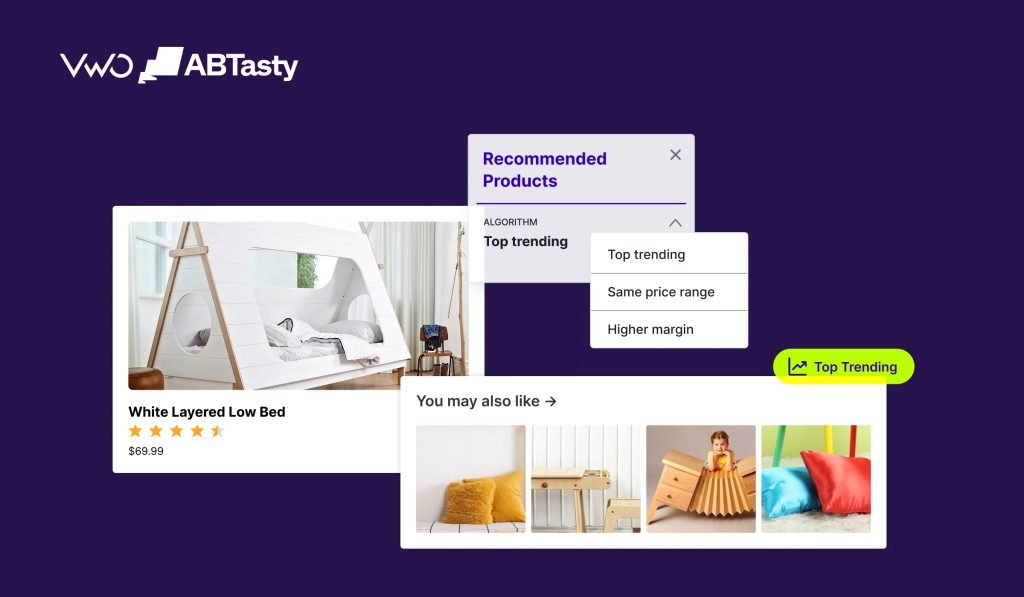
One of the most significant barriers to agile merchandising has been the complexity of configuring rules. Traditionally, a merchandiser would have to manually assemble nested filter logic, sort conditions, and promotion parameters to execute a campaign. VWO AB Tasty has integrated a generative AI layer that allows users to describe their goals in plain English. For example, a user can input a command such as "prioritize high-margin summer apparel for returning customers in coastal regions," and the AI translates this intent into a deployable strategy across search and category pages. This reduces the time-to-market for seasonal campaigns and allows teams to test more hypotheses in less time.
2. Global Boost and Bury Rules
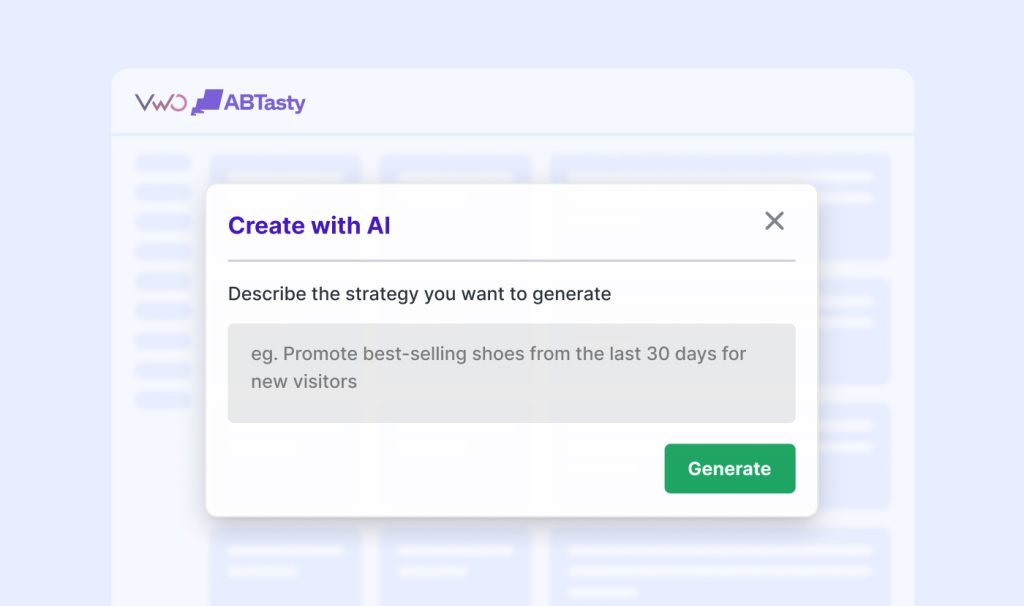
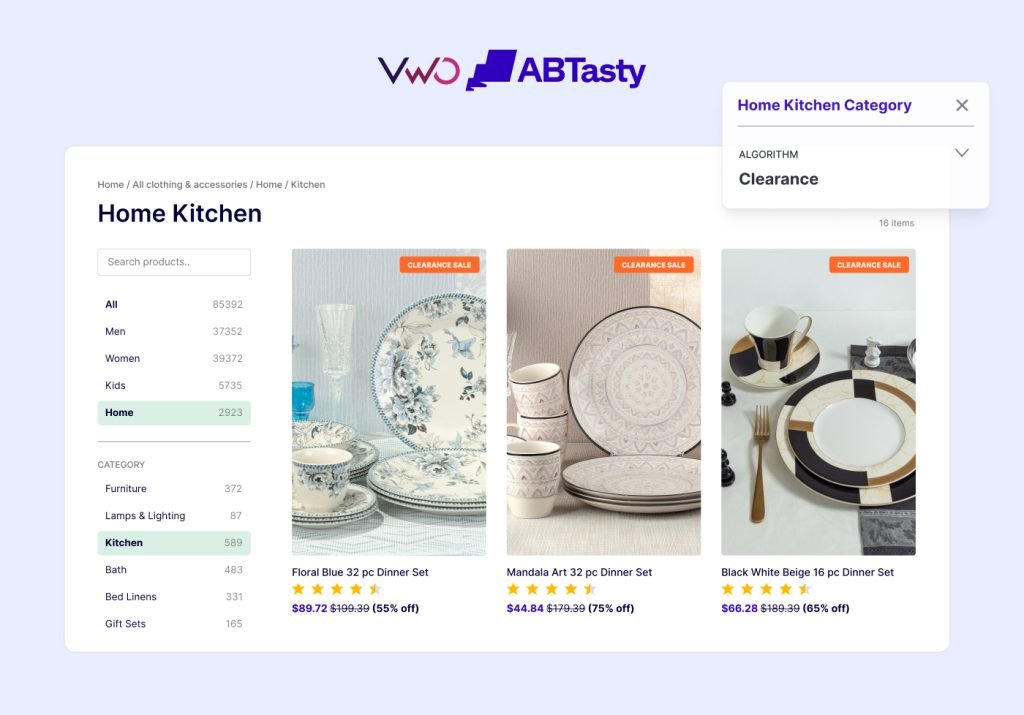
In a fragmented environment, launching a new product requires a merchandiser to update category pages, search rankings, and recommendation widgets independently. The VWO AB Tasty Commerce platform introduces "Global Boost & Bury," a centralized control mechanism. When a product is boosted globally, the change propagates through the entire discovery ecosystem simultaneously. This ensures brand consistency and prevents the "logic drift" that occurs when different tools have conflicting priorities, such as a search engine prioritizing relevance while a recommendation engine prioritizes inventory clearance.
3. Unified Facet and Sort Management
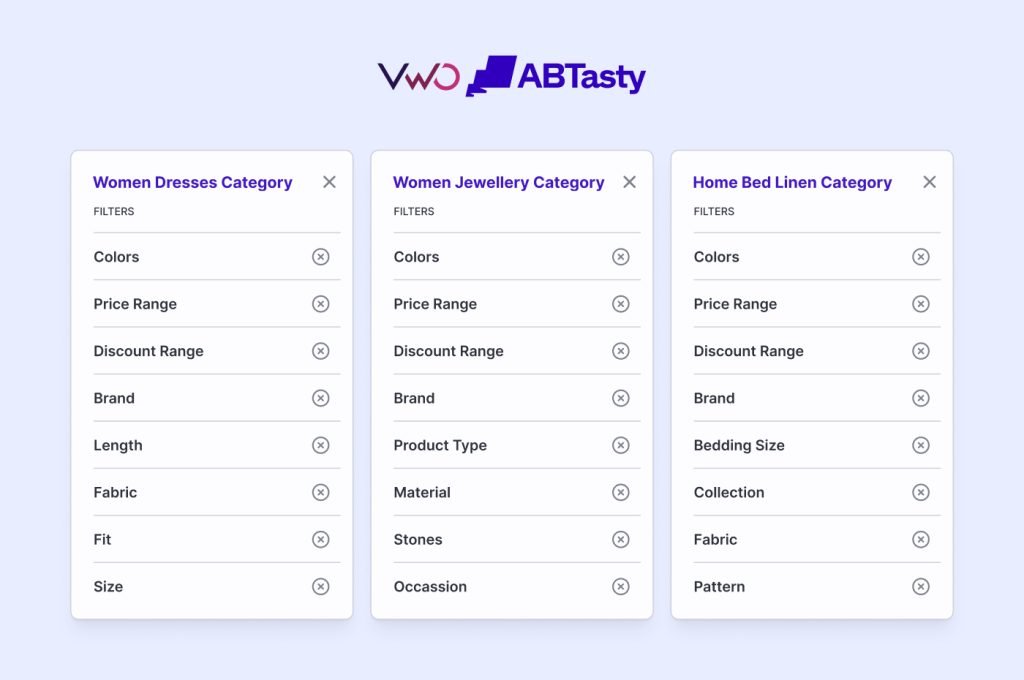
Facets—the filters shoppers use to narrow down results by size, color, price, or brand—are critical to conversion. Data indicates that nearly 40% of shoppers use filters during their journey, and any inconsistency in these filters can lead to immediate site abandonment. The Commerce platform centralizes the management of these facets. Whether a user is browsing a specific category or looking at search results, the filtering logic remains identical. This creates a seamless UI/UX that mirrors the reliability of physical retail environments.
4. Revenue-First Reporting and Optimization Suggestions
Most legacy commerce platforms focus on "micro-metrics" such as Click-Through Rate (CTR) or "no-results" rates for search queries. While useful, these metrics often fail to correlate directly with business growth. VWO AB Tasty’s reporting dashboard shifts the focus to "macro-metrics," including revenue uplift, assisted revenue, and overall strategy performance. Furthermore, the platform’s AI doesn’t just report on past performance; it provides proactive suggestions. If the data shows that certain high-performing products are buried too deep in search results, the system will prompt the user to "Update sorting to prioritize recent high-performers," effectively acting as an automated consultant for the merchandising team.
Market Context and Economic Implications
The release of this platform comes at a time when eCommerce margins are under pressure from rising operational costs. By consolidating multiple tools into one, enterprises can significantly reduce their Total Cost of Ownership (TCO). Beyond the direct licensing savings, the reduction in "tech debt"—the cost of maintaining complex integrations between disparate tools—provides a substantial boost to the bottom line.
Industry experts note that the "unified catalog" approach is particularly vital for omnichannel retailers. As shoppers move between mobile apps, desktop sites, and in-store kiosks, they expect a coherent brand experience. A unified discovery platform ensures that the "source of truth" remains constant regardless of the touchpoint. This is architecturally distinct from many competitors who offer "suites" that are actually a collection of acquired tools stitched together with APIs. VWO AB Tasty’s platform was built from the ground up to be a single entity, which offers superior data latency and synchronization compared to integrated legacy suites.
Supporting Data: The Cost of Poor Discovery
The necessity for a unified platform is underscored by current consumer behavior data. According to recent retail studies:
- Search Abandonment: Approximately 76% of consumers report that they will abandon a site if they cannot find what they are looking for within the first few seconds of a search.
- Relevance Gap: Over 50% of shoppers feel that the product recommendations they receive are irrelevant to their current shopping intent.
- Operational Drag: eCommerce managers report spending up to 30% of their work week simply syncing data between different marketing and sales tools.
By addressing these three pain points, VWO AB Tasty Commerce positions itself as a solution not just for IT departments, but for the business units responsible for P&L. The ability to react to market trends in real-time—such as a sudden surge in demand for a specific product category—gives retailers a competitive edge that is impossible to achieve with fragmented systems.
Broader Impact and Future Outlook
The launch of VWO AB Tasty Commerce is likely to trigger a broader shift in the eCommerce software-as-a-service (SaaS) industry. As AI becomes more deeply embedded in the retail stack, the value of "siloed" data decreases. The future of the industry lies in "Contextual Commerce," where every interaction a user has with a brand informs every other interaction in real-time.
For eCommerce teams, the move toward a unified platform represents a professional evolution. Instead of being "tool operators" who spend their days managing software configurations, they can become "experience architects" who focus on customer psychology and brand strategy. The platform’s ability to handle the "heavy lifting" of data synchronization and rule translation via AI allows human talent to be redeployed toward high-value creative and analytical tasks.
In summary, the VWO AB Tasty Commerce platform is a response to a decade of over-complication in the eCommerce tech stack. By re-unifying search, recommendations, and merchandising, the company is offering a path forward for retailers who are tired of the "fragmentation tax." As the market moves toward more autonomous and intelligent shopping experiences, the foundation of a unified catalog and a shared AI layer will likely become the standard requirement for any brand looking to compete at scale in the digital-first era. Retailers interested in modernizing their stack can now access a demo of the system, which promises to simplify the complexities of modern product discovery.