A recent study published by Incogni has illuminated a profound transformation in the landscape of social media, signaling a distinct shift away from its foundational purpose of social posting and personal updates towards a primary role as an entertainment platform driven by algorithms and dominated by short-form content. This paradigm shift, revealed through a comprehensive survey of 1,000 Americans, underscores evolving user behaviors and growing sentiment regarding digital engagement.
The Fading Era of Public Sharing and the Rise of the Digital Lurker
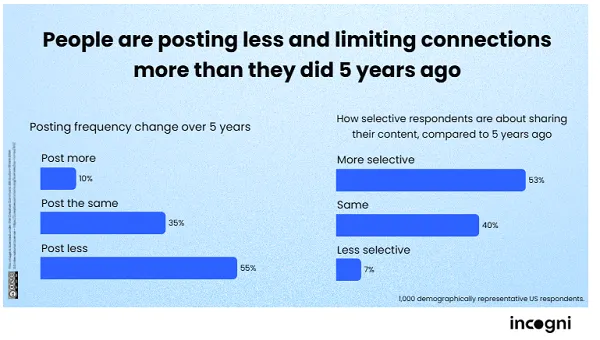
The Incogni study’s core finding indicates a significant decline in active posting, with a striking 55% of respondents reporting that they post less to social media now compared to five years ago. This trend is not an isolated phenomenon but aligns with broader industry data suggesting a migration of personal interactions from public feeds to more intimate, private channels. Users are increasingly opting to share updates and content within private direct message (DM) groups, fostering closer connections with select friends rather than broadcasting to a wider, often anonymous, audience.
This movement towards private sharing echoes a long-standing pattern of online participation, famously articulated by the 90-9-1 principle, first discussed by The Guardian in 2006. This principle posits that on most collaborative websites, approximately 90% of users are "lurkers" who consume content without contributing, 9% are occasional contributors, and only 1% are active creators. While this concept originated nearly two decades ago, the Incogni study suggests that this disproportionate distribution of content creation may now be even more exaggerated. Data from Pew Research in 2019, for instance, revealed that a mere 10% of users were responsible for around 80% of all tweets on the platform then known as Twitter. If fewer people are posting across the board, the reliance on this small fraction of active creators becomes even more pronounced, potentially leading to a narrower range of perspectives dominating public online discourse. This concentration of content creation also raises concerns about the diversity of voices and experiences represented in the digital public square, potentially leading to echo chambers or a homogenized view of online reality.
The reasons behind this decline in public posting are multifaceted. Privacy concerns, a desire for authenticity, and a general weariness with the performative aspects of social media all contribute. Users are becoming more selective about what they share and with whom, preferring the perceived safety and intimacy of private groups over the often-scrutinized and sometimes hostile environment of public feeds. This shift also reflects a growing awareness of data privacy and the desire to control one’s digital footprint, opting for ephemeral or restricted sharing formats that limit long-term exposure.
The Burden of the Creator Economy and Digital Burnout
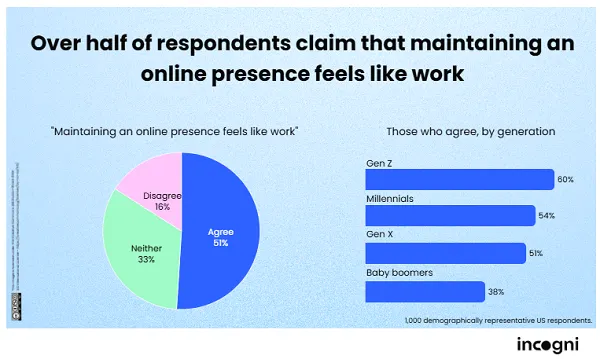
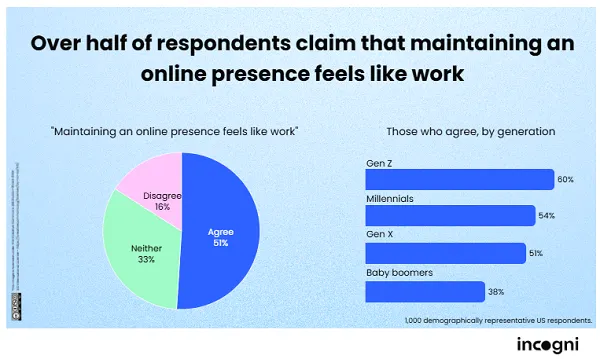
One of the most telling insights from the Incogni survey is the revelation that more than half of respondents feel that maintaining a social media presence "feels like work." This sentiment is particularly acute among younger generations, who, influenced by the visible successes of creators like MrBeast, often harbor aspirations of monetizing their online activities. The allure of turning passion into profit has driven many into the creator economy, a vibrant but intensely competitive landscape.
However, the reality of achieving financial success as an online creator is starkly different from the widespread perception. Research from Influencer Marketing Hub indicates that a significant 48% of creators earn less than $15,000 annually from their online endeavors. Furthermore, a 2015 study by TubeFilter highlighted that a staggering 95% of all YouTube video views were generated by just 5% of active accounts. These figures paint a clear picture: breaking through the noise and building a sustainable income stream online is exceptionally challenging, requiring immense dedication, strategic effort, and often, a degree of luck.
The pressure to consistently produce engaging, high-quality content, keep pace with ever-changing algorithms, and maintain an authentic yet aspirational online persona can lead to significant digital fatigue and burnout. This phenomenon extends beyond financial pressures; it encompasses the emotional labor of managing public perception, dealing with criticism, and the relentless demand for novelty. The constant pursuit of engagement metrics—likes, shares, comments—can transform what was once a creative outlet into a demanding, high-stress occupation, draining the joy from the creative process. The promise of "doing what you love and getting paid for it" often overlooks the grueling hours, the emotional toll, and the precarious nature of income in the creator economy.
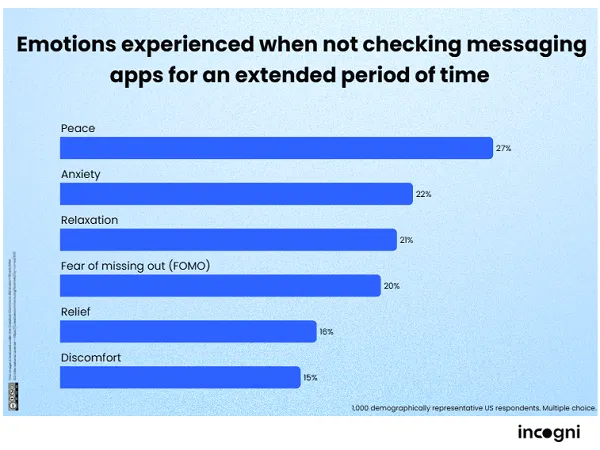
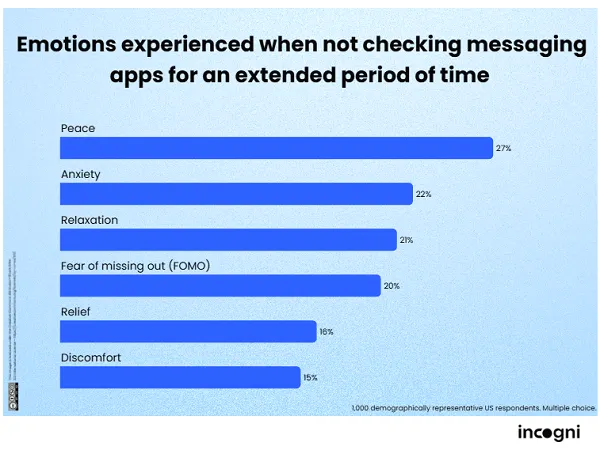
This pervasive sense of burden directly correlates with another finding from the Incogni report: a widespread feeling of relaxation when users take breaks from social media and messaging applications. This relief underscores the psychological toll that constant connectivity and the pressure to perform online exacts on individuals. It suggests that many users are subconsciously, or consciously, seeking respite from the demands of digital self-presentation and the relentless consumption cycle.
The Algorithmic Engine: Entertainment and Division
Beyond the shifting patterns of personal posting, the fundamental architecture of social media platforms—specifically their reliance on sophisticated algorithms—has played a crucial role in redirecting user behavior towards entertainment consumption and, inadvertently, exacerbating societal divisions. These algorithms are designed to maximize user engagement by serving content most likely to elicit an emotional response, thereby increasing time spent on the platform.
This algorithmic preference for emotionally charged content often translates into a prioritization of short-form videos and, notably, partisan or divisive political content. The "dopamine-fueled rush" of likes, comments, and shares that creators receive from such posts incentivizes them to produce more of the same, creating a self-perpetuating cycle. This mechanism has been widely implicated in fostering political polarization, pushing users into ideological echo chambers, and making online environments feel increasingly hostile and unwelcoming. The report notes that this algorithmic incentive has played a significant role in sustaining political division, subsequently driving more people away from social applications, particularly those seeking a less confrontational online experience.
Paradoxically, while many users report feeling overwhelmed or driven away by certain aspects of social media, overall time spent on these platforms has not necessarily decreased. Meta, for instance, has reported an increase in time spent on Facebook and Instagram in recent years, a trend largely attributed to the platforms’ aggressive integration and promotion of short-form video content, such as Reels. This seemingly contradictory data points to a deeper truth: users are not abandoning social media entirely, but rather changing how they engage with it. They are less inclined to post personal updates but more inclined to passively consume algorithmically curated entertainment, particularly short videos. This reinforces the central thesis that social media is increasingly functioning as a form of digital entertainment rather than a purely social connective tissue.
Chronology of a Digital Evolution
The transformation of social media has unfolded over several distinct phases:
- Early 2000s (Emergence): Platforms like MySpace and early Facebook emerged as novel tools for connecting with friends and expanding social circles. The focus was largely on personal profiles, status updates, and photo sharing, emphasizing social connection.
- Mid-2010s (Growth of Influence): The rise of smartphones and improved internet access fueled rapid user growth. This era saw the genesis of influencer culture, where individuals began to leverage large followings for commercial purposes. Monetization started to become a visible, albeit niche, aspiration. Video content gained traction, but text and image posts remained dominant.
- Late 2010s (Algorithmic Refinement & Video Dominance): Algorithms became increasingly sophisticated, moving beyond chronological feeds to prioritize "engaging" content. The explosive growth of TikTok, characterized by its hyper-addictive short-form video format and powerful recommendation engine, fundamentally altered user expectations for content consumption. Other platforms rapidly adapted, integrating similar features. This period also saw an increase in content virality and the amplification of emotionally resonant, often polarizing, narratives.
- Early 2020s (Digital Fatigue & Entertainment Focus): The proliferation of content, the relentless algorithmic feed, and the pressures of online performance led to widespread digital fatigue. The COVID-19 pandemic further accelerated online dependency while simultaneously highlighting the mental health challenges associated with constant digital immersion. Social media solidified its role as a primary source of entertainment, with passive consumption of short-form video eclipsing active personal posting for many users. The challenges of the creator economy became more apparent, and public discourse often devolved into online contention.
Broader Implications and Future Trajectories
The profound shift in social media dynamics carries significant implications across various sectors:
- For Users: The move towards entertainment and passive consumption may offer a less demanding online experience for some, but it also risks deepening engagement in algorithmic rabbit holes, potentially leading to echo chambers and a diminished capacity for critical information processing. Digital wellness strategies will become even more critical, empowering users to manage their screen time and curate healthier online environments. The search for authentic connection may drive users to smaller, niche communities or entirely offline interactions.
- For Marketers: The transformation necessitates a fundamental re-evaluation of digital marketing strategies. Traditional organic reach for static posts has largely diminished, replaced by a need for highly engaging, short-form video content and strategic paid media campaigns. Marketers must adapt to the "entertainment-first" mindset, focusing on storytelling, authentic influencer collaborations, and creating content that resonates with fleeting attention spans. The shift to private sharing also means that word-of-mouth and community-building within closed groups become increasingly valuable, requiring more nuanced engagement tactics. Data privacy concerns will also continue to shape advertising practices, pushing for more transparent and consent-driven approaches.
- For Platforms: Social media companies face an ongoing challenge to balance user engagement with digital well-being. This includes developing more ethical AI algorithms that prioritize diverse content and minimize polarization, while still maintaining profitability. Innovation in content formats, enhanced privacy features, and tools to combat misinformation will be crucial for retaining users and maintaining platform relevance. The competition for user attention in the short-form video space remains fierce, driving continuous evolution and differentiation.
- Societal Outlook: The shift has broader societal ramifications, influencing public discourse, political engagement, and the formation of community. The prevalence of algorithmically driven content can exacerbate societal fragmentation, making it harder to find common ground. The concentration of content creation among a few voices also raises questions about censorship, content moderation, and the democratization of information. Understanding these evolving dynamics is essential for fostering a healthier, more inclusive digital public sphere.
In conclusion, the Incogni study provides a critical snapshot of social media at a pivotal moment. The platforms that once promised to connect the world are increasingly functioning as sophisticated entertainment engines, reshaping how individuals interact with information, consume content, and perceive their digital selves. As users contend with digital fatigue and the harsh realities of the creator economy, and as algorithms continue to dictate the flow of information and entertainment, the future of social media will undoubtedly be defined by ongoing adaptation, innovation, and a collective re-evaluation of its purpose in our daily lives.