The proliferation of artificial intelligence-generated content has escalated into a significant challenge for social media platforms globally, fundamentally altering the landscape of online interaction and discourse. Recent advancements in AI models have enabled the creation of highly sophisticated, human-like text, alongside realistic images and video clips, making it increasingly difficult for users to discern authentic content from synthetic. This surge in AI-generated material, often deployed as spam, misinformation, or engagement-farming tactics, is muddying the digital waters, raising concerns about trust, authenticity, and the very purpose of social networking.
The Unmasking of AI Spam Hotspots
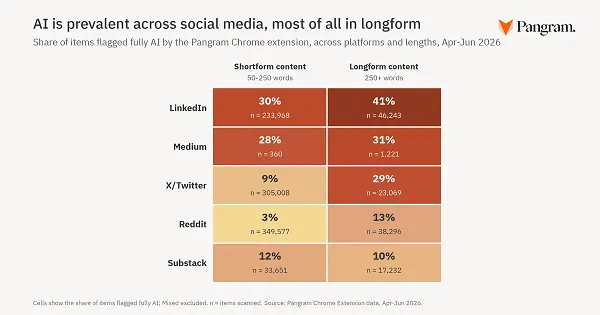
A new report sheds light on which platforms are currently bearing the brunt of this AI-driven onslaught. Professional networking site LinkedIn has surprisingly emerged at the forefront, with a staggering 41% of its long-form posts displaying indicators of AI generation. This revelation, coming from Pangram, a technology company specializing in AI writing detection through a proprietary browser extension, underscores the pervasive nature of the problem even in environments traditionally associated with professional integrity and verified human input. While acknowledging that no AI detection software can boast 100% accuracy, Pangram’s comprehensive tracking across various social media platforms points to LinkedIn as the current epicenter of AI-generated content. Following closely is X (formerly Twitter), where approximately a third of all long-form posts are believed to be AI-written, highlighting the widespread impact across diverse social ecosystems.
The Evolution of AI and the Spam Conundrum
The exponential growth of generative AI tools, particularly large language models (LLMs) and advanced image/video synthesis capabilities, forms the backdrop for this escalating problem. Over the past few years, these technologies have become more accessible, efficient, and convincing, moving from niche academic tools to widely available consumer applications. This democratization of AI has empowered individuals and malicious actors alike to produce vast quantities of content with minimal effort and cost. The "human-like" quality of modern AI output means that spam is no longer easily identifiable by crude grammar or repetitive phrasing; it can now mimic nuanced human conversation, create persuasive narratives, and generate visually compelling (though often subtly flawed) imagery. This sophistication makes detection and mitigation significantly more complex for platform operators. The timeline of this surge roughly aligns with the public release of powerful generative AI models in late 2022 and early 2023, which catalyzed a rapid increase in AI-generated content across all digital mediums.
Platform-Specific Battles and Countermeasures
Every major social media platform is grappling with the influx of AI spam, albeit with varying approaches and degrees of success.

LinkedIn’s Professional Predicament: The finding that LinkedIn, a platform built on professional credibility and genuine networking, is so heavily impacted is particularly noteworthy. AI-generated posts on LinkedIn often take the form of motivational speeches, career advice, industry insights, or thought leadership pieces, designed to garner engagement and build a false sense of authority for the poster. While LinkedIn has implemented countermeasures, including "reach penalties" for detected AI spam, the sheer volume suggests these efforts face significant hurdles. The implications for professional trust, the integrity of networking, and the perceived value of genuine expertise on the platform are substantial. If users cannot trust the authenticity of the advice or connections presented, the platform’s core utility diminishes.
X and the Bot Armies: X has been a vocal battleground against AI-generated content, particularly bots. Elon Musk, X’s owner, has frequently highlighted the existential threat posed by AI bots to social apps, famously stating in March 2023 that advanced AI has made it "impossible to keep bot armies out of social apps," due to the "trivial" cost of spinning up "100k human-like bots for less than a penny per account." This perspective led to Musk’s controversial proposal to charge all users a small fee for access, based on the assumption that even a minimal cost would deter bot creation at scale. However, this strategy largely failed to resonate with audiences, who have historically shown little interest in paying for social media access. In March, Nikita Bier, X’s head of product, announced changes to the platform’s creator monetization incentives specifically to combat a sharp rise in AI-generated deepfakes, particularly those related to geopolitical events like the war in Iran. This highlights the dual challenge for X: not just general spam, but also the weaponization of AI for misinformation and propaganda.
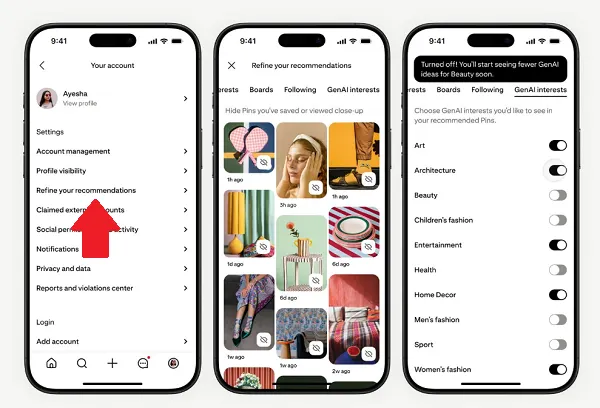
Pinterest’s Proactive Stance: In contrast to some other platforms, Pinterest has taken a more direct and user-centric approach to managing AI-generated content. The platform has actively worked to address user concerns regarding feeds "flooded" with synthetic posts. Notably, Pinterest is one of the only platforms to introduce an "AI off switch," or similar toggles, allowing users to explicitly limit the prevalence of AI-generated content in their feeds and topic explorations. This move reflects an understanding of user sentiment that prioritizes authentic human creativity and interaction over an unchecked influx of AI-generated imagery and ideas, aiming to preserve the platform’s identity as a source of inspiration and genuine discovery.
Reddit’s Defensive Measures: Reddit, known for its diverse communities and user-generated discussions, has also shared insights into its ongoing efforts to combat a rise in AI-generated comments and activity. The platform’s challenge lies in distinguishing genuine community contributions from automated posts designed to manipulate discussions, spread spam, or influence narratives. With millions of daily users and countless subreddits, Reddit’s scale makes the task of moderation particularly arduous, requiring sophisticated AI-driven detection alongside human oversight to maintain the integrity of its discussions.
Meta’s Ambivalent Embrace of AI: Meta (Facebook, Instagram) presents a complex case. On one hand, the company has committed hundreds of billions of dollars to AI development, with a stated ambition to become a global leader in AI technology. This investment is reflected in the aggressive integration of Meta AI tools across its platforms, regularly prompting users to leverage AI for asking questions, generating images, and composing posts. However, user reception to these integrated AI features has been notably lukewarm, if not outright negative. When Instagram Chief Adam Mosseri recently announced the integration of Meta’s latest Muse Image generation tools into the app, replies to his post were overwhelmingly critical. Comments such as "AI slop," "We need an option to turn off AI-generated content," and "Literally no one wants this" underscore a significant user backlash against the forced integration of AI tools for recreational consumer use. This dichotomy highlights a fundamental tension: while platforms invest heavily in AI for strategic advantage and content generation, their users often express a preference for genuine, human-created content and interaction.
The Erosion of Trust and the Shifting Purpose of Social Media
The core value proposition of social media has historically been human connection and the sharing of personal experiences. AI tools, by their very nature, introduce a layer of simulation and replication that directly challenges this foundation. AI-generated images and videos, increasingly indistinguishable from reality, risk replacing authentic personal narratives, original artwork, and genuine life events with synthetic facsimiles. When a significant portion of shared content is artificial, trust in the entire network erodes. This isn’t just about detecting spam; it’s about a fundamental questioning of what is real and what holds value in the digital public square.
If social media platforms become dominated by AI-generated content, their function could fundamentally shift from fostering connection to primarily serving as entertainment conduits. In this paradigm, platforms would largely churn out an endless stream of algorithmically curated videos and content, replacing traditional television screens with smaller, more personalized digital displays featuring shorter, often AI-produced, shows. The distinction between a "social network" and a "curated entertainment app" blurs significantly.
This potential transformation raises critical questions about the future of online interaction. Are messaging apps, where direct, one-on-one or small-group human engagement occurs, now becoming the true bastions of "social media" in the traditional sense? For many users, these private channels are indeed the last frontiers of genuine online social interaction, starkly contrasting with the public feeds increasingly populated by AI.
Quality vs. Quantity: The AI Content Dilemma
While AI technology is undoubtedly improving rapidly, the sheer volume of AI-generated content being produced currently raises significant quality concerns. For every compelling AI-generated video, such as Harry Potter characters reimagined in modern styles, there are thousands more forgettable, often flawed, depictions rife with anatomical inconsistencies, exaggerated facial expressions, or misaligned lip-syncs. The promise that "AI will get better" is true, but the challenge remains in filtering the signal from the noise.
Furthermore, the most successful AI-generated content often leverages established intellectual property (IP). This suggests that while AI can generate variations, original ideas and compelling narratives, traditionally human domains, still resonate more deeply with audiences. Empowering boundless AI creativity might, paradoxically, lead to less user interest if it results in an overwhelming flood of derivative or uninspired content. The human element of original thought, unique perspective, and authentic storytelling remains a critical differentiator.
Broader Implications and the Path Forward
The implications of unchecked AI-generated spam extend beyond mere annoyance. It poses significant risks to information integrity, potentially amplifying misinformation and disinformation campaigns, creating echo chambers, and making it harder for users to access reliable information. The challenge for platforms is multifaceted: how to leverage AI’s potential for creativity and user experience while simultaneously combating its misuse for spam and manipulation. This requires a delicate balance between encouraging innovation and implementing robust ethical guidelines and technical safeguards.
Platform governance will need to evolve rapidly, incorporating advanced AI detection mechanisms, transparent labeling of AI-generated content, and potentially new moderation paradigms. The user experience, too, will likely adapt, with a growing demand for features that allow greater control over the type and source of content consumed. The ongoing battle against AI spam is not just a technical race; it is a societal challenge that will redefine the nature of online interaction and the fundamental trust we place in our digital environments. The future of social media, and indeed, much of our online discourse, hinges on how effectively these challenges are met.