The annual back-to-school (BTS) shopping season represents a critical sales period for retailers, often dubbed the "second holiday season" due to its significant economic impact. In 2026, as consumer behaviors continue to evolve and digital channels dominate purchasing decisions, e-commerce brands are sharpening their focus on highly targeted and timely marketing strategies, primarily leveraging email and SMS to connect with key demographics: parents, students, and teachers. This guide delves into the most effective back-to-school campaigns, provides real-world e-commerce marketing examples, and offers actionable tips for building robust campaigns in the current retail landscape.
Understanding the Back-to-School Phenomenon
Back-to-school marketing encompasses the strategic efforts by retailers and e-commerce brands to promote products and services tailored for the impending academic year. This extends beyond traditional school supplies to include apparel, electronics, personal care items, and even home goods for college students. Brands utilize a multi-channel approach, integrating email, SMS, social media, paid advertisements, product bundling, and seasonal discounts to capture the attention of a diverse shopper base.
![Back-to-School Marketing: Best Practices & Examples [2026 ]](https://www.omnisend.com/blog/wp-content/uploads/2026/07/2-B-Wear-email.jpg)
For e-commerce, the BTS season is unique. It’s one of the few mid-year periods where seasonal intent—the intrinsic need for specific products tied to an event—converges with gift-style bundling opportunities and predictable repeat-purchase behaviors. This confluence creates a lucrative window for online retailers to boost sales, acquire new customers, and foster loyalty. The season typically spans from June through September, segmenting into distinct shopper phases: early browsers in June, deal-hunters in mid-July, peak purchasing in August, and last-minute shoppers concluding in early September. A nuanced understanding of these shopping intensity behaviors is paramount for strategically timing campaigns and maximizing engagement.
The Strategic Back-to-School Marketing Timeline
Effective back-to-school marketing is less about a single push and more about a sustained, phased campaign that aligns with consumer readiness and purchasing cycles.
June: The Early Bird Catches the Worm
The season kicks off in June, targeting early planners and those looking to spread out their spending. This period is ideal for list-building and soft introductions. Brands should focus on:
![Back-to-School Marketing: Best Practices & Examples [2026 ]](https://www.omnisend.com/blog/wp-content/uploads/2026/07/3-Rachel-Riley-email.jpg)
- New Arrivals: Showcasing fresh collections of apparel, tech, or supplies to generate excitement.
- Welcome Series: Engaging new subscribers acquired through sign-up forms with introductory offers and brand stories.
- Sign-Up Forms: Deploying enticing pop-ups and embedded forms to capture email and SMS opt-ins, promising early access to deals or exclusive content.
Mid-July: The Deal Hunter’s Paradise
As July progresses, shoppers become more active, comparing prices and seeking the best value. This is when competitive offers become crucial.
- Discount Emails: Launching clear, attractive discounts on popular items.
- Product Bundles: Presenting curated bundles of related items at a reduced price, simplifying shopping for busy parents.
- Giveaways: Running contests or giveaways to boost engagement, expand reach, and collect valuable contact information.
August: Peak Purchasing Power
August marks the zenith of back-to-school shopping activity. Campaigns during this month should focus on urgency and addressing common pain points.
- Sale Reminders: Sending follow-up emails for ongoing sales, highlighting expiring offers.
- Cart Recovery: Implementing automated sequences for abandoned carts, potentially with additional incentives.
- Back-in-Stock Alerts: Notifying customers when popular, previously sold-out items are replenished.
Early September: The Last-Minute Rush
The final leg of the season caters to procrastinators and those realizing overlooked necessities.
![Back-to-School Marketing: Best Practices & Examples [2026 ]](https://www.omnisend.com/blog/wp-content/uploads/2026/07/4-INGLOT-Canada-email.jpg)
- Last-Call Emails and SMS: Urgent messages about final discounts or shipping deadlines.
- Post-Purchase Follow-ups: Sending thank-you notes, delivery updates, and recommendations for complementary products to foster loyalty and encourage future purchases.
Key Trends Shaping the 2026 Season
The back-to-school landscape is continuously reshaped by economic factors, technological advancements, and evolving consumer preferences. Several key trends are particularly influential in 2026:
Value Trumps Brand Loyalty Amid Economic Uncertainty
The 2026 Deloitte Back-to-School Survey highlights a significant shift: 71% of parents are willing to switch brands to maximize value. This underscores a consumer environment where economic uncertainty drives hyper-value-seeking behavior. While 57% of parents prefer online shopping for school supplies, the competition for their dollar is intense. For brands, this implies a strategic imperative to clearly articulate value propositions, prominently feature discounts, and offer compelling product bundles. E-commerce platforms that facilitate easy price comparison and highlight savings will likely outperform.
Children’s Growing Influence on Purchasing Decisions
PwC’s 2026 back-to-school poll reveals that children’s influence over school purchases is substantial, with 58% of parents acknowledging their input. Furthermore, 61% of parents permit their children to add items to online shopping carts. This trend necessitates marketing materials that appeal to both parents (value, durability) and children (aesthetics, trends). Email campaigns should feature simple layouts, clear, engaging imagery, and familiar products that resonate across age groups, potentially segmenting content for parent-focused and child-focused appeals.
![Back-to-School Marketing: Best Practices & Examples [2026 ]](https://www.omnisend.com/blog/wp-content/uploads/2026/07/5-Converse-email.jpg)
AI Emerges as a Back-to-School Shopping Channel
A notable development is the integration of Artificial Intelligence into the shopping journey. PwC found that 73% of families plan to use AI for school shopping this year, with 23% specifically utilizing it for price comparison or deal discovery. This emphasizes the need for brands to optimize their digital content for scannability and clear information delivery, ensuring AI tools can easily extract and present relevant product details, prices, and offers.
Social Media as a Primary Discovery Channel
Social media and influencer recommendations continue to play a pivotal role in product discovery, with 23% of parents planning to shop through these channels. This trend necessitates an integrated marketing approach where email and social media campaigns are harmonized, sharing consistent offers and messaging. Brands should leverage visually rich social content that drives traffic to their e-commerce sites, complementing the detailed information provided in email campaigns.
The Broader Scope of "School Season" Spending
The financial burden of the school year extends far beyond initial supplies. PwC reports that families expect to spend approximately $635 per month on recurring costs once school starts, including significant allocations for school fees ($260) and meals/snacks ($235). This broader spending pattern creates opportunities for brands outside traditional school supply categories. As exemplified by INGLOT Canada, beauty products can be positioned as "back-to-school essentials," while brands offering food, organizational tools, or wellness products can remain relevant throughout the extended season.
![Back-to-School Marketing: Best Practices & Examples [2026 ]](https://www.omnisend.com/blog/wp-content/uploads/2026/07/6-Cuisinart-email.jpg)
Effective Campaign Strategies: Lessons from Leading Brands
Successful back-to-school marketing campaigns are characterized by their relevance, timeliness, and ability to address specific shopper needs. Here are six proven ideas, enriched with practical insights:
1. Audience Segmentation: Tailoring Messages to Specific Shoppers
Example: B-Wear Sportswear’s "Back to School Buy 3 Get 3 Free" campaign.
B-Wear brilliantly demonstrated how a single promotional offer can resonate with diverse shopper segments by customizing product presentation. Instead of a generic email, they divided their campaign into sections for "Teachers," "Pet Lovers," "Music Lovers," and "Country Life," each featuring relevant products.
Analysis: Parents, teachers, and students have distinct needs. A one-size-fits-all approach is less effective than targeted messaging. Advanced email segmentation tools allow brands to send different campaigns or dynamic content blocks within a single email based on subscriber interests, past purchase history, or demographic data. This personalized approach significantly increases engagement and conversion rates, as recipients see products directly relevant to them. Industry experts emphasize that hyper-segmentation is no longer a luxury but a necessity for maximizing ROI in competitive seasonal sales.
2. Urgency and Scarcity: The Power of the Deadline
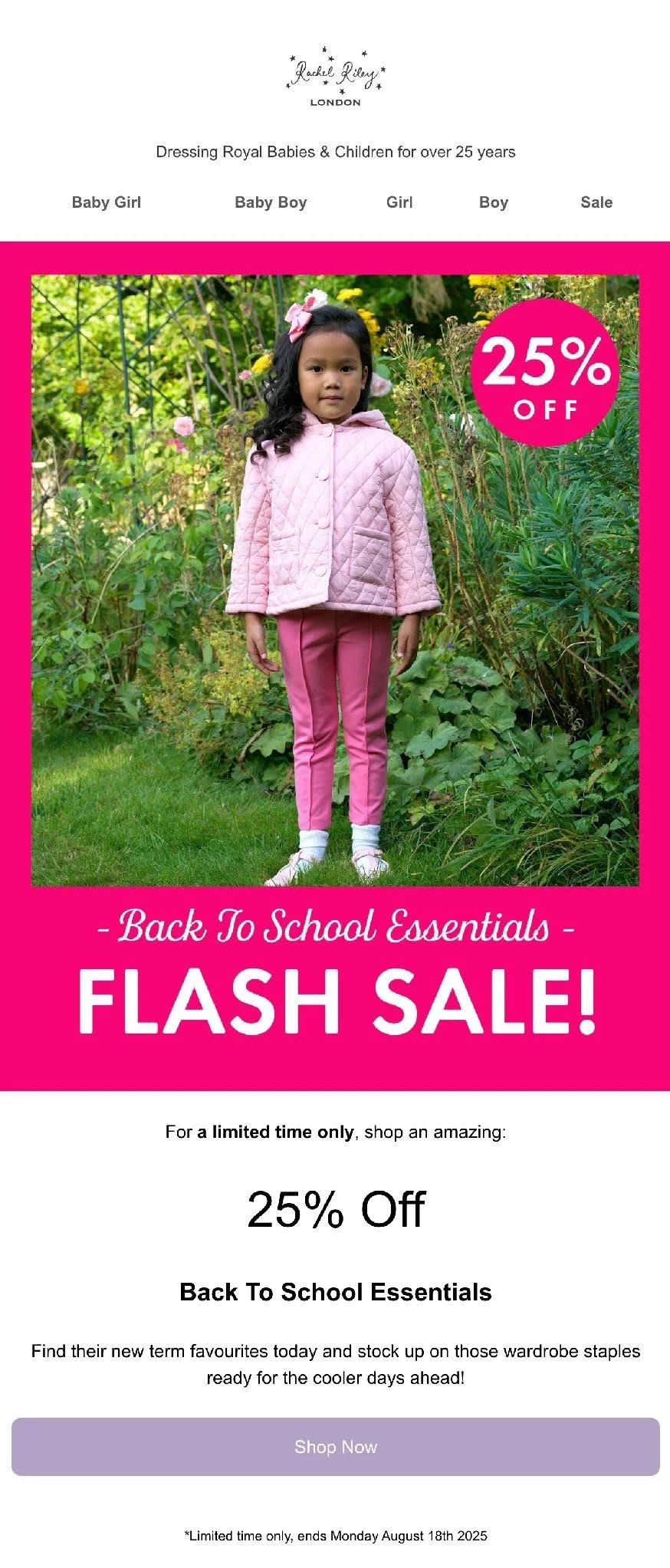
Example: Rachel Riley’s "Back to School Essentials Flash Sale."
Rachel Riley effectively combined a straightforward discount with a clear expiration date, creating a powerful incentive for immediate action. Highlighting a "25% OFF" along with an explicit end date for the promotion capitalizes on psychological triggers.
Analysis: Limited-time offers are potent motivators. The fear of missing out (FOMO) encourages shoppers to purchase rather than delay. When implementing this, brands should ensure the deadline is prominent and easy to understand. The promotion should be simple and visually consistent with the brand to maintain trust. Marketing analysts suggest that flash sales work best for specific product categories or as a mid-season boost, generating quick sales velocity.
![Back-to-School Marketing: Best Practices & Examples [2026 ]](https://www.omnisend.com/blog/wp-content/uploads/2026/07/7-Crocs-email.jpg)
3. Product Re-positioning: Expanding the "Essentials" Definition
Example: INGLOT Canada’s "Back to School Sale."
INGLOT Canada demonstrated that the back-to-school season isn’t exclusively for traditional school items. By simply framing their beauty products as "essentials" for feeling ready for the new term, they successfully tapped into a broader market.
Analysis: Back-to-school shopping extends to products that help individuals feel prepared, confident, and organized for a new academic year. This opens opportunities for brands in fashion, health, wellness, home goods, and even food. The key is creative messaging that connects the product’s benefits to the "back-to-school" narrative. Including clear offers, product details, and trust badges (e.g., free shipping, vegan, cruelty-free) makes the proposition more appealing. E-commerce strategists advise looking for tangential needs that arise during this period—from dormitory decor to healthy snack options—and tailoring marketing accordingly.
4. Value-Driven Bundling: Simplifying the Shopping List
Example: Converse’s "Back to School Bundle Up & Save."
Converse made back-to-school shopping more convenient by grouping complementary products—shoes, a backpack, and socks—into a single offer, with tiered discounts encouraging higher spending.
Analysis: Product bundles serve a dual purpose: they simplify the purchasing process for consumers by providing all necessary items in one go, and they increase the average order value for retailers. By offering tiered discounts (e.g., "Spend $100, Save $20; Spend $150, Save $40"), brands can incentivize customers to add more items to their cart. This strategy is particularly effective for parents with multiple children or those needing to purchase a wide array of items. Bundling can also help move slower-selling inventory when paired with high-demand products.
5. Early Engagement: Capturing Demand Ahead of the Crowd
Example: Cuisinart’s "Back-to-School Savings Start Now."
Cuisinart initiated its back-to-school campaign early, featuring an "after-school" theme, dollar-off deals, and a clear sale end date.
Analysis: Launching campaigns in June or early July ensures brands are noticed before inboxes become saturated with competitor offers. Early engagement also accommodates "planner" shoppers who prefer to spread their purchases over time. Cuisinart’s inclusion of an SMS sign-up section highlights another crucial aspect: growing the contact list for future, more immediate communications. Automation tools are invaluable here, allowing brands to schedule early-bird emails and follow-up messages throughout the season without manual intervention.
![Back-to-School Marketing: Best Practices & Examples [2026 ]](https://www.omnisend.com/blog/wp-content/uploads/2026/07/8-Back-to-school-email-template-1.jpg)
6. Lifestyle Integration: Selling the Experience, Not Just the Product
Example: Crocs’ "The Best Back to School Hack."
Crocs utilized lifestyle imagery, showing students wearing their products in campus settings and during everyday activities, to help shoppers visualize the footwear in real-life school scenarios.
Analysis: Consumers are more likely to buy when they can envision how a product fits into their daily lives. Lifestyle imagery, featuring diverse students and relatable scenarios, creates an authentic and memorable brand experience. This approach sells the "experience" of comfort, style, or convenience rather than just the product itself, fostering a deeper connection with the target audience. High-quality visual content is crucial, as it builds aspiration and reinforces the product’s relevance to the back-to-school narrative.
Building a Robust Back-to-School Email Campaign: A Practical Guide
For e-commerce brands, creating an impactful back-to-school campaign can be streamlined using modern marketing platforms. Here’s a step-by-step guide, exemplified by tools available in platforms like Omnisend:
1. Template Selection for Efficiency
Begin by choosing a back-to-school specific email template. Pre-designed layouts save significant time, providing a professional foundation that can be customized. These templates often include relevant imagery and structure, allowing brands to focus on content.
![Back-to-School Marketing: Best Practices & Examples [2026 ]](https://www.omnisend.com/blog/wp-content/uploads/2026/07/9-Brand-assets-section.jpg)
2. Establish Brand Consistency with a Kit
Before customizing, set up a brand kit within the marketing platform. Upload your logo, define brand colors, select fonts, and integrate social media links. This ensures that every email automatically adheres to your brand guidelines, maintaining visual consistency and strengthening brand identity across all communications.
3. Craft Engaging Email Content
Focus on a clean, readable layout. Incorporate a seasonal banner, clearly state your offer and any discount codes, feature key products, and include prominent calls-to-action (CTAs). Utilize drag-and-drop editors to easily assemble elements and ensure the email is responsive across desktop and mobile devices. A/B testing different headlines or CTAs can optimize performance.
4. Strategic Seasonal Campaign Planning
Develop a comprehensive content calendar for the entire back-to-school season. This schedule should outline which emails and SMS messages will be sent at each stage (June, July, August, September), aligning with the consumer journey. This foresight allows for proactive content creation and timely deployment.
![Back-to-School Marketing: Best Practices & Examples [2026 ]](https://www.omnisend.com/blog/wp-content/uploads/2026/07/10-drag-and-drop-editor.jpg)
5. Capture Demand with Sign-Up Forms
Leverage pop-ups and embedded forms on your website to grow your subscriber list ahead of and during the season. Implement best practices for pop-ups, such as offering a clear incentive (e.g., "early access to deals," "10% off your first order"). Advanced platforms may offer AI-powered form generation, allowing brands to describe their desired pop-up, and the tool creates the design and copy.
6. Automate Core Workflows for Efficiency
Activate essential marketing automations to run continuously throughout the campaign. This includes:
- Welcome Series: For new subscribers, introducing them to the brand and initial offers.
- Abandoned Cart Workflows: Reminding shoppers about items left in their cart, often with a gentle nudge or discount.
- Post-Purchase Workflows: Sending order confirmations, shipping updates, and product recommendations to enhance the customer experience and encourage repeat business.
Utilize pre-built automation templates offered by platforms, customizing timing, content, and branding to fit your specific needs.
7. Segment, Preview, and Schedule for Precision
Organize your subscriber list into targeted segments based on their journey or interests. Examples include:
![Back-to-School Marketing: Best Practices & Examples [2026 ]](https://www.omnisend.com/blog/wp-content/uploads/2026/07/11-AI-popup-generator.jpg)
- First-time buyers: For welcome offers.
- Repeat customers: For early access to sales.
- Past back-to-school buyers: For returning-shopper offers.
- Category interest: For personalized product recommendations.
- Cart abandoners: For targeted reminders.
Modern platforms often provide ready-made segments or AI-powered segment builders, allowing marketers to describe their desired audience in plain language. Always preview your emails across different devices before scheduling to ensure optimal display and functionality.
Broader Implications for E-commerce
The back-to-school season of 2026 underscores several critical shifts in the e-commerce landscape. The dominance of digital channels, coupled with economic pressures, necessitates a more data-driven, customer-centric approach. Brands must invest in robust marketing automation, advanced segmentation capabilities, and an omnichannel strategy that seamlessly integrates email, SMS, social media, and on-site experiences. The growing influence of AI and children in purchasing decisions means content must be both informative and engaging, optimized for discovery across various platforms. Furthermore, the extended definition of "back-to-school essentials" offers a blueprint for how brands can creatively align their products with seasonal events, even if they fall outside traditional categories. Retailers that embrace these dynamics will not only capture a larger share of the back-to-school market but also build more resilient and responsive marketing frameworks for future seasonal opportunities.
Conclusion
The 2026 back-to-school season presents a significant opportunity for e-commerce brands willing to adapt to evolving consumer behaviors and technological advancements. By starting early, segmenting audiences, leveraging urgency, bundling products, and integrating lifestyle messaging, brands can cut through the noise. The strategic deployment of email and SMS, supported by powerful automation and AI tools, will be instrumental in reaching parents, students, and teachers effectively. The overarching message is clear: success in back-to-school marketing hinges on a well-planned, personalized, and value-driven approach that resonates with the diverse needs of today’s academic shoppers.