Effective reminder emails are not merely a tactical component of email marketing; they represent a fundamental strategic asset for enhancing customer service, fostering robust relationships, and ultimately driving customer success. In an increasingly competitive digital landscape, where customer acquisition costs continue to rise, the ability to retain and nurture existing customers has become paramount. Service-oriented messages, often overlooked in the broader scope of promotional campaigns, are critical touchpoints that reinforce brand loyalty and significantly elevate the overall customer experience. These communications, when executed thoughtfully, transform from simple notifications into powerful tools for building lasting connections.
The concept of reminder emails has evolved far beyond basic transactional messages. Modern best practices dictate a nuanced approach, beginning with a focus on three essential types: onboarding, renewal, and proactive support. Each type serves a distinct purpose within the customer lifecycle, designed to resonate genuinely with recipients, reinforce brand values, and cultivate a sense of partnership rather than just a commercial transaction. The ultimate goal is to ensure these reminders are perceived as helpful interventions, not intrusive pestering, thereby strengthening relationships, increasing customer satisfaction, and supporting sustained customer engagement.
The Evolving Landscape of Customer Communication
The digital age has fundamentally reshaped how businesses interact with their customers. Gone are the days when customer service was primarily reactive, confined to troubleshooting issues after they arose. Today, customer expectations are higher than ever, demanding proactive engagement, personalized experiences, and an intuitive understanding of their needs. Email, despite the proliferation of other communication channels, remains a cornerstone of this interaction, offering a direct and often preferred conduit for important information.
This shift is driven by several factors, including the commoditization of many products and services, which places a premium on differentiation through customer experience. Businesses can no longer rely solely on product features or pricing; they must cultivate an environment where customers feel valued, supported, and understood. This paradigm shift underscores the importance of every customer touchpoint, including the seemingly mundane reminder email, as an opportunity to build trust and demonstrate commitment.
The Strategic Imperative of Retention: Data-Driven Insights
Customer retention is widely recognized as a more cost-effective strategy than customer acquisition. Studies consistently show that acquiring a new customer can be five to 25 times more expensive than retaining an existing one. Furthermore, a 5% increase in customer retention can lead to a 25% to 95% increase in profits, according to research by Bain & Company. These statistics highlight the financial imperative behind investing in strategies that foster loyalty and reduce churn.
Email reminders, particularly those focused on service, play a direct role in these retention efforts. They act as regular, gentle nudges that keep a brand top-of-mind, ensure customers are fully utilizing their purchased services, and provide timely assistance. For instance, well-executed onboarding processes significantly reduce early churn. Wyzowl’s research indicates that 86% of people would be more likely to stay loyal to a business that invests in onboarding content that welcomes and educates them after purchase. This data underscores that the initial interactions are not just about setup but about laying the groundwork for long-term loyalty.
Beyond retention, effective email communication also influences customer lifetime value (CLTV). Customers who feel supported and engaged are more likely to upgrade services, purchase additional products, and become advocates for the brand. This positive feedback loop contributes significantly to a company’s sustained growth and profitability.
The Customer Journey: A Chronology of Engagement
To understand the strategic placement of service-oriented reminder emails, it is helpful to visualize the customer journey as a continuous cycle rather than a linear path. This cycle typically encompasses:
- Awareness & Acquisition: The initial stage where a potential customer learns about a product or service.
- Onboarding & Activation: The critical period immediately following purchase or sign-up, where the customer learns to use the product effectively.
- Engagement & Usage: The ongoing phase where the customer regularly interacts with the product/service.
- Retention & Loyalty: Efforts to ensure the customer continues their relationship with the brand.
- Advocacy & Expansion: When satisfied customers become promoters and potentially upgrade or cross-purchase.
Service-oriented reminder emails are strategically deployed at key junctures within this cycle, particularly during the onboarding, engagement, and retention phases, to guide the customer, anticipate needs, and reinforce value.
Three Pillars of Proactive Customer Engagement
Integrating these three types of service-oriented reminder emails into a comprehensive content strategy can significantly reinforce customer value and promote lasting loyalty.
1. Onboarding Check-in Emails: Forging Early Connections
The onboarding phase is arguably the most critical period in the customer journey. It is where initial impressions are solidified, and the groundwork for long-term satisfaction is laid. Onboarding check-in emails are designed to guide new customers through the initial setup, account configuration, and early adoption of a service. These emails demonstrate a dedication to the customer’s success from day one, fostering confidence and reducing the likelihood of early disengagement.
For example, if a user has signed up for a service but has not completed a crucial setup action—such as integrating with other tools, setting up their profile, or initiating their first project—a friendly check-in email can be invaluable. This email might offer direct assistance, provide a link to a helpful guide or video tutorial, or even suggest scheduling a quick demo. Such proactive engagement ensures customers overcome initial hurdles, discover the full potential of the service, and become "hooked" on its value. By keeping the brand top-of-mind during this formative period, businesses can significantly improve activation rates and customer stickiness.
Beyond the Wyzowl statistic, industry data often highlights that a robust onboarding process can reduce churn by as much as 20% to 30% in the first 90 days, a period notorious for high attrition rates. These emails are not just instructions; they are invitations to success.
2. Upcoming Renewal Notice Emails: Reinforcing Value and Continuity
For subscription-based services, upcoming renewal notice emails are essential. These notices serve multiple benefits for both the customer and the company. For the customer, they provide a timely reminder, preventing service interruption and offering an opportunity to review their usage and needs. For the company, they are a proactive measure to secure continued business, reduce involuntary churn, and potentially encourage upgrades or adjustments to service tiers.
Typically sent approximately 30 days before a renewal date, these emails should do more than just state the upcoming charge. They should succinctly remind the customer of the core benefits they have gained from the service over the past period. This can include:

- Highlighting key features used: "Since you joined, you’ve saved X hours using our automation tools."
- Quantifying value: "Your team has collaborated on Y projects, improving efficiency by Z%."
- Announcing new features: "We’ve added [new feature] since your last renewal, designed to [benefit]."
- Offering support: "Questions about your plan? Our support team is here to help."
- Providing flexibility: "Considering an upgrade or a different plan? Explore your options here."
The tone should be appreciative and value-driven, emphasizing the continued partnership. This proactive communication can significantly improve renewal rates and provide an opportunity for customers to upgrade or adjust their plans, optimizing their value and further cementing their loyalty. According to churn statistics, a significant portion of cancellations are often due to perceived lack of value or simple forgetfulness, both of which can be mitigated by well-crafted renewal notices.
3. Proactive Support Offer Emails: Anticipating Needs, Preventing Churn
This advanced strategy leverages data analytics to anticipate potential issues or declining engagement before a customer explicitly requests help. By monitoring user activity, product usage patterns, or other relevant metrics (e.g., a decrease in login frequency, a drop in feature utilization, or specific error reports), businesses can identify customers who might be struggling or disengaging.
When a predefined data trigger is met, an automated, gentle, and supportive message is dispatched, offering assistance. For example, if a user who regularly utilized a particular feature suddenly stops using it, a proactive support email might ask, "We noticed you haven’t used [Feature X] recently. Is everything running smoothly, or can we offer some tips?" This approach not only emphasizes the company’s investment in the customer’s success but also helps to significantly reduce churn by addressing pain points before they escalate into full-blown frustrations.
Automating these emails ensures timely intervention at scale. This strategy moves beyond reactive customer service, positioning the company as a true partner invested in the customer’s continuous success. Research from Gartner suggests that proactive customer service can reduce call volume by up to 30% and improve customer satisfaction scores by 10% to 20%, demonstrating its tangible benefits.
Crafting Appreciated Reminders: Principles for Effective Communication
The success of these reminder emails hinges on their ability to be genuinely helpful and to make the next steps easy and intuitive for the recipient. When customers perceive that a business values their experience and success over mere transactions, it builds a stronger, more resilient relationship. Here are key principles for crafting such communications:
- Personalization: Address the customer by name and reference their specific account, usage, or situation. Generic emails are easily ignored.
- Clarity and Conciseness: Get straight to the point. What is the reminder about? What action is required? Why is it important to them?
- Value Proposition: Always articulate the benefit to the customer. Why should they care about completing their onboarding, renewing their service, or accepting support?
- Clear Call to Action (CTA): Make it obvious what the customer needs to do next. Use prominent buttons or clear links. Examples: "Complete Your Setup," "Renew Now," "Contact Support."
- Empathetic Tone: Use friendly, supportive language. Avoid overly demanding or pushy phrasing. The goal is to assist, not to pressure.
- Mobile Responsiveness: A significant portion of emails are opened on mobile devices. Ensure emails are designed to look good and function well on all screen sizes.
- Segmentation: Target different customer segments with tailored messages. A new user’s needs differ from a long-term loyal customer.
Key Email Elements for Maximum Impact
An effective email strategy necessitates designing content that maximizes readability and impact. Upon opening an email, the customer should immediately grasp its value without having to sift through dense blocks of text. Focusing on specific email elements can significantly enhance this experience:
- Subject Lines: These are the gatekeepers. They should be clear, concise, and indicative of the email’s content. A good subject line creates urgency without being alarmist and sets the right expectation. Examples: "Action Required: Complete Your [Product] Setup," "Your [Service] Renewal is Coming Soon," "Checking In: How Can We Help With [Feature]?"
- Preheader Text: This short snippet of text appears after the subject line in the inbox preview. It’s a valuable opportunity to provide additional context or a compelling hook that encourages the open.
- Sender Name: A recognizable and trustworthy sender name (e.g., "YourName from [Company]" or "[Company] Customer Success") builds immediate trust and recognition.
- Visual Hierarchy and Design: Use clear headings, bullet points, and short paragraphs to break up text. Incorporate branding elements consistently (logo, colors). A clean, uncluttered layout guides the reader’s eye to the most important information and the CTA.
- Personalized Content Blocks: Dynamically insert relevant information, such as their account status, recent activity, or recommended next steps based on their usage data.
- Accessibility: Ensure emails are accessible to all users, including those with disabilities. This includes using appropriate font sizes, sufficient color contrast, and descriptive alt-text for images.
- Unsubscribe Options: While counter-intuitive for retention, including a clear unsubscribe link is a legal requirement and demonstrates respect for the recipient’s preferences, which can ironically foster more positive sentiment than making it hard to leave.
Industry Perspectives on Customer-Centric Communication
Industry analysts and customer success leaders consistently emphasize the profound impact of proactive, service-oriented communication. "The modern customer journey is no longer linear; it’s a dynamic, interconnected web of interactions," notes a prominent marketing strategist. "Businesses that excel are those that anticipate customer needs and address them before they become problems. Reminder emails are a prime example of how automation can be leveraged to deliver highly personalized, empathetic support at scale."
Customer success managers frequently report that a well-timed onboarding check-in can significantly reduce initial support tickets by pre-empting common setup issues. Similarly, proactive support offers are lauded for their ability to convert potentially frustrated users into loyal advocates, demonstrating a genuine investment in their success. "We’ve seen a tangible decrease in churn rates directly attributable to our proactive outreach programs," states a lead customer success executive at a SaaS company. "It transforms our relationship from vendor-client to trusted partner."
Broader Implications: Enhancing Brand Equity and Financial Performance
The strategic deployment of service-oriented reminder emails extends its influence far beyond immediate customer interactions. It contributes significantly to a company’s overall brand equity and financial performance.
From a brand perspective, consistent, helpful, and well-timed communication cultivates a perception of reliability, trustworthiness, and customer-centricity. This enhances brand reputation, making the company more attractive to potential new customers and strengthening its position in the market. In an era where word-of-mouth and online reviews hold immense sway, a positive customer experience, fostered by these communications, can be a powerful marketing tool.
Financially, the impact is multifold:
- Increased Customer Lifetime Value (CLTV): By reducing churn and encouraging longer customer relationships, CLTV naturally increases.
- Reduced Support Costs: Proactive support and clear onboarding guidance can decrease the volume of inbound support requests, leading to operational efficiencies and lower customer service costs.
- Higher Conversion Rates for Upsells/Cross-sells: Engaged and satisfied customers are more receptive to offers for additional products or services.
- Improved Brand Advocacy: Loyal customers are more likely to refer new business, acting as organic sales channels.
However, implementing such a strategy is not without its challenges. Businesses must invest in robust marketing automation platforms, ensure data quality for effective segmentation and personalization, and continuously test and optimize their email content to avoid message fatigue or being flagged as spam. The balance between helpfulness and intrusiveness is delicate and requires ongoing refinement.
Leveraging Technology for Scalable Customer Engagement
The ability to execute sophisticated reminder email strategies at scale relies heavily on modern email marketing and customer relationship management (CRM) platforms. These tools provide the infrastructure for:
- Automation: Setting up triggers for specific customer actions or inactions.
- Segmentation: Dividing customer bases into granular groups based on behavior, demographics, or purchase history.
- Personalization: Dynamically inserting customer-specific data into email content.
- A/B Testing: Experimenting with different subject lines, CTAs, and content to optimize performance.
- Analytics: Tracking open rates, click-through rates, conversions, and other key metrics to inform future strategies.
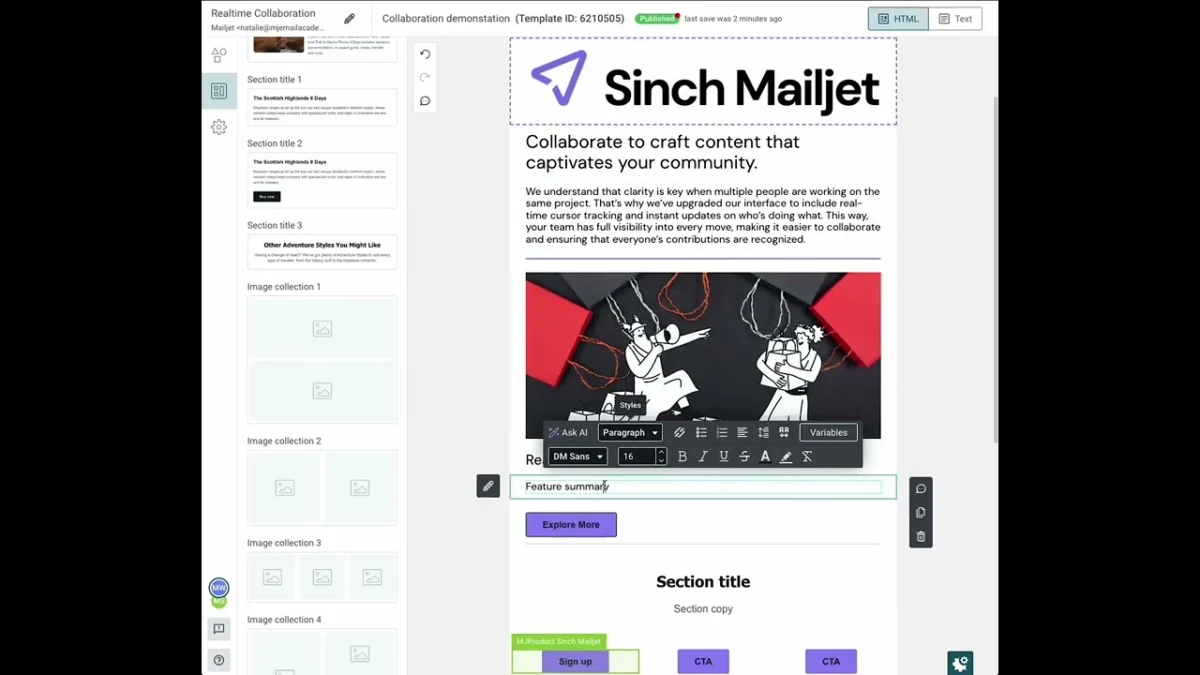
Advanced platforms often include features like HTML email builders or intuitive drag-and-drop interfaces, enabling marketing teams to design professional, mobile-responsive emails without extensive coding knowledge. This technological backbone ensures that businesses can deliver timely, relevant, and engaging communications consistently across their entire customer base.
In conclusion, service-oriented reminder emails are far more than administrative necessities; they are strategic pillars of modern customer success. By focusing on onboarding, renewal, and proactive support, and by meticulously crafting messages that are helpful, personalized, and easy to act upon, businesses can transform transactional touchpoints into relationship-building opportunities. This commitment to customer experience not only boosts satisfaction and loyalty but also drives significant financial benefits, cementing the role of these emails as an indispensable component of any forward-thinking customer engagement strategy.