The print-on-demand (POD) sector has revolutionized e-commerce, offering entrepreneurs a low-barrier entry into selling custom-designed products. Within this dynamic market, platforms like Tapstitch and Printful represent distinct philosophies and operational models. While both enable the creation and sale of personalized goods, their approaches to product range, quality, integrations, and global reach cater to different segments of the market. This comprehensive analysis delves into the nuances of Tapstitch and Printful, providing clarity for businesses seeking the optimal partner for their custom product ventures.
Understanding the Print-on-Demand Ecosystem
Print-on-demand platforms function as intermediaries, allowing designers and businesses to upload their artwork, select products, and list them for sale on their own e-commerce stores or marketplaces. When a customer places an order, the POD provider prints the design onto the product, packages it, and ships it directly to the end consumer. This model eliminates the need for upfront inventory investment, reducing financial risk and enabling a wide variety of designs to be offered simultaneously. The global POD market has experienced significant growth, projected to reach $40 billion by 2027, driven by increasing consumer demand for personalized goods and the proliferation of online retail.
Tapstitch and Printful: A Comparative Overview
At its core, the distinction between Tapstitch and Printful lies in their specialization. Tapstitch positions itself as a premium provider for fashion-forward apparel brands, focusing on high-quality blanks, substantial fabric weights, and detailed print execution. In contrast, Printful offers a much broader catalog of products, encompassing apparel, home decor, accessories, and more, supported by a vast network of fulfillment centers and diverse printing technologies.
Product Range: Breadth Versus Depth
Printful emerges as the clear leader in product diversity. With over 479 Stock Keeping Units (SKUs) spanning categories such as apparel, home goods, accessories, and wall art, Printful provides an expansive ecosystem for sellers looking to diversify their offerings. This extensive catalog includes a wide array of printing methods, such as Direct-to-Garment (DTG), embroidery, sublimation, cut-and-sew, and UV printing. This versatility allows businesses to experiment with different product types and printing techniques, catering to a wider customer base and testing market demand across various niches. For instance, a seller could offer custom-designed t-shirts, embroidered hats, and printed mugs all through a single platform.
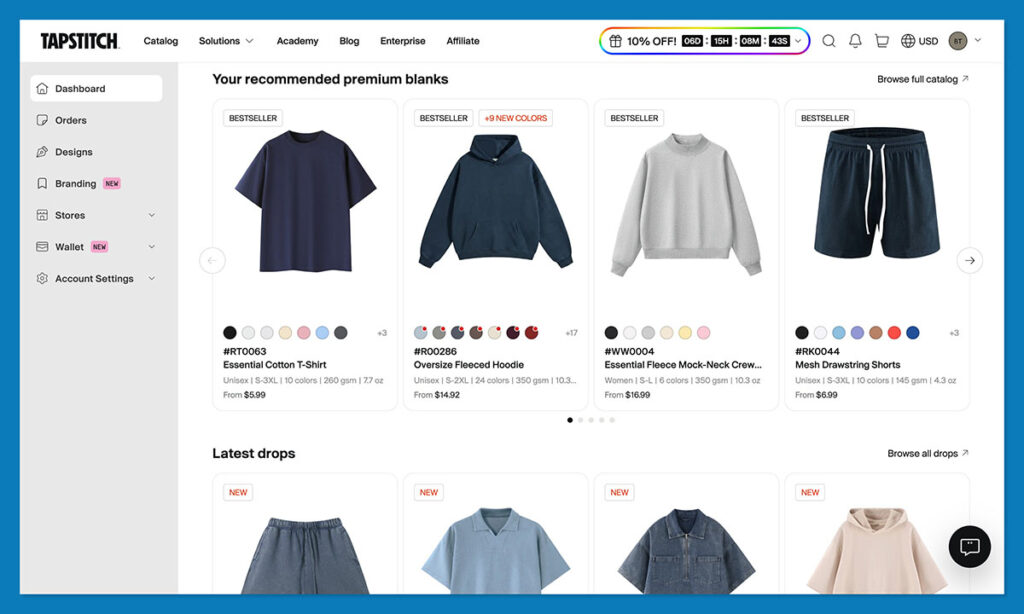
Tapstitch, on the other hand, adopts a more focused approach, concentrating on an apparel-centric catalog of over 400 blanks. This deliberate limitation is geared towards building premium streetwear and fashion brands. The emphasis is on heavyweight, high-GSM apparel, including oversized cuts and styles designed for a discerning fashion market. While Tapstitch does not offer non-apparel items, its depth within its chosen niche is notable. The platform prioritizes blanks that are well-suited for intricate designs and provide a superior feel, aiming to replicate the experience of purchasing from a dedicated fashion label.
Print Quality and Production Methods
The debate over print quality often hinges on the specific application and brand positioning. Tapstitch emphasizes its vertically integrated production facilities, which utilize modern DTG and DTF (Direct-to-Film) printing technologies. User feedback frequently highlights the premium feel of Tapstitch garments, citing robust white ink coverage, good wash durability, and fabric weights that convey a sense of luxury. The platform’s in-house control over production is a significant factor in its ability to maintain high standards for its apparel-focused offerings.
Printful also offers high-quality printing across its diverse product range. Its DTG printing is known for its consistency and reliability at scale. However, some user communities have reported occasional variances in print placement, with deviations of up to an inch, which can be a concern for brands that require absolute precision, especially for large graphic prints. While Printful’s quality is generally regarded as dependable for mass production, Tapstitch’s specialized focus on apparel often results in a more artisanal and meticulously executed print for its target market.
The diverse printing methods available at Printful are a significant advantage for businesses seeking varied aesthetics. DTG is ideal for detailed, multi-color designs on cotton fabrics. Embroidery offers a textured, premium look for items like hats and polos. Sublimation allows for full-coverage prints on polyester-based materials, perfect for activewear and all-over designs. Cut-and-sew provides complete control over garment construction and fabric choice. UV printing is suitable for rigid items and offers vibrant, durable prints. Tapstitch’s reliance on DTG and DTF, while excellent for apparel, limits the creative possibilities for sellers who wish to explore these other product types.
Integrations and Platform Capabilities
For e-commerce sellers, seamless integration with their chosen sales channels is paramount. Printful boasts an extensive integration network, connecting with over 21 platforms and marketplaces, including giants like Amazon, eBay, TikTok Shop, and established e-commerce builders such as Shopify, WooCommerce, and Squarespace. This broad compatibility ensures that businesses can manage their sales and fulfillment across multiple online touchpoints from a single dashboard. Furthermore, Printful offers a custom API for developers, enabling bespoke integrations for businesses with unique technical requirements.
Tapstitch’s integration ecosystem is more focused, currently supporting Shopify, Etsy, and Wix. While these platforms cover a significant portion of the small to medium-sized business market, they may not cater to sellers aiming for broader marketplace presence or those utilizing less common e-commerce solutions.
Beyond integrations, Printful provides a suite of tools designed to enhance the e-commerce workflow. These include an AI-assisted design tool, a comprehensive mockup generator, product templates, and bulk ordering capabilities. Printful also offers "Quick Stores," a feature designed for sellers who need to launch a basic storefront rapidly.
Tapstitch counters with a solid built-in design tool that features 3D apparel mockups, ideal for showcasing fashion collections. A key differentiator for Tapstitch is its support for custom neck labels (available at an additional cost per unit). This feature is crucial for fashion brands aiming to establish a distinct brand identity and present their products as legitimate apparel labels rather than generic print-on-demand items. While Printful also offers branding options like inside labels and custom pack-ins, Tapstitch’s focus on physical garment branding, such as neck labels, aligns more closely with traditional fashion industry practices.
Pricing and Cost Structure
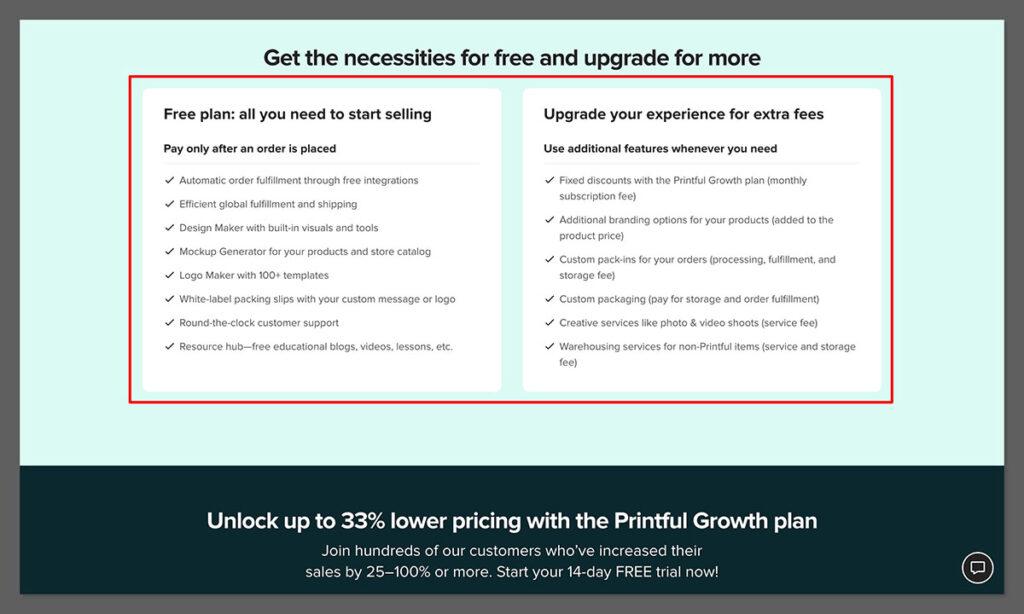
Both Tapstitch and Printful offer a free-to-start model, making them accessible for entrepreneurs with limited initial capital. They operate on a pay-per-order basis, meaning businesses only incur costs when a sale is made.
Printful introduces an optional "Growth" plan, priced at approximately $24.99 per month. This subscription unlocks product discounts of up to 33%, which can significantly reduce per-unit costs for high-volume sellers. For example, a comparable branded tee with US shipping might cost around $21.73 through Printful’s standard offering, but this price could drop substantially with the Growth plan discounts as order volumes increase.
Tapstitch maintains a straightforward pay-per-order model without tiered subscription plans or volume-based discounts. A similar branded tee with US shipping on Tapstitch is estimated to cost around $22.95. At lower order volumes, the per-unit costs are remarkably similar between the two platforms. The difference becomes more pronounced as sales scale, where Printful’s Growth plan can offer a more competitive price point. For small businesses or those just beginning their e-commerce journey, the absence of a mandatory monthly fee on both platforms levels the playing field. However, for businesses anticipating substantial sales volume, Printful’s tiered pricing structure presents a potential cost advantage.
Global Fulfillment and Shipping
The ability to ship products efficiently and cost-effectively to a global customer base is a critical consideration for any e-commerce business. Printful excels in this area with its extensive network of over 12 fulfillment centers strategically located across North America, Europe, and other international regions. This distributed infrastructure allows orders to be produced closer to the end customer, leading to reduced shipping times, lower shipping costs, and fewer customs-related complexities. For businesses targeting European markets, Printful’s local production capabilities offer a distinct advantage over competitors relying solely on US or Asian fulfillment.
Tapstitch’s fulfillment network is currently more limited, with facilities in Los Angeles, USA, and Guangzhou, China. While this setup is effective for serving US-based customers and can facilitate international orders routed through its China facility, it offers less geographical flexibility compared to Printful’s expansive network. Sellers with a significant international clientele, particularly those in regions not well-served by the US or China hubs, may find Tapstitch’s shipping options less competitive.
Strategic Positioning: When to Choose Which Platform
The decision between Tapstitch and Printful ultimately depends on a business’s specific goals, target market, and brand identity.
Tapstitch is the preferred choice for:
- Premium Apparel Brands: For businesses dedicated to building a high-end streetwear or fashion label, Tapstitch’s focus on premium blanks, heavyweight fabrics, and large print areas is a significant asset. Its curated catalog allows for a more cohesive and premium product offering within the apparel niche.
- Brand-Centric Presentation: The availability of custom neck labels and a brand-forward approach to packaging helps create a more authentic fashion brand experience, distinguishing it from generic print-on-demand products.
- US-Focused Markets: For businesses primarily serving customers within the United States, Tapstitch’s Los Angeles fulfillment center can ensure efficient and timely delivery.
- Simplicity in Apparel: If a business’s sole focus is high-quality t-shirts, hoodies, and similar apparel, Tapstitch’s specialized offerings can simplify product selection and quality control.
Printful is the stronger option for:
- Broad Product Offerings: Businesses looking to sell a diverse range of products beyond apparel, including home decor, accessories, and wall art, will find Printful’s extensive catalog indispensable.
- Global Reach: For sellers with an international customer base, Printful’s 12+ global fulfillment centers offer superior shipping speed, cost-effectiveness, and reduced logistical challenges.
- Multi-Channel Sellers: Printful’s integrations with over 21 platforms and marketplaces, including Amazon, eBay, and TikTok Shop, make it ideal for businesses operating across multiple sales channels.
- Scalability and Cost Optimization: As businesses grow, Printful’s optional Growth plan provides significant cost savings through volume discounts, making it more economically viable for high-volume operations.
- Diverse Printing Needs: The availability of various printing methods like embroidery and sublimation opens up creative possibilities that are not typically offered by apparel-focused platforms.
Testing and Evaluation Methodology
The comparative analysis presented here is derived from extensive hands-on testing of both platforms. This involved evaluating the user interface, product catalog navigation, design tools, order placement process, and the quality of sample products received. Additionally, feedback from independent user reviews, online community discussions, and third-party data analysis were incorporated to provide a holistic perspective. Key evaluation criteria included product range breadth and depth, print quality and method diversity, integration capabilities with popular e-commerce platforms, pricing structures including potential for discounts, global fulfillment network efficiency, and branding options.
Conclusion: A Tailored Choice for Diverse Needs
In the competitive print-on-demand arena, both Tapstitch and Printful offer distinct advantages. For the majority of e-commerce entrepreneurs seeking versatility, extensive product options, broad market reach, and scalable solutions, Printful stands out as the more robust and adaptable platform. Its comprehensive catalog, diverse printing technologies, vast integration network, and global fulfillment capabilities make it a reliable partner for businesses aiming to build a multifaceted brand across various sales channels and geographies.
However, Tapstitch carves out a significant niche for itself as the premier choice for dedicated fashion and streetwear brands. Its unwavering focus on premium apparel blanks, superior garment quality, and sophisticated print execution provides a compelling offering for businesses where the product itself is the primary brand differentiator. While its integrations and product range are more limited, the quality and brand-building potential within its specialized domain are undeniable.
Ultimately, the optimal platform choice hinges on an entrepreneur’s specific business model and aspirations. Both Tapstitch and Printful offer free accounts, allowing aspiring sellers to order samples and personally assess the quality and user experience before committing resources. This hands-on evaluation remains the most effective way to determine which platform best aligns with individual business objectives and quality standards.