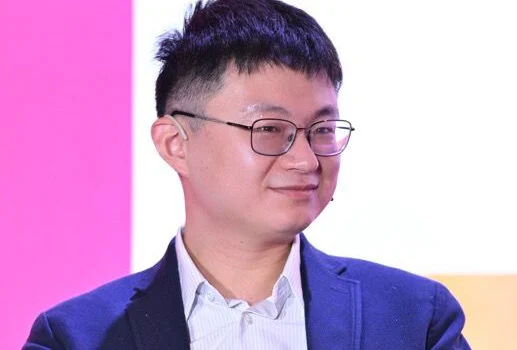
The landscape of professional communications is currently undergoing a seismic shift, moving away from the novelty of generative text toward a more sophisticated, integrated model of artificial intelligence. At the forefront of this transition is Sirui Hua, the Head of Audience and Analytics at NowThis, a global leader in social-first video news. Hua, who functions as the "infrastructure behind the storytellers," is challenging the industry to abandon the limited view of AI as a mere digital copywriter. Instead, he advocates for a paradigm shift where AI is viewed as a "team of specialists" or a suite of "chiefs of staff" capable of managing complex, multi-step workflows. As the communications industry prepares for Ragan’s upcoming AI Communications Conference on July 22, Hua’s insights into agentic workflows provide a roadmap for how organizations can move from basic automation to true innovation.
The Evolution of an Audience Strategist
Sirui Hua’s journey into the heart of digital strategy began in the high-stakes environment of the Chinese public relations sector. Working with global brands to establish their presence on platforms like Weibo and WeChat, Hua gained early exposure to the transformative power of direct digital engagement. This experience laid the groundwork for his move to NowThis a decade ago. Starting as an associate producer, Hua mastered the craft of narrative construction, learning how to engineer the "hooks" and "emotional payoffs" that define viral video content.
This dual background in creative production and data analytics has allowed Hua to view audience strategy through a unique lens. He does not see numbers as abstract figures on a spreadsheet; rather, he views them as indicators of narrative success. By decoding audience interests, platform algorithms, and emerging trends, Hua provides the structural support that allows creators to focus on the art of storytelling. His philosophy is rooted in the belief that even the most brilliant content requires a robust strategic infrastructure to ensure it reaches its intended audience in a crowded digital marketplace.
Moving Beyond the "Operator" Mindset
A central theme of Hua’s strategic approach is the critique of how most communicators currently utilize AI. He argues that using frontier models like GPT-4 or Claude solely for drafting content is a massive underutilization of the technology’s potential. According to Hua, if a communicator is only using AI to write a first draft, they remain the primary "operator"—the person responsible for research, file management, formatting, and distribution.
The goal, Hua suggests, is to transition from an operator to a "manager" or "editor." In this model, the human professional sets the objectives and quality standards, while the AI executes the intermediate steps. This shift addresses the primary bottleneck in modern communications: it is no longer the "blank page" that slows down production, but rather the complex administrative and logistical workflows surrounding the creative process. Hua likens the current misuse of AI to owning a high-end smartphone but only using it to make voice calls; the true value lies in the ecosystem of capabilities that have yet to be fully tapped by the average user.
The Rise of Agentic Workflows
At the heart of Hua’s presentation at the Ragan conference is the concept of "agentic workflows." Unlike traditional AI interactions, which are often one-off prompts and responses, agentic workflows involve multi-agent systems—specialized AI tools that each own a specific step of a campaign or project lifecycle.
Hua points to a real-world example currently in use at NowThis: a paid social agent designed to manage campaigns on Meta and TikTok. This system is composed of a "small team" of specialized agents:
- The Execution Agent: Handles the technical setup of social media boosts.
- The Reporting Agent: Aggregates performance data into client-ready reports.
- The Optimization Agent: Monitors pacing and delivery, recommending budget reallocations or creative changes.
Crucially, these agents do not operate in a vacuum. They gather context by "reading" the environments where project reality exists, including Slack threads, contract PDFs, emails, and internal data warehouses. This ensures that the AI’s recommendations are grounded in the specific goals and constraints of the campaign. Hua emphasizes a "human-in-the-loop" requirement: while the agents can draft changes and pull data, no action is executed without human review and approval. This preserves the professional’s role as the final arbiter of quality and ethics.
Automating the "Hated" Tasks
Hua’s advice for organizations looking to begin their AI journey is pragmatic: "Find the recurring task someone on your team genuinely hates and automate that one end-to-end." He identifies two areas where communicators currently waste significant manual effort: status reporting and comment analysis.
Status reporting often involves the tedious assembly of existing information—pulling metrics from various platforms and cross-referencing them with client communications. This is "non-judgment work" that AI agents are uniquely suited to perform. Similarly, the sheer volume of audience interaction on social media makes manual comment analysis impossible. In an era where a single video can generate 20,000 comments, most teams rely on "vibes" or small samples. AI, however, can process every single comment to provide a comprehensive view of what is resonating and with whom, turning raw sentiment into actionable data.
The Broader Industry Context and Data Trends
Hua’s perspective aligns with broader trends in the communications industry. According to the 2024 Muck Rack State of AI in PR report, while over 60% of PR professionals are now using AI in some capacity, the majority still focus on content creation and brainstorming. Only a small fraction have moved into the advanced workflow automation that Hua describes. This represents a significant competitive gap.
The shift toward agentic AI is also reflected in the strategic directions of major AI labs. Companies like Anthropic and OpenAI are increasingly focusing on "agents" that can use tools and browse the web autonomously. Hua cites a recent interview with Anthropic co-founder Jack Clark, who suggested that organizations should stop buying AI as software and start thinking of it as "hiring thousands of chiefs of staff." This reframing is vital because a chief of staff’s effectiveness is directly tied to the level of access and context they are granted.
The Creativity Floor and the Taste Ceiling
Despite his advocacy for automation, Hua remains cautious about the impact of AI on the creative soul of communications. He references a study discussed by Georgetown neuroscientist Adam Green, which found that while AI can raise the "floor" of student writing—making it sound more polished and creative—it can also lead to a "homogenization of ideas," making the underlying concepts more similar.
This finding reinforces Hua’s belief that human "taste" is the most important asset in an AI-augmented world. "AI raises the floor, but your taste sets the ceiling," Hua notes. In this new landscape, the value of a communicator is found in their ability to distinguish between a result that is merely "competent" and one that is "magical." The human element remains the essential ingredient for ensuring that content doesn’t just reach an audience but truly moves them.
Chronology of the AI Shift in Media
To understand the urgency of Hua’s message, one must look at the timeline of AI integration in the media landscape:
- Late 2022: The public release of ChatGPT triggers a "gold rush" toward generative text, with many newsrooms experimenting with automated drafting.
- 2023: Concerns over "hallucinations" and the "graying" of content lead to a cooling-off period and the implementation of strict AI ethics guidelines across major publishers.
- Early 2024: The focus shifts from "generative" to "agentic." Leaders like Hua begin building internal tools that integrate LLMs with existing data structures (RAG – Retrieval-Augmented Generation).
- Mid-2024: The industry moves toward "multi-agent systems," where specialized AI units handle specific business functions, as seen in the NowThis paid social agent.
Implications for the Future of Communications
The implications of Hua’s "infrastructure" approach are profound. For agencies, it means a shift in billing models—moving away from hourly tasks that AI can now do in seconds toward value-based pricing centered on strategy and results. For individual contributors, it means a necessary upskilling in "prompt engineering" and "workflow design."
Furthermore, the democratization of high-level analytics means that smaller teams can now compete with larger agencies by leveraging AI agents to handle the heavy lifting of data processing and reporting. However, the risk of over-reliance remains. Hua’s insistence on keeping a "human at the front and the back" of every workflow is a safeguard against the potential for AI to ship subpar or off-brand content.
Personal Philosophy and Mental Clarity
For a professional so deeply embedded in the digital and data-driven world, Hua finds his balance in the physical world. A resident of Jersey City, he is an avid long-distance runner, frequently using the Hudson River waterfront as his training ground. He notes that his best strategic ideas rarely occur at a desk; instead, they emerge during the "rhythmic exertion" of a run, typically between miles two and three. This practice of clearing "mental clutter" is perhaps the ultimate human counterweight to the constant noise of the digital age.
Conclusion
As the industry converges at Ragan’s AI Communications Conference, the message from Sirui Hua is clear: the era of asking AI to "write an email" is over. The new era is defined by the construction of intelligent systems that understand context, manage data, and execute complex strategies. By embracing the role of the "manager" and building agentic workflows, communicators can finally move past the administrative bottlenecks that have long hindered their creative potential. In the hands of a strategist like Hua, AI is not a replacement for the storyteller, but the powerful engine that ensures the story is heard.