The United States is currently grappling with one of the most devastating public health crises in its history, a multi-decade emergency characterized by a staggering rise in opioid-related overdose deaths. While the epidemic is often discussed in terms of personal tragedies and localized community impact, a comprehensive analysis of international and domestic data reveals a systemic phenomenon that distinguishes the American experience from the rest of the world. Data from the Centers for Disease Control and Prevention (CDC), the United Nations Office on Drugs and Crime (UNODC), and various demographic research entities suggest that the crisis has evolved through distinct phases, moving from prescription medication to illicit heroin and, most recently, to highly potent synthetic opioids like fentanyl.
To understand the magnitude of this issue, one must look beyond anecdotal evidence. In the late 1990s, the pharmaceutical industry assured the medical community that patients would not become addicted to prescription opioid pain relievers, leading healthcare providers to prescribe them at greater rates. This increased prescription volume led to widespread diversion and misuse of these medications before it became clear that these medications could indeed be highly addictive. This period marked the first wave of the epidemic. According to the CDC, nearly 500,000 people died from overdoses involving any opioid, including prescription and illicit opioids, between 1999 and 2019.
A Chronology of the Three Waves
The progression of the opioid epidemic in the United States is generally categorized by experts into three distinct waves. Understanding this timeline is essential for recognizing how the crisis shifted from a medical oversight issue to a complex illicit market problem.
The first wave began in the 1990s, involving overdose deaths involving prescription opioids. This was fueled by the rapid increase in the prescription of opioids such as oxycodone and hydrocodone. The aggressive marketing of these drugs, particularly by companies like Purdue Pharma, significantly altered the landscape of pain management in American medicine. By 2010, the sheer volume of prescriptions in circulation had created a massive population of individuals with opioid use disorder.
The second wave began in 2010, characterized by a rapid increase in overdose deaths involving heroin. As authorities began to crack down on "pill mills" and doctors became more cautious about prescribing opioids, the supply of prescription pills tightened. Many individuals who had become addicted to prescription opioids turned to heroin, which was often cheaper and more readily available on the black market. Heroin deaths began to climb sharply, particularly among younger demographics.
The third wave began in 2013, with significant increases in overdose deaths involving synthetic opioids, particularly those involving illicitly manufactured fentanyl. Fentanyl is a synthetic opioid that is 50 to 100 times more potent than morphine. Because of its high potency, it is often mixed with heroin or cocaine—with or without the user’s knowledge—to increase its effects. This has led to a surge in accidental overdoses, as even a microscopic amount of fentanyl can be lethal. In 2021 alone, the CDC reported that overdose deaths exceeded 100,000 in a single 12-month period for the first time, with synthetic opioids accounting for the vast majority of those fatalities.
Comparative Analysis of Drug Usage and Lethality
When examining the data provided by organizations such as FiveThirtyEight and the UNODC, a startling disparity emerges between the prevalence of drug use and the rate of drug-related deaths. Heroin, for instance, shows a relatively small user base when compared to marijuana or even cocaine, yet its lethality is disproportionately high. Data indicates that heroin usage is most concentrated among the 20-34 age demographic. This concentration may be attributed to several factors, including the high mortality rate among users, which prevents many from reaching older age brackets, or a specific generational vulnerability to the transition from prescription drugs to illicit opioids.
In contrast, drugs like cocaine and crack show a broader distribution across older age groups. This suggests that while these substances carry significant health risks, the immediate "overdose potential" of the current illicit opioid supply is significantly higher, leading to a "culling" effect in the data where users do not survive long enough to be counted in older demographic statistics.
Furthermore, the data highlights that the United States is a significant outlier in the global context. In absolute numbers and in deaths per million people, the U.S. consistently leads industrialized nations. While countries like Iceland show high per-capita rates, these figures are often skewed by extremely small total populations where a dozen deaths can significantly alter the statistical average. Sweden and Australia also report notable overdose rates, but even these are frequently less than half of the rate observed in the United States.
Regional Hotspots and Domestic Trends
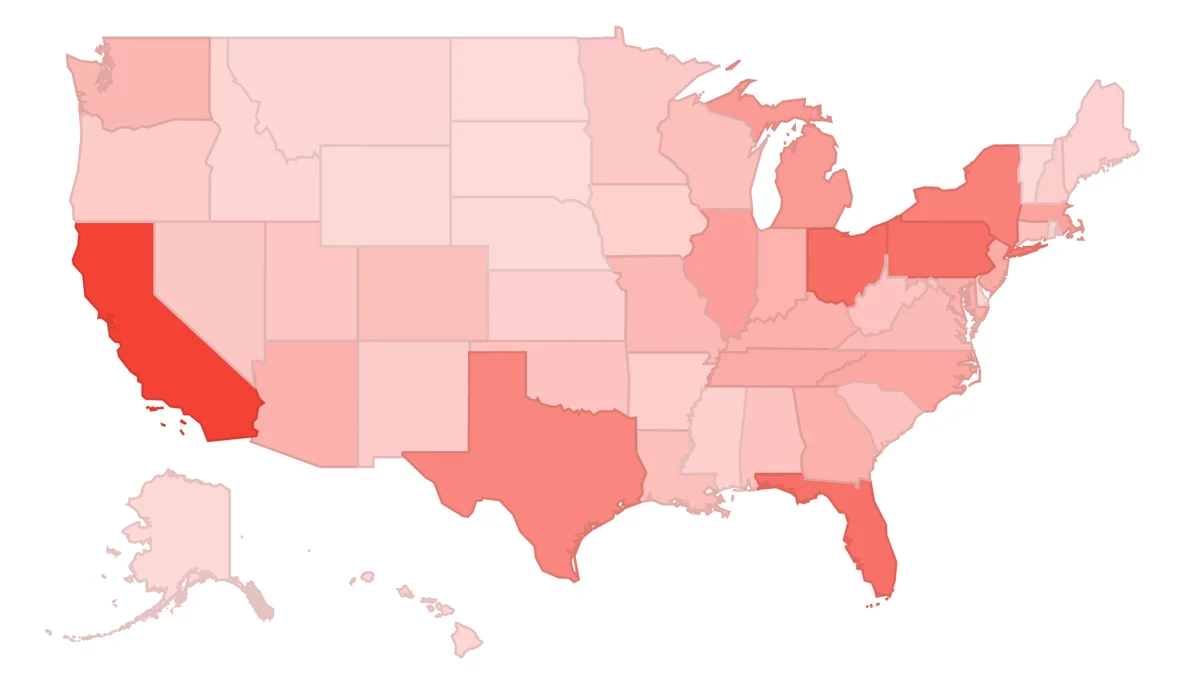
Within the United States, the epidemic does not hit every region with equal force. The Appalachian region, the Rust Belt, and parts of the Northeast have historically been the hardest hit. States such as West Virginia, Ohio, and Pennsylvania have consistently reported some of the highest overdose rates in the country.
The "Seven Days of Heroin" report, a Pulitzer Prize-winning investigation by the Cincinnati Enquirer, provided a granular look at this reality. By documenting every overdose call and drug-related incident in a single county over one week, the report illustrated that the crisis is not a series of isolated incidents but a constant, rolling emergency that strains every level of public infrastructure, from emergency medical services and hospitals to the foster care system and the coroner’s office.
Data trends also show a "westward expansion" of the crisis. While the East Coast was the primary epicenter for the first two waves, the introduction of illicit fentanyl into the supply chains of the Western United States has caused death rates in states like California, Oregon, and Washington to spike in recent years. This suggests that the epidemic is not a static problem but a moving target that adapts to market forces and law enforcement interventions.
Official Responses and Policy Implications
The response from the United States government and the international community has been multifaceted, though critics argue it has often been reactive rather than proactive. In the U.S., several major legal actions have been taken against pharmaceutical manufacturers and distributors. Settlements totaling billions of dollars have been reached with companies like Johnson & Johnson, AmerisourceBergen, Cardinal Health, and McKesson. These funds are largely earmarked for treatment and prevention programs.
On the legislative front, the "Support for Patients and Communities Act" (SUPPORT Act) was signed into law in 2018, aiming to address the opioid crisis by standardized screening, improving access to medication-assisted treatment (MAT), and bolstering the fight against synthetic drugs. Additionally, the widespread distribution of Naloxone (often known by the brand name Narcan), an opioid antagonist that can reverse an overdose, has become a cornerstone of harm reduction strategies.
Internationally, the United Nations has called for a shift in drug policy that prioritizes public health over criminalization. Some countries have found success with the "Portuguese Model," which decriminalized the possession of small amounts of drugs and redirected resources toward treatment and social integration. While the U.S. has seen some movement toward this in specific jurisdictions, the sheer volume of the fentanyl supply remains a unique challenge for American policymakers.
Economic and Societal Impact
The broader implications of the opioid epidemic extend far beyond health statistics. The Council of Economic Advisers has estimated that the crisis costs the United States over $500 billion annually when accounting for healthcare costs, lost productivity, and criminal justice expenses.
The social fabric of communities is also under significant strain. The "hidden victims" of the crisis include the hundreds of thousands of children who have been placed in foster care because their parents are either deceased or incapacitated by addiction. The phenomenon of "grandfamilies," where grandparents are forced to come out of retirement to raise their grandchildren, has become a common demographic shift in hard-hit rural areas.
Moreover, the crisis has exposed deep inequities in the American healthcare system. Access to high-quality addiction treatment is often determined by geography and insurance status, leaving many of the most vulnerable populations without a path to recovery. The stigma associated with drug use also remains a significant barrier, preventing individuals from seeking help until it is too late.
Conclusion and the Role of Data Analysis
As the United States enters the third decade of this crisis, the role of data remains paramount. For analysts and policymakers, the ability to track trends in real-time is the difference between life and death. Understanding the shifting patterns of drug adoption, the geographic movement of synthetic opioids, and the demographic groups most at risk allows for more targeted interventions.
The opioid epidemic is a reminder of the consequences of systemic failure—from the initial over-prescription of addictive medications to the delayed response to a changing illicit market. However, it also highlights the power of information. By utilizing datasets from the CDC, UNODC, and other research bodies, society can move toward a more evidence-based approach to drug policy. The goal of such analysis is not merely to document the devastation but to provide the insights necessary to mitigate future harm and eventually bring an end to one of the most lethal chapters in modern public health history. Analysts and researchers have a vital role to play in this journey, using their skills to transform raw numbers into actionable strategies for a better, safer world.