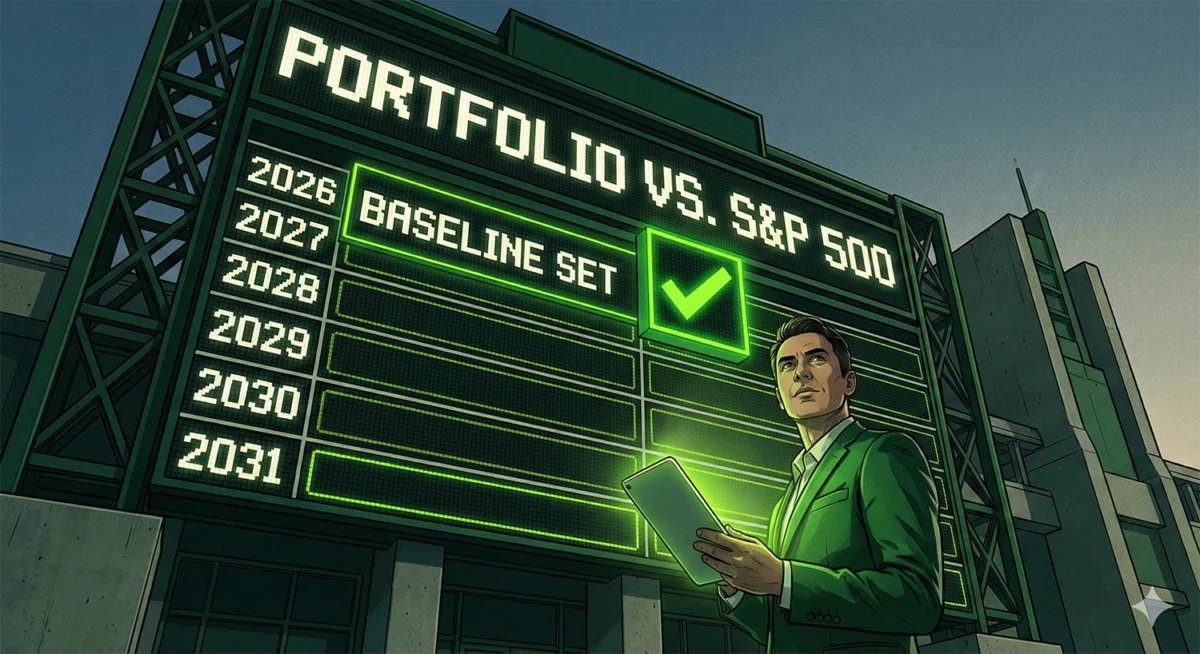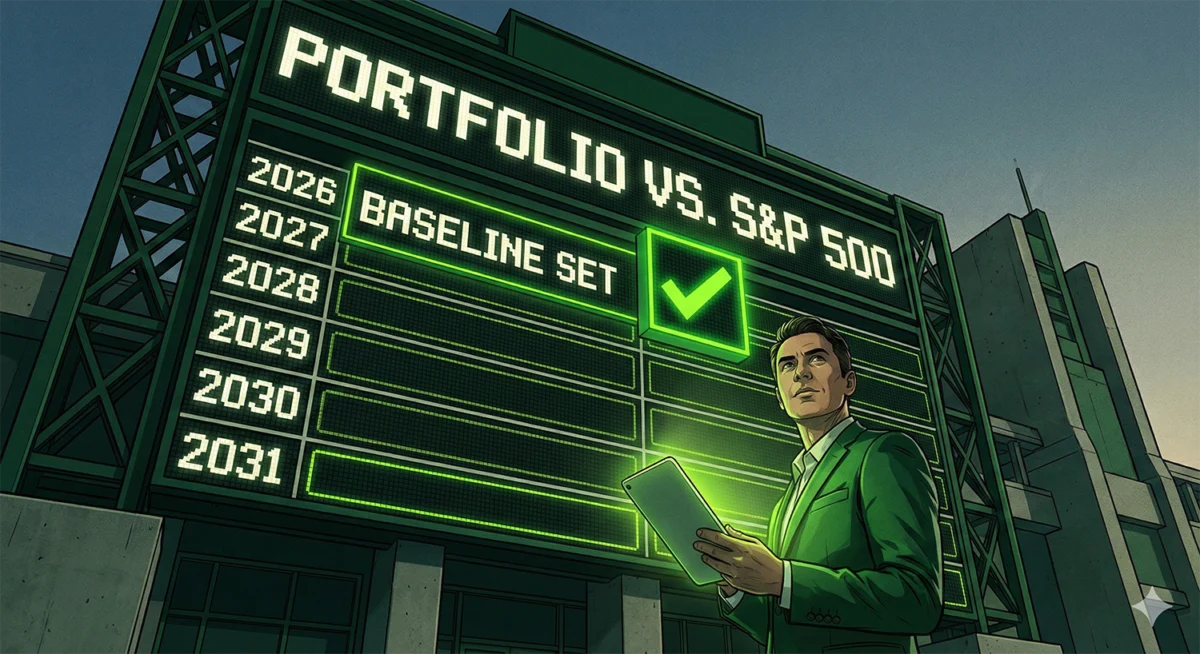
The financial strategy for entrepreneurs often centers on the valuation and eventual sale of their businesses, a singular focus that carries significant inherent risk. As detailed in a recent financial mastery framework, a crucial yet often overlooked component of an entrepreneur’s financial security lies in the parallel development of their personal balance sheet. This approach, advocated by industry experts, aims to mitigate risk, enhance decision-making capabilities, and provide greater overall financial optionality. To illustrate this principle, a baseline personal investment portfolio for the year 2026 has been established and will be tracked against the performance of the S&P 500.
The Rationale Behind Personal Financial Fortification
The prevailing entrepreneurial narrative frequently hinges on a future business exit – an acquisition or Initial Public Offering (IPO). However, the success of such events is far from guaranteed. Market downturns, unforeseen industry shifts, or internal business challenges can derail even the most promising exit strategies. Relying solely on this future liquidity event for personal financial security exposes entrepreneurs to substantial vulnerability. By actively building and diversifying personal assets independently of their business, individuals can create a safety net, reduce desperation in business negotiations, and ultimately make more strategic, less pressured decisions. This dual-pillar approach to wealth creation is fundamental to long-term financial resilience.
Portfolio Construction: Defining the Investment Universe
For the purpose of this personal balance sheet assessment, a clear distinction is made regarding what constitutes "investable" assets. Excluded from this calculation are the primary residence, personal possessions, and the active business itself.
- Primary Residence: While a significant asset for many, a home is primarily viewed as a consumption good rather than a direct investment asset. Its value is tied to personal utility and market fluctuations that may not align with investment growth objectives.
- Physical Possessions: Items such as vehicles, furniture, and collectibles, while possessing value, are generally not considered liquid or easily investable assets in the traditional financial sense.
- Active Business: The business is intentionally separated due to its inherent illiquidity and volatility. Valuing an active business and incorporating it into a personal net worth calculation before an exit can create a misleading sense of security. Tracking liquid investments separately provides a more transparent and actionable view of accessible wealth.
This defined scope ensures that the reported figures represent readily deployable capital and investments, offering a clearer picture of financial flexibility and security.
The 2026 Personal Portfolio: A Detailed Breakdown
The 2026 baseline portfolio reflects a strategic allocation across various asset classes, emphasizing diversification and a blend of passive and conviction-based investments.
Individual Stocks: A Focused Approach (3.5% of Portfolio)
The investment philosophy espoused here is one of calculated risk, suggesting that approximately 90% of an investment portfolio should be allocated to stable, broad-market investments, with the remaining 10% reserved for high-conviction, potentially higher-growth individual stock picks. The aim is to select a few companies where there is deep understanding and belief in their long-term outperformance, ensuring that any success significantly impacts the overall portfolio.
In this specific allocation, two individual stocks are held:
- Shopify: Recognized as a dominant force in the e-commerce infrastructure landscape, Shopify is considered by many to be the closest to a monopoly in hosted software solutions outside of Amazon. Its increasing market entrenchment and the lack of comparable alternatives in its niche position it as a core holding.
- Cloudflare: While internal operational details may be less understood, widespread positive feedback from industry contacts and strong personal user experience contribute to a favorable view of Cloudflare. The company is noted for its diverse service offerings and a seemingly robust organizational culture.
The strategy here is not to chase speculative growth but to invest in businesses with demonstrable competitive advantages and strong market positioning.
Index Funds: The Foundation of Stability (63% of Portfolio)
The bulk of the portfolio is dedicated to broad-market index funds, forming the bedrock of the investment strategy. This allocation is intentionally "boring" and deliberate, comprising primarily U.S. total market funds, with an additional 15% allocated to international equities. Notably, there is currently zero allocation to bonds.
There is an ongoing effort to increase international exposure. Recent market performance in international equities has been strong, and there remains potential for further gains based on valuation metrics. Furthermore, international diversification is a crucial element in hedging against country-specific economic risks and improving overall portfolio resilience. The core principle remains consistent: invest in low-fee, broad-market index funds with a long-term holding perspective. This approach minimizes management costs and capitalizes on the historical long-term growth of global equity markets.
Cryptocurrency: A Strategic Hedge (12% of Portfolio)
The cryptocurrency allocation is primarily focused on Bitcoin and Ethereum. The underlying thesis for holding these assets remains centered on their potential as non-institutional stores of value and as a hedge against potentially erratic government monetary policies.
However, recent market behavior has raised some concerns. The expectation for cryptocurrencies, particularly Bitcoin, to act as a digital gold – a safe-haven asset during times of economic uncertainty – has been challenged. The performance of gold, which saw significant gains over the past year, has outpaced that of Bitcoin, prompting a re-evaluation of its "digital gold" narrative.

Despite this, the long-term fundamentals are still viewed favorably. The existence of unrealized gains, coupled with the desire to avoid immediate tax liabilities, also plays a role in the decision to hold. Crucially, cryptocurrency is seen as a meaningful diversification play, offering a hedge against institutional dominance and potential systemic financial risks. As institutional adoption increases and market capitalization grows, the potential for exponential upside may diminish, and volatility could increase. Nevertheless, the holding continues, reflecting a belief in its long-term disruptive potential.
Real Estate: Opportunistic Holdings (11% of Portfolio)
The real estate component of the portfolio consists of a single rental property. This asset is acknowledged as not being a purely optimal investment from a pure financial return perspective. Rather, it represents a property that was personally valued and is currently being rented out pending future decisions.
The experience of managing a short-term rental property, even with third-party management, has provided a deeper understanding of the operational complexities involved. This firsthand insight has also fostered an appreciation for the value proposition offered to consumers using platforms like Airbnb, where the end-user experience is streamlined and hassle-free.
Cash Reserves: Strategic Cushion (9% of Portfolio)
A significant cash reserve is maintained, particularly given the current market environment where many indices are trading at or near all-time highs. Approximately half of this cash is designated for a "big bets" fund. This capital is earmarked for deployment into one or two high-conviction investment opportunities that may arise in 2026, allowing for meaningful financial commitment when the right circumstances present themselves.
Private Investments: Niche Opportunities (Less Than 1% of Portfolio)
The allocation to private investments is minimal, comprising three small stakes in founders and companies with whom there is a strong belief in their vision and execution: IntelliGems, Postpilot, and Kanpai Foods. These ventures are recognized for building strong businesses.
While private investing can be compelling, particularly when leveraging domain expertise and trusted networks, its role in this portfolio remains peripheral. The focus is on maintaining a manageable level of exposure to these opportunities, prioritizing liquidity and broader diversification.
Portfolio Adjustments: Key Transactions in 2026
The year 2026 saw two significant divestitures from the portfolio, each driven by distinct strategic considerations.
Tesla Divestment
The holding in Tesla, which had been maintained for approximately four years, was sold. The original investment thesis was predicated on the strength and customer satisfaction associated with Tesla’s electric vehicles. However, a perceived shift in the company’s strategic focus from automotive manufacturing to ambitious ventures in robotics, autonomous driving, and automated taxi services prompted a re-evaluation. While the potential of these future technologies is acknowledged, the original investment premise had fundamentally changed. Critically, the homework required to validate a multi-trillion-dollar valuation for these nascent technologies had not been undertaken.
An additional factor influencing the decision was the increasing "key man risk" associated with Elon Musk. His advanced age, lifelong intense work ethic, and the diversification of his involvement across multiple high-profile companies were seen as growing risks that could impact Tesla’s future trajectory. Given the substantial valuation and the evolution of the investment thesis, exiting the position was deemed a prudent decision.
Airbnb Exit
The sale of Airbnb shares is characterized as a regrettable decision, stemming from a "knee-jerk" investment. The initial purchase was influenced by external recommendations without sufficient independent conviction. The shares were held for a period of six to twelve months, ultimately resulting in a break-even outcome before the sale.
The experience of establishing and managing a personal Airbnb rental provided a more grounded perspective on the company’s operational realities. While not dismissing the company entirely, the observed years of lackluster growth and the absence of a clear catalyst for significant future acceleration led to a diminished conviction. The primary lesson derived from this experience is the importance of investing only when there is a high degree of conviction. For investments lacking such conviction, a simple allocation to broad-market index funds is the recommended course of action.
Looking Ahead: Tracking Performance and Future Insights
This 2026 baseline portfolio serves as a starting point for tracking personal financial growth against broader market benchmarks. Regular reporting will be provided at the end of the year, detailing the performance of this diversified portfolio in comparison to the S&P 500.
For entrepreneurs seeking ongoing guidance on building financial mastery and gaining insights from a community of successful business owners, engagement with specialized financial resources and communities is encouraged. This proactive approach to personal financial management is as vital as the strategic growth of one’s business.