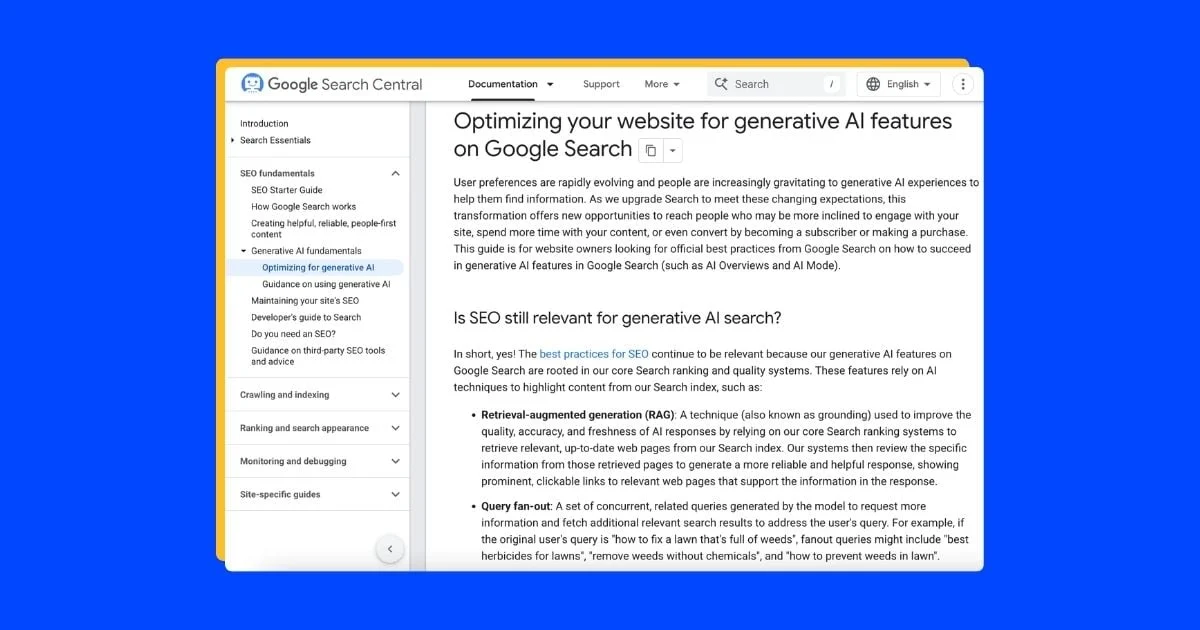
In late May 2026, Google officially released its first comprehensive guidance on the inner workings of its AI Overviews and AI Mode features. This landmark publication, shared on the Google Search Central blog, offers unprecedented clarity, unequivocally stating that the core principles of effective search engine optimization (SEO) remain paramount for visibility in these burgeoning generative AI search experiences. The guidance directly addresses and debunks a raft of speculative "AI optimization" tactics that have proliferated over the past year, emphasizing instead the enduring importance of fast, accessible websites, content demonstrating genuine expertise, and robust local reputation signals. These are not new demands, but rather the foundational elements that have long driven search visibility, now re-contextualized for the AI-powered search landscape.
The timing of this release is significant. Following the widespread rollout of AI Overviews in mid-2025, search marketers and business owners found themselves navigating a complex and often contradictory ecosystem of advice. Companies specializing in AI optimization services touted proprietary methods involving specific file formats, content "chunking," and AI-specific rewrites. However, Google’s latest documentation explicitly dismisses these approaches, dedicating a section to "Mythbusting" that directly challenges the efficacy of such specialized tactics for AI search performance. This clarification serves as a powerful validation for those who prioritized time-tested SEO strategies, while offering a clear directive for businesses seeking to enhance their presence in AI-driven search results.
A Shift from Speculation to Substance: Google’s Official Stance
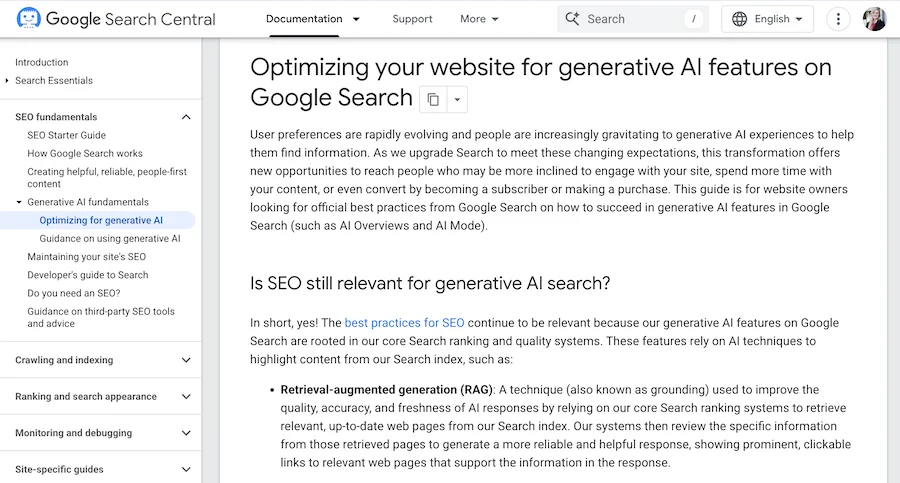
The new guidance, titled "Optimizing for generative AI features on Google Search," is housed within Google Search Central’s extensive documentation. Announced at Google I/O 2026, the document aims to demystify AI Overviews, AI Mode, and the emerging category of agentic search experiences – systems designed to perform tasks on behalf of users. A central question that has loomed since AI Overviews’ inception has been: "Does SEO still matter for AI search?" Google’s answer is a resounding "yes."
Nikiya Griffith, Director of Organic Growth at BX Studio, a digital marketing agency, has observed this convergence in practice for some time. "We’ve seen that about 80% of the time, what’s good for SEO is good for GEO [Geographic Optimization]," Griffith stated. "Our most successful strategic initiatives over the last year have been ones where SEO and GEO were approached in unison as one holistic strategy. Of course, you still need to devote time and attention to the considerations that are unique to GEO or SEO, but overall, we really see GEO as an extension of good SEO."
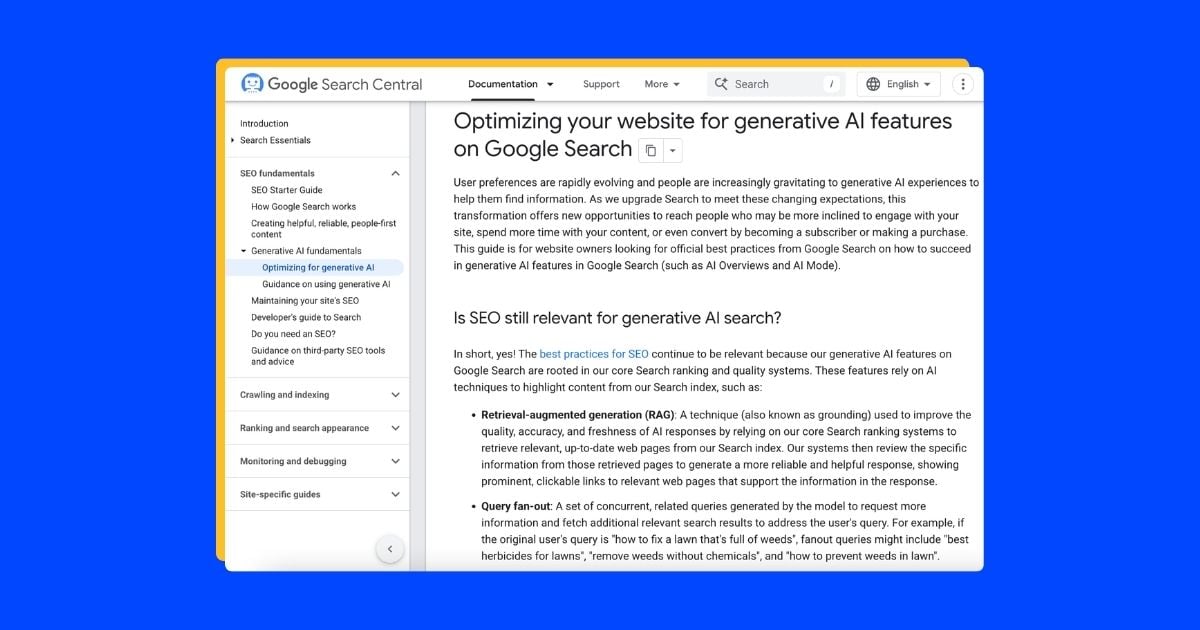
Google’s official documentation aligns perfectly with this perspective. The search giant confirms that its generative AI features draw from the same Search index as traditional results and utilize the same ranking systems. Consequently, achieving visibility in AI Overviews or AI Mode is fundamentally contingent upon succeeding in traditional search. The guidance coalesces around three core themes: foundational SEO, demonstrable expertise, and trust and local relevance. These are not novel requirements but rather a clarification of existing signals now applied to AI-powered experiences. For small and medium-sized businesses (SMBs), this offers a substantial advantage, confirming that prior investments in solid SEO practices retain significant value, contrary to the narrative pushed by some AI optimization service providers.
The Pillars of AI Search Visibility: What Google Says Matters
Google’s guidance, while detailed, distills into three primary areas that will feel familiar to seasoned SEO professionals.
Foundational SEO: The Unchanging Bedrock
The ability of AI systems to discover, access, understand, and retrieve content remains the cornerstone of search performance. This process operates as it always has. Google’s documentation explicitly highlights crawlability, site structure, mobile usability, page speed, and internal linking as critical factors. These elements not only influence traditional search rankings but are also integral to how AI Overviews access and process information.
For instance, a local plumbing company in Phoenix with a slow-loading mobile website faces a dual challenge: it hinders traditional search visibility and impedes AI Overviews’ ability to efficiently retrieve relevant information. Google’s clarification underscores that these are not separate issues but facets of the same underlying problem. For most SMBs, the technical prerequisites are not overly complex. Ensuring content is crawlable, the website offers a seamless mobile experience, and pages meet basic indexing eligibility requirements covers the majority of technical considerations outlined by Google.
Content Built on Real Experience: The Power of Unique Insights
This is arguably the most emphasized aspect of Google’s guidance, and it warrants careful consideration. Google explicitly prioritizes what it terms "non-commodity content" – content that transcends generic information readily available through a simple search. The distinction is not about length or format, but about the presence of genuine knowledge and unique insights not easily replicated elsewhere.
Google provides a clear example: a summary of existing advice is considered commodity content. In contrast, a first-hand account detailing a specific experience, such as "Why We Waived the Inspection and Saved Money: A Look Inside the Sewer Line," exemplifies non-commodity content. This type of content reflects lived experience and specialized knowledge.
For SMBs, this presents a significant structural advantage over larger publishers or national brands. An HVAC technician in Cleveland, for example, who can offer detailed insights into why heat pumps underperform during polar vortex conditions, including specific settings to adjust and common system failure points, provides value that a national publisher offering generic HVAC advice cannot match. Similarly, a dental practice that can articulate the subtle nuances patients notice during their first Invisalign appointment, drawn from hundreds of patient cases, possesses knowledge that competitors cannot easily duplicate.
Businesses operating at the front lines of customer interaction often possess proprietary information that larger entities struggle to access or replicate. Google’s guidance directs businesses to make this inherent expertise visible. "If you have genuinely unique insights to share, whether it’s in the form of expert quotes, original data, or something else, you’re going to have a much better chance of winning in organic and AI search," Nikiya Griffith noted. "You still need to make sure you’re following best practices and formatting fundamentals, so your content can be easily crawled and gets discovered. But quality beats quantity if you’re aiming for long-term growth."
Local Relevance and Trust Signals: The Foundation of Community Search
Google’s guidance highlights the continued importance of signals that build trust and establish local relevance. These include Google Business Profile (formerly Google My Business) listings, customer reviews, citation consistency across online directories, and local mentions. These elements carry significant weight in both traditional and AI-powered local search results.
For SMBs, reviews that detail specific services or outcomes are more valuable than generic five-star ratings. A review stating "Arrived on time, fixed the leak" offers less context to AI systems than one describing a specific scenario: an emergency repair at 2 a.m., or a problem that two other companies had misdiagnosed. Such specific details provide Google’s systems with richer context about the business’s capabilities and performance.
Citation consistency is also crucial. Discrepancies in a business’s name, address, or phone number across different online directories can weaken trust signals. Rectifying these inconsistencies benefits both traditional and AI-driven local search visibility.
Debunking the Myths: What Google Says is Less Important
The "Mythbusting" section of Google’s AI search guidelines is particularly valuable, offering businesses the opportunity to save time and resources by focusing on what truly matters. Google explicitly states that five specific tactics are not required for AI search visibility.
Llms.txt Files: A Passing Fad
An llms.txt file, a markdown document placed at a site’s root directory to summarize its content and link to key pages, was proposed in 2024 as a way for AI systems to orient themselves without extensive crawling. The SEO industry quickly adopted this concept. However, empirical data has largely shown its ineffectiveness. A May 2026 analysis by Ahrefs, examining 137,000 websites, found that a staggering 97% of existing llms.txt files received zero traffic, meaning no bots or human users accessed them. Of the minuscule percentage that did receive traffic, AI retrieval bots accounted for only 1.1% of requests, with general chat applications fetching them more frequently than specialized AI bots. Furthermore, Ahrefs observed that no AI bots sought out llms.txt files that did not exist, indicating no penalty for their absence.
Google’s guidance directly corroborates this data, stating that businesses do not need to create new machine-readable files, AI text files, or specialized markup for generative AI search. Google’s own Search Advocate, John Mueller, has previously described llms.txt as "a temporary crutch, perhaps to save some tokens" for AI coding tools parsing developer documentation, suggesting it was primarily designed for software developers rather than general business use.
Content Chunking: Write for Humans, Not Bots
Content chunking, the practice of breaking down content into short, discrete sections under the assumption that AI systems retrieve information in small pieces, is also addressed. Google clarifies that its systems are capable of understanding multiple topics on a single page and can surface relevant portions without requiring publishers to pre-segment their content. The recommendation is clear: pages should be written with the human audience in mind, with content length dictated by the subject matter, not by perceived AI preferences.
AI-Focused Content Rewrites: Redundancy is Unnecessary
Some businesses have been engaged in rewriting existing, effective content to incorporate "long-tail keywords" and "AI-retrieval phrases." Google asserts that this is unnecessary. Its AI systems possess a robust understanding of synonyms and general meaning, rendering it redundant to mirror every possible variation of a search query. Chasing such specific retrieval phrases is described as a pursuit with diminishing returns.

Specialized AI Schema: Existing Markup Suffices
Structured data continues to be vital for rich results like star ratings, FAQ boxes, and local business details. However, Google explicitly states that there is no "special schema.org markup for AI search." No AI-specific types or new properties are required. If a business’s structured data is already optimized for traditional search, it will be recognized and utilized by AI features.
Nikiya Griffith cautions about potential pitfalls in this area: "There’s been a lot of mixed messaging around schema markup recently, and as a result, we’ve seen an uptick in what I consider schema slop. I think the intention behind it is good; people want to follow best practices, but if you have an AI tool write schema for you, and you don’t have an expert with technical SEO or GEO experience to review that code, you can actually wind up doing yourself a disservice. If you’re going to add schema markup to your website, you need to make sure it matches what’s actually on the page, and you need to validate it." The key takeaway is that existing, accurate, and validated structured data is what matters; adding more without these conditions can be counterproductive.
Applying the Guidance: A Simple, Universal Question
Google’s guidance can be distilled into a single, actionable question for any piece of website content: "Would a customer who already trusted your business find this genuinely useful?"
This customer-centric approach encourages a review of each page from the perspective of a potential client. The focus should be on identifying and enhancing pages that:
- Offer unique insights and demonstrable expertise.
- Reflect real-world experience and provide practical solutions.
- Clearly articulate the value proposition and specific services offered.
Pages that sound generic or indistinguishable from competitors’ content are those that warrant immediate attention. Conversely, content that authentically reflects a business’s problem-solving approach and unique perspective is already well-aligned with Google’s AI search directives. The content that historically underperforms in traditional search – thin, generic pages that offer little beyond readily available information – is also the content most likely to struggle in AI search. This fundamental dynamic has not changed; AI search simply amplifies its visibility.

Implications and the Future of Search
Google’s latest guidance offers a valuable service to the digital marketing community by providing a definitive, published reference point for AI search optimization. This clarity empowers businesses to discern legitimate strategies from speculative tactics. When presented with new "AI optimization" services, such as those involving chunking, llms.txt files, or specialized schema, businesses can now cross-reference these claims with Google’s official pronouncements.
The enduring message is that the work that has always driven search visibility – technical accessibility, demonstrated expertise, and local trust signals – remains the bedrock of success in AI-powered search. The integration of AI into search does not necessitate a new playbook; rather, it intensifies the importance of executing the existing one with greater consistency and a sharper focus on genuine value for the user. The era of AI-driven search is here, but its foundations are built on the enduring principles of quality content and user-centric design that have guided SEO for years.