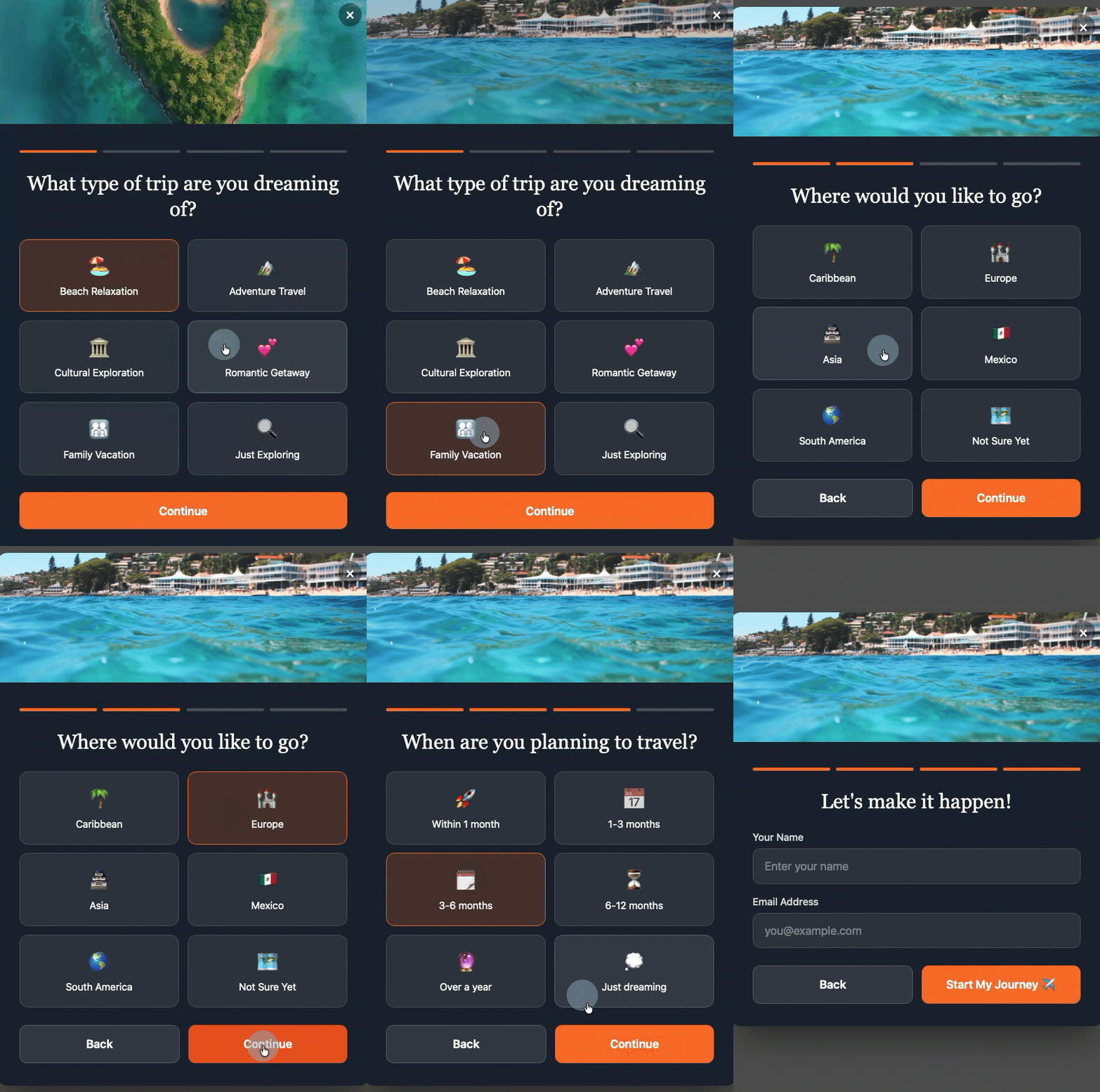
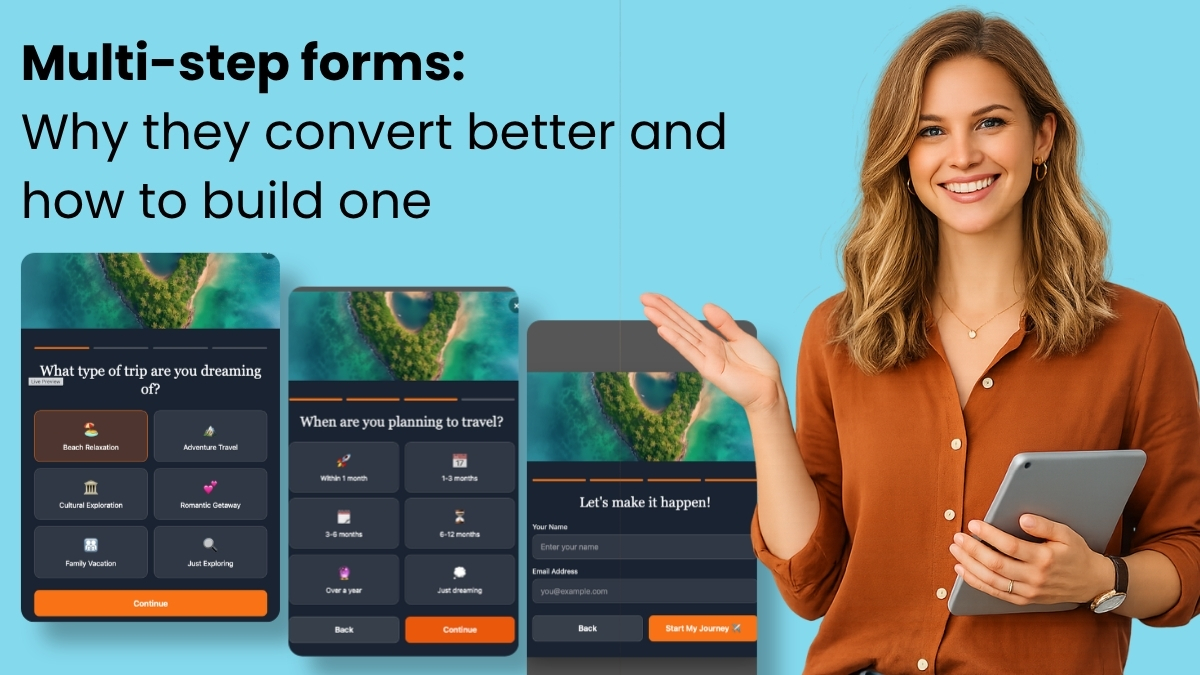
In an increasingly competitive digital landscape, businesses are continually seeking innovative strategies to optimize user engagement and enhance conversion rates. A significant advancement gaining traction is the adoption of multi-step forms, a design paradigm that fundamentally redefines how online information collection is approached. This method segments a lengthy input process into a series of concise, manageable screens, moving away from the traditional single-page format that often overwhelms prospective customers. Instead of presenting a monolithic block of fields requesting personal details, company affiliation, and interests simultaneously, multi-step forms guide users through a conversational flow, asking one or a few related questions per screen. This incremental approach not only makes the overall process feel less daunting but has also been demonstrably proven to yield substantially higher conversion rates, with industry research consistently indicating a conversion efficacy roughly three times greater than that of their single-page counterparts. This evolution in form design is particularly critical for businesses aiming to capture comprehensive user data without deterring potential subscribers or clients, paving the way for more sophisticated personalization and targeted marketing efforts.
The Psychological Underpinnings of Enhanced Conversions
The remarkable success of multi-step forms is not merely a design preference but is deeply rooted in established principles of human psychology and user experience. Three core psychological concepts explain why breaking down a form into smaller, sequential steps dramatically increases completion rates: progressive disclosure, the completion effect, and reduced perceived effort. Understanding these mechanisms is crucial for any organization looking to optimize its digital touchpoints.
-
Progressive Disclosure: This principle dictates that information should be revealed only when it is needed, preventing users from being overwhelmed by an excessive amount of data or choices upfront. A single-page form with numerous fields can trigger immediate cognitive overload, prompting a user to unconsciously evaluate, "Is this worth my time and effort?" before even beginning. This initial assessment often leads to abandonment, especially if the perceived effort outweighs the immediate perceived benefit. Conversely, a multi-step form that commences with a single, simple question effectively bypasses this initial hurdle. Users perceive a minimal commitment, answer the question, and naturally progress, building momentum without the initial mental barrier of a long list of requirements. This gradual unveiling fosters a sense of ease and encourages forward movement.
-
The Completion Effect: Once an individual invests even a minimal amount of effort into a task, they are psychologically more inclined to see it through to completion. This phenomenon, often observed in behavioral economics, means that after answering the first question in a multi-step form, a user experiences a subtle sense of accomplishment and a desire to resolve the incomplete task. Incomplete processes create a psychological tension that individuals naturally seek to alleviate. Each completed step provides positive reinforcement, fueling the motivation to continue to the next. This intrinsic drive makes users more persistent, transforming a potentially tedious data entry process into a series of achievable micro-goals.
-
Reduced Perceived Effort: While the total number of fields to complete remains the same whether they are presented on one page or across multiple screens, the perception of effort changes significantly. Five fields on a single screen can feel like a laborious chore, a formidable barrier to entry. However, those same five fields distributed across five separate screens can feel like a simple conversation or a quick series of clicks. The psychological burden is drastically reduced. This re-framing transforms the interaction from a data-collection exercise into a more engaging, less demanding experience. UX researchers consistently find that reducing perceived effort is a cornerstone of effective digital design, directly correlating with improved user satisfaction and conversion metrics.
Numerous studies in digital marketing analytics further corroborate these findings. For instance, an analysis across various e-commerce, lead generation, and service-based websites has shown that forms implementing multi-step designs often see a 200-300% increase in submission rates. This translates directly into more leads, more subscribers, and ultimately, greater business growth. The strategic application of these psychological principles transforms a functional necessity into a powerful conversion tool.
Anatomy of an Effective Multi-Step Form Design
While the psychological advantages are clear, successful implementation of multi-step forms hinges on adherence to specific design best practices. Deviating from these guidelines can inadvertently reintroduce friction, negating the inherent benefits.
-
Start with the Easiest Question First: The initial interaction should be virtually effortless. A question such as "What brings you here today?" offering clickable options, rather than a text input field, sets a low barrier to entry. This builds immediate momentum and commitment without demanding significant cognitive effort from the user. It is a warm invitation, not an interrogation. Asking for personal details like a full name or email address upfront can be perceived as intrusive before a user has understood the value proposition or committed to the process.
-
Maintain One Question Per Step (or Closely Related Few): The core principle of reduced perceived effort is undermined if a single step begins to resemble a mini-form. The golden rule for multi-step design is typically one question per screen. In instances where questions are highly interdependent (e.g., city and state), a maximum of two very closely related fields might be acceptable, but the overarching goal is to keep each screen feeling minimal and swift to complete. This ensures the conversational flow is maintained and prevents users from feeling overwhelmed at any point.
-
Implement Clear Visual Progress Indicators: Uncertainty breeds anxiety. Users need to know where they are in the process and how much remains. A simple step counter (e.g., "Step 2 of 4") or a dynamic progress bar provides crucial visual feedback. This clarity manages user expectations, reinforces the completion effect with each increment, and instills confidence that the end is in sight, thereby reducing the likelihood of abandonment.
-
Strategically Place Name and Email Fields Last: This counterintuitive approach is highly effective. By placing personal information fields towards the end, after users have engaged with several interest-based or qualifying questions, they have already invested time and effort into the interaction. At this stage, entering an email address or name feels like a natural conclusion to a value exchange, rather than an initial barrier to accessing information. This sequence leverages the completion effect, as users are less likely to abandon after having already committed to multiple prior steps.
-
Ensure Every Answer is Actionable: A well-designed multi-step form is not merely about collecting data; it’s about collecting useful data. Every question posed should directly map to a specific tag, custom field, or segmentation criterion within the associated email marketing or CRM platform. If a question does not serve to qualify a subscriber, personalize future communications, or inform a business decision, it should be eliminated. This meticulous approach ensures that the data collected is immediately actionable, transforming raw input into strategic insights for targeted engagement.
The Dawn of AI-Powered Form Building: A Paradigm Shift
The evolution of multi-step forms has been significantly accelerated by the advent of artificial intelligence, democratizing access to sophisticated design and data management capabilities. Historically, creating dynamic, multi-step forms required significant technical expertise in coding (HTML, CSS, JavaScript) or reliance on rigid templates that offered limited customization. The emergence of AI-powered form builders marks a paradigm shift, enabling businesses of all sizes to deploy highly effective, personalized forms with unprecedented ease.
A prime example of this innovation is the AWeber AI Signup Form Builder. This tool allows users to generate fully functional multi-step forms from a single, conversational plain-language prompt. Instead of dragging and dropping elements, configuring fields manually, or wrestling with code, a user simply describes their desired form – for instance, "a five-question quiz that segments subscribers by interest," or "a three-step qualification form for my consulting business." The AI then generates a custom, branded form complete with appropriate animations, seamless transitions, and automatic field mapping. This no-code approach is revolutionizing how marketers and small business owners approach lead generation and data collection.
During a recent episode of "The Shift AI Show," Chris Vasquez, AWeber’s Chief Product Officer, provided a compelling live demonstration of this capability. He constructed a multi-step personality quiz in real-time, showcasing how the AI builder created a complete quiz with each question presented on its own screen, allowing visitors to answer by clicking options rather than typing. Crucially, after users entered their name and email, the form immediately displayed their personality type. Beyond the user interface, the builder automatically created corresponding custom fields and tags within AWeber’s platform. For instance, a subscriber might appear on the list with the tag "personality: visionary" already applied. This instant, intelligent tagging eliminates manual data entry and configuration, enabling immediate, hyper-targeted follow-up actions. As Vasquez highlighted during the demo, "It’s so frictionless for them to give you that info up front. And frankly, it’s kind of fun to interact with, so it almost entices engagement. You don’t have to go, ‘I’ll learn more about them later.’ You can get a lot of that information up front without driving people away." This statement encapsulates the core value proposition: superior data collection paired with an enjoyable user experience.
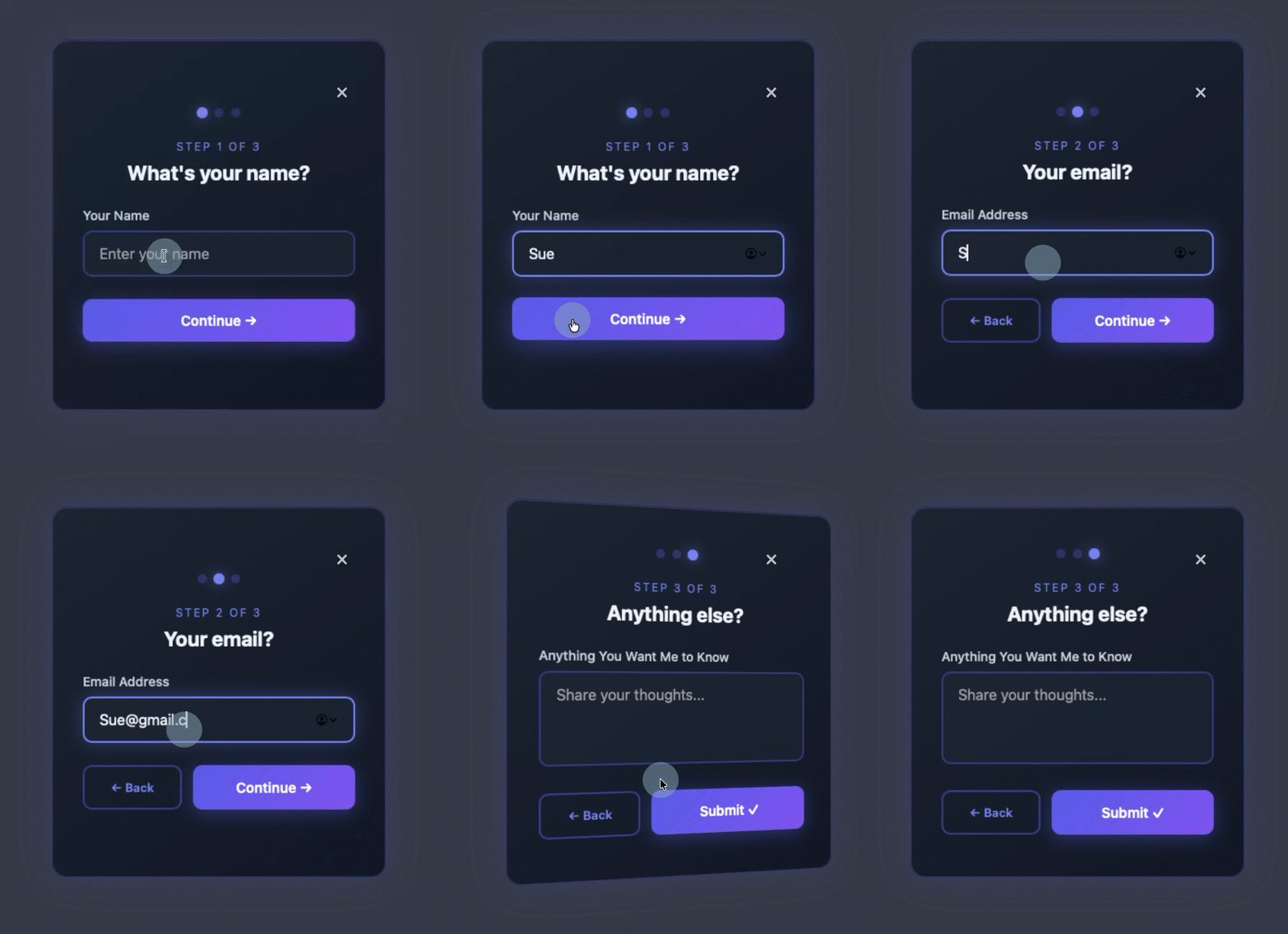
This AI-driven approach stands in stark contrast to traditional form templates. While templates offer pre-built layouts, they often come with fixed fields, preset styling, and a structure decided by someone else. Users typically spend considerable time modifying these templates to align with their brand and specific needs, often finding them more restrictive than time-saving. AI, conversely, builds forms from scratch based on user intent, offering unparalleled customization and flexibility without the need for technical expertise. It allows businesses to upload visual inspiration, guiding the AI to create a form that reflects their aesthetic preferences without being a direct copy.
Transforming Email Marketing with Intelligent Data Collection
The strategic implementation of multi-step forms, particularly when powered by AI, extends far beyond mere conversion rate optimization. It fundamentally enhances the efficacy and sophistication of email marketing strategies by providing a richer, more actionable dataset at the point of signup.
-
Automated, Granular Segmentation: One of the most significant advantages is the seamless integration of segmentation. Each answer collected through a multi-step form can automatically apply a specific tag or populate a custom field within the email marketing platform. This eliminates the laborious manual process of segmenting subscribers after they join. For example, a subscriber indicating interest in "vacation getaways" can be automatically routed into one segment, while another expressing interest in "investment property" enters a different, highly targeted group. This pre-segmentation ensures that marketing efforts are relevant from the very first interaction, drastically improving engagement rates and reducing unsubscribes.
-
Hyper-Personalized Welcome Sequences: Generic welcome emails often fall flat because they attempt to cater to a diverse audience with a single message. Multi-step forms enable the creation of highly specific welcome sequences. Based on quiz results, interest selections, or qualification answers, different automated email journeys can be triggered. A subscriber who selected "I need help right now" on a qualification form can immediately receive an urgent follow-up sequence, whereas someone who chose "just exploring" can be entered into a nurturing sequence designed for long-term engagement. This level of personalization establishes a strong, relevant relationship with the subscriber from the outset.
-
Dynamic Content for Enhanced Relevance: Advanced email marketing platforms, such as AWeber, allow for the display of different content blocks within a single email based on subscriber tags. Multi-step forms that apply precise tags during signup make dynamic content eminently practical and powerful from the very first send. Imagine an email where different product recommendations or service offerings are displayed based on the interests a subscriber indicated during form completion. This eliminates the need for manual tagging or waiting to gather data through subsequent interactions, delivering immediate, personalized value and significantly boosting click-through rates and conversions.
The cumulative effect of these improvements is a substantial increase in marketing ROI. By collecting better, more actionable data upfront, businesses can execute more targeted campaigns, foster stronger customer relationships, and ultimately drive greater revenue.
Navigating the Multi-Step Form Landscape: Best Practices and Considerations
To fully leverage the potential of multi-step forms, it is essential to consider several practical aspects, from the optimal number of steps to technical implementation and tool selection.
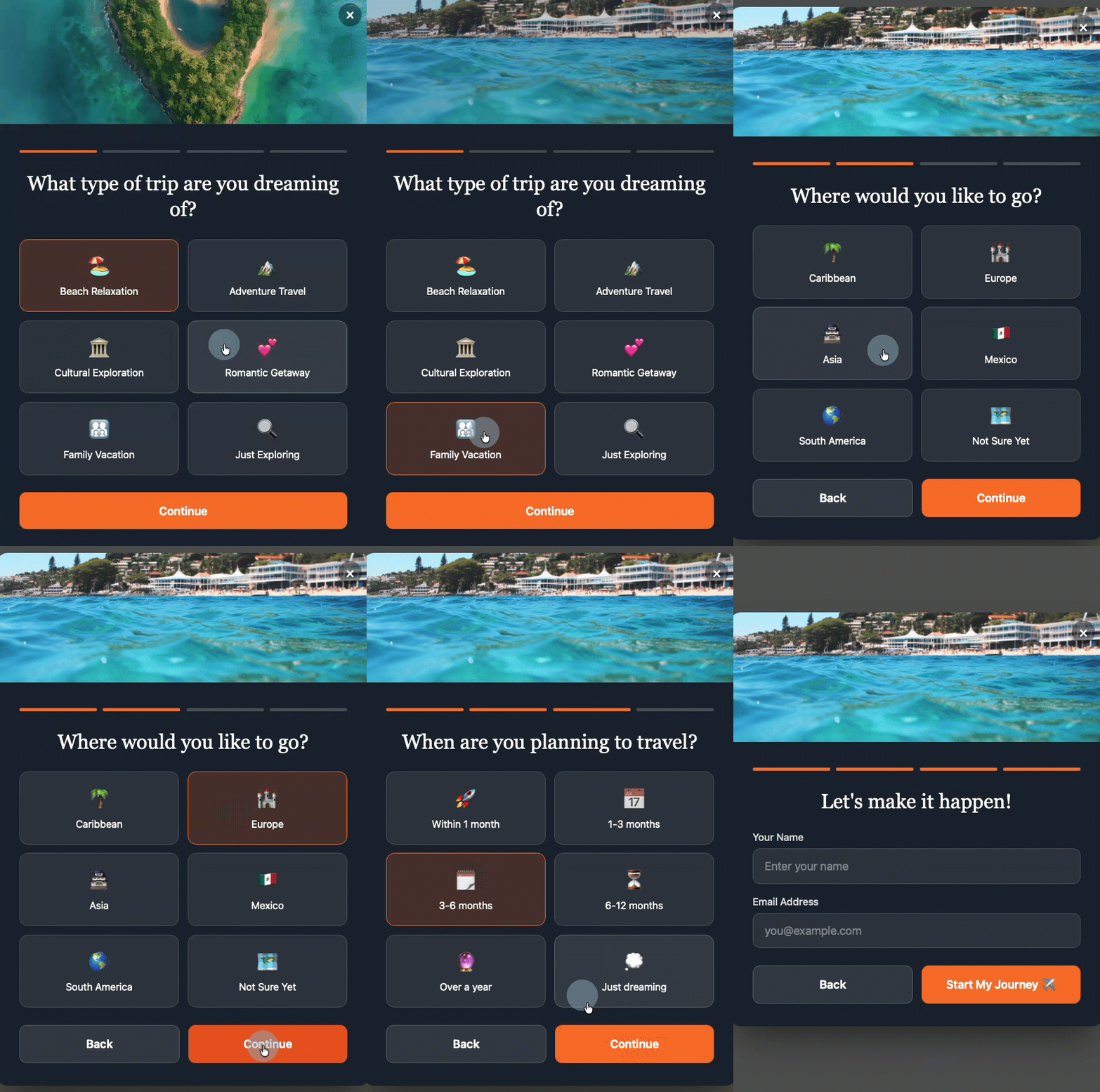
-
Optimal Number of Steps: While there’s no universally fixed number, most effective multi-step forms typically range from three to five steps. Fewer than three steps might not fully capitalize on the progressive disclosure and completion effect benefits, as the form could still feel somewhat compressed. Conversely, exceeding five steps risks reintroducing user fatigue and increasing drop-off rates, even with the psychological advantages in play. The ideal number is ultimately dictated by the specific data required and the perceived value offered in exchange for that information. Every step must serve a clear purpose related to segmentation, personalization, or qualification; superfluous steps should be eliminated.
-
Technical Implementation and Accessibility: The ability to build multi-step forms without requiring coding knowledge is a significant leap forward. Tools like the AWeber AI Signup Form Builder epitomize this by allowing creation through plain-language prompts, generating fully functional forms with transitions and automatic field mapping. This democratizes access to advanced form design, making it accessible to marketers and small business owners who lack development resources. For integration into existing web infrastructure, such as WordPress sites, modern solutions often involve installing a single code snippet or a dedicated plugin, ensuring seamless deployment and management without ongoing code modifications.
-
Choosing the Right Tool: The market offers various form builders, but the "best" tool depends on specific needs. For small businesses and marketers focused on email marketing efficacy, an AI-powered builder that integrates directly with their email platform offers unparalleled advantages. Traditional form builders, while robust, often require manual configuration for each field, integration with third-party tools for automation, and a more hands-on approach to design. A tool that creates custom, branded, multi-step forms from conversational prompts, automatically handling custom fields and tags, streamlines the entire process, making it the most efficient choice for maximizing email marketing impact.
Challenges and Future Outlook
While multi-step forms offer significant advantages, businesses must also be mindful of potential pitfalls. Over-segmentation without a clear strategy for utilizing the data can lead to unnecessary complexity. Furthermore, while collecting more data, businesses must remain vigilant about data privacy and compliance with regulations such as GDPR and CCPA, ensuring transparency and consent in all data collection practices.
Looking ahead, the integration of AI into user experience and marketing automation tools is set to deepen. We can anticipate even more intuitive, predictive form builders that adapt to user behavior in real-time, further enhancing personalization and conversion rates. The future of online interaction points towards increasingly intelligent, conversational interfaces that seamlessly gather valuable information while providing a delightful user experience.
In conclusion, multi-step forms represent a critical evolution in digital engagement, offering a proven pathway to significantly higher conversion rates and richer subscriber data. By leveraging fundamental psychological principles and embracing cutting-edge AI technology, businesses can transform a mundane necessity into a powerful strategic asset, driving more effective email marketing campaigns, fostering deeper customer relationships, and ultimately securing a competitive edge in the digital economy.