The landscape of e-commerce is constantly evolving, and for aspiring online entrepreneurs, dropshipping remains a compelling entry point into the market. Despite perceptions of a saturated market, the dropshipping sector is projected for substantial growth, with industry analysis forecasting a valuation exceeding $1.2 trillion by 2030. This continued expansion underscores the enduring viability of the dropshipping model, which offers a streamlined path to launching an online store with an extensive product catalog without the significant upfront investment typically associated with traditional retail. However, the contemporary dropshipping environment demands a more strategic approach than simply sourcing inexpensive items and hoping for the best. Success now hinges on offering customers unique value propositions, whether through expedited shipping, superior customer support, or access to exclusive, high-quality products that cannot be readily found elsewhere.
This critical need for differentiation has led to the emergence of platforms designed to empower dropshippers. Among these, dropXL and Zendrop represent distinct approaches to serving the needs of online retailers. dropXL distinguishes itself through a focused catalog of over 130,000 vidaXL products, specializing in high-quality furniture and home goods, coupled with efficient global shipping from localized warehouses and a commission-free model. In contrast, Zendrop presents a broader ecosystem, boasting over a million products and a suite of integrated tools, including AI-powered advertising and store creation, product discovery, sourcing services, coaching, and print-on-demand capabilities. This article provides an in-depth comparison of these two platforms to assist entrepreneurs in selecting the best fit for their e-commerce strategies.
Quick Verdict: Strategic Choices Between dropXL and Zendrop
The optimal choice between dropXL and Zendrop is intrinsically linked to an entrepreneur’s specific business objectives and current stage of development. For businesses aiming to establish a strong presence in the home and garden sector, dropXL emerges as the superior option. Its curated selection of quality products, robust return support, and real-time inventory updates ensure a streamlined and reliable supply chain, crucial for maintaining customer satisfaction and operational efficiency in these product categories.
Conversely, Zendrop is better positioned for individuals embarking on the journey of building and testing a new e-commerce brand from the ground up. The platform’s comprehensive feature set, including a free entry-level plan, extensive product variety, 24/7 customer support, and advanced tools for AI-driven store and advertisement creation, product sourcing, and print-on-demand services, provides a holistic environment for experimentation and rapid iteration. This makes Zendrop an invaluable resource for those still defining their niche and refining their business model.
dropXL vs Zendrop: A Comprehensive Overview
While comparing dropshipping platforms often boils down to pricing, product selection, and integration capabilities, the evaluation of dropXL and Zendrop necessitates a more nuanced examination, considering their distinct philosophies and feature sets.
What is dropXL?
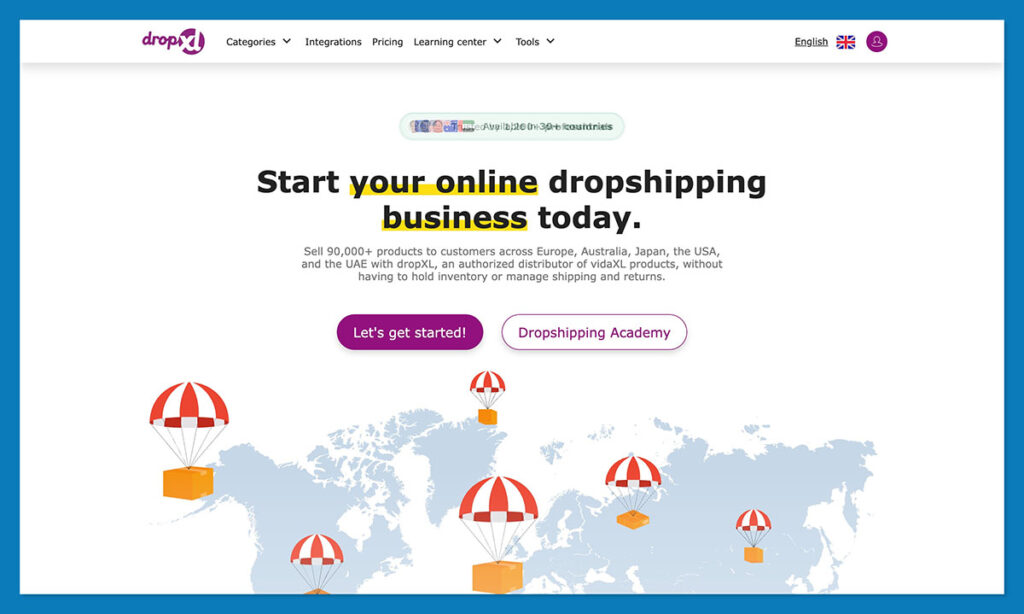
dropXL operates as a specialized dropshipping supplier, intricately linked with the vidaXL product catalog. It offers sellers access to approximately 90,000 distinct products, which can be listed on their own online stores or through various marketplace storefronts. The core value proposition of dropXL lies in its comprehensive management of logistics, including shipping, order tracking, and handling of returns, thereby relieving sellers of these complex operational burdens.
The platform’s product assortment is strategically concentrated on home and outdoor merchandise. This includes a wide array of items such as coffee tables, lounge sets, storage cabinets, and pet accessories, among other practical household goods. dropXL facilitates global distribution through a network of strategically located warehouses across key international markets, including Europe, the United States, and Australia, ensuring faster delivery times and potentially lower shipping costs for a global customer base.
The backend infrastructure of dropXL is designed for operational efficiency. It provides essential tools such as product feeds, real-time updates on pricing and stock levels, API access for custom integrations, robust order management capabilities, and streamlined return processing. This integrated approach aims to simplify the operational complexities of dropshipping, allowing sellers to focus on marketing and customer engagement.
Pros of dropXL:
- Focused, High-Quality Product Catalog: Specializes in a curated selection of vidaXL products, particularly strong in furniture, home, and garden categories, known for their quality.
- Streamlined Operations: Handles shipping, tracking, and returns, reducing the operational burden on sellers.
- Global Warehousing: Localized warehouses in key markets ensure faster shipping and potentially lower costs.
- No Commissions: A straightforward monthly fee structure with no per-order commission.
- Real-time Data Feeds: Hourly inventory updates and daily pricing updates help maintain accuracy.
- Dedicated Support for Returns: Offers robust support for product returns, crucial for larger items.
- DropXL Academy: Provides educational resources for sellers.
Cons of dropXL:
- Limited Product Variety: The catalog is significantly smaller and more niche-focused compared to broader platforms.
- Subscription Required for Full Access: A monthly fee is necessary to access the full catalog and features.
- Multiple Subscriptions for Multi-Country Sales: Sellers operating in multiple countries may need separate subscriptions for each region.
- Less Emphasis on AI Tools: Does not offer the extensive AI-driven marketing and store-building tools found on other platforms.
What Is Zendrop?
Zendrop positions itself as a more comprehensive e-commerce platform that extends beyond traditional dropshipping. Upon account creation and store integration, users gain access to an expansive catalog exceeding one million products across a multitude of categories. Zendrop manages the fulfillment process once orders are received, mirroring the operational model of other dropshipping suppliers.
However, Zendrop differentiates itself by offering a rich array of supplementary features designed to support business growth and operational efficiency. These include AI-powered tools for creating entire online stores and video advertisements, advanced product discovery algorithms, custom product sourcing services, and integrated print-on-demand capabilities. For newcomers to the e-commerce industry, Zendrop provides access to live, weekly coaching sessions and extensive support resources, fostering a guided entry into the dropshipping landscape.
Essentially, Zendrop appears engineered for entrepreneurs seeking a hands-on, supportive introduction to e-commerce, while dropXL is optimized for sellers who require a refined and focused supply channel with a specialized product catalog.
Pros of Zendrop:
- Vast Product Selection: Offers over a million products across a wide range of categories, ideal for diverse niches.
- Comprehensive Feature Suite: Includes AI store builders, AI video ads, product discovery, sourcing, and print-on-demand.
- Free Plan Available: Allows users to start with no upfront cost, facilitating initial exploration.
- 24/7 Support and Coaching: Provides extensive support, including live coaching for beginners.
- AI-Powered Tools: Streamlines store creation, marketing, and product identification.
- Print-on-Demand Integration: Enables the creation of custom-branded merchandise.
- Flexible Pricing Tiers: Offers options from a free plan to premium packages with advanced features.
Cons of Zendrop:
- Quality Variability: With a vast supplier network, product quality can vary, requiring diligent vetting.
- Potential for Overwhelm: The sheer volume of products and features can be daunting for some users.
- Subscription Costs for Advanced Features: Access to the most powerful tools requires higher-tier paid plans.
- Returns Handling May Be Less Direct: While managed, the direct customer interaction for returns might differ from platforms with more integrated supplier support.
dropXL vs Zendrop: Product Range and Quality
The sheer volume of products offered by Zendrop, exceeding one million, might suggest an inherent advantage. This extensive catalog is complemented by product sourcing services for unique items and integrated print-on-demand functionality, providing a vast array of options for sellers. The dropshipping catalog spans diverse categories such as pet supplies, beauty and skincare, home and kitchen, tech and electronics, fitness and wellness, and apparel, essentially covering almost any conceivable product type. Zendrop also features highly affordable items, with examples like silicone phone cases retailing for around $10.68, sourced at approximately $2.67. This broad selection is particularly beneficial for dropshippers who are still in the process of identifying their niche, though it can become overwhelming for those with a defined market. It is also important to note that while Zendrop vets its suppliers, the quality of products can vary across its extensive network.
In contrast, dropXL provides access to over 130,000 products directly sourced from the vidaXL catalog. The primary focus is on furniture, garden supplies, outdoor equipment, pet products, storage solutions, and other practical household items. While these categories represent the bulk of the offerings, there are also options in clothing and accessories, and entertainment products. The products available through dropXL generally exhibit a high standard of quality, which is advantageous for profit margins. The consolidation of suppliers under the vidaXL umbrella simplifies the process of ensuring product consistency and quality control. A potential drawback is that specific product costs are not publicly disclosed until an account is created and a product feed is downloaded.
In summation, dropXL is more suitable for businesses with a clearly defined niche, particularly in the home and lifestyle sectors, while Zendrop is better suited for entrepreneurs who are exploring various product ideas and testing different market angles due to its expansive and diverse product selection.
dropXL vs Zendrop: Shipping and Fulfillment
dropXL’s fulfillment model closely mirrors the traditional supplier-centric approach, with products dispatched directly to end customers from the nearest available warehouse. The company maintains warehouses in over 30 countries, facilitating efficient global distribution. Sellers receive tracking details for all shipments, and dropXL also manages the return process. This streamlined logistics is particularly beneficial for dropXL’s catalog, which includes large and often bulky items like furniture, where reliable shipping and return handling are paramount for customer satisfaction and operational success. The platform simplifies the complexities of shipping large items for new sellers.
Zendrop offers a more multifaceted fulfillment stack. For standard dropshipping, it operates similarly to dropXL. However, Zendrop’s approach to returns management differs; customers cannot directly contact Zendrop for issue resolution, unlike with dropXL. Despite this, Zendrop provides a third-party logistics (3PL) service for US and China-based sellers, offering same-day or next-day fulfillment with carriers like USPS and UPS, and notably, no storage fees. Additionally, Zendrop uniquely offers a print-on-demand service, which dropXL does not.
Both platforms strive for timely delivery and cover extensive global territories. dropXL offers greater convenience for managing returns, whereas Zendrop excels in faster domestic shipping options, its 3PL services, and its print-on-demand capabilities.
Extra Features and Integrations
Zendrop demonstrably leads in terms of the sheer volume and variety of extra features it offers. The platform incorporates print-on-demand services, a suite of AI tools for website and advertisement creation, product sourcing capabilities, comprehensive coaching programs, and educational resources, including access to an "MCP server" for AI assistants. dropXL, by comparison, does not offer these advanced functionalities.
The supplementary features provided by Zendrop are exceptionally valuable for a specific segment of sellers. For entrepreneurs testing new business ventures, an AI-generated store populated with trending products and optimized with a conversion-ready Shopify theme can significantly accelerate the launch process. The AI ad generator simplifies customer acquisition, and the integrated discovery, expansion, and learning tools offer a substantial advantage in scaling operations. The inclusion of print-on-demand is particularly appealing, allowing businesses to diversify their product offerings beyond everyday items into more unique, branded merchandise.
Zendrop’s integration capabilities are robust, with direct connections for platforms such as Shopify, TikTok Shop, Wix, and ClickFunnels. These integrations facilitate one-click product importing, seamless order syncing, and automated fulfillment processes.
dropXL’s supplementary offerings are more conventional, focusing on core operational tools. These include API access for custom development, plugins for easier integration, product feeds for direct data import, and regular updates on pricing, stock levels, and product details, along with tracking numbers. The platform also features the dropXL Academy, providing educational content, and localized product information available in over 27 languages.
Regarding integrations, dropXL’s approach is less plug-and-play than Zendrop’s. While it offers API access, plugins, and product feeds that can be directly uploaded to e-commerce stores, and supports a handful of integration partners for direct connections, establishing these links might require more technical effort. Nevertheless, it allows connectivity with major platforms like Shopify and Amazon. Despite the perceived lack of advanced features and the slightly more involved integration process, dropXL remains an appealing option for established sellers who have already identified their market, developed a solid store, and formulated a comprehensive business strategy. Zendrop, conversely, appears to be more tailored to the needs of absolute beginners.
Pricing: dropXL vs Zendrop
dropXL simplifies its pricing structure with a single, straightforward plan. For a monthly fee of €30 (approximately $32 USD), users gain access to all products, data feeds, APIs, academy resources, and return support. There are no per-order commissions, and the cost of each product is paid only after it has been sold. It is important to note that the actual product cost is not visible until an account is created and a product feed is downloaded. A potential drawback is the requirement for a separate account and subscription for each country in which a seller operates, which could increase overall costs. However, dropXL offers a 30-day refund policy if no sales are made within that period, mitigating initial risk.
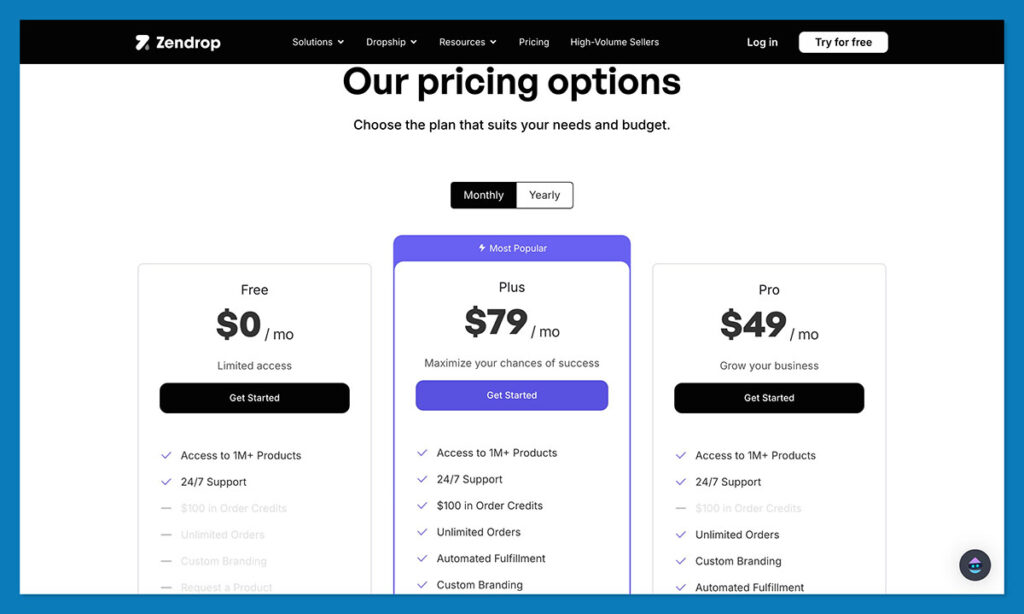
Zendrop provides a more tiered pricing model, catering to different levels of need and budget. The free plan offers access to over a million products and 24/7 customer support, serving as an entry point for exploration. The Pro plan, priced at $49 per month, unlocks unlimited orders, custom branding, automated fulfillment, product request features, and dedicated US products. For more advanced users, the Plus plan at $79 per month includes all Pro features, plus access to top-performing products, $100 in order credits, print-on-demand services, Zendrop AI, chargeback management, private product listings, and live coaching calls.
The tiered structure of Zendrop allows users to start for free and invest in premium features as their business scales and revenue grows. Zendrop also provides more transparent public pricing examples for products, such as a men’s slim-fit blazer listed at $18.71 with a suggested retail price of $50-$70, enabling potential users to better estimate profit margins before committing.
In essence, dropXL is ideal for those seeking predictable platform costs and a supplier-centric operational model, while Zendrop is more appealing to users who prefer a free entry point and the flexibility to pay for advanced tools as needed.
dropXL vs Zendrop: Ease of Use and Customer Support
For dropshippers starting from scratch, Zendrop generally offers a more intuitive user experience. The ability to create a free account, link a store, and begin listing products without initial payment significantly lowers the barrier to entry. Features like the AI store creator and ad builder are designed to expedite the initial setup and marketing efforts, saving considerable time and effort.
dropXL, while still user-friendly, can require a bit more initial setup. The necessity of separate accounts for each country of operation and less direct integrations compared to Zendrop might present a slightly steeper learning curve. However, the benefit is a reduced time spent sifting through vast product catalogs or evaluating supplier quality, given its specialized nature. Furthermore, dropXL’s enhanced return support is a significant advantage, especially when dealing with product categories like furniture where returns can be complex and costly. The reduced feature set of dropXL can also prevent new sellers from getting bogged down in constant experimentation, encouraging a more focused approach.
Both platforms provide excellent customer support. Zendrop offers 24/7 assistance across all its plans, supplemented by extensive online resources. Paid plans can include personalized coaching calls and chargeback management services. dropXL, with its single-tier structure, ensures comprehensive support for all users. This includes access to educational materials via its academy, help centers, and direct customer assistance.
Final Verdict: Recommending the Right Platform
The ultimate recommendation between dropXL and Zendrop hinges on the specific needs and strategic direction of the e-commerce business and its proprietor.
dropXL is the recommended choice for a focused retailer specializing in garden, outdoor furniture, or related home products. Its strength lies in providing a trustworthy supplier, direct shipping, reliable tracking, and comprehensive return support. The absence of per-order commissions simplifies financial planning, although the need for separate country-specific subscriptions could introduce additional costs for businesses operating internationally.
Zendrop is better suited for experimental entrepreneurs looking to explore new product avenues, rapidly launch websites, develop marketing campaigns, and test diverse business models. The synergy of dropshipping, print-on-demand, sourcing services, and AI-powered tools makes Zendrop a compelling option for those still identifying their most profitable ventures.
Both platforms excel in their respective domains. dropXL empowers sellers to build a reputable brand centered around a high-quality product catalog and efficient delivery. Zendrop, on the other hand, assists entrepreneurs in discovering viable product opportunities, launching their stores with remarkable speed, and leveraging advanced technology to drive growth. Ultimately, the choice depends on whether the priority is establishing a stable, niche-focused brand or embracing rapid experimentation and comprehensive digital tooling.