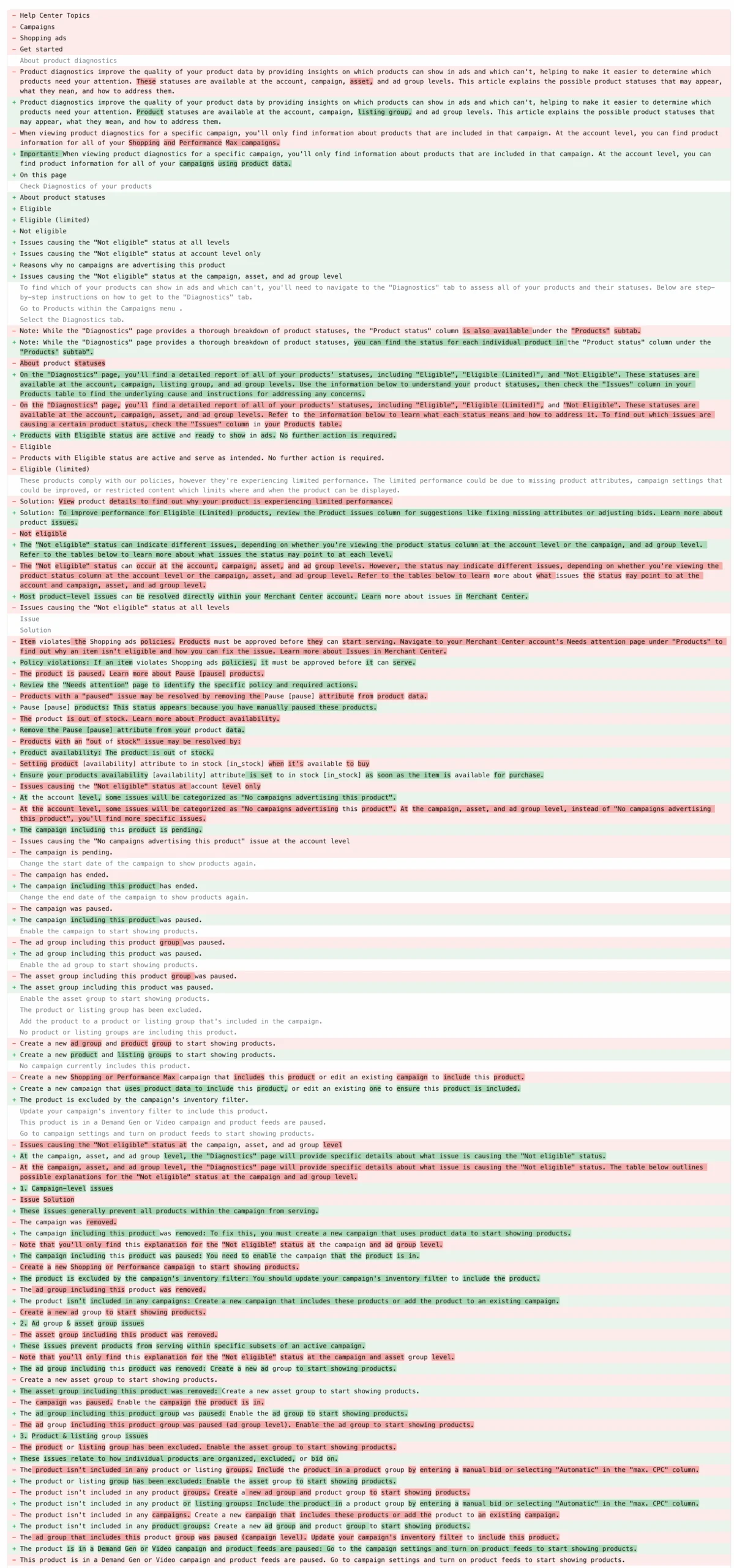
Google Ads has recently updated its "About product category insights" help documentation, formally stating that it "automatically assigns your products to categories using a continuously evolving product taxonomy." This update, while seemingly a minor documentation change, carries significant implications for advertisers, bringing greater clarity to a process that has long been a foundational element of Google’s e-commerce ecosystem. Previously, this automatic assignment mechanism was primarily detailed within Google Merchant Center documentation, dating back to at least 2019, creating a subtle informational disparity for advertisers whose primary interface might be Google Ads. The current synchronization across help documents underscores Google’s commitment to transparency and advertiser education, reinforcing best practices for product data management in a highly automated advertising landscape.
A Closer Look at the Documentation Update
The specific change within the Google Ads help document is the inclusion of a new section titled "How products are assigned to categories." This section explicitly outlines Google’s methodology: "Google automatically assigns your products to categories using a continuously evolving product taxonomy. This ensures that your products appear in the most relevant search results for potential customers." This statement is critical as it confirms the reliance on an dynamic, AI-driven system rather than static, predefined categories. Furthermore, the document provides crucial guidance for advertisers: "If you think that a product has been misclassified, you can manually override the categorization by using the google_product_category attribute in your Merchant Center feed. Submitting this attribute tells Google to prioritize your specific classification over the automated categorization." This dual approach — automated categorization with a manual override — empowers advertisers with a level of control within an otherwise highly automated system. The update also directs users to the Google Merchant Center documentation for further details on the google_product_category attribute, highlighting the interconnectedness of Google’s various advertising platforms.
This clarification is more than just a semantic update; it serves to formalize and make explicit a process that has been implicitly understood or observed by many experienced advertisers. By clearly stating the automation and the override mechanism within the Google Ads context, Google aims to improve advertiser confidence and performance by ensuring a better understanding of how their product listings are categorized and ultimately matched with user searches. The "continuously evolving" aspect of the taxonomy also hints at Google’s ongoing investment in machine learning and artificial intelligence to refine its product understanding and classification capabilities, adapting to new products, trends, and search behaviors in real-time.
Bridging the Information Gap: Merchant Center’s Long-Standing Practice
The current update to Google Ads documentation is significant because it brings the Ads platform’s stated operational procedures in line with those long established in Google Merchant Center. For years, Merchant Center, the central repository for product data feeds, has explicitly detailed its use of an automated system for product categorization. An archived version of the Google Merchant Center help document from December 2019 already stated, "Google automatically assigns your products to categories using a continuously evolving product taxonomy. This ensures that your products appear in the most relevant search results for potential customers." This historical context reveals that the underlying technology and approach to product categorization have been in place for several years. The delay in updating the Google Ads documentation specifically may be attributed to various factors, including the primary focus of Merchant Center as the direct input for product data, while Google Ads traditionally focused on campaign management and bidding strategies. However, with the increasing integration of data across Google’s advertising platforms, particularly with the advent of Performance Max campaigns, a unified understanding of core functionalities like product categorization becomes imperative.
Google Merchant Center serves as the backbone for all product-related advertising on Google, including Google Shopping ads, free product listings, and dynamic remarketing. Advertisers submit comprehensive product data feeds to Merchant Center, which then processes and validates this information. A crucial part of this process is categorization, which ensures that products are shown to the most relevant users at the right time. Without accurate categorization, products might appear in irrelevant searches, leading to wasted ad spend and poor user experience. The google_product_category attribute, first introduced in Merchant Center, has always been the primary means for advertisers to either confirm Google’s automated classification or provide their own, more specific categorization when necessary. This dual system acknowledges both the efficiency of machine learning for large-scale classification and the nuanced understanding that only a human advertiser might possess for highly specific or niche products.
The Evolution of Google’s Product Taxonomy: Driven by AI and Machine Learning
The concept of a "continuously evolving product taxonomy" lies at the heart of Google’s sophisticated approach to e-commerce. This is not a static list of categories but a dynamic, AI-driven system that constantly learns and adapts. Google’s vast ecosystem, encompassing trillions of search queries, billions of product listings, and extensive user behavior data, provides an unparalleled training ground for its machine learning algorithms. These algorithms analyze various signals to categorize products:
- Product Titles and Descriptions: Keywords, phrases, and semantic relationships within the textual content.
- Product Images: Image recognition technology identifies product types, features, and brands.
- Product Attributes: Specific data points like brand, color, size, material, and MPN (Manufacturer Part Number).
- User Search Queries: How users search for similar products provides context and helps refine categories.
- Website Content: The context of the product on the merchant’s website.
The evolution of this taxonomy is critical for several reasons. The retail landscape is constantly changing, with new product categories emerging (e.g., smart home devices, sustainable fashion, specialized wellness products) and existing ones evolving. A static taxonomy would quickly become outdated, leading to misclassifications and a degraded user experience. AI and machine learning enable Google to:
- Adapt to New Trends: Quickly incorporate new product types and categories as they gain popularity.
- Improve Granularity: Refine existing categories to be more specific, ensuring products are matched with highly targeted searches (e.g., distinguishing between "running shoes" and "trail running shoes").
- Handle Ambiguity: Resolve cases where a product might fit into multiple categories, optimizing for the most likely user intent.
- Scale Efficiency: Process and categorize billions of products across countless merchants globally without manual intervention for every item.
This continuous evolution is a testament to Google’s investment in AI for enhancing its core services, from search to advertising. The goal is to create the most accurate and relevant connection between a user’s intent and a merchant’s product, driving both user satisfaction and advertiser ROI.
Implications for Advertisers: Benefits, Challenges, and Best Practices
For advertisers, understanding Google’s automated product categorization system, and particularly the recent clarification, has several key implications:
Benefits:
- Streamlined Onboarding: For new advertisers or those with large product catalogs, automated categorization significantly reduces the manual effort required to classify every single item, allowing them to get their products live faster.
- Improved Relevance: For the vast majority of products, Google’s AI-driven system is highly accurate, ensuring products appear for the most relevant search queries, leading to higher click-through rates (CTRs) and conversion rates.
- Wider Reach: By correctly categorizing products, Google can expose them to a broader, yet still relevant, audience that might not have used highly specific search terms.
- Reduced Manual Labor: Advertisers can focus on other strategic aspects of their campaigns, confident that basic categorization is being handled efficiently.
Challenges and Considerations:
- Risk of Misclassification: While generally accurate, automated systems are not infallible. Niche products, newly invented items, or products with ambiguous descriptions can sometimes be misclassified, leading to products appearing in irrelevant searches or missing out on relevant ones.
- Impact on Ad Performance: Incorrect categorization can severely impact campaign performance. If a product is categorized incorrectly, it might be excluded from relevant queries or shown for irrelevant ones, wasting ad spend and lowering ROI.
- Lack of Granularity: Sometimes, Google’s automated category might not be granular enough for an advertiser’s specific marketing strategy. For example, a "dress" might be further refined by an advertiser as a "cocktail dress" or "summer maxi dress."
Best Practices for Advertisers:
- Maintain High-Quality Product Feeds: The foundation of accurate categorization is a rich, accurate, and up-to-date product feed. This includes clear product titles, detailed descriptions, high-quality images, accurate pricing, and correct GTINs/MPNs. Poor quality data is the primary cause of misclassification.
- Regularly Review Automated Classifications: Advertisers should periodically audit their product listings within Google Merchant Center to check how Google has categorized their products. This is especially crucial for top-selling items or new product launches.
- Strategically Use the
google_product_categoryAttribute: For products where Google’s automated classification is incorrect, not specific enough, or strategically disadvantageous, advertisers must use thegoogle_product_categoryattribute to manually override it. This provides the ultimate control. - Understand Google’s Taxonomy: Familiarize oneself with the official Google Product Taxonomy list to ensure manual classifications are valid and align with Google’s accepted categories.
- Monitor Campaign Performance: Pay close attention to the performance of product groups and individual products in Google Ads. Anomalies in CTR, conversion rates, or impression share might indicate categorization issues.
The Strategic Importance of the google_product_category Attribute
The google_product_category attribute is more than just a correction mechanism; it’s a strategic lever for advertisers. In an environment dominated by automation, it provides a critical point of human intervention and intelligence. There are several scenarios where its explicit use is not just recommended, but essential:
- Niche or Highly Specialized Products: For items that don’t fit neatly into broad categories, manual classification ensures they are positioned correctly. For instance, a "left-handed ergonomic gaming mouse" might be automatically classified as just "computer mouse," but a manual override can push it into a more specific, higher-converting niche.
- Products with Ambiguous Meanings: Certain product names can be ambiguous. A "jacket" could be a clothing item or a protective covering for a book. Manual categorization removes this ambiguity.
- Competitive Differentiation: In highly competitive markets, a more granular and accurate categorization can give an advertiser an edge by targeting very specific long-tail queries that competitors might miss with broader classifications.
- New Product Innovations: When a completely new product type enters the market, Google’s taxonomy might not yet have a perfectly matching category. Advertisers can use the closest available category, or suggest a more appropriate one through their feed, influencing future automated classifications.
- Inventory Segmentation: Advertisers often structure their ad campaigns and bidding strategies around specific product categories. Manual control over
google_product_categoryensures that these internal segmentations align with how Google understands and targets the products, optimizing campaign structure.
By prioritizing the advertiser’s submitted classification, Google acknowledges the unique insights merchants have into their own products and target audiences. This attribute acts as a crucial bridge between automated efficiency and human strategic intent, ensuring that the final ad delivery is as effective as possible.
Industry Reactions and Expert Perspectives
The clarification from Google has largely been met with affirmation within the digital marketing community. Industry experts and SEM professionals generally view this as a positive step towards greater transparency. Many acknowledge that the underlying functionality has been known and utilized by seasoned advertisers for years, particularly those working extensively with Google Merchant Center. However, making this explicit within the Google Ads documentation is beneficial for a broader audience, especially those who might primarily manage their campaigns through the Ads interface and may not delve deeply into Merchant Center specifics.
Digital marketing consultant and SEO veteran Barry Schwartz, who initially reported on the update, noted, "I don’t think this is a change in how Google handles product categorization but a clarification to the Google Ads help documentation to be more in sync with how it has worked since at least 2019." This sentiment is echoed by many, who emphasize that the update is about improving communication rather than altering core processes.
Experts often highlight that this clarification reinforces the critical importance of data hygiene and proactive feed management. "This move by Google simply underlines what we’ve been telling clients for years," comments Sarah Jenkins, an e-commerce strategist. "Your product feed is the absolute foundation of your success on Google Shopping and Performance Max. Relying solely on automation without understanding it or having the ability to course-correct is a recipe for inefficiency." Another SEM specialist, Mark Thompson, added, "It’s good to see Google explicitly state the override mechanism in Ads documentation. It empowers advertisers who might feel a loss of control in increasingly automated campaign types, reminding them that they still have a powerful tool to ensure product relevance." The consensus points towards this being a helpful update that demystifies a crucial background process and provides clearer actionable advice for advertisers.
Broader Impact: Cohesion Across Google’s E-commerce Ecosystem
The synchronization of documentation across Google Ads and Google Merchant Center signifies a broader push towards greater cohesion within Google’s vast e-commerce ecosystem. A consistent understanding of how product data is processed and categorized is vital for several reasons:
- Unified Advertiser Experience: As Google continues to integrate its various advertising platforms, particularly with campaign types like Performance Max that pull data from multiple sources (Merchant Center feeds, business profiles, Google Ads assets), a consistent message across all help documents ensures advertisers have a unified and less fragmented experience.
- Enhanced User Experience: Accurate product categorization directly translates to a better user experience on Google Search and Google Shopping. When products are correctly classified, users are shown more relevant results, leading to higher satisfaction, reduced bounce rates, and a more efficient shopping journey. This reinforces Google’s position as a primary destination for product discovery.
- Optimized Ad Performance: For advertisers, consistent and accurate categorization is a cornerstone of effective ad performance. It ensures that product ads are displayed to the most appropriate audiences, maximizing click-through rates, conversion rates, and ultimately, return on ad spend (ROAS). This consistency is particularly crucial for AI-driven campaigns like Performance Max, which rely heavily on accurate feed data to optimize targeting and delivery.
- Foundation for Future Innovations: A robust and well-understood product categorization system serves as a stable foundation for future innovations in e-commerce advertising. As Google develops more sophisticated AI tools for personalization, predictive analytics, and automated campaign management, the accuracy and reliability of the underlying product taxonomy will be paramount.
This move reinforces the idea that Google’s various platforms are not isolated entities but interconnected components of a larger, intelligent system designed to facilitate commerce and connect consumers with products efficiently.
The Future of Product Categorization in Digital Advertising
Looking ahead, the role of automated product categorization is only expected to grow in sophistication and importance. As e-commerce continues its rapid expansion, fueled by technological advancements and changing consumer behaviors, Google’s "continuously evolving product taxonomy" will need to keep pace. We can anticipate several key trends:
- Increased Granularity and Nuance: AI models will likely become even more adept at understanding highly specific product attributes and contexts, leading to more granular and accurate classifications without manual intervention.
- Hyper-Personalization: Categorization will play a crucial role in delivering highly personalized shopping experiences, where product recommendations and ad placements are tailored not just to broad categories but to individual user preferences, past behaviors, and real-time intent signals.
- Multimodal AI: The integration of various AI capabilities, including advanced natural language processing (NLP) for product descriptions, sophisticated image and video recognition, and even audio analysis (e.g., for products with sound features), will create a richer understanding of each product.
- Proactive Problem Detection: AI systems might evolve to proactively identify potential misclassifications in advertiser feeds and suggest corrections, further reducing manual effort and improving data quality.
- Semantic Search Integration: As search becomes more conversational and semantic, the product taxonomy will need to understand complex queries and match them with products in a way that goes beyond simple keyword matching, recognizing underlying concepts and relationships.
For advertisers, the takeaway is clear: while automation offers immense efficiency, human oversight and strategic input remain indispensable. Maintaining impeccable product data feeds, understanding Google’s evolving systems, and judiciously utilizing override mechanisms like google_product_category will be critical for success in the dynamic landscape of digital advertising. This latest clarification from Google serves as a timely reminder of this enduring partnership between intelligent automation and informed advertiser control.