The digital optimization industry is currently navigating a significant paradigm shift, moving away from rigid academic standards toward a more nuanced, decision-based approach to data. Andrea Bronzini, the founder of Confident Story, recently provided a comprehensive overview of this evolution, highlighting how the traditional focus on "statistical significance" may be hindering business growth rather than fostering it. By focusing on the relationship between signal and noise, Bronzini argues that the next generation of conversion rate optimization (CRO) will be defined by strategic risk management and the seamless integration of artificial intelligence.
The Shift from Signal to Noise
For years, the primary objective of experimentation has been to isolate the "signal"—the measurable lift or conversion increase resulting from a specific change. However, Bronzini suggests that this perspective is incomplete. In his view, noise is the actual protagonist of every experiment. Noise, or stochastic variation, is the random fluctuation inherent in any data set. It is the factor that either clarifies a signal or obscures it entirely.

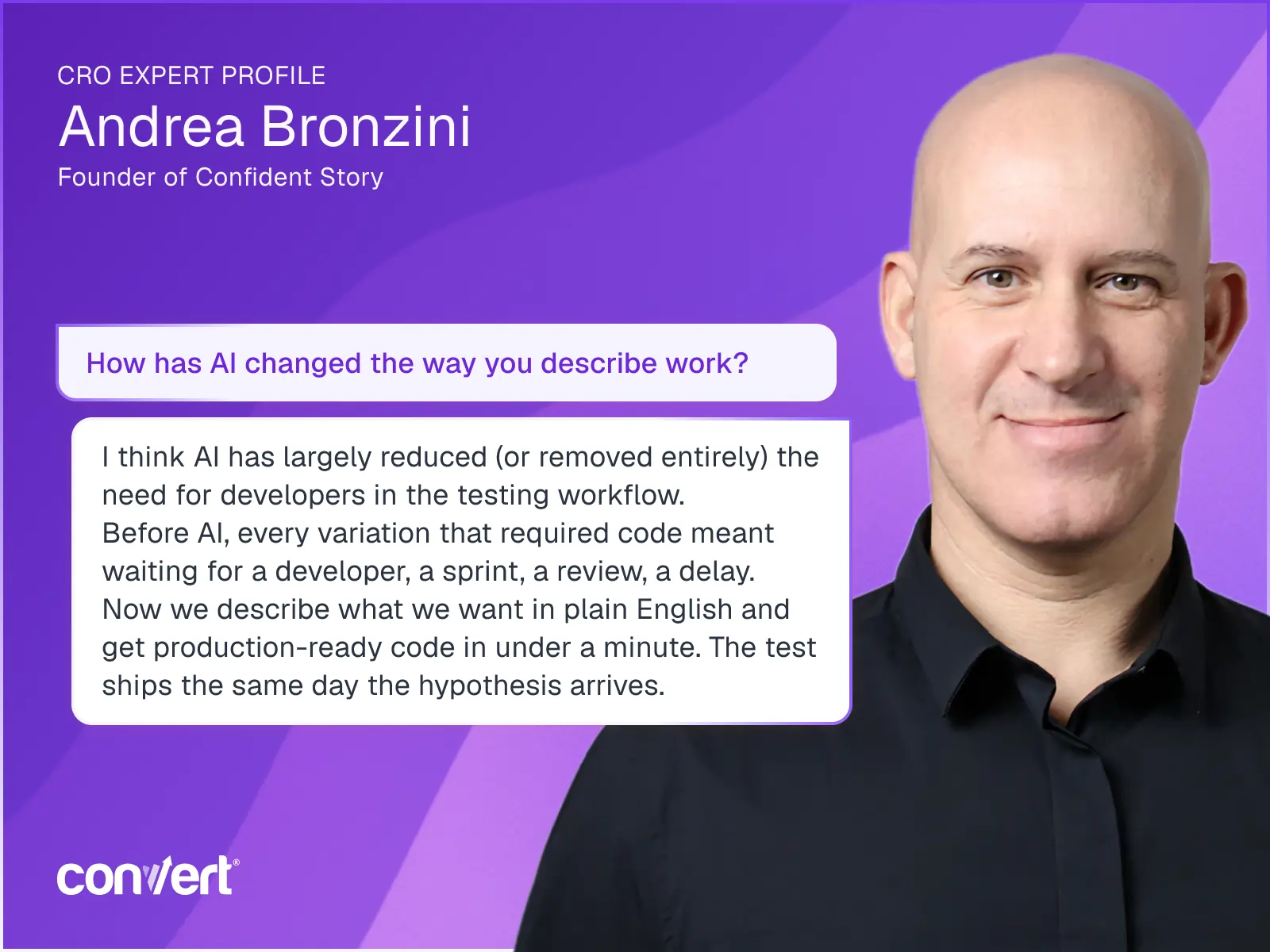
The industry’s historical obsession with "objectivity" often masks the subjective nature of experimental design. Decisions regarding sample size, duration, and the threshold for success are judgment calls that shape results before a single user visits a page. Bronzini’s focus on modeling stochastic noise represents a departure from the "winner-takes-all" mentality of traditional A/B testing, emphasizing instead a "balancing act between errors."
The Chronology of Experimentation Standards
To understand the current state of digital experimentation, it is necessary to look at the timeline of its development. Originally, A/B testing was adopted by digital marketers from the world of clinical trials and academic research. In those fields, the cost of a "false positive"—such as approving a drug that does not work—is exceptionally high. Consequently, the industry adopted the 95% confidence interval as the gold standard.
By the mid-2010s, CRO became a standard department in most enterprise-level organizations. However, the constraints of academic rigor began to clash with the speed of digital business. Companies with lower traffic volumes found themselves unable to reach statistical significance within reasonable timeframes, leading to a backlog of "inconclusive" tests.

In the current era, as Bronzini notes, the industry is entering an "inflection point." The focus is shifting toward "decision-policy thinking." This involves moving away from a binary "significant vs. non-significant" mindset and toward a framework that evaluates the cost of different types of errors relative to business goals.
The Three Modes of Experimental Failure
A central component of Bronzini’s thesis is the identification of three distinct ways an experiment can fail. While traditional CRO focuses almost exclusively on the first, the latter two are often more damaging to long-term growth.
- The False Positive (Type I Error): This occurs when a team declares a winner that is actually a loser. Noise pushed the data in a positive direction during the test window, leading the company to ship a change that may actually hurt performance. This is the only error the 95% confidence threshold is designed to mitigate.
- The Missed Winner (Type II Error): This happens when a change produces a genuine improvement, but because the lift did not cross the 95% threshold, it is labeled "inconclusive." For companies with traffic constraints, power analysis often yields required sample sizes that are impossible to reach. Consequently, real growth opportunities are discarded and forgotten.
- The Inflated Winner (The Winner’s Curse): This is perhaps the most overlooked failure mode. In this scenario, a team correctly identifies a winner, but the measured lift is drastically exaggerated. For example, a test might show a 12% lift when the true underlying improvement is only 3%. This happens because only tests that "run hot"—meaning they are amplified by positive noise—can cross strict significance thresholds.
Bronzini compares these errors to a "short blanket." If a practitioner pulls the blanket up to cover their head (reducing false positives by increasing the threshold), their feet get cold (missing real winners and inflating the ones they find). There is no configuration that eliminates all three; there is only a strategic choice of how to distribute the risk.
Supporting Data: The Meta-Experiment Simulation
To validate these concepts, Bronzini developed a simulator that replays the same experiment thousands of times using a known "true lift." In one specific scenario, he modeled a 3.2% true lift with 500 total conversions over four weeks.
The results were revealing: using a standard 95% significance threshold, only 12 out of 100 runs were identified as "significant." The other 88 runs were labeled inconclusive, despite the fact that a 3.2% improvement was actually present. Furthermore, the 12 "winners" showed an average measured lift of 9% to 14%.
This data explains a common phenomenon in the industry: the "regression" of results after a winning test is deployed. The results do not necessarily regress due to seasonality or technical issues; rather, the original experiment captured a noise-amplified version of reality. By the time the change is fully implemented, the results simply return to the true, lower lift.
The Role of Artificial Intelligence in Workflow Transformation
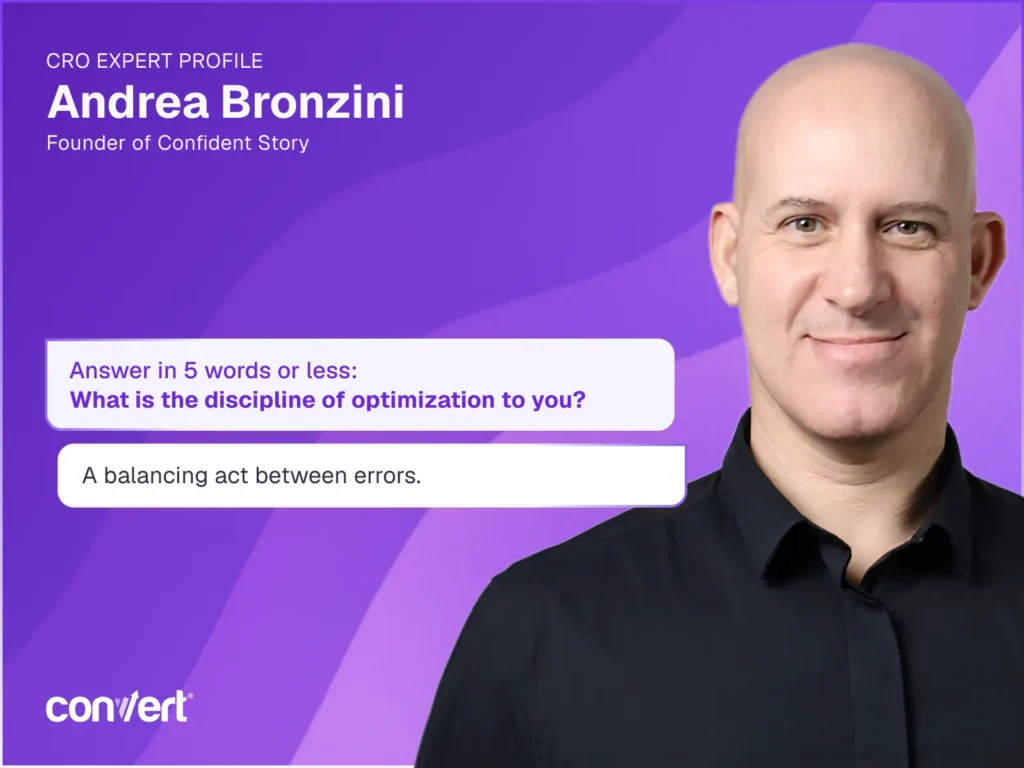
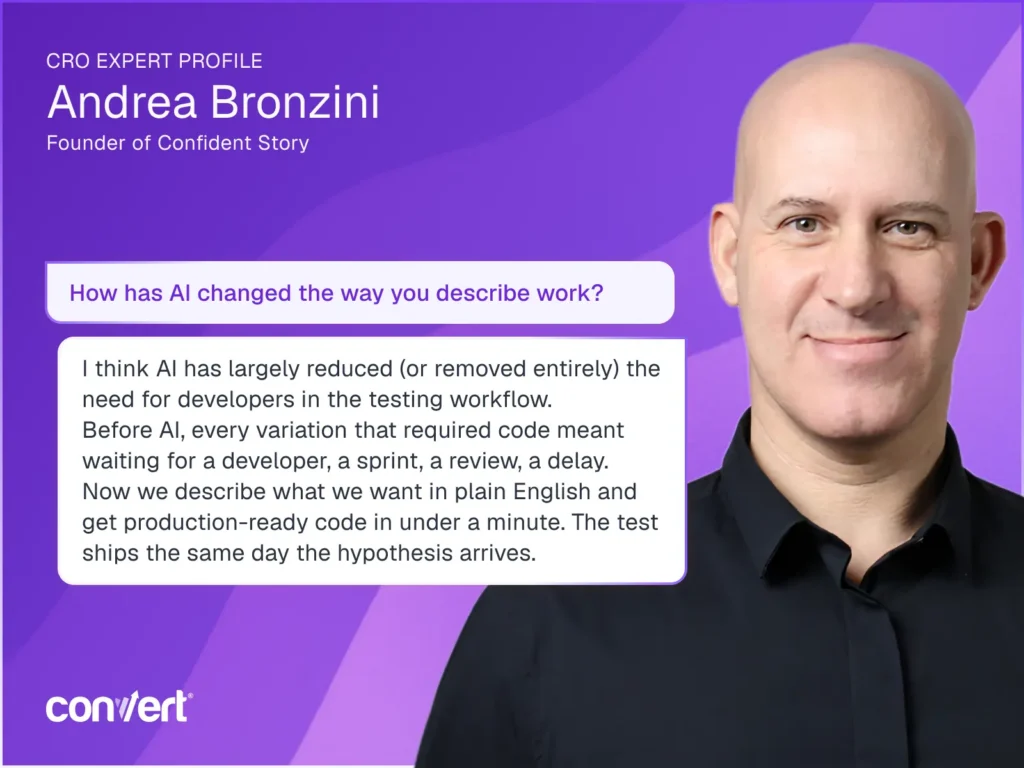
The integration of AI is fundamentally changing the execution of these experiments. Bronzini highlights that AI’s most immediate impact is the removal of the "developer bottleneck." Historically, creating a test variation required a developer, a sprint cycle, and a code review. This friction often led teams to test only "safe," easy-to-build ideas.
With AI, practitioners can describe complex changes in plain English—such as reordering page elements or rewriting copy based on psychological triggers—and receive production-ready JavaScript in seconds. This allows tests to go live the same day an idea is conceived.
Beyond speed, this shifts the psychology of the optimizer. When implementation costs drop to near zero, teams are willing to test bolder, more structural hypotheses. AI is also being utilized to:

- Summarize qualitative user research.
- Generate and prioritize hypotheses based on page data.
- Analyze test results and suggest the next iteration.
Bronzini’s team is currently testing fully autonomous workflows where AI identifies insights, generates variations, deploys tests, and repeats the cycle based on the results. This leaves human practitioners free to focus on the higher-level work: understanding user psychology and asking the right questions.
Broader Impact and Industry Implications
The shift toward decision-policy thinking has profound implications for how organizations value their CRO programs. If companies stop treating 95% confidence as a fixed requirement and start treating it as a variable, they can optimize for "winner capture." This is particularly vital for mid-sized companies that cannot compete with the massive traffic of giants like Amazon or Google.
For the broader digital economy, this means a more efficient allocation of resources. Instead of spending months waiting for a single test to reach an arbitrary significance level, companies can run more tests with a higher tolerance for certain types of error, ultimately finding more "real" winners over time.

Industry experts suggest that this transition will require a re-education of stakeholders. Executives who are used to seeing "95% certain" on reports will need to understand that this certainty comes at the cost of missed opportunities. The future of the discipline lies in the ability to communicate these trade-offs clearly.
Conclusion
Andrea Bronzini’s insights suggest that the future of optimization is not found in more rigorous math, but in more strategic thinking. By acknowledging the omnipresence of noise and the limitations of academic significance, practitioners can build systems that are more resilient and more aligned with business reality.
As AI continues to automate the "how" of experimentation, the "why" becomes more important than ever. The most successful optimizers of the next decade will be those who can balance the three modes of failure, leverage AI to increase experimental velocity, and move from being data reporters to being strategic decision-makers. The discipline is no longer just about finding what works; it is about managing the inherent uncertainty of human behavior in a digital landscape.