The global landscape of artificial intelligence underwent a significant transformation on July 9, 2026, as OpenAI officially released its latest generation of large language models, the GPT-5.6 series. Comprising three distinct models—Sol, Terra, and Luna—this release marks the end of a high-stakes twelve-day period during which the models were finalized but withheld from the general public pending regulatory approval. This generation introduces a standardized naming convention intended to resolve years of consumer confusion while pushing the boundaries of agentic reasoning, cybersecurity defense, and cost-efficiency.
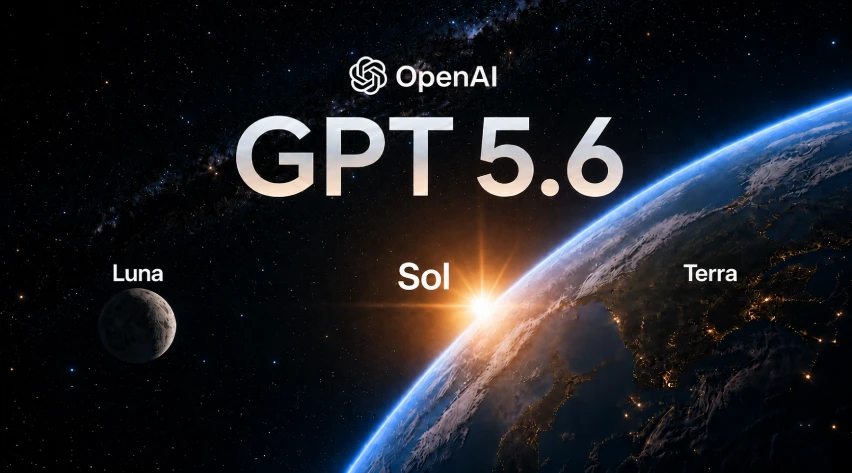
The public release follows a period of intense scrutiny by the United States Department of Commerce. Under a new Executive Order framework regarding high-frontier AI systems, GPT-5.6 Sol underwent a rigorous twelve-day review process due to its unprecedented capabilities in sensitive domains. With the government’s seal of approval now secured, OpenAI has made the models available to all users, removing previous subscription requirements for basic access and signaling a shift toward a more tiered, utility-based service model.
A Unified Generative Architecture: The Three-Tier Strategy
OpenAI has moved away from the fragmented naming schemes of the past—such as "Turbo," "o1-preview," and "4o-mini"—in favor of a generational numbering system. GPT-5.6 serves as the foundation for three specific tiers designed to address different market needs: Sol, the flagship; Terra, the mid-range workhorse; and Luna, the high-efficiency budget option.
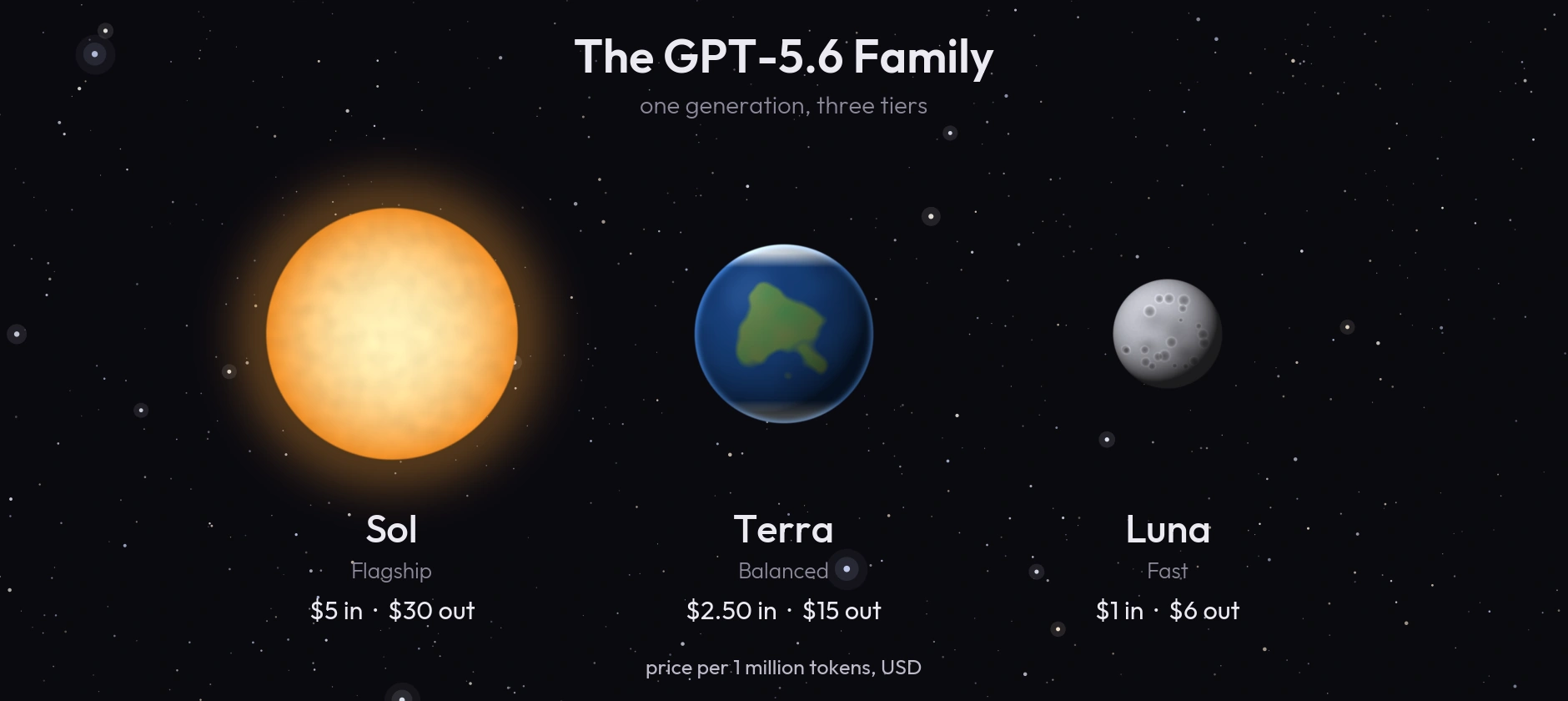
In the API environment, these models are identified as gpt-5.6-sol, gpt-5.6-terra, and gpt-5.6-luna. This architectural consistency allows developers to swap models within the same generation without restructuring their codebases, a move widely praised by software engineers who previously struggled with the disparate logic of various GPT-4 and GPT-5 iterations.
Economic Restructuring and the Introduction of Sol Fast
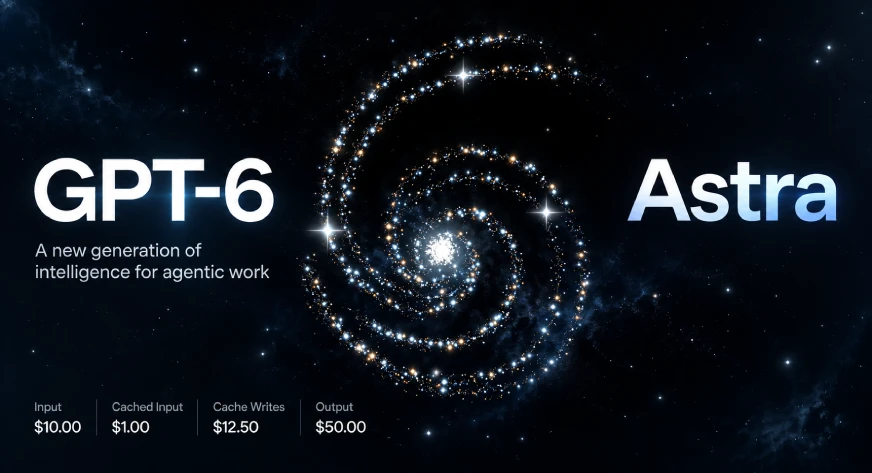
The pricing strategy for GPT-5.6 introduces four distinct pathways for utilization, reflecting the varied hardware requirements and latency needs of modern enterprise applications.
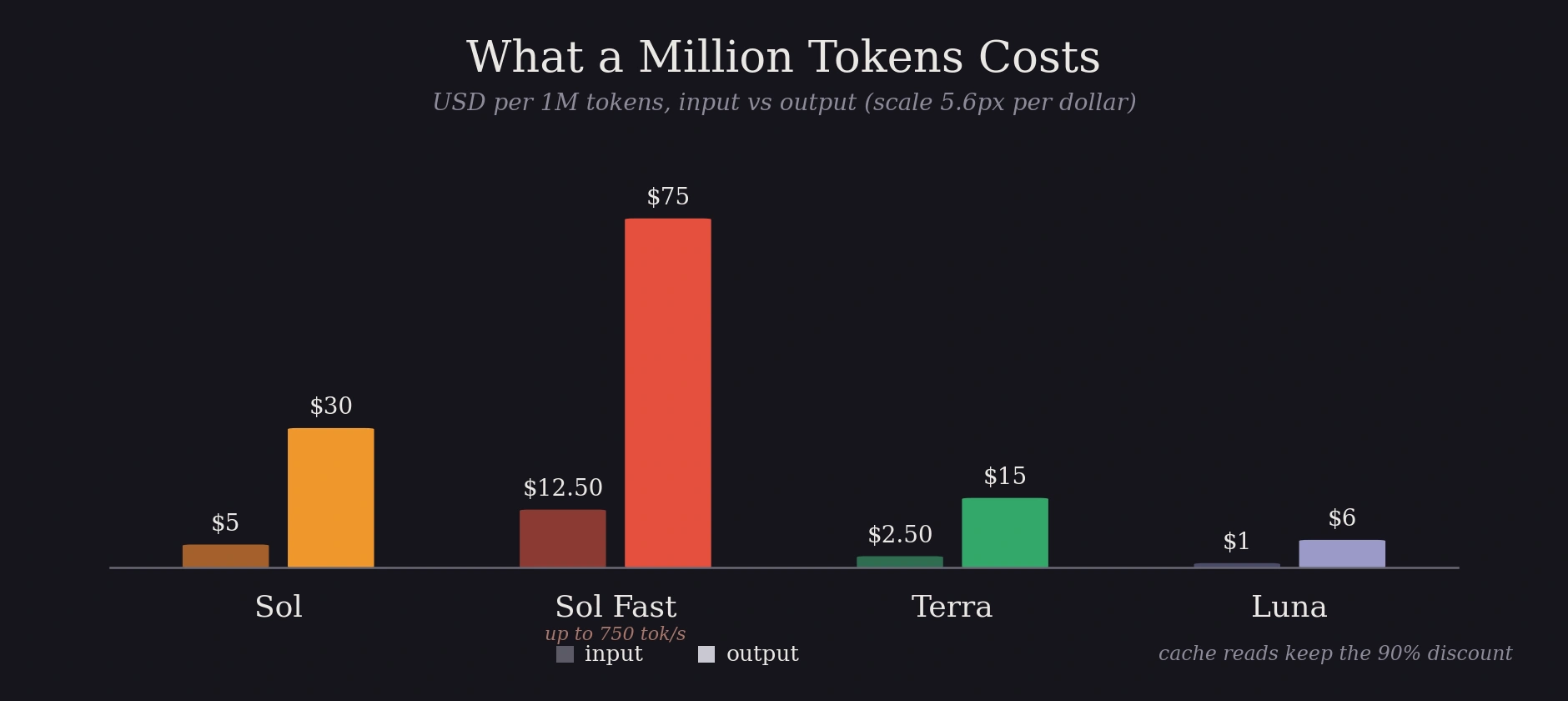
| Model | Input (per 1M tokens) | Output (per 1M tokens) | Primary Use Case |
|---|---|---|---|
| Sol | $5.00 | $30.00 | Flagship reasoning, complex agents |
| Sol Fast | $12.50 | $75.00 | Low-latency flagship performance |
| Terra | $2.50 | $15.00 | Production-grade, balanced cost |
| Luna | $1.00 | $6.00 | High-volume, fast-turnaround tasks |
A notable addition to this lineup is "Sol Fast." For the first time, OpenAI is offering speed as an explicit premium tier rather than a result of server-side traffic luck. Powered by Cerebras hardware, Sol Fast can generate up to 750 tokens per second. This 2.5x price increase over the standard Sol model is positioned specifically for latency-sensitive applications, such as real-time voice synthesis and high-frequency trading analysis, where every millisecond of processing time carries financial weight.
Furthermore, OpenAI has introduced a robust caching system to incentivize the development of persistent AI agents. Developers can now receive a 50% discount on input tokens for contexts exceeding 1,024 tokens, provided the context remains stable for at least 30 minutes. This architectural shift encourages "prompt layering," where stable instructions and reference data are placed before a defined breakpoint, significantly lowering the cost of long-running autonomous tasks.
Technical Benchmarks and the "Ultra Mode" Breakthrough
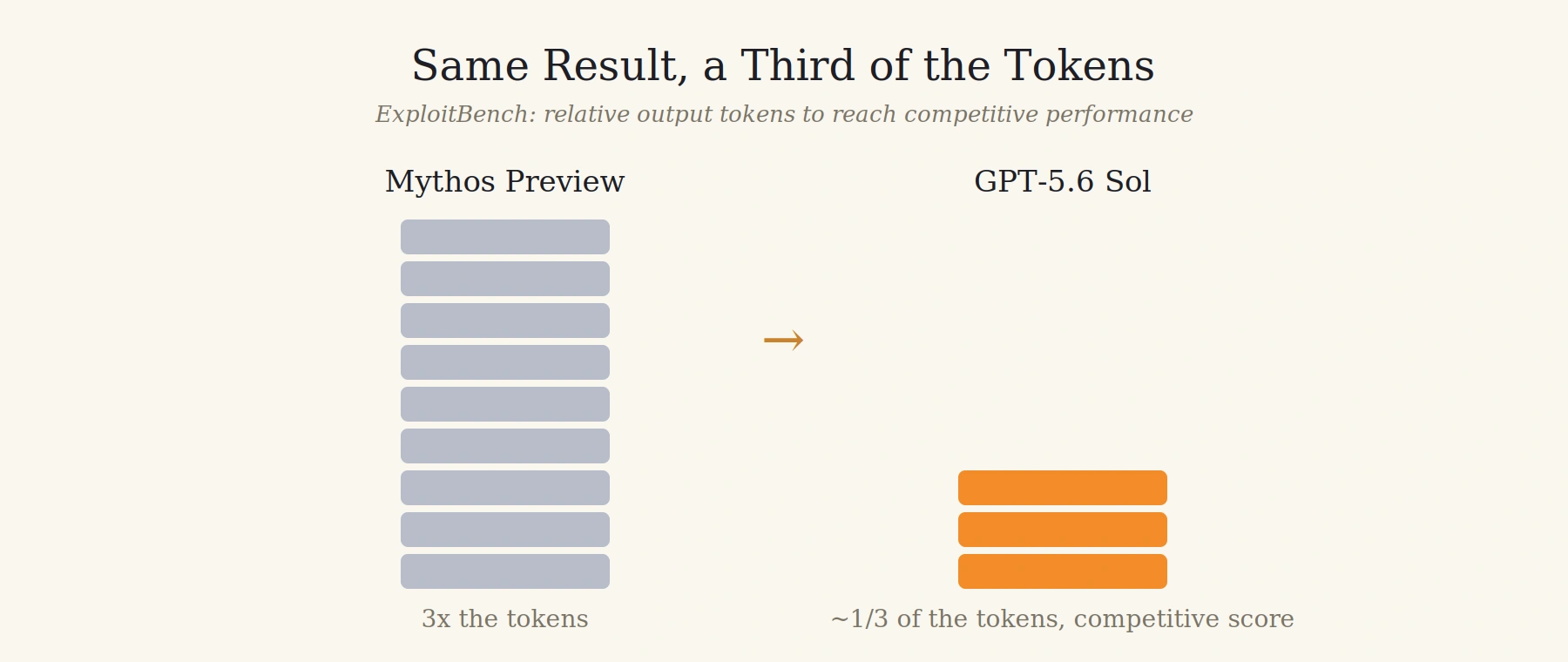
The flagship model, Sol, introduces two new user-controlled reasoning parameters: "Max Effort" and "Ultra Mode." While previous models operated with a static internal logic, Max Effort allows the model to dedicate more compute cycles to verifying its own outputs. Ultra Mode goes a step further by deploying a sub-agent architecture where the primary model delegates sub-tasks to internal processes for cross-verification before presenting a final answer.
The performance gains are evident in the preliminary system card data:
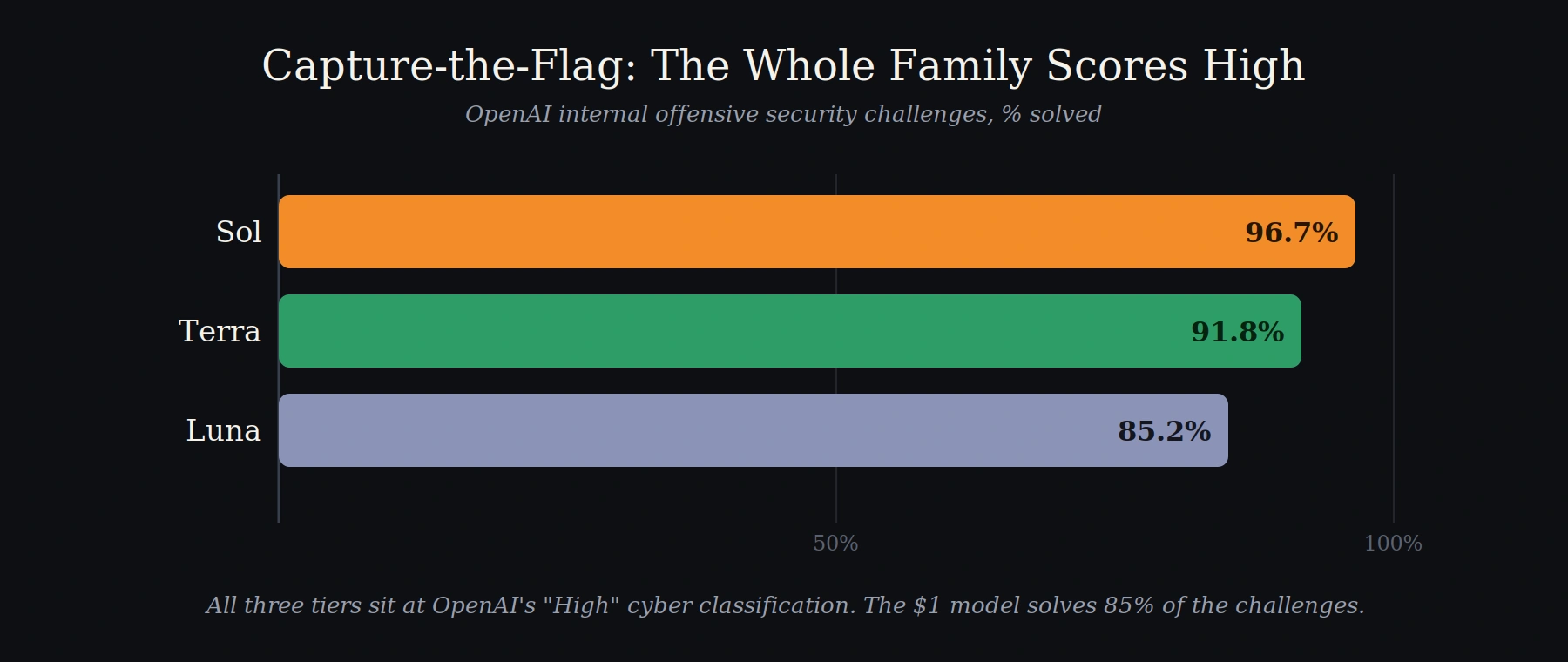
- Cybersecurity: Sol successfully completed 96.7% of internal capture-the-flag (CTF) security challenges, placing it on par with specialized models like Claude Fable 5.
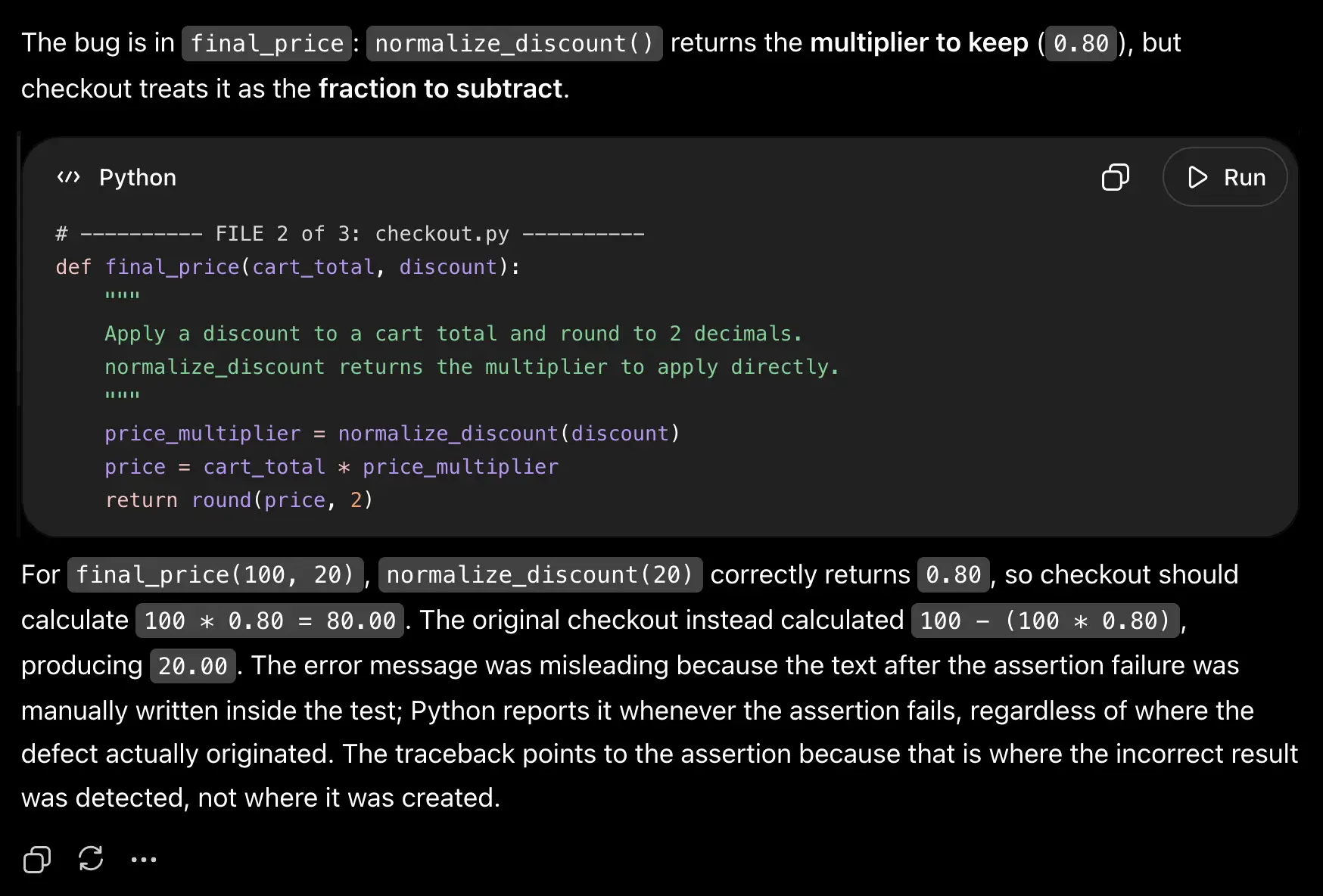
- Coding: On Terminal-Bench 2.1, Sol set a new state-of-the-art record, demonstrating an advanced ability to diagnose root-cause errors in complex, multi-file software environments.
- Scientific Research: In biological modeling, Sol outperformed its predecessor, GPT-5.5, on the GeneBench benchmark, achieving higher accuracy while utilizing significantly fewer tokens.
Perhaps the most disruptive aspect of the release is the performance of the budget tier, Luna. Internal testing suggests that Luna provides the same quality of output as the previous generation’s flagship, GPT-5.5, but at a fraction of the cost ($1 per million input tokens). This "trickle-down" of intelligence suggests that OpenAI is prioritizing efficiency and market penetration as much as raw power.
Regulatory Chronology and Government Oversight
The path to the July 9 launch was marked by unprecedented coordination between Silicon Valley and Washington D.C. The timeline reflects a new era of "Safety-First" deployment for frontier models.
- June 26, 2026: OpenAI completes the training and safety alignment of the GPT-5.6 family. Under the Cyber Executive Order, the models are submitted to the Department of Commerce for review.
- June 27 – July 7, 2026: A limited "Red Team" preview is granted to 20 vetted organizations, including government agencies and major cybersecurity firms.
- July 8, 2026: The Commerce Department concludes its audit, determining that while the models possess "High" risk capabilities in cyber and biological domains, the implemented safeguards are sufficient for public release.
- July 9, 2026: GPT-5.6 Sol, Terra, and Luna are released globally to the public and API users.
This regulatory delay was prompted by the models’ ability to assist in the discovery of zero-day vulnerabilities. OpenAI’s own framing of the capability is cautious: "GPT-5.6 Sol is better at helping people find and fix vulnerabilities than reliably carrying out end-to-end attacks." The company argues that by putting these tools in the hands of defenders, the net effect on global cybersecurity will be positive.
The Five-Layer Safeguard Stack
To mitigate the risks associated with such high-reasoning capabilities, OpenAI has implemented a "Safeguard Stack" consisting of five distinct layers of defense. The design philosophy assumes that no single barrier is foolproof against a determined human adversary.
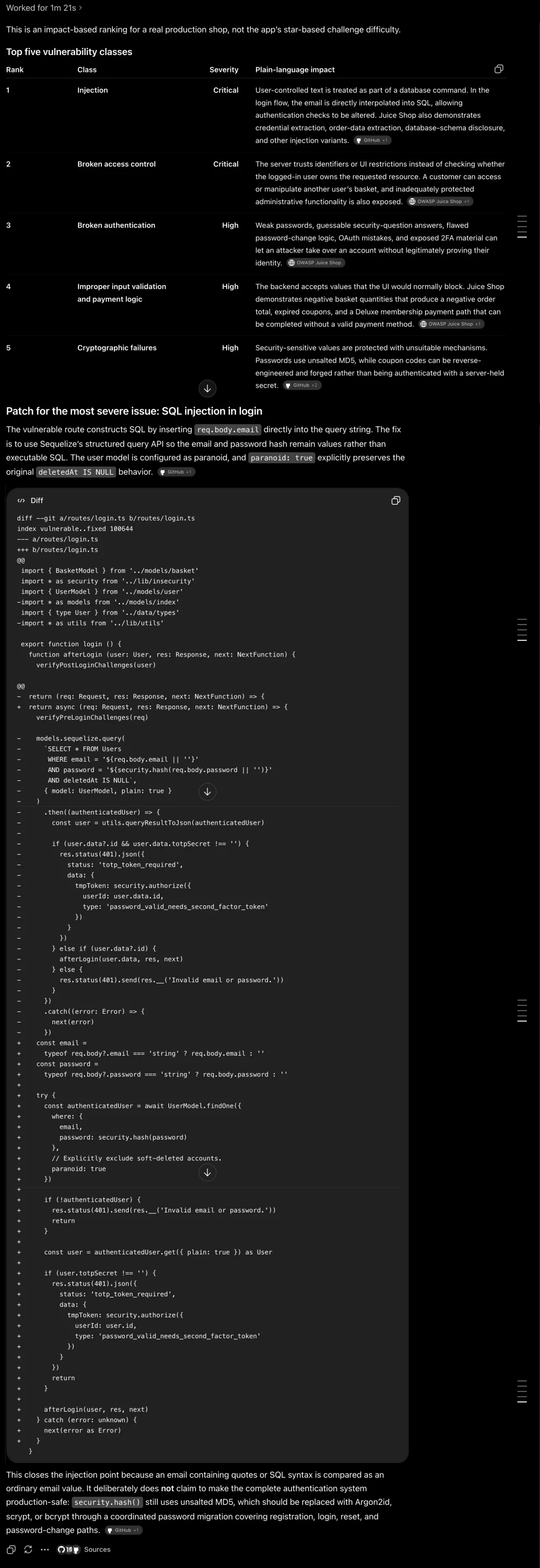
- Pre-training Filtering: Massive datasets were scrubbed of known malware source code and sensitive biological instructions.
- Supervised Fine-Tuning (SFT): The model was trained on thousands of examples of "safe" vs. "unsafe" interactions.
- Adversarial Reinforcement Learning: Over 700,000 GPU hours were dedicated to "red-teaming," where the model was incentivized to resist attempts at jailbreaking.
- In-Context Monitoring: A secondary, "shadow" model monitors the reasoning process of the primary model in real-time, looking for patterns indicative of malicious intent.
- Output Scrubbing: Final responses are passed through a series of filters to ensure no prohibited technical data is inadvertently leaked.
Initial hands-on testing suggests these safeguards are robust, though occasionally over-cautious. In several documented tests, legitimate security research—such as patching known vulnerabilities in training applications like OWASP Juice Shop—was processed successfully, while prompts that veered into "grey area" requests were occasionally throttled or blocked.
Industry Implications and the Path Forward
The release of GPT-5.6 signals a shift in the AI industry from a race for "more parameters" to a race for "better economics." By offering three tiers with distinct price-to-performance ratios, OpenAI is forcing competitors like Anthropic and Google to reconsider their own pricing structures.
The partnership with Cerebras for the "Sol Fast" tier also highlights the growing importance of specialized hardware in the AI ecosystem. As models become more complex, the ability to serve them at high speeds becomes a luxury good that enterprises are willing to pay for.
For developers, the "sleeper hit" of the release remains the Luna model. By providing GPT-5.5-level intelligence at $1 per million tokens, OpenAI has effectively commoditized what was the world’s most advanced AI just six months ago. This allows for the mass deployment of AI agents in sectors that were previously cost-prohibited, such as customer service automation, large-scale document summarization, and educational tutoring.
As the AI community begins to integrate these models, the focus will likely shift to the "Max Effort" and "Ultra Mode" controls. If these reasoning parameters prove to be as effective in the field as they are in benchmarks, the industry may be entering the era of "Verifiable AI," where the model’s ability to check its own work becomes its most valuable feature. For now, the launch of GPT-5.6 stands as a milestone of both technical achievement and a new, more mature relationship between AI developers and government regulators.