The integration of Artificial Intelligence (AI) into marketing operations presents a unique challenge, not due to the inherent capabilities of AI, but rather the daunting task of identifying where to begin. This article proposes a structured approach, leveraging an adapted SWOT analysis, to guide marketing teams in defining clear boundaries and strategic starting points for AI adoption. By internalizing strengths and weaknesses and externalizing opportunities and threats, organizations can chart a more effective path toward successful AI integration, as illustrated through two client case studies. The core recommendation emphasizes setting defined boundaries, securing leadership buy-in, and meticulously planning the ensuing changes.
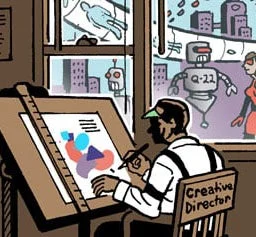
The complexity of AI adoption in marketing often stems from an overwhelming array of possibilities, akin to staring at a blank canvas. As Tom Swanson, Senior Engagement Manager at Heinz Marketing, notes, the sheer volume of AI solutions and claims can lead to a sense of futility when attempting to select and prioritize use cases. This sentiment echoes historical observations in educational research, where structured environments with clear boundaries have been shown to foster creativity, suggesting that a defined framework is crucial for navigating the vast potential of AI.
The AI Adoption Dilemma: From Blank Slate to Strategic Blueprint
In the rapidly evolving landscape of artificial intelligence, marketing professionals often find themselves paralyzed by choice. The promise of AI extends to virtually every conceivable marketing function, leading to a deluge of solutions and a constant stream of advice, often from those seeking to capitalize on the trend. This has created a "blank slate" effect, where the abundance of options makes it incredibly difficult to identify a starting point, let alone establish a prioritized roadmap for AI integration.
This challenge is particularly acute in Business-to-Business (B2B) marketing, where the intricacies of customer journeys, long sales cycles, and diverse stakeholder needs require a nuanced approach to technology adoption. The speed at which AI capabilities are advancing further exacerbates this dilemma. What seems cutting-edge today may be commonplace tomorrow, making any chosen path feel potentially obsolete before it is fully implemented.
The need to integrate AI is undeniable. Industry reports consistently highlight the growing investment in AI for marketing. For instance, a 2023 report by Statista projected that the global marketing AI market would reach over $100 billion by 2028, underscoring the widespread recognition of AI’s transformative potential. However, this potential can only be realized through deliberate and strategic implementation.
Embracing Structure: The AI-Adapted SWOT Framework
To counter the paralyzing effect of infinite possibilities, a structured approach is essential. The author proposes adapting the foundational strategic planning tool, SWOT analysis, to the specific context of AI integration in marketing. SWOT, an acronym for Strengths, Weaknesses, Opportunities, and Threats, traditionally assesses internal capabilities and external factors. When applied to AI adoption, these components take on a specific meaning:
- Strengths (Internal): What existing capabilities or resources does the marketing team possess that AI can amplify or enhance? This focuses on leveraging existing advantages to achieve faster, more impactful wins.
- Weaknesses (Internal): Where does the marketing team currently fall short, and how can AI address these deficiencies? This involves identifying gaps that, when filled with AI, can lead to significant improvements in efficiency and effectiveness.
- Opportunities (External): What upcoming initiatives or market trends can AI capitalize on to deliver visible and valuable outcomes? This element focuses on leveraging AI to achieve strategic goals and demonstrate tangible ROI.
- Threats (External): What external factors could hinder the successful adoption and integration of AI within the marketing department? This involves anticipating and mitigating potential roadblocks to ensure a smooth implementation process.
By reorienting the traditional SWOT framework, marketing leaders can create a more actionable and focused plan for AI adoption. This approach moves beyond the abstract potential of AI and grounds the integration process in the specific realities and objectives of the organization.
Deep Dive into the AI-Adapted SWOT Components
Strengths and Weaknesses: The Internal Compass for AI Use Cases
The internal assessment of Strengths and Weaknesses is paramount for identifying immediate, actionable AI use cases. The principle here is straightforward: understand what your team excels at and where it struggles. These internal indicators provide a clear map for defining AI applications that can yield tangible benefits.
Categorizing Internal AI Opportunities:

When examining internal strengths and weaknesses, it is beneficial to categorize potential AI applications into two primary areas:
-
Enhancing Existing Strengths: This involves identifying areas where the marketing team already possesses a strong capability and exploring how AI can further amplify that strength. For example, if a team has a robust content creation process, AI could be used to generate content variations, optimize headlines, or personalize distribution. The advantage of this approach lies in building upon established successes, often leading to quicker adoption and demonstrable value. As Swanson suggests, "enhancing a strength is usually the faster win."
-
Addressing Key Weaknesses and Gaps: This focuses on identifying areas where the marketing team faces significant challenges or lacks crucial capabilities. AI can be instrumental in bridging these gaps. For instance, if lead qualification is a bottleneck, AI-powered tools can automate the scoring and prioritization of leads, freeing up sales development representatives for more strategic engagement. While addressing weaknesses may require a more significant investment in training and process adaptation, the long-term benefits can be profound, leading to a more robust and resilient marketing operation.
While it is often recommended to pursue both types of initiatives concurrently, prioritization is key. The author advises that "eventually though, team demands will shift, so prioritizing one will help with decisions and clarity at those points." The general rule of thumb is that enhancing strengths often yields quicker, more visible returns, which can be crucial for building momentum and securing further investment. However, in the long run, strategically filling critical gaps can lead to more sustainable and impactful improvements, particularly for marketing teams responsible for a broad range of activities.
Opportunities and Threats: Navigating the External Landscape
While Strengths and Weaknesses focus on internal capabilities, Opportunities and Threats guide the strategic timing and contextual awareness of AI integration. This external perspective ensures that AI adoption is aligned with broader business goals and market dynamics.
Opportunities: Capitalizing on AI’s Impactful Potential
Opportunities, in the context of AI adoption, represent upcoming initiatives or market conditions where AI can deliver a discernible and valuable impact. The critical factor here is the ability to prove value, often a prerequisite for securing budget and continued investment. Therefore, opportunities should be identified with an eye towards measurable outcomes.
Examples of opportunities that AI can address include:
- Accelerating Campaign Development: AI can automate repetitive tasks in campaign creation, such as generating ad copy variations, identifying optimal targeting parameters, or suggesting relevant creative assets, thereby reducing campaign launch times.
- Personalizing Customer Experiences at Scale: Leveraging AI to analyze customer data and deliver tailored content, product recommendations, or service interactions across various touchpoints can significantly enhance customer engagement and loyalty.
- Improving Market Research and Competitive Analysis: AI can rapidly process vast amounts of market data, identify emerging trends, and analyze competitor strategies, providing marketers with actionable insights for strategic decision-making.
- Optimizing Budget Allocation: AI-powered predictive analytics can forecast campaign performance and recommend optimal budget allocations across different channels and initiatives, maximizing return on investment.
Identifying these opportunities helps define when and where to drive AI adoption. Prioritizing opportunities that are a few months out and do not involve overly complex lead-ups can lead to faster implementation and quicker demonstration of AI’s value. While AI can perform tasks rapidly, the broader adoption process, including team training and workflow adjustments, still requires time.
Threats: Mitigating Adoption Roadblocks
Threats, conversely, represent external factors that could impede the successful adoption and integration of AI within the marketing department. These are the potential derailers that can disrupt planned workflows and slow down progress. It is crucial to acknowledge that the business must continue to operate and deliver results even as AI is being implemented.
Examples of potential threats include:
- Resource Constraints: Limited budget, insufficient technical expertise, or competing priorities within the organization can hinder AI implementation.
- Data Privacy and Security Concerns: Evolving regulations and the sensitive nature of customer data necessitate careful consideration of AI solutions that comply with privacy standards and maintain robust security protocols.
- Resistance to Change: Internal stakeholders, including team members or leadership, may be resistant to adopting new technologies or altering established workflows, posing a significant barrier to adoption.
- Integration Challenges: The complexity of integrating new AI tools with existing marketing technology stacks can be a substantial hurdle, requiring significant technical effort and potential disruption.
- Rapid Technological Obsolescence: The fast pace of AI development means that chosen solutions could quickly become outdated, requiring continuous evaluation and adaptation.
Understanding these threats is akin to acknowledging the "four horsemen of the project plan" – unforeseen challenges that can significantly impact timelines and outcomes. While these threats may not be entirely preventable, planning for them allows organizations to develop contingency strategies and mitigate their impact, ensuring that AI integration proceeds as smoothly as possible.
Real-World Applications: Case Studies in AI Integration
To illustrate the practical application of this AI-adapted SWOT framework, two client examples provide concrete insights into how organizations are leveraging AI to address specific challenges.
Case Study 1: Streamlining Marketing Intake Processes
One client, operating with an internal agency model where a central marketing team serves multiple business units, faced a significant challenge with their marketing intake process. The existing system was characterized by an open-ended request mechanism, leading to inconsistent and often insufficient information being provided by the various business units. This "garbage in, garbage out" scenario resulted in inefficient workflows and suboptimal campaign outcomes.
The Gap: A lack of standardization in the intake process, leading to fragmented and low-quality input from diverse business units.
The Need: To establish a consistent and effective mechanism for receiving marketing requests that ensures the necessary information is provided upfront, enabling the central marketing team to deliver higher-quality results.
The Solution (AI-Adapted SWOT Application):
- Strengths: The client possessed a strong internal agency structure with dedicated teams capable of executing marketing initiatives.
- Weaknesses: The fragmented and inconsistent intake process was a significant bottleneck and a source of inefficiency.
- Opportunities: The client saw an opportunity to leverage AI to standardize intake forms, automate initial information gathering, and ensure that all critical details were captured, thereby improving the quality of briefs.
- Threats: A potential threat was resistance to change from the various business units accustomed to their existing methods of requesting marketing support.
The implemented solution involved developing AI tooling to standardize intake. This typically included:
- AI-Powered Intake Forms: Utilizing AI to create dynamic forms that guided requesters through a structured process, asking relevant questions based on the type of marketing request.
- Automated Information Enrichment: Employing AI to gather publicly available information about the requesting business unit or campaign objective to pre-populate fields.
- AI-Driven Brief Summarization: Using AI to analyze submitted information and generate concise summaries for the marketing team, highlighting key objectives, target audiences, and required deliverables.
- Workflow Automation: Integrating AI with existing project management tools to automatically route standardized briefs to the appropriate teams and initiate workflows.
The most significant hurdle, however, was driving adoption among disparate, siloed business units and the receiving teams. This necessitated robust change management strategies, focusing on clear communication of benefits, providing adequate training, and establishing feedback loops to continuously refine the process.
Case Study 2: Accelerating Account Data Enrichment for Small Businesses
Another client, focused on sourcing new target accounts, possessed a significant strength in identifying potential clients. However, they faced a challenge in expediting the enrichment of account data, particularly for small, brick-and-mortar businesses, where data from popular providers was often scarce or incomplete.

The Strength: A highly effective capability in sourcing new target accounts.
The Need: To rapidly enrich the data associated with these sourced accounts to enable more targeted and informed outreach, overcoming the limitations of existing data providers for niche segments.
The Solution (AI-Adapted SWOT Application):
- Strengths: The team’s expertise in account sourcing was a foundational asset.
- Weaknesses: The manual process of enriching data for small, often data-scarce businesses was time-consuming and inefficient.
- Opportunities: AI offered a significant opportunity to automate the data enrichment process, pulling information from diverse sources and structuring it for actionable insights.
- Threats: The threat lay in the complexity of developing custom AI solutions and ensuring their accuracy and reliability for a diverse range of small businesses.
The solution involved a combination of a coded script and a team of specialized agents. The workflow typically looked like this:
- Automated Data Extraction: AI-powered scripts were developed to scan various online sources, including business websites, social media profiles, and local directories, for relevant information.
- AI-Driven Data Validation and Structuring: Natural Language Processing (NLP) techniques were employed to extract key data points (e.g., business type, services offered, customer reviews, geographic location) and structure them into a standardized format.
- Integration with CRM: The enriched data was then seamlessly integrated into the client’s Customer Relationship Management (CRM) system, providing sales teams with comprehensive account profiles.
- Agent Oversight and Refinement: Human agents reviewed the AI-generated data for accuracy and completeness, providing feedback to refine the AI models over time.
While the underlying workflow was relatively simple, the successful implementation relied on numerous agents and integrations. Once built, this solution provided a substantial enhancement to a well-understood and frequently utilized process, saving significant time and effort for the account sourcing team.
Conclusion: Charting Your Own Course in the AI Revolution
The integration of AI into marketing is not a one-size-fits-all endeavor. There is no single "right way" to approach it. The boundaries are fluid, and organizations must define their own strategic parameters. This process requires a deliberate and thoughtful approach, beginning with leadership alignment.
The recommendation is clear: convene your leadership team to collaboratively work through this adapted SWOT framework. Identify your organization’s unique strengths and weaknesses, and scan the external horizon for opportunities and threats. From this strategic overview, source more specific, ground-level use cases that directly address the insights gained.
Furthermore, robust project and change management disciplines are indispensable. These are not merely administrative functions but critical enablers of successful AI adoption. Without careful planning, communication, and adaptation, even the most promising AI initiatives can falter.
For those seeking to delve deeper into navigating the complexities of AI integration and developing tailored strategies, further discussion is encouraged. Reaching out to specialists can provide invaluable guidance in building a roadmap that aligns with your specific organizational goals and empowers your marketing team to harness the transformative power of artificial intelligence.