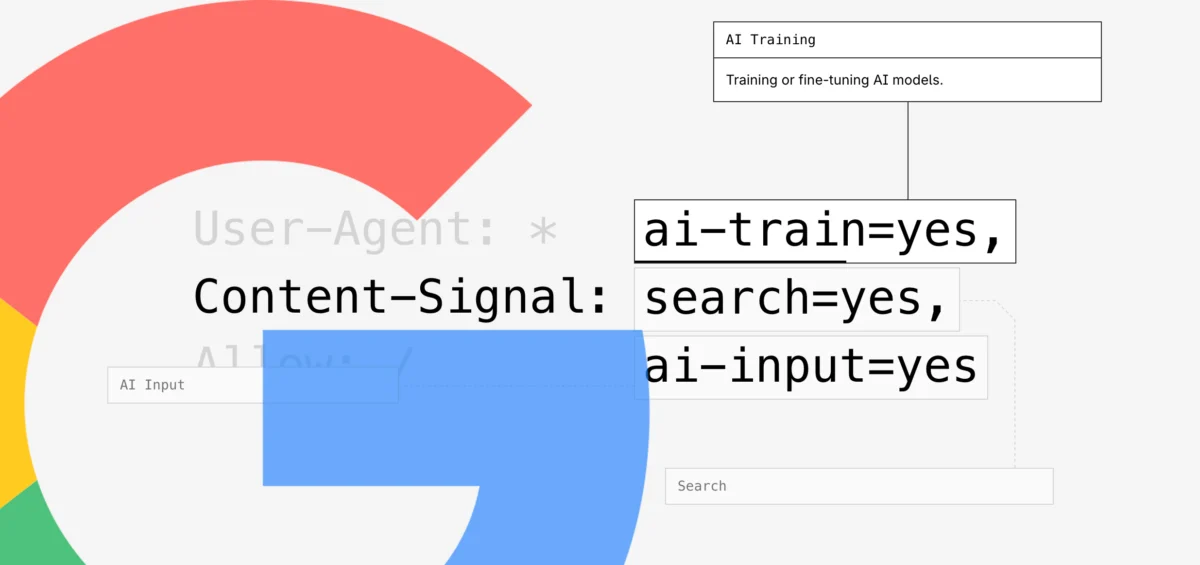
Google’s Search Relations team, through spokesperson John Mueller, has unequivocally stated that the Content Signals robots.txt directive, an initiative spearheaded by Cloudflare, has "no effects whatsoever for any crawler or LLM." Mueller further characterized its implementation as merely adding "bloat and future maintenance" to a website’s robots.txt file, emphasizing that, to his knowledge, neither major crawlers nor large language models (LLMs) currently utilize these directives. This declaration casts significant doubt on the immediate efficacy of Cloudflare’s proposed standard in influencing how major search engines and AI systems interact with web content.
The statement originated from a Reddit discussion within the r/TechSEO community, where a user inquired about the effectiveness of "Content-Signal headers and llms.txt" in aiding "Person entity disambiguation." Mueller’s response, direct and unambiguous, addressed both the llms.txt and llms-author.txt files, confirming Google’s non-use, and then specifically targeted the content-signal robots.txt directives. He elaborated, "It was made up by a CDN, afaik it has no effects whatsoever for any crawler or llm. Using it just adds bloat & future maintenance to your robots.txt file. You can also add other arbitrary things to your robots.txt file, crawlers just use the directives that they support and ignore the rest." This highlights a fundamental principle of the robots.txt protocol: it functions on voluntary compliance and universal recognition of directives.
Understanding Cloudflare’s Content Signals Initiative
Cloudflare, a prominent content delivery network (CDN) and cybersecurity company, introduced the Content Signals initiative in 2023. Its primary goal was to provide website owners with a more granular control mechanism over how their content is accessed and utilized by various internet agents, particularly in the burgeoning era of generative artificial intelligence. The initiative emerged against a backdrop of increasing concerns among content creators and publishers regarding the unchecked scraping of their data for training AI models, often without explicit consent or compensation.
Cloudflare proposed a new set of directives, including llms.txt and llms-author.txt, and specific content-signal directives within robots.txt, designed to categorize and manage access for different types of AI bots and crawlers. These categories typically included:
- Training: For AI models that use content for training purposes.
- Agent: For AI agents that interact with content to provide services (e.g., summarization, question answering).
- Search: For traditional search engine crawlers that index content for retrieval.
The core philosophy behind Content Signals was to empower publishers to distinguish between these uses, allowing them to permit or restrict access based on their preferences, intellectual property rights, and business models. Cloudflare positioned this as a step towards "content independence," giving website owners a voice in how their digital assets contribute to the AI ecosystem.
Cloudflare’s Deadline and Default Changes
As part of its rollout, Cloudflare announced a significant deadline and a shift in default settings for its users. By September 15, 2026, Cloudflare intends to implement new default behaviors for how these content classifications are handled. Specifically, for all new domains onboarding to Cloudflare, the categories of "Training" and "Agent" will be blocked by default on pages that display advertisements. Conversely, the "Search" category will remain allowed by default, ensuring that traditional search engines like Google can continue to index content for their primary function.
This change is particularly impactful given Cloudflare’s extensive reach. As of early 2024, Cloudflare serves approximately 21.3% of all websites on the internet, a figure that underscores its significant influence on web infrastructure. The impending default changes mean that a substantial portion of the web could, by default, begin restricting certain AI activities, even if passively. Cloudflare’s intent was to prompt website owners to actively review and adjust their Content Signals settings well in advance of the deadline, ensuring their preferences align with these new defaults. For existing Cloudflare users, the onus is on them to proactively check their configurations to avoid unintended consequences for AI access.
Google’s Official Stance and Implications
John Mueller’s statement from Google is a critical counterpoint to Cloudflare’s initiative. By asserting that Google does not use and has no plans to use these directives, he effectively signals that, for the dominant search engine, Cloudflare’s Content Signals are currently irrelevant. This position carries several important implications:
Technical and Protocol Nuances
The robots.txt protocol, established in 1994, is fundamentally a voluntary exclusion standard. It provides a way for websites to request that certain crawlers not access specific parts of their site. However, its effectiveness hinges on crawlers choosing to respect these directives. When a new directive is introduced by a third party, it only gains traction if major crawlers adopt and implement support for it. Google’s stance indicates that they view Content Signals as a proprietary directive lacking industry-wide consensus, and therefore, they are not integrating it into their crawling mechanisms. From a technical perspective, adding unsupported directives to robots.txt can indeed be considered "bloat," as crawlers must parse them, determine they are unrecognized, and then ignore them, adding a marginal processing overhead without yielding any desired effect.
Google’s Own AI Directives
It’s crucial to note that Google is not indifferent to the issue of AI training and content control. Google has introduced its own set of directives to manage how its various crawlers and AI models interact with content. For instance, Google supports directives like noindex and nofollow for traditional search. More recently, Google launched Google-Extended as a user-agent string that website owners can use in their robots.txt file to explicitly prevent Google’s generative AI models (like Google Bard and Vertex AI) from accessing their content, while still allowing Googlebot to crawl for traditional search indexing. This demonstrates Google’s preference for developing and promoting its own control mechanisms rather than adopting external, non-standardized directives like Cloudflare’s Content Signals. This approach allows Google to maintain control over its ecosystem and ensure consistency in how it interprets directives across its vast array of services.
Impact on Website Owners
For website owners utilizing Cloudflare’s Content Signals in the hope of influencing Google’s crawling and AI training behavior, Mueller’s statement is a clear disappointment. It means that any efforts invested in configuring these specific directives will not have the intended effect on Google or, presumably, other major LLM developers who have not explicitly endorsed the standard. This creates a dilemma: should they continue to implement Cloudflare’s directives for potential future adoption or for the benefit of smaller, compliant crawlers, or should they focus solely on widely recognized standards like Google’s Google-Extended for immediate impact? The advice to "just adds bloat & future maintenance" suggests a practical recommendation against its current use if the goal is to influence Google.
Broader Industry Context and the AI Content Debate
The exchange between Cloudflare’s initiative and Google’s response is a microcosm of a larger, ongoing debate within the tech industry about content ownership, AI training data, and the future of web standards.
The Data Scraping Controversy
The rise of sophisticated generative AI models has intensified the debate around data scraping. Many publishers and content creators argue that their intellectual property is being used without permission or compensation to train AI models, which then generate content that can compete with the original sources. This has led to lawsuits and calls for new regulatory frameworks and technical standards to protect content creators. Cloudflare’s Content Signals emerged directly from this sentiment, aiming to offer a technical solution to a complex legal and ethical challenge.
The Challenge of Standardization
Establishing new internet standards is a notoriously difficult process, especially when major players have differing strategic interests. Historically, new robots.txt directives or meta tags have gained widespread adoption when proposed by or strongly supported by dominant search engines. Without Google’s endorsement, Cloudflare’s Content Signals face an uphill battle to become a universally respected standard. This situation underscores the power Google wields in setting de facto web standards, given its overwhelming market share in search. Other LLM developers and crawler operators are likely to follow Google’s lead, avoiding the overhead of supporting a non-standard directive unless it gains significant traction.
Control vs. Openness
This incident also highlights the tension between a desire for greater content control by publishers and the inherent "openness" of the web, which has historically facilitated indexing and information dissemination. While publishers seek to dictate how their content is used, search engines and AI developers often prioritize efficient and comprehensive data access for their respective services. The challenge lies in finding a balance that respects intellectual property rights while fostering innovation and accessibility.
Future Outlook
The immediate future for Cloudflare’s Content Signals directive, at least concerning Google and major LLMs, appears challenging. While Cloudflare’s commitment to empowering publishers is clear, the lack of adoption by a key internet player like Google significantly limits its current practical utility.
Cloudflare may continue to advocate for the standard, hoping that other industry participants or future regulatory pressures might compel wider adoption. They might also refine the initiative based on feedback, attempting to align it more closely with existing web protocols or Google’s own approaches. However, without a shift in Google’s stance, website owners seeking to manage Google’s access to their content for AI training will need to rely on Google-specific directives like Google-Extended.
This event serves as a potent reminder that while new technical solutions can be proposed to address evolving internet challenges, their ultimate success often depends on collaborative adoption and consensus among the most influential stakeholders in the digital ecosystem. For now, the Content Signals robots.txt directive remains a well-intentioned but largely unsupported effort in the ongoing quest for content independence in the age of artificial intelligence.