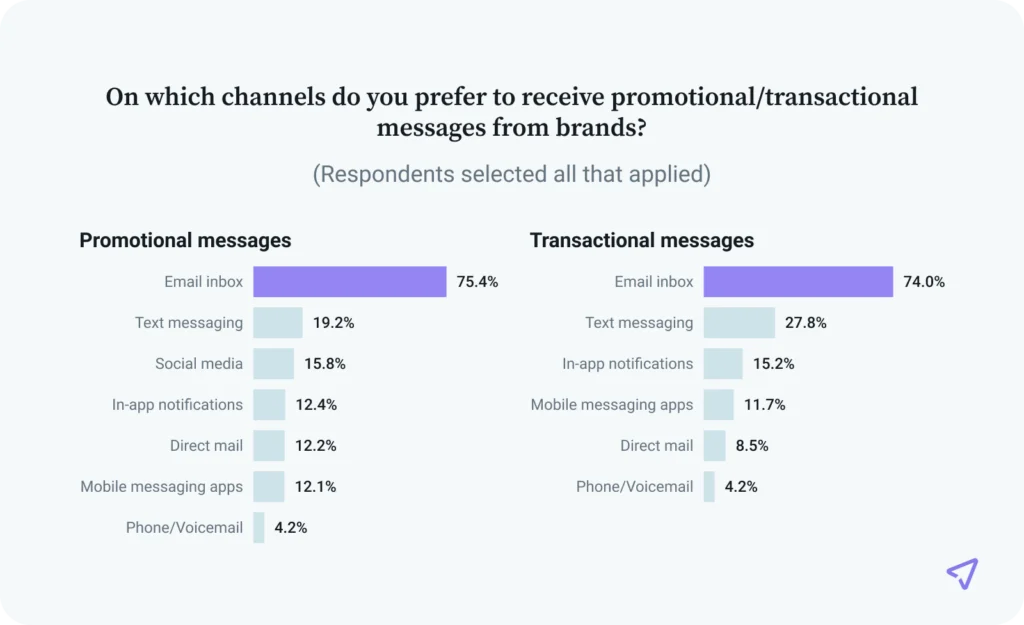
In the dynamic landscape of digital communication, email marketing continues to stand as an unparalleled cornerstone for businesses aiming to forge direct, meaningful connections with their clientele. Far from being a relic of the past, email remains a vital, owned marketing channel, offering businesses a direct line to their audience for everything from critical product announcements and onboarding sequences to engaging newsletters and targeted promotional campaigns. This enduring relevance is not merely anecdotal; robust data consistently underscores its preference among consumers for receiving commercial communications.
Email’s Enduring Dominance: Key Data and Market Context
Recent research, including Mailjet’s comprehensive 2024 email engagement report, provides compelling evidence of email’s continued efficacy. The report highlights that a significant 75.4% of consumers across major markets including the U.S., UK, France, Germany, and Spain express a clear preference for email when it comes to receiving promotional messages. Furthermore, 74% favor email for crucial transactional communications, such such as order confirmations and shipping updates, over all other available channels. This demonstrates email’s dual power: as a potent tool for driving sales and as an essential medium for critical customer service interactions.
The consistent high return on investment (ROI) associated with email marketing further solidifies its position. Industry benchmarks frequently cite an average ROI of $36 for every $1 spent, surpassing many other digital marketing channels. This efficiency, coupled with the ability to build and own a subscriber list independent of third-party platform algorithms, makes email a strategic imperative for businesses of all sizes. As other platforms constantly evolve their rules and reach, the email inbox remains a controlled environment where brands can cultivate loyalty and drive direct conversions.
The Paradox of Choice: Navigating a Crowded Market
While the strategic value of email marketing is undisputed, the journey to harness its full potential often begins with a formidable challenge: selecting the right email marketing platform. The market is saturated with hundreds of solutions, each boasting a unique array of features, pricing models, and target audiences. From lean tools designed for nascent startups to sprawling enterprise-grade suites, and from platforms heavy on automation to those prioritizing simplicity, the sheer volume of options can quickly become overwhelming. This "paradox of choice" necessitates a clear, methodical approach to identification and selection.

For years, industry experts have dedicated extensive resources to testing, analyzing, and documenting the evolution of leading email platforms. This guide aims to cut through the noise, providing a meticulously researched framework and spotlighting solutions tailored to various business needs. Whether an individual founder embarking on their first campaign or a scaling team seeking advanced segmentation and automation, the goal is to equip decision-makers with the insights needed to align platform capabilities with operational realities.
Defining Excellence: What Makes an Email Marketing Platform "Best" in 2026?
To compile this definitive list, a rigorous evaluation process was undertaken, involving countless hours of hands-on testing. This included setting up diverse campaigns, constructing intricate automation workflows, scrutinizing template libraries, and probing integration ecosystems across dozens of email tools. Crucially, inclusion in this guide is solely merit-based; no commercial considerations influenced the selection process.
Modern email marketing transcends the basic act of sending messages. Today’s premier platforms offer sophisticated capabilities for audience segmentation, behavior-triggered automation, and hyper-personalization, transforming mass communication into highly relevant one-to-one dialogues. However, many tools either over-engineer solutions for enterprise-level demands or fall short for businesses serious about growth. Therefore, the selection criteria focused on five critical "must-haves" that balance power with practicality:
-
Intuitive Ease of Use, Regardless of Technical Proficiency: A platform should empower users to launch campaigns and automate sends without requiring extensive technical expertise or a steep learning curve. The chosen tools prioritize clean dashboards, straightforward interfaces, and user-friendly builders for lists, campaigns, and automations. Clunky or confusing user experiences were immediate disqualifiers.
-
Robust and Reliable Built-in Automations: Effective email marketing relies heavily on automation, from welcoming new subscribers to nurturing leads and recovering abandoned carts. The selected platforms offer simple, yet powerful, automation builders that allow users to design complex customer journeys without writing a single line of code, ensuring reliability once live.
-
Seamless Integrations with Existing Tech Stacks: An email platform rarely operates in isolation. It must harmoniously connect with a business’s broader ecosystem, including e-commerce platforms, CRM systems, booking software, and analytics tools. Prioritization was given to tools with native, robust integrations or at least reliable Zapier compatibility to ensure smooth data flow and workflow efficiency.
-
Transparent and Scalable Pricing for Businesses of All Sizes: Budget considerations are paramount, especially for small and growing businesses. The evaluation focused on platforms offering affordable entry-level plans, generous free tiers, or flexible pay-as-you-go options. The aim was to identify solutions that allow businesses to start small and scale without encountering prohibitive costs or unexpected minimum volume requirements.
-
Ample Room for Future Growth and Scalability: As a business expands, its email marketing needs evolve. The "best" platforms provide a clear path for scaling campaigns, managing larger subscriber lists, and implementing more complex automations without forcing a costly and disruptive migration to an entirely new system. They are designed to grow with the business, not restrict it.
Understanding the Email Marketing Platform Pricing Landscape
For small businesses and marketing teams operating with finite budgets, a thorough understanding of pricing models is as crucial as evaluating features. While many platforms entice users with "free plans," these often come with limitations on contact numbers, monthly sends, or advanced features, which can impede growth as a subscriber list expands.
Common pricing structures and tiers observed in the market include:
- Free Tiers: Ideal for beginners or very small lists (e.g., up to 500-2,000 contacts) with basic sending limits and features. They serve as excellent entry points for testing functionality.
- Contact-Based Pricing: The most prevalent model, where costs increase proportionally with the number of subscribers in your list. This offers predictability but can become expensive as lists grow, regardless of actual sending volume.
- Send-Volume Based Pricing: Charges are determined by the number of emails sent per month, irrespective of list size. This can be cost-effective for larger lists that send infrequently but can escalate for high-volume senders.
- Feature-Based Tiers: Higher-priced plans unlock more advanced features such as sophisticated automation, A/B testing, dedicated IP addresses, advanced reporting, or priority support.
- Hybrid Models: Some platforms combine elements, offering a base price for a certain number of contacts and sends, with additional charges for exceeding limits or accessing premium features.
When assessing pricing, it is vital to balance immediate needs with long-term strategic goals. A seemingly attractive low-priced plan might lack the scalability or advanced features necessary for future growth, potentially leading to costly and time-consuming platform migrations down the line. Consideration of total cost of ownership, including potential add-ons and future upgrade paths, is essential.
Spotlight on Leading Email Marketing Platforms

Based on the rigorous evaluation criteria, here’s an in-depth look at some of the best email marketing platforms available in 2026, categorized by their ideal use cases:
Best for Budget-Conscious Teams: Mailjet
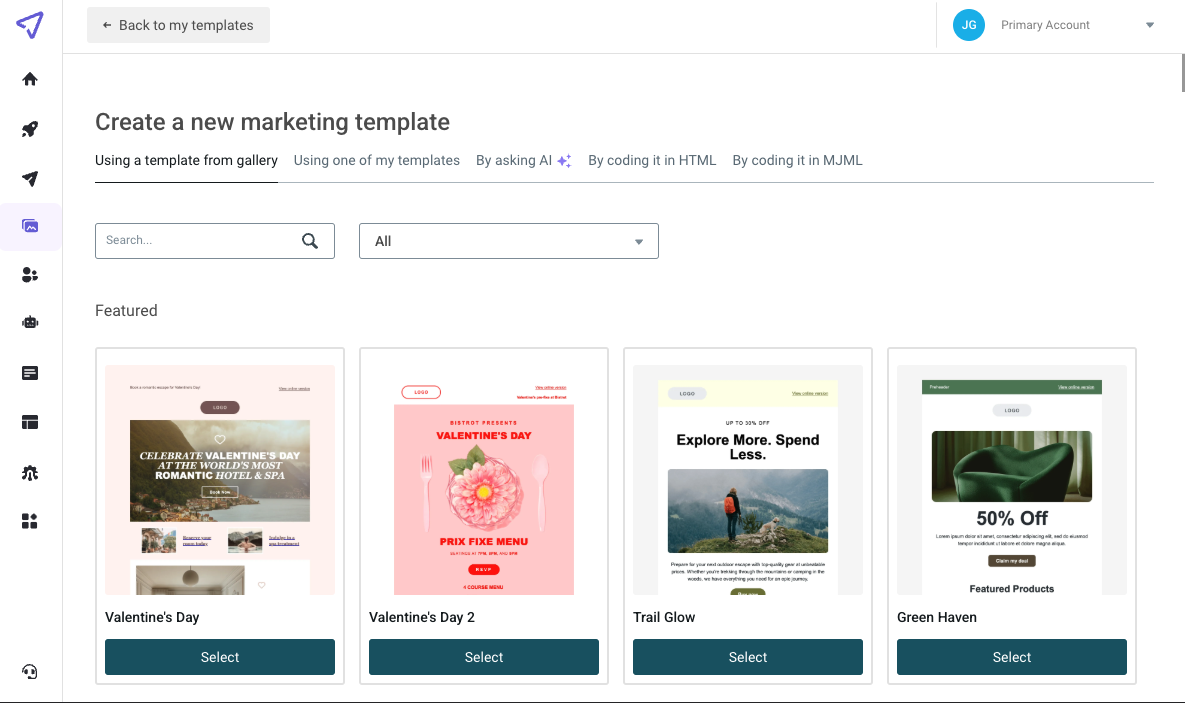
Mailjet distinguishes itself by offering a powerful suite of email marketing and transactional email features without imposing a contact-based pricing structure, making it exceptionally appealing for budget-conscious teams and growing startups. Its core strength lies in charging solely for the volume of emails sent, providing predictable costs even as subscriber lists expand exponentially. The platform boasts a clean, intuitive user interface that simplifies the creation and deployment of both marketing campaigns and crucial transactional emails, along with integrated form builders and landing page capabilities. Mailjet also emphasizes deliverability, offering robust infrastructure to ensure emails reach the inbox.
- Key Features: Send-volume based pricing, intuitive drag-and-drop email builder, robust API for developers, transactional email capabilities, A/B testing, real-time analytics, comprehensive template gallery, collaboration tools.
- Drawbacks: Some advanced automation features may require higher tiers, reporting can be less granular than specialized CRM platforms.
- Pricing: Offers a free plan for up to 6,000 emails/month (200 emails/day). Paid plans start from approximately $15/month for 15,000 emails, scaling with send volume rather than contacts.
Best for Getting Started: Mailchimp
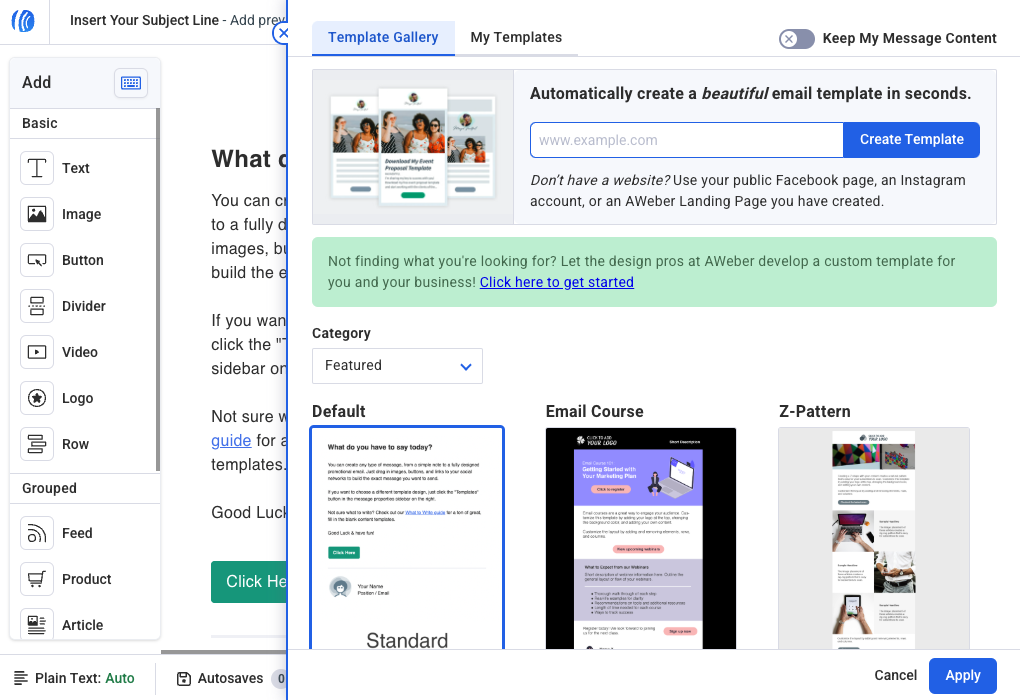
Mailchimp has long been synonymous with entry-level email marketing, renowned for its beginner-friendly interface and generous free plan (up to 500 contacts and 2,500 monthly sends). Its intuitive drag-and-drop editor, extensive template library, and straightforward campaign setup make it an ideal starting point for individuals and small businesses new to email marketing. While it has evolved into a broader marketing platform offering CRM functionalities, website builders, and social media tools, its core strength remains accessible email campaign management. However, as strategies mature and lists grow, users may encounter limitations in advanced automation and customization, and its contact-based pricing can become significantly more expensive compared to volume-based alternatives.
- Key Features: User-friendly interface, extensive template library, basic automation workflows, website and landing page builders, social media posting, basic segmentation, mobile app.
- Drawbacks: Contact-based pricing can get costly, limited advanced automation on lower tiers, deliverability has seen fluctuations.
- Pricing: Free plan for up to 500 contacts. Paid plans start around $13/month for 500 contacts, with prices escalating significantly with list size.
Best for Digital Creators: Kit (formerly ConvertKit)
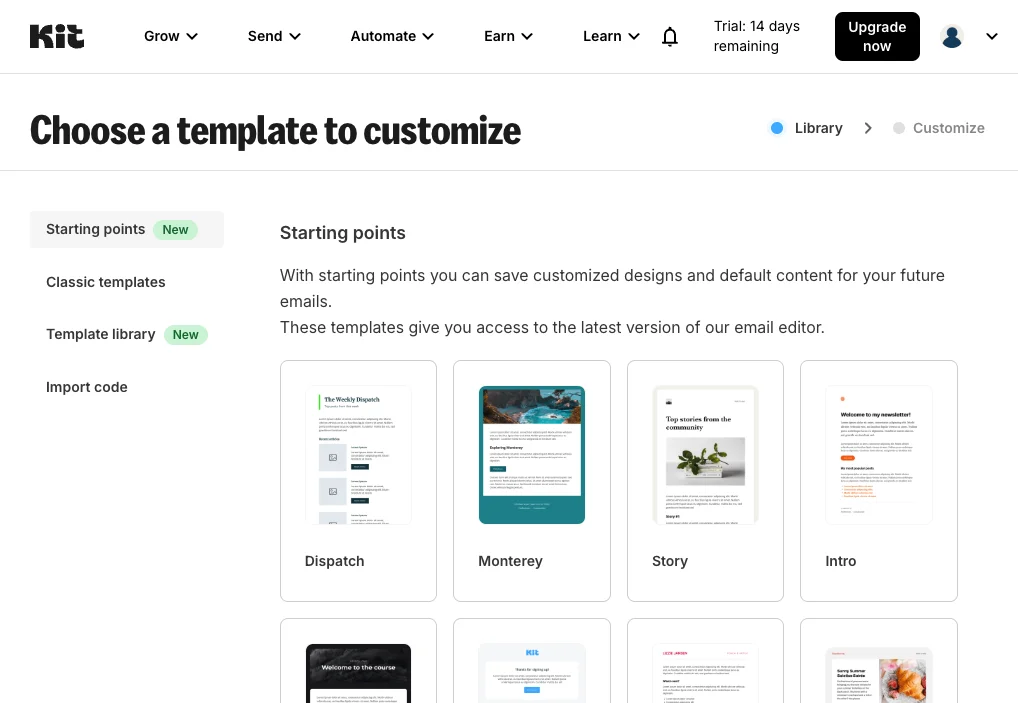
Kit, previously known as ConvertKit, is purpose-built for the unique needs of digital creators, including bloggers, YouTubers, podcasters, and online course creators. Its platform excels at audience growth and automated follow-up sequences, with a generous free plan supporting up to 10,000 subscribers. Kit focuses on tagging and segmentation, allowing creators to deeply understand their audience and deliver highly personalized content. It’s particularly strong for selling digital products, offering integrated landing pages, customizable forms, and simple sales funnels. While its email editor is intentionally minimalist, prioritizing deliverability and text-focused content over elaborate design, more advanced multi-sequence automation and complex funnels require a paid upgrade.
- Key Features: Advanced tagging and segmentation, landing page and form builders, simple visual automation builder, e-commerce integrations for digital products, plain-text email focus for deliverability, audience insights.
- Drawbacks: Email design options are more limited, less suited for highly visual, brand-heavy campaigns, can be pricey for larger lists.
- Pricing: Free plan up to 10,000 subscribers (with limited features). Paid plans start around $15/month for 300 subscribers, scaling with list size.
Best for Social-Savvy Brands: Constant Contact
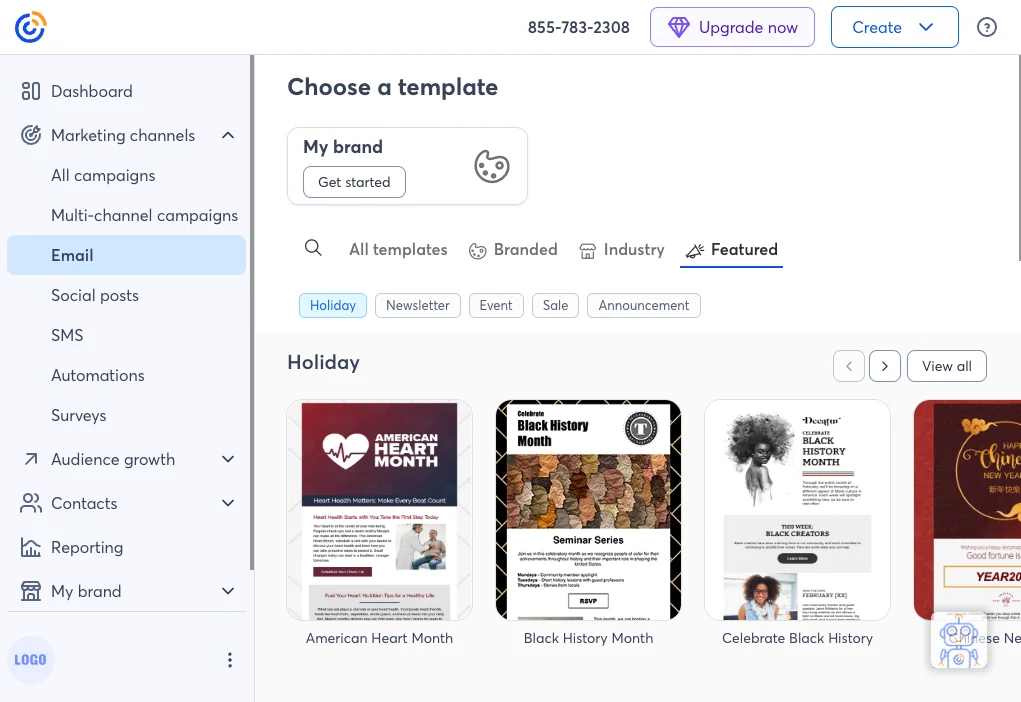
Constant Contact offers a robust solution for businesses that integrate their email campaigns with a strong social media presence. Its drag-and-drop editor is exceptionally user-friendly, and the platform is known for consistently high email delivery rates. Beyond email, Constant Contact provides tools for event management, social media marketing, and even basic website building, making it a comprehensive choice for brands that thrive on Facebook, Instagram, and other social channels. While powerful, its higher-tier plans can be a considerable investment for smaller teams or those with extensive subscriber lists.
- Key Features: User-friendly drag-and-drop editor, strong social media integration, event management tools, extensive template library, good deliverability, e-commerce integrations, basic CRM.
- Drawbacks: Higher price point for advanced features and larger lists, automation capabilities are not as deep as some competitors.
- Pricing: No free plan, but offers a free trial. Paid plans start around $12/month for up to 500 contacts, with pricing based on list size and features.
Best for Long-Standing Reliability: AWeber
With over two decades in the industry, AWeber stands as a testament to long-standing reliability and consistent performance, trusted by solo entrepreneurs and small business owners alike. Its platform is straightforward and easy to use, featuring a rich library of pre-built templates, robust automation capabilities, and native integrations with popular platforms like Etsy and YouTube. While AWeber may not boast the cutting-edge features of newer, more specialized platforms, it excels at the fundamentals, providing solid analytics, reliable testing tools, and a strong focus on deliverability, making it a dependable workhorse for general email marketing needs.
- Key Features: Reliable email deliverability, comprehensive template library, strong automation, email analytics, A/B testing, integrations with popular tools (e.g., Etsy, PayPal).
- Drawbacks: Interface can feel a bit dated, some advanced features might be less intuitive to set up.
- Pricing: Free plan for up to 500 subscribers. Paid plans start around $15/month for up to 500 contacts, scaling with list size.
Best for All-in-One Marketing: HubSpot
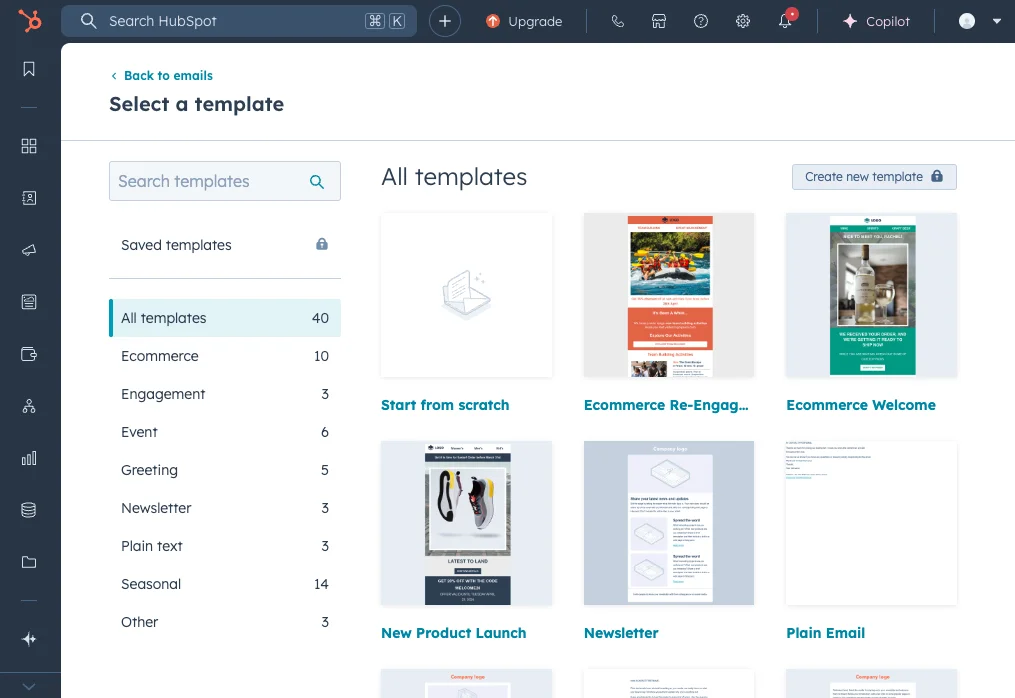
HubSpot transcends typical email marketing by offering a comprehensive CRM and marketing suite, making it ideal for businesses seeking a truly unified platform. Users can manage contacts, build sophisticated automated email workflows, design landing pages, and track performance across sales, marketing, and customer service — all within a single dashboard. Its free tier is surprisingly generous, providing essential CRM tools and limited email sending. However, accessing HubSpot’s more advanced marketing automation, lead scoring, and in-depth reporting features requires a significant jump in price, making it a substantial investment suited for growing businesses committed to an integrated inbound marketing strategy.
- Key Features: Integrated CRM, extensive marketing automation workflows, landing page and website builders, comprehensive analytics, sales tools, customer service hub, broad integration ecosystem.
- Drawbacks: Can be very expensive for full features, steep learning curve for new users, complex for basic needs.
- Pricing: Free CRM and limited email sending. Paid Marketing Hub plans start around $50/month, but comprehensive suites can quickly reach hundreds or thousands of dollars monthly.
Best for Online Stores: Omnisend
Omnisend is meticulously designed for e-commerce brands, providing a powerful omnichannel marketing automation platform. It integrates email, SMS, and push notifications directly out of the box, even on its free plan, allowing online retailers to engage customers across multiple touchpoints. Omnisend excels at e-commerce specific automations, such as abandoned cart recovery, browse abandonment, and post-purchase follow-ups, with deep integrations into platforms like Shopify and WooCommerce. While feature-rich for e-commerce, it may not offer the absolute best email deliverability compared to dedicated email-only services, and its template library, while functional, might lack the visual diversity some brands desire.
- Key Features: E-commerce specific automation (abandoned cart, product recommendations), omnichannel marketing (email, SMS, push notifications), deep e-commerce platform integrations, customer segmentation.
- Drawbacks: Deliverability can be an area for improvement, template designs are functional but not always cutting-edge, reporting can be less comprehensive on lower tiers.
- Pricing: Free plan for up to 500 contacts and 250 emails/month. Paid plans start around $16/month for 500 contacts, scaling with list size and message volume.
Best for Multi-Channel Campaigns: Brevo (formerly Sendinblue)
Brevo, formerly known as Sendinblue, offers a compelling solution for businesses that want to consolidate email, SMS, and live chat into a single, unified platform. Its strength lies in providing a comprehensive suite for multi-channel engagement, making it ideal for organizations seeking an all-in-one communication hub. Brevo boasts a clean, easy-to-navigate user interface and robust transactional email capabilities. Its flexible pricing, often based on email volume rather than contact count, can be advantageous. However, users may find some limitations in the depth of analytics and reporting unless they subscribe to higher-tier plans, which unlock more granular insights.
- Key Features: Multi-channel capabilities (email, SMS, live chat), transactional email API, marketing automation, CRM lite, landing page builder, flexible volume-based pricing.
- Drawbacks: Advanced analytics and segmentation are locked behind higher tiers, some users report occasional deliverability issues.
- Pricing: Free plan for up to 300 emails/day. Paid plans start around $25/month for 20,000 emails, scaling by email volume.
Best for Serious Automation: ActiveCampaign
ActiveCampaign is a powerhouse designed for businesses that demand sophisticated marketing automation and deep customer relationship management. It seamlessly combines advanced email marketing automation with a built-in CRM, offering unparalleled control over the entire customer journey. Features like detailed workflow builders, dynamic content, lead scoring, and intelligent segmentation enable hyper-personalized communication at scale. ActiveCampaign is a tool built for depth and complexity, making it ideal for teams seeking to implement intricate, behavior-driven strategies. This sophistication, however, comes with a steeper learning curve and a higher price tag, requiring a significant investment in both time and budget.
- Key Features: Advanced marketing automation, integrated CRM, lead scoring, dynamic content, robust segmentation, sales automation, SMS marketing, comprehensive reporting.
- Drawbacks: Steep learning curve, higher price point, can be overwhelming for beginners, template designs are functional but not always inspiring.
- Pricing: No free plan, but offers a free trial. Paid plans start around $29/month for 500 contacts, with pricing scaling significantly based on contact count and features.
Strategic Alignment: Which Platform for Your Business and Use Case?
The optimal email marketing tool is highly contingent on a business’s specific identity, objectives, and operational context. A lean startup’s requirements differ significantly from an established e-commerce giant or a community-focused nonprofit. Aligning the platform choice with your actual use case is paramount for efficiency and success.
- Small Businesses & Startups: Prioritize simplicity, affordability, and time-saving tools. Look for intuitive dashboards, accessible support, and automation that simplifies common tasks. Platforms like Mailjet, Mailchimp (for very small lists), and AWeber offer excellent starting points, with Mailjet being particularly strong for predictable, volume-based costs.
- E-commerce Brands: Email is a direct revenue driver here. Essential features include deep integrations with e-commerce platforms (Shopify, WooCommerce), abandoned cart recovery sequences, product recommendation engines, and behavioral triggers. Omnisend, ActiveCampaign, and HubSpot (for larger, integrated needs) are strong contenders.
- Digital Creators & Bloggers: Focus on audience growth, segmentation for diverse content, and sales funnels for digital products. Platforms like Kit (ConvertKit) excel with their tagging systems, landing page builders, and focus on direct engagement for creators.
- Nonprofits: Budget constraints are often critical. Seek platforms offering discounted or free nonprofit plans. Key features include customizable templates, donor segmentation, event management, and integrations with fundraising platforms to foster engagement and streamline operations. Constant Contact and Mailjet can be good fits, often with special pricing.
- B2B Companies: Email strategies revolve around lead nurturing, pipeline management, and account-based marketing. Integration with a robust CRM, lead scoring capabilities, and sophisticated segmentation for targeted communication are vital. HubSpot and ActiveCampaign are designed for this level of integration and automation depth.
Deciding on the Best Email Marketing Platform for You: A Comprehensive Approach
Choosing the right email marketing service requires a careful evaluation of your unique needs, overarching goals, and available resources. By systematically assessing core features, pricing structures, use case alignment, integration possibilities, scalability, advanced capabilities, and analytics, businesses can confidently narrow down their options.
The "best" email newsletter service for your business is ultimately one that strikes a harmonious balance between robust functionality, user-friendliness, and affordability, all while offering the flexibility to evolve with your dynamic needs. As you embark on this crucial decision-making process, consider these key takeaways:
- Prioritize User Experience: An intuitive interface minimizes training time and maximizes team efficiency.
- Automation is Key: Look beyond basic autoresponders to platforms that enable sophisticated, behavior-driven customer journeys.
- Integration Ecosystem: Ensure seamless data flow with your CRM, e-commerce platform, and other vital business tools.
- Scalability is Non-Negotiable: Choose a platform that can grow with your list size and evolving feature requirements without forcing a painful migration.
- Understand Pricing Models: Differentiate between contact-based and send-volume-based pricing to find the most cost-effective solution for your unique sending patterns.
- Deliverability Matters: A platform’s reputation for getting emails into the inbox, not the spam folder, is critical for campaign success.
- Support and Resources: Evaluate the quality of customer support and the availability of learning resources.
- Compliance: Ensure the platform supports GDPR, CCPA, and other relevant data privacy regulations.
- A/B Testing Capabilities: The ability to test subject lines, content, and calls to action is vital for continuous optimization.
- Mobile Responsiveness: Ensure templates and emails render perfectly across all devices.
By adhering to these guidelines and diligently evaluating your options, you can select an email marketing service that will serve as a powerful engine for driving engagement, nurturing customer relationships, and achieving your overarching business objectives. With the right platform at your fingertips, you will be well-equipped to navigate the ever-evolving digital landscape and cultivate an email marketing strategy that truly distinguishes your brand.
Finding the Right Email Platform for Your Business: A Final Checklist
Ultimately, selecting the ideal email marketing tool isn’t about chasing the flashiest features; it’s about identifying the perfect fit for your business, your goals, and your budget. Once these core parameters are clear, the selection process becomes significantly more manageable.
Start by focusing on these essential considerations:
- What is your primary budget for email marketing, and how will it scale?
- What is your current subscriber list size, and what are your growth projections?
- What level of technical expertise does your team possess?
- Which other tools (CRM, e-commerce, analytics) must your email platform integrate with?
- What are your most critical automation needs (e.g., welcome series, abandoned cart, re-engagement)?
Your specific use case is also a critical determinant. An online retailer will prioritize different features than a B2B service provider or a content creator. Aligning your platform choice with your operational realities will save considerable time and prevent future headaches.
Integration is paramount. Your chosen email tool must seamlessly connect with your existing tech stack to ensure data consistency and streamline workflows. Furthermore, if you anticipate delving into advanced capabilities—such as sophisticated deliverability optimization, highly personalized dynamic content, or robust compliance support—ensure your platform is built to accommodate such depth.
To synthesize this guide, here’s a quick checklist to steer your final decision:
- Budget Alignment: Does the pricing structure (free tier, contact-based, send-volume) fit your current and projected budget?
- Ease of Use: Is the interface intuitive, with a straightforward drag-and-drop editor and clear navigation?
- Core Feature Set: Does it offer essential features like list management, segmentation, and a good template library?
- Automation Prowess: Are the automation workflows robust, easy to set up, and capable of handling your desired customer journeys?
- Integration Compatibility: Does it integrate natively or via Zapier with your CRM, e-commerce platform, and other key tools?
- Scalability Path: Can the platform comfortably accommodate your list growth and future feature requirements without a complete overhaul?
- Deliverability Reputation: Does the provider have a strong track record for ensuring emails land in the inbox?
- Analytics & Reporting: Does it offer detailed insights into open rates, click-through rates, conversions, and ROI?
- Customer Support: Is responsive and knowledgeable support available when you need it?
- Compliance Features: Does it offer tools and features to help you comply with data privacy regulations like GDPR and CCPA?
- Mobile Optimization: Are emails automatically optimized for viewing on all devices?
- A/B Testing: Can you easily test different elements of your campaigns to optimize performance?
The right email platform will not merely facilitate sending messages; it will empower you to build genuine connections with your audience, nurture leads effectively, and drive significant, measurable growth for your business. Therefore, invest the necessary time, explore a few top contenders, and select the platform that feels custom-made for your unique entrepreneurial journey.
Frequently Asked Questions About Choosing an Email Service
For those new to email marketing or seeking to optimize their current setup, this FAQ addresses common queries regarding email marketing services, features, pricing, integrations, and more.
What is an email marketing service, and how does it work?
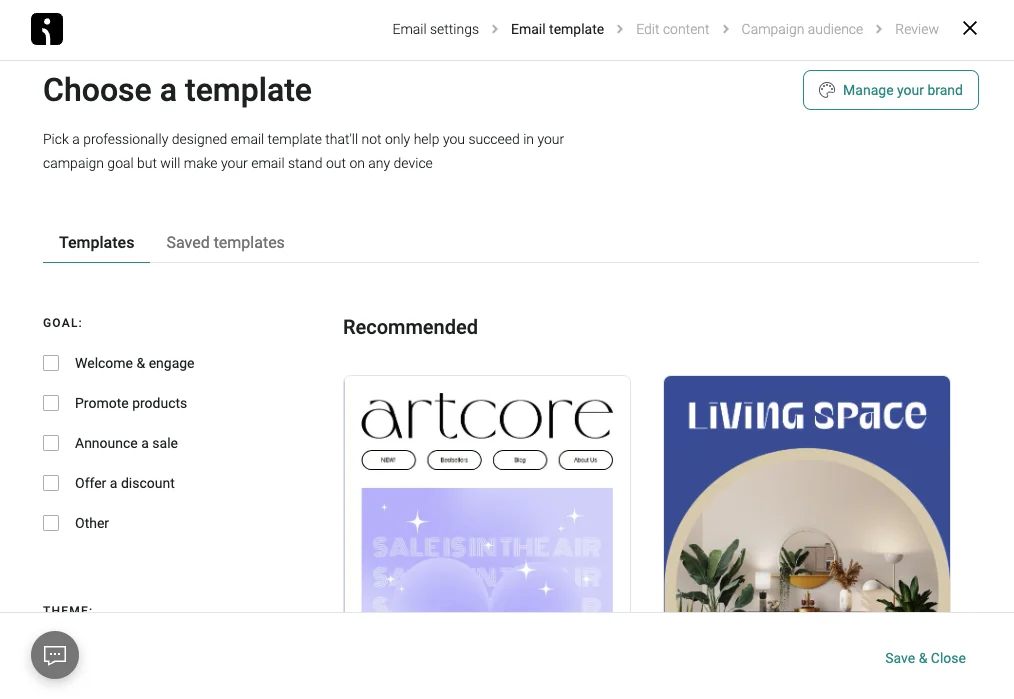
An email marketing service (EMS) or email service provider (ESP) is a software platform designed to help businesses manage, send, and track email campaigns. These tools typically offer features like drag-and-drop email builders, subscriber list management, segmentation capabilities, marketing automation, signup forms, and detailed performance reports, enabling efficient campaign execution without requiring design or development expertise.
How many emails can I send per month?
The number of emails you can send typically depends on your chosen plan. Some providers offer unlimited sends on higher-tier plans, while others impose monthly or even daily send limits. It’s crucial to carefully review the send limits for each plan, especially if you have a large subscriber list or plan to send frequent bulk emails.
What are transactional emails, and do I need them?
Transactional emails are automated, system-triggered messages sent in response to a user’s action, such as order confirmations, password resets, shipping notifications, or account activation links. If you operate an e-commerce store, provide a service that requires user accounts, or manage bookings, transactional emails are essential for providing timely information and enhancing customer experience. Many modern email marketing platforms integrate these into their automation workflows or allow connection via APIs.
Are there affordable email marketing services for small businesses?
Absolutely. Many email marketing tools offer generous "forever-free" plans or affordable basic plans that include essential features like email sequences, automation, and access to pre-made templates. Mailjet, Brevo, Mailchimp (for very small lists), and MailerLite are popular choices for budget-conscious users, offering a strong feature set without a prohibitive cost.
What kind of advanced features should I look for?
If you’ve moved beyond the basics, prioritize tools that offer:
- Advanced Segmentation: Dynamic lists based on behavior, demographics, and purchase history.
- Complex Automation Workflows: Multi-step, conditional journeys triggered by specific user actions.
- A/B Testing: The ability to test various elements (subject lines, content, send times) for optimization.
- CRM Integration: Seamless syncing with your customer relationship management system.
- Dynamic Content: Personalizing email content blocks based on subscriber data.
- Lead Scoring: Assigning values to leads based on engagement to prioritize follow-ups.
- Predictive Analytics: AI-driven insights to forecast customer behavior.
These features are particularly valuable for e-commerce customers, content creators, and businesses selling digital products, enabling highly targeted and effective campaigns.
Do email marketing tools integrate with my existing tech stack?
Most reputable email marketing platforms offer a wide array of third-party integrations with popular tools like Shopify, Salesforce, Google Analytics, WordPress, and Zapier. Look for "deep integrations" if you require robust CRM syncing, direct advertising platform connections, or detailed conversion funnel tracking.
What are some good platforms for e-commerce email marketing?
For online stores, platforms specifically built with e-commerce in mind are ideal. Omnisend, Drip, and Klaviyo are strong choices, offering specialized features like commerce revenue attribution, sophisticated abandoned cart recovery emails, product-based segmentation, and sales automation tailored for online retailers.
How important is email deliverability?
Email deliverability is paramount. Poor deliverability rates mean your emails might