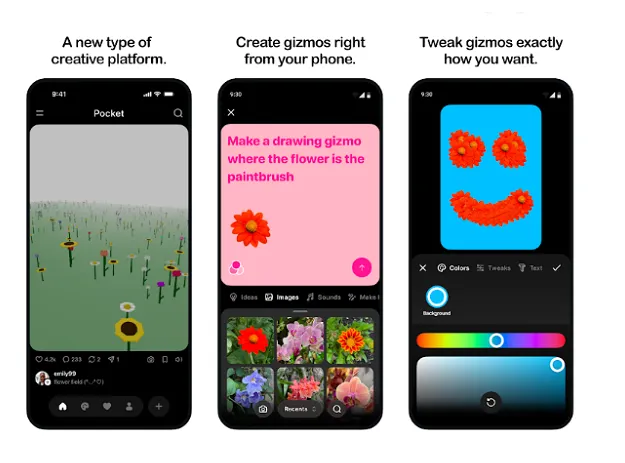
Meta Platforms, Inc. has unveiled “Pocket,” a new artificial intelligence-powered application designed to empower users to generate interactive “gizmos” – miniature games and tools – directly from text prompts. This launch signals a significant acceleration of Meta’s ambitious AI strategy, pushing forward despite an increasing chorus of concerns and backlash regarding the proliferation of AI-generated content across its vast ecosystem of applications. The company’s move into accessible AI-driven creation platforms reflects a broader industry trend toward democratizing content generation, but it also reignites debates about content quality, authenticity, and the very nature of digital creativity in an AI-dominated landscape.
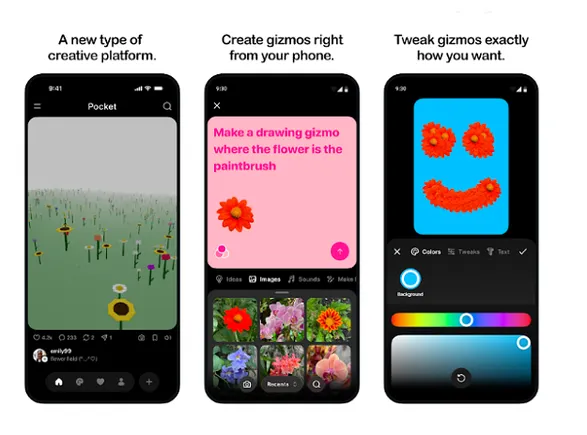
The Pocket app is currently available for download, allowing individuals to craft novel interactive experiences by simply describing their desired function or game scenario. As articulated in its Google Play Store description, “Pocket is a creative platform for making and sharing gizmos. A gizmo is a small interactive thing you can tap and play with… and you can make a gizmo just by describing it.” This core functionality aims to bypass traditional coding barriers, enabling anyone with an idea to bring it to life in an interactive format. For instance, a user envisioning a game where they battle extraterrestrial invaders for galactic dominance could input this concept as a prompt, and Meta’s AI engine within Pocket would endeavor to generate a playable experience. The platform also incorporates social features, allowing users to browse a feed of gizmos created by others, offering options to “like” and “comment” to foster community engagement and highlight popular creations. This communal aspect is intended to cultivate a vibrant ecosystem where users can discover, share, and potentially inspire each other’s AI-generated projects.
Meta’s Unwavering AI Offensive and Strategic Context
The introduction of Pocket is not an isolated event but rather a strategic component of Meta’s overarching and aggressive push into artificial intelligence. For several years, Meta has been investing heavily in AI research and development, viewing it as fundamental to its future across various domains, from enhancing user experience in its social media platforms to building the foundational technologies for the metaverse. This commitment has manifested in numerous initiatives, including the development of powerful large language models like Llama, the integration of AI assistants into Messenger and WhatsApp, and the increasing presence of AI-generated content within Facebook and Instagram feeds.
The timing of Pocket’s launch is particularly notable, occurring amidst heightened public debate and internal challenges concerning AI. In recent months, Meta, alongside other tech giants, has faced scrutiny over issues such as the spread of misinformation via AI-generated images and text, the ethical implications of synthetic media, and the impact of AI on human creators. Critics argue that the rapid deployment of generative AI tools, without robust safeguards, could exacerbate existing problems related to content authenticity and lead to a deluge of low-quality or potentially harmful content. Despite these concerns, Meta has consistently emphasized its belief in the transformative potential of AI to enhance connection and creativity, positioning Pocket as a tool for empowerment rather than a source of contention.
From a strategic standpoint, Pocket aligns with several key objectives for Meta. Firstly, it seeks to broaden user engagement by offering novel creative outlets, potentially attracting a new demographic of casual creators who might otherwise be intimidated by traditional coding or game development. Secondly, by fostering a new ecosystem of user-generated interactive content, Meta can gather valuable data on user preferences, AI model performance, and emergent creative trends, which can then be fed back into improving its core AI technologies. Thirdly, it serves as a testing ground for Meta’s vision of an interactive, AI-powered metaverse, where users can effortlessly create and share dynamic experiences. The ability to “describe and create” aligns perfectly with the metaverse’s promise of intuitive, immersive digital interactions.
A Brief Chronology of Meta’s AI Journey
Meta’s journey into AI began over a decade ago with the establishment of its AI Research (FAIR) lab, focusing on fundamental research in areas like computer vision, natural language processing, and speech recognition.
- Early 2010s: Initial investments in AI research, forming FAIR, with a focus on improving core platform functionalities like content ranking, facial recognition, and personalized recommendations.
- Mid-2010s: Expansion of AI applications to include sophisticated language models for translation and chatbots for Messenger. Acquisition of AI startups to bolster capabilities.
- Late 2010s: Increased focus on generative AI, particularly in areas like image generation and video synthesis. Development of open-source AI frameworks like PyTorch to foster broader AI innovation.
- Early 2020s: Public announcement of Meta’s metaverse vision, with AI identified as a critical enabling technology for virtual world creation and interaction. Launch of advanced large language models (LLMs) like Llama, emphasizing open-source contributions.
- 2023: Introduction of AI assistants across Meta’s apps, and a more pronounced integration of generative AI features, leading to increased public discourse around AI-generated content.
- 2024: Launch of Pocket, marking a significant step into user-facing AI-powered interactive content generation, further solidifying Meta’s commitment to democratizing AI creativity.
This timeline illustrates a deliberate and sustained effort by Meta to integrate AI deeply into its product offerings and future strategic direction, with Pocket representing a tangible outcome of this long-term investment.
The Broader Landscape of Generative AI and User-Generated Content
The emergence of Pocket is contextualized within a rapidly expanding market for generative AI tools. Over the past few years, the tech industry has witnessed an explosion in platforms that allow users to generate text, images, audio, and even video from simple prompts. Tools like OpenAI’s DALL-E and Midjourney for images, Stability AI’s Stable Diffusion, and various text-to-video generators have captured public imagination and demonstrated the immense potential of AI to transform creative workflows. The game development sector, in particular, has seen growing interest in AI-powered tools that assist with asset creation, level design, and even character behavior, aiming to reduce development time and costs.
While many existing AI tools focus on generating static assets, Pocket’s emphasis on interactive “gizmos” places it in a slightly different, albeit related, category. It directly addresses the burgeoning demand for user-generated content (UGC) within an interactive framework. The success of platforms like Roblox, Minecraft, and Fortnite’s Creative mode, which empower users to build and share their own games and experiences, underscores the immense appetite for interactive UGC. These platforms have demonstrated that a significant portion of digital engagement comes from users creating content for other users. Pocket seeks to lower the barrier to entry for this type of creation even further, moving beyond visual scripting or block-based coding to pure natural language prompts.
Market data suggests a significant growth trajectory for the generative AI market. Projections indicate that the global generative AI market size, valued at billions of dollars in 2023, is expected to expand at a compound annual growth rate (CAGR) exceeding 30% over the next decade. This growth is driven by increasing adoption across various industries, including media and entertainment, where tools like Pocket fit perfectly. The potential for AI to streamline content creation, personalize experiences, and foster innovation is immense, drawing considerable investment and competitive activity from major tech players.
The Paradox of Democratized Creativity: Quantity vs. Quality
The central premise of Pocket – democratizing creativity through AI – carries with it an inherent paradox, a point subtly highlighted in the original article. While empowering individuals without coding expertise to create interactive experiences is undeniably powerful, the actual quality and compelling nature of the resulting “gizmos” remain a significant question. The article notes, “most of the resulting outputs are very basic, and not particularly interesting. That’s likely because the creators don’t have the requisite knowledge and/or experience to create a truly compelling experience.”
This observation resonates deeply with broader discussions surrounding generative AI. While AI can quickly produce a vast quantity of content, the leap from “functional” to “captivating” often requires human discernment, artistic vision, and a deep understanding of design principles, narrative structures, and user psychology – skills typically honed through years of dedicated practice and iterative refinement. Creating a truly engaging game, for example, involves far more than just conceptualizing a premise; it requires careful balancing of mechanics, intuitive user interfaces, compelling level design, effective storytelling, and sophisticated debugging. These elements are the product of “years of trial and error,” as the article suggests, and are not easily replicated by a simple text prompt, no matter how advanced the underlying AI.
It is plausible that Pocket will indeed lead to some genuinely innovative and captivating projects. The sheer volume of creations could statistically increase the likelihood of unique “diamonds in the rough” emerging. Niche communities might form around specific types of gizmos, fostering a distinct creative culture. However, the majority of AI-generated interactive content, particularly in the initial phases, may struggle to transcend basic functionality. If the platform becomes saturated with simplistic or repetitive gizmos, user engagement could wane, potentially leading to the app’s decline – a fate the original article speculates is “most likely” for Meta’s latest AI project. The challenge for Meta will be to continuously refine its AI models to produce more sophisticated and nuanced outputs, and to foster a community that values and promotes high-quality creations, even those from novice users.

Technical Underpinnings and Ethical Considerations
Underpinning Pocket’s functionality are sophisticated generative AI models, likely a combination of large language models (LLMs) for interpreting text prompts and translating them into logical game structures, and potentially other generative models for asset creation (e.g., visual styles, sound effects). These models are trained on vast datasets of existing games, interactive experiences, code snippets, and creative content, learning patterns and relationships that allow them to generate new outputs. The computational demands for such a system are considerable, requiring significant processing power and robust cloud infrastructure to handle real-time generation requests from millions of users.
Beyond the technical marvel, Pocket, like all AI platforms, faces significant ethical and safety considerations.
- Content Moderation: Ensuring that user-generated gizmos do not contain harmful, offensive, or illegal content will be a perpetual challenge. Automated moderation systems, while helpful, often require human oversight and continuous refinement to catch nuanced forms of inappropriate content.
- Bias: The AI models themselves could inadvertently inherit biases present in their training data, leading to skewed or stereotypical outputs. Meta will need to implement strategies to detect and mitigate such biases to ensure fair and inclusive creation.
- Intellectual Property: The origin of assets and code generated by AI raises complex questions about intellectual property rights. If a user describes a game that closely resembles an existing copyrighted work, who is responsible? What are the ownership rights over the AI-generated components? These are questions the broader legal framework around generative AI is still grappling with.
- User Safety: As an interactive platform, there is a need to protect users, particularly minors, from exploitation or exposure to harmful interactions within gizmos.
Official Responses and Broader Impact
While Meta has not released specific statements beyond the app description, their strategic rationale is evident. They are positioning Pocket as an evolution of user-generated content, aiming to tap into a creative impulse that was previously limited by technical barriers. This aligns with statements from Meta executives, including Mark Zuckerberg, who have consistently championed AI as a tool for human augmentation and expression. The company views these initiatives as crucial for maintaining its relevance and competitive edge in an increasingly AI-driven tech landscape, especially against rivals like Google, Microsoft, and OpenAI, who are also heavily investing in generative AI.
The impact of Pocket could be multifaceted. For the broader creator economy, it represents another avenue for “micro-creators” to emerge, potentially leading to new forms of digital entrepreneurship. While the economic viability of creating “gizmos” is yet to be determined, platforms that simplify creation often pave the way for unexpected innovations and new revenue models. For the education sector, Pocket could offer an accessible entry point into computational thinking and interactive design, allowing students to experiment with game development concepts without needing to learn complex programming languages.
However, the long-term success of Pocket will hinge on several factors. The quality of the AI generation must continuously improve, moving beyond basic prototypes to more sophisticated and customizable experiences. Meta will need to cultivate a thriving community through effective curation, incentivization, and robust moderation. Crucially, the platform must demonstrate its ability to foster genuine creativity and produce experiences that are not merely functional but truly engaging and memorable, transcending the initial novelty of AI-powered creation. If it succeeds, Pocket could redefine casual interactive content creation; if it falters, it may serve as another example of an ambitious AI project that struggled to bridge the gap between technological possibility and compelling user experience.