

The traditional framework of website analysis, once defined by the simple monitoring of traffic volume, keyword rankings, and page load speeds, has undergone a fundamental transformation as the digital ecosystem enters 2026. In the current environment, a website’s success is no longer determined solely by its performance on a standard search engine results page (SERP). Instead, a brand’s digital footprint is now subject to the scrutiny of artificial intelligence (AI) agents, large language models (LLMs), and highly sophisticated user behavior tracking. As users increasingly bypass traditional search links in favor of AI-generated summaries and conversational interfaces, the metrics for “visibility” have been radically redefined.
Market research indicates that the shift toward AI-integrated search is not merely a trend but a structural change in consumer behavior. According to data released by Gartner, traditional search engine volume was projected to drop by 25% by 2026 as users migrated toward AI chatbots and virtual agents. This shift is corroborated by findings from the Pew Research Center, which noted a significant decline in click-through rates (CTR) when AI summaries are present. Specifically, users were found to click on traditional links in only 8% of visits when an AI summary appeared, compared to 15% when no summary was present. Consequently, website analysis must now encompass five critical pillars: search and AI visibility, technical health, user behavior, content credibility, and conversion optimization.
The Evolution of Visibility: From SEO to AI Optimization
In the preceding decade, search engine optimization (SEO) focused almost exclusively on Google’s indexing and ranking algorithms. Today, however, visibility requires a dual-track strategy: optimizing for human searchers and optimizing for machine readability. Buyers now discover brands through a diverse array of entry points, including ChatGPT, Perplexity, and Google’s AI Overviews.
To analyze a site’s standing in this new reality, businesses are adopting “AI visibility audits.” This involves moving beyond traditional keyword tracking to assess how LLMs summarize a brand’s value proposition. For instance, a developer of conversion rate optimization (CRO) tools must now evaluate how a chatbot responds to queries such as “What are the top-rated CRO platforms for e-commerce in 2026?” or “Compare the pricing and features of the leading user behavior analytics tools.”
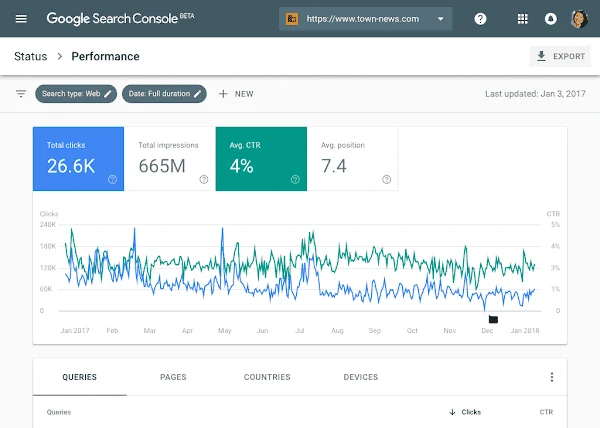
The technical side of this visibility remains anchored in Google Search Console (GSC), but the focus has shifted. Analysts now prioritize the “Indexing” report to ensure that priority pages are not only crawled but also correctly categorized. Common issues such as “Crawled – currently not indexed” or duplicate canonical errors can prevent AI models from accurately ingesting a site’s data. Furthermore, the URL Inspection tool is now used to verify that a site’s structured data—schema markup—is robust enough for AI agents to interpret.
Technical Infrastructure and Performance Benchmarks
The technical health of a website remains the foundation upon which all other optimizations are built. In 2026, page speed and Core Web Vitals are considered “table stakes” rather than competitive advantages. However, the stakes for technical failure have risen. If a site’s server response time is sluggish, AI crawlers may deprioritize the site, leading to a “visibility blackout” in AI-generated recommendations.
A comprehensive technical audit now involves a rigorous functionality assessment. This includes testing whether website functions are discoverable and whether navigational elements are intuitive for both desktop and mobile users. Experts recommend a “zero-friction” approach, where every link, button, and form is tested across multiple browser environments. If a user finds a function difficult to operate, the resulting negative experience often leads to immediate site abandonment, a metric that search engines now use as a signal of poor site quality.
User Behavior and the Psychology of Conversion
Understanding how users interact with a site—once they arrive—is the domain of Conversion Rate Optimization (CRO). Modern CRO analysis has evolved into a 360-degree evaluation that combines quantitative data with qualitative insights.
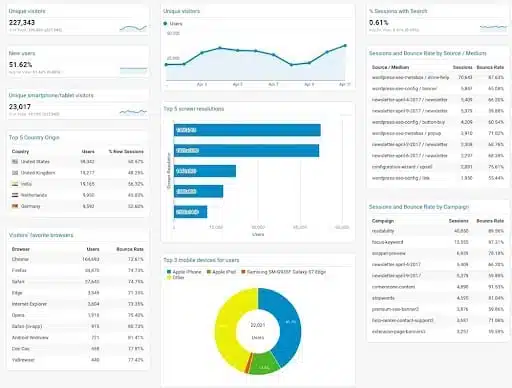
Quantitative data, provided by tools such as Google Analytics 4 (GA4) or Similarweb, offers a numerical overview of user journeys, including session duration, bounce rates, and exit pages. However, numbers alone do not explain why a user left a cart or ignored a call-to-action (CTA). This is where qualitative tools, such as FigPii or Hotjar, become essential. By utilizing heatmaps and session recordings, analysts can visualize the user’s struggle. For example, a scroll map might reveal that 70% of visitors never see the primary “Buy Now” button because it is buried too far down the page.
Moreover, messaging analysis has become a critical component of the CRO audit. In an era of information overload, a website’s copy must resonate immediately with the target audience. Analysts now perform “message match” audits to ensure that the promise made in an ad or an AI summary is fulfilled the moment the user lands on the page. Discrepancies between the search intent and the landing page content are one of the primary drivers of high bounce rates.
Heuristic Evaluation and Expert Reviews
To achieve a superior user interface (UI), many organizations are returning to the fundamentals of heuristic analysis. This involves an expert review of a website based on established usability principles, most notably those developed by Jakob Nielsen. These ten heuristics serve as a checklist for identifying design flaws:
- Visibility of system status: Keeping users informed about what is going on.
- Match between system and the real world: Using words and concepts familiar to the user.
- User control and freedom: Providing a clear “emergency exit” from unintended actions.
- Consistency and standards: Ensuring users don’t have to wonder whether different words or actions mean the same thing.
- Error prevention: Designing to prevent problems from occurring in the first place.
- Recognition rather than recall: Minimizing the user’s memory load.
- Flexibility and efficiency of use: Catering to both inexperienced and experienced users.
- Aesthetic and minimalist design: Removing irrelevant information.
- Help users recognize, diagnose, and recover from errors: Using plain language to describe problems and solutions.
- Help and documentation: Providing easy-to-search information if a user gets stuck.
Violating these rules often results in “conversion friction,” where the cognitive load required to navigate a site becomes too high, leading the user to seek alternatives.
Content Quality and the Trust Economy
As AI-generated content saturates the internet, “Content Quality” has become synonymous with “Trust Signals.” In 2026, search engines and AI models prioritize content that demonstrates E-E-A-T: Experience, Expertise, Authoritativeness, and Trustworthiness.

A content analysis now involves examining whether a site’s articles and product pages provide unique value or merely regurgitate existing information. Analysts look for “information gain”—the inclusion of original data, case studies, or expert quotes that cannot be found elsewhere. Furthermore, trust signals such as clear author biographies, verified customer reviews, secure payment badges, and transparent return policies are no longer optional. They are essential data points that AI models use to determine whether a brand is credible enough to recommend to a user.
The Strategic Roadmap for Website Analysis
Conducting a comprehensive website analysis requires a structured, goal-oriented approach. Industry experts suggest a six-step roadmap for organizations looking to optimize their digital presence:
- Objective Definition: Analysis must begin with a clear baseline. Whether the goal is to reverse a drop in rankings or reduce cart abandonment, a defined objective prevents “analysis paralysis.”
- Tool Selection: Organizations must deploy a stack that covers all bases, from SEO tools like Ahrefs and SEMrush to CRO platforms like FigPii and usability tools like Qualaroo.
- Roadmap Creation: Benchmarking data against industry standards allows a company to set realistic KPIs. This phase involves mapping the ideal customer journey from discovery to conversion.
- Data Collection: Using the selected tools, organizations gather both numerical and behavioral data over a set period (typically 30 to 90 days).
- Vulnerability Mitigation: Analysts identify “loopholes”—areas where traffic is lost or users encounter friction—and implement iterative changes.
- Institutionalization: Website analysis is not a one-time event but a continuous cycle. Consistent monitoring ensures the site remains adaptive to changes in search algorithms and consumer expectations.
Competitive Intelligence and Market Positioning
The debate over the necessity of competitive analysis has largely been settled in favor of proactive intelligence. In a crowded marketplace, understanding a competitor’s strategy is vital for identifying underserved market segments.
Competitive analysis focuses on three key areas: organic traffic patterns, customer demographics, and Pay-Per-Click (PPC) strategies. By using tools like iSpionage, businesses can gain insights into the keywords competitors are bidding on and the duration of their campaigns. This data allows a brand to refine its own paid initiatives and discover “keyword gaps”—lucrative search terms that competitors have overlooked.
Broader Implications for the Future
The implications of this shift in website analysis are profound. We are moving toward a “post-click” economy where the value of a website is measured not just by how many people visit it, but by how effectively its data is served to AI agents and how efficiently it converts the high-intent traffic that does arrive.
For businesses, the message is clear: the era of “set it and forget it” web design is over. As AI continues to mediate the relationship between brands and consumers, the website must serve as a high-performance, high-trust data hub. Those who fail to adapt their analysis techniques to include AI visibility and deep user behavior metrics risk becoming invisible in an increasingly automated world. Conversely, those who master these five pillars of modern website analysis will be well-positioned to lead their respective industries through the next decade of digital evolution.







