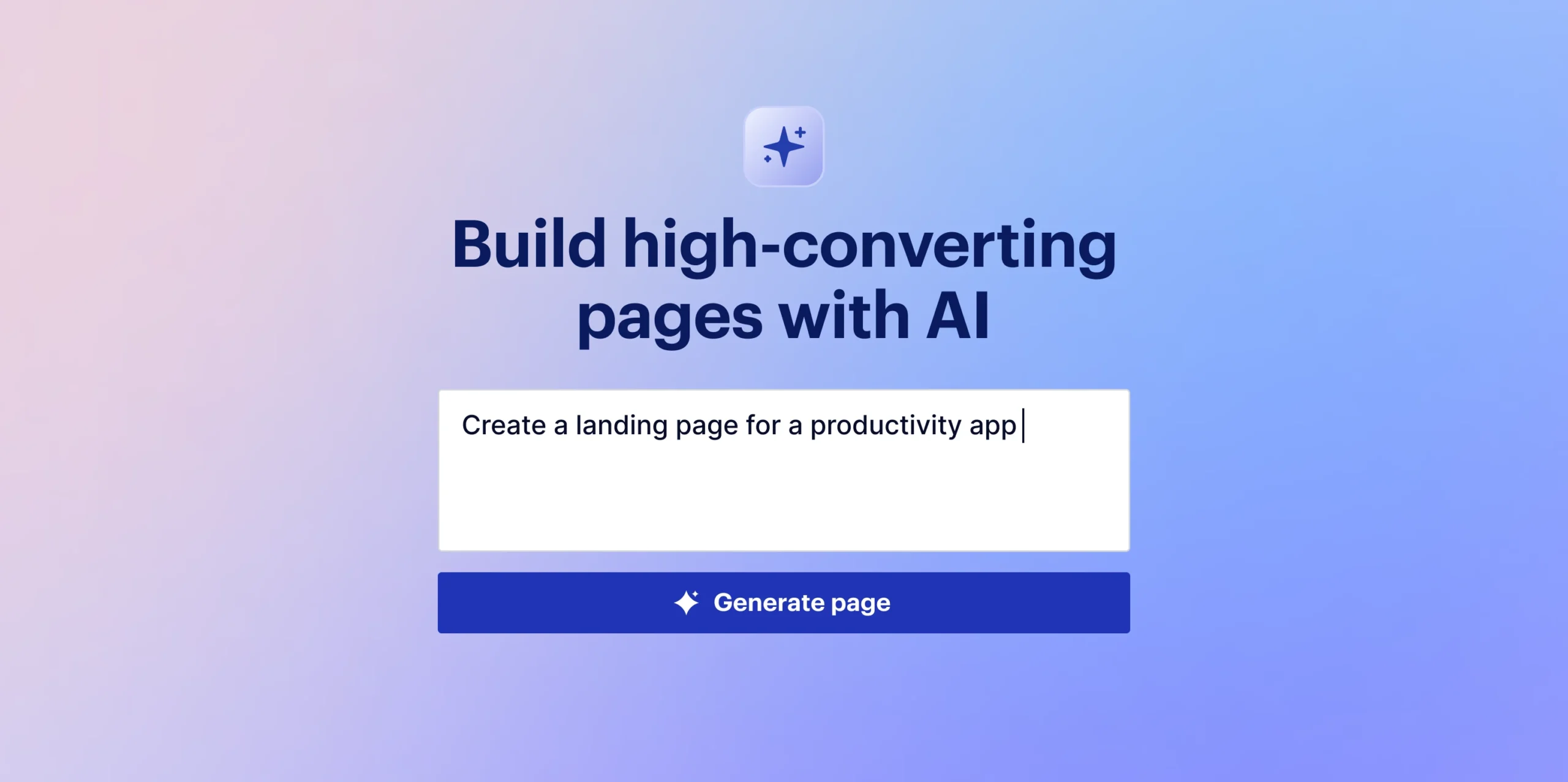
The landscape of digital marketing has undergone a fundamental transformation as Instapage, a pioneer in landing page technology since 2012, announced the launch of its comprehensive AI-powered marketing platform. This evolution marks a significant shift from the company’s origins as a specialized landing page builder to an integrated ecosystem designed to handle the entire conversion lifecycle. By embedding generative artificial intelligence across every stage of the marketing funnel—from initial page design to automated lead follow-up—the platform aims to eliminate the “tool fatigue” that has long plagued digital marketing teams.
The announcement comes at a critical juncture for the industry. As organizations face tightening budgets and leaner team structures in 2026, the demand for high-efficiency, low-friction tools has reached a peak. Instapage’s new suite, which includes AI Page Generation, AI Email Generation, and AI Collections, is positioned as a direct response to these market pressures, offering a solution that minimizes the need for manual design, copywriting, and technical integration.
The Evolution of Conversion Rate Optimization: From Builder to Ecosystem
Since its inception over a decade ago, Instapage has maintained a focus on Conversion Rate Optimization (CRO). The company’s journey began with the development of what many industry analysts considered the top-rated landing page builder, characterized by its pixel-perfect drag-and-drop interface. Over the years, the platform expanded its capabilities to include sophisticated experimentation tools, heatmaps, and personalization features.
However, the recent integration of generative AI represents the most significant update in the company’s history. The new platform logic moves beyond simple “AI-assisted” tools—such as basic copy generators—toward an “AI-first” workflow. This transition is designed to solve the two most persistent problems in digital marketing: the “blank page syndrome” and the inefficiency of “stitching” together disparate software tools. By centralizing landing pages, website components, personalization, and email automation within a single AI-enhanced interface, Instapage is attempting to redefine the standard for marketing operations.
Technical Breakdown: AI Page Generation and the Refinement Gap
One of the flagship features of the updated platform is AI Page Generation. Unlike traditional templates that require manual population of content, this system utilizes large language models and design algorithms to build conversion-ready pages from a simple text description. A user can describe their target audience, value proposition, and desired tone, and the AI generates a complete layout with tailored messaging and optimized visual hierarchies in seconds.
A significant point of differentiation highlighted by Instapage is the “refinement gap.” Most standalone AI design generators create static outputs that are difficult to modify. If a user wishes to change a specific section or adjust a layout, they are often forced to regenerate the entire page, consuming additional tokens and time. Instapage addresses this by marrying AI generation with its legacy pixel-perfect builder. Once the AI generates the initial structure, users maintain full creative control, allowing for granular adjustments to design elements without needing to re-prompt the system. This hybrid approach—combining the speed of AI with the precision of manual editing—is intended to reduce the friction between conceptualization and execution.
Closing the Lead Loop with AI-Powered Email Automation
The second major pillar of the release is the AI Email Generator. In traditional marketing workflows, there is often a disconnect between the moment a lead is captured on a landing page and the moment they receive a follow-up communication. This delay, often caused by the need to export data to a third-party Email Service Provider (ESP) and manually draft copy, can significantly degrade conversion rates.
The new Instapage functionality allows for instantaneous, context-aware follow-ups. Because the email generator is housed within the same platform as the landing page, it possesses the context of what the user clicked on and what information they provided. Marketers can select their specific goal, audience segment, and tone, and the AI produces tailored messaging for automated triggers. This integration ensures that lead engagement is both timely and relevant, fulfilling the modern consumer’s expectation for immediate response.
Chronology of Instapage’s Technological Development
To understand the impact of this announcement, it is necessary to view it through the lens of the company’s technological trajectory:

- 2012–2015: Instapage enters the market as a focused landing page builder, prioritizing ease of use and design flexibility.
- 2016–2019: The platform introduces “Instablocks” and Global Blocks, allowing teams to scale page production. This period also saw the launch of sophisticated A/B testing and heatmapping.
- 2020–2022: Focus shifts to personalization and “Personalization” (1:1 ad-to-page relevancy), helping enterprise clients align their ad spend with landing page content.
- 2023–2025: The “AI Beta” phase, where the company experimented with embedded AI copy tools and basic layout assistance.
- 2026: The launch of the “End-to-End AI-Powered Marketing Platform,” marking the full integration of AI across page generation, email, and performance scaling.
Supporting Data: The Cost of Tool Fragmentation
The shift toward an integrated AI platform is supported by broader industry data regarding marketing efficiency. According to recent SaaS industry reports, the average marketing team utilizes between 12 and 15 different tools to manage their daily operations. This fragmentation leads to “context switching,” which research suggests can decrease productivity by as much as 40%.
Furthermore, data from conversion optimization studies indicate that responding to a lead within the first five minutes increases the likelihood of conversion by nearly 900% compared to responding after 30 minutes. By integrating AI-driven email follow-ups directly into the page-building workflow, Instapage aims to help businesses capture this “golden window” of engagement without the need for complex API integrations or manual data handling.
Market Reactions and Implications for the MarTech Industry
Industry analysts have noted that Instapage’s move reflects a broader trend toward “platformization” in the Marketing Technology (MarTech) space. As AI becomes a commodity, the value is no longer in providing a standalone AI tool, but in how that AI is integrated into existing business processes.
“The challenge for marketers today isn’t a lack of AI tools; it’s the overhead of managing them,” says an industry consultant specializing in digital transformation. “By embedding AI into the entire workflow—from the first pixel to the final follow-up email—Instapage is tackling the operational bottlenecks that prevent small and mid-sized teams from scaling.”
From a competitive standpoint, this move places Instapage in more direct competition with comprehensive marketing suites like HubSpot or Salesforce, though Instapage maintains its focus on the “conversion” end of the funnel rather than general Customer Relationship Management (CRM).
Broader Impact and the Future of Marketing Operations
The implications of an end-to-end AI marketing platform extend beyond mere convenience. This technology represents a democratization of high-end marketing capabilities. Historically, creating a “pixel-perfect” landing page and a synchronized, automated email campaign required a team consisting of a designer, a copywriter, and a technical marketing operations specialist.
With the rollout of AI Collections and automated generation, these tasks can now be performed by a single individual, significantly lowering the barrier to entry for startups and reducing overhead for established enterprises. However, this shift also raises questions about the changing role of the marketer. The focus is shifting from “doing” (writing, designing, coding) to “directing”—using AI to generate options and then applying human intuition and strategic oversight to select and refine the best path forward.
Conclusion and Availability
As Instapage continues to roll out these features, the company has emphasized that select AI tools are currently in a beta phase, with a gradual release schedule to ensure platform stability and user feedback integration. The company is offering a 14-day free trial to allow businesses to experience the new workflow firsthand.
In an era where “more with less” has become the mantra for digital growth, the transition of Instapage into an AI-powered ecosystem serves as a benchmark for how legacy SaaS companies are adapting to the generative AI revolution. By focusing on the elimination of gaps between tools and the acceleration of the creative process, the platform is positioning itself as an essential infrastructure for the next generation of digital marketing.