As the digital marketing landscape enters a pivotal era in 2025, the methodology behind consumer data collection is undergoing a fundamental transformation. With the definitive phase-out of third-party cookies and the increasing fragmentation of user behavior across multiple devices and platforms, the reliance on passive tracking has become insufficient for high-growth enterprises. In this context, the strategic implementation of website polls has transitioned from a supplementary feedback tool to a primary driver of conversion rate optimization (CRO) and zero-party data acquisition. Industry experts now argue that when polls are integrated with behavioral data, they serve as a critical mirror reflecting the underlying psychological barriers that quantitative analytics alone cannot identify.
The Paradigm Shift Toward Zero-Party Data
The shift toward privacy-first browsing has forced digital marketers to reconsider how they understand visitor intent. Zero-party data—information that a customer intentionally and proactively shares with a brand—has become the “gold standard” for personalization. Unlike first-party data, which tracks behaviors like clicks and downloads, zero-party data provides direct insight into preferences, purchase intentions, and personal context.
Website polls are currently one of the most effective vehicles for gathering this data in real-time. According to recent industry benchmarks, brands that successfully leverage zero-party data through interactive elements see a 15% to 20% increase in marketing efficiency. By asking users direct questions while they are actively engaged with a site, companies can bypass the guesswork associated with algorithmic modeling. However, the efficacy of these polls depends entirely on their timing, phrasing, and the research foundation upon which they are built.
The Methodology: Beyond Brainstorming
The common pitfall for many digital marketing teams is treating poll creation as a creative brainstorming session rather than a scientific exercise. Professional CRO practitioners at firms like Invesp emphasize that effective polling requires a significant amount of pre-work. The process does not begin with writing a question; it begins with an exhaustive analysis of existing data points to identify “knowledge gaps.”
Before a single poll is launched, analysts typically conduct a multi-layered research phase, including:
- Heuristic Evaluations: Expert reviews of the site’s interface to identify potential friction points.
- Analytics Assessment: Utilizing platforms like Google Analytics 4 (GA4) to identify pages with high exit rates or low conversion-to-traffic ratios.
- Heatmap and Session Recording Analysis: Observing where users linger, where they struggle, and where their mouse movements suggest confusion.
- Usability Testing: Gathering qualitative feedback from a small group of users to form hypotheses.
By the time a poll question is drafted, it should be designed to validate a specific hypothesis generated from these activities. For instance, if session recordings show users hovering over a shipping policy link but then abandoning the cart, a poll can be deployed on that specific page to ask, “Is there anything about our shipping options that is preventing you from completing your order?”
A Chronology of User Feedback Integration
The evolution of website polling can be traced through several distinct stages of digital maturity:
- The Era of Intrusive Pop-ups (2010–2015): Early polls were often generic, full-screen interruptions that asked vague questions like “How are we doing?” These frequently led to high bounce rates and user irritation.
- The Rise of Behavioral Triggers (2016–2020): Tools began allowing marketers to trigger polls based on specific actions, such as “exit intent” or “time on page.” This marked the beginning of “contextual polling.”
- The Integration of CRO and UX (2021–2023): Polling became a standard part of the CRO toolkit, used to fuel A/B testing hypotheses.
- The Zero-Party Data Revolution (2024–Present): In the current landscape, polls are integrated into the brand’s data architecture, feeding directly into Customer Data Platforms (CDPs) to create hyper-personalized marketing journeys.
Segmenting the Buyer’s Journey
To avoid the “wide net” approach that often yields low-quality data, marketers must align their poll questions with the visitor’s current stage in the buyer’s journey. Asking a first-time visitor on a blog post why they haven’t purchased yet is not only premature but can be detrimental to the brand experience.
The five critical stages of the buyer’s journey—Awareness, Interest, Consideration, Intent, and Purchase—require distinct polling strategies. Industry-leading frameworks suggest segmenting traffic using funnel-type dashboards. For example, visitors on a “Category Page” are likely in the Interest or Consideration phase, whereas those on a “Checkout Page” are in the Intent phase.
If a marketer cannot decipher the stage of the visitor, they risk the “three wrongs”: asking the wrong question, to the wrong user, on the wrong page.
The Four Pillars of Data-Driven Poll Questions
To maximize the actionability of feedback, questions are generally categorized into four specific functional areas:
1. Identifying Motivators
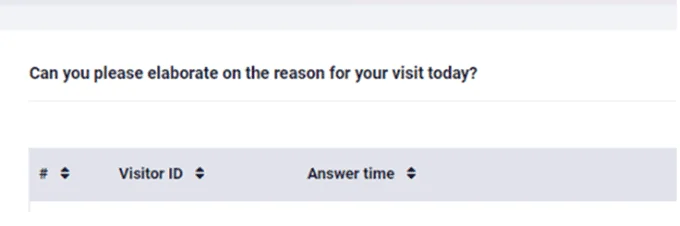
Motivator questions seek to understand the “why” behind a visit. They uncover the core value proposition that resonates with the audience. In one case study, an e-commerce client observed users scrolling aimlessly through session replays. By deploying a poll asking, “What is the primary reason for your visit today?” the company discovered that a significant portion of their traffic was looking for a specific product feature that was buried three clicks deep in the navigation.
2. Pinpointing Barriers
Barriers include fears, uncertainties, and doubts (FUDs). If GA4 data reveals a high exit rate on a specific funnel page, a barrier-focused poll can uncover usability issues or hidden anxieties. Common questions include:
- “Is there anything preventing you from completing your purchase today?”
- “What was your biggest fear or concern about using our service?”
- “Is there any information missing that would make your decision easier?”
3. Discovering Hooks
Hooks are the persuasive elements that successfully convert a visitor. These polls are typically served to customers who have just completed a purchase or a sign-up. By asking, “What is the one thing that almost prevented you from buying?” or “Why did you choose us over a competitor?” brands can identify their unique selling points and emphasize them in future marketing copy.
4. Uncovering Missing Content
Digital marketers often suffer from the “curse of knowledge,” assuming their site content is comprehensive. Usability tests frequently reveal that users cannot find information that is “clearly” displayed. A poll asking, “Were you able to find the information you were looking for?” can provide shocking insights into layout failures and content gaps.
Validating Qualitative Trends with Quantitative Polling
One of the most sophisticated uses of polling is the validation of small-scale qualitative findings. Khalid Saleh, CEO of Invesp, notes that while customer interviews provide deep insight, they often involve a small sample size. “Polls give you a few data points from many people, and that’s their power,” Saleh explains. “They’re not a replacement for qualitative research, but they sharpen it.”
For example, if ten customer interviews suggest that users are motivated by a brand’s sustainability practices, a poll can be deployed to thousands of site visitors to see if that sentiment holds true across the broader demographic. If 70% of poll respondents agree, the brand can safely pivot its primary messaging to focus on sustainability.
Implications for the Future of E-Commerce and SaaS
The implications of strategic polling extend far beyond simple conversion lifts. In an era where customer acquisition costs (CAC) are at an all-time high, the ability to increase the lifetime value (LTV) of a customer through better understanding is paramount.
As we move further into 2025, we expect to see “smart polls” that utilize artificial intelligence to adjust their questions in real-time based on the user’s previous interactions. This level of dynamic feedback will allow brands to build a “conversational” interface that feels less like a series of forms and more like a guided shopping experience.
Conclusion
Website polls, when executed with intentionality and backed by rigorous data analysis, are far more than a minor annoyance for visitors; they are a vital strategic asset. By shifting the focus from “what” users are doing to “why” they are doing it, organizations can bridge the gap between cold analytics and the complex reality of human psychology. In the 2025 digital economy, the brands that ask the right questions at the right time will be the ones that secure the most valuable asset of all: the customer’s trust and their direct, honest feedback.