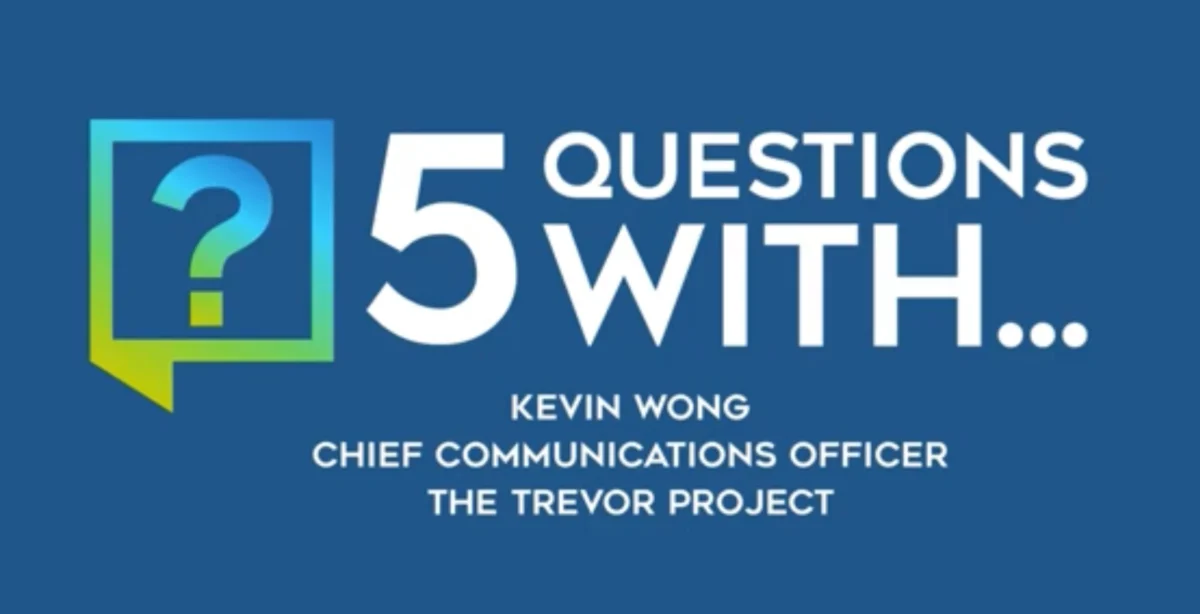
The landscape of corporate advocacy and crisis intervention for marginalized communities is undergoing a significant transformation, marked by a complex interplay of shifting political climates and evolving consumer expectations. At the center of this transition is The Trevor Project, the world’s largest suicide prevention and crisis intervention organization for LGBTQ+ (lesbian, gay, bisexual, transgender, queer, and questioning) young people. Kevin Wong, the organization’s Chief Communications Officer, recently provided an in-depth look into the strategic maneuvers required to sustain a high-stakes non-profit mission during a period of corporate volatility and social re-evaluation.
As organizations nationwide grapple with a documented retreat from public diversity, equity, and inclusion (DEI) commitments, Wong’s insights offer a blueprint for maintaining mission visibility. His perspective underscores a broader industry shift: the transition from performative “rainbow washing” to a model of “authentic partnership” that prioritizes internal corporate culture and long-term systemic support over seasonal marketing campaigns.
The Evolving Landscape of Corporate Pride and DEI Commitments
The current environment for LGBTQ+ advocacy is defined by a paradoxical trend. While public awareness of the challenges facing queer youth is at an all-time high, corporate support has become increasingly bifurcated. Recent data suggests a cooling effect in the corporate sector; approximately 65% of Fortune 500 companies have reduced or ceased the public documentation of their DEI practices over the last year. This retreat is often attributed to a combination of legislative pressure, macroeconomic shifts such as inflation and tariffs, and a strategic “pivoting” within corporate social responsibility (CSR) departments.
For The Trevor Project, these shifts represent both a challenge and a clarifying moment. Wong notes that while some partners have been forced to slash budgets or pull back on public visibility due to external pressures, others are responding to the “macro environment” by doubling down on their commitments. This “doubling down” often manifests as increased donations, expansive cause-marketing campaigns, and a renewed focus on staff education. This divergence creates a clear distinction in the marketplace between brands that view Pride as a temporary marketing opportunity and those that view it as a core component of their corporate values.
The stakes for this visibility are remarkably high. According to The Trevor Project’s research, more than 1.8 million LGBTQ+ young people in the United States seriously consider suicide each year. For these individuals, corporate visibility is more than a commercial gesture; it serves as a signal of societal acceptance and safety. When major brands withdraw their support, it can inadvertently signal a retreat of that safety, making the work of communicators like Wong essential in ensuring the “North Star”—the well-being of young people—remains the focus.
The Authenticity Test: Moving Beyond Performance
One of the most significant hurdles for modern communicators in the non-profit sector is the rising skepticism among Gen Z and Millennial consumers regarding “performative” activism. The era of simply adding a rainbow filter to a corporate logo for the month of June has largely passed, replaced by a demand for transparency and internal consistency.
Wong outlines a rigorous “authenticity test” that The Trevor Project applies to potential corporate partners. This vetting process begins by looking inward at the corporation’s own treatment of its LGBTQ+ employees. The organization asks critical questions: What does support look like for your internal staff? What programming is in place to ensure a safe and inclusive workplace? How has the company addressed internal grievances or systemic inequities?
By insisting that the internal foundation be “shored up” before an external campaign is launched, The Trevor Project helps its partners avoid the pitfalls of “rainbow washing.” This strategy also serves a dual purpose: it protects the non-profit’s credibility and ensures that the corporate partner’s messaging is resilient against internal or external criticism. When a brand partners with a topic expert like The Trevor Project, it gains a layer of clinical and social credibility that can only be sustained if the brand’s actions match its public rhetoric.
Strategic Momentum: Translating Accolades into Action
The Trevor Project has recently garnered significant international recognition, including two placements on TIME magazine’s prestigious lists—TIME Visionaries and TIME100 Philanthropy—as well as the Elton John Impact Award. In the world of public relations, such accolades often serve as the pinnacle of a news cycle. However, Wong and CEO Jaymes Black have adopted a strategy designed to convert these moments into long-term organizational momentum.
A key component of this strategy is the deliberate redirection of the spotlight. Rather than centering the recognition on executive leadership, the organization has used these awards to validate the work of its “boots on the ground” staff—the crisis counselors, researchers, and advocates who drive the mission daily. Internally, this approach boosts morale and reinforces the value of the organization’s high-quality, IRB-approved research and crisis services.
Externally, these awards are used as high-level “proof of concept” for funders, foundations, and corporate partners. In an era where non-profits must compete for limited resources, being recognized as a “TIME Visionary” provides a powerful argument for continued investment. It signals to donors that their contributions are being managed by an organization with a proven track record of impact and innovation. This is particularly crucial given the scale of the mission; serving even a fraction of the 1.8 million youth at risk requires a massive, year-over-year fundraising effort.
Always Here, Always Forward: The Clinical Power of Joy
The theme for The Trevor Project’s recent Pride initiatives, “Always Here, Always Forward,” serves as both a historical acknowledgement and a forward-looking promise. Historically, LGBTQ+ communities have existed in every society, often forming “chosen families” to survive and thrive. The “Always Here” portion of the theme emphasizes the permanence of the community and the organization’s crisis services. The “Always Forward” portion highlights the resilience and progress of the movement.
From a communications and mental health perspective, Wong emphasizes the importance of “queer joy.” In clinical terms, joy and visibility act as “protective factors.” While “risk factors” (such as discrimination or lack of housing) increase the likelihood of negative mental health outcomes, protective factors reduce that risk. By showcasing images of thriving, happy LGBTQ+ individuals on platforms that reach millions, The Trevor Project provides a counter-narrative to the “moment of darkness” many youth experience. This visibility helps young people realize that they are not alone and that a future characterized by support and happiness is possible.
The Intersection of Pop Culture and Advocacy
The Trevor Project has increasingly looked toward pop culture and the arts to broaden its reach. Recent collaborations with Broadway productions—including Wicked, Cats: The Jellicle Ball, and & Juliet—have allowed the organization to engage with audiences in spaces where the community is already celebrated. These “talk-back” sessions and Broadway partnerships provide a unique platform to humanize the organization’s mission and connect with potential supporters through shared cultural experiences.
Wong also highlighted the critical role of high-profile allies in the current political climate. Last year, the organization faced a potential $25 million loss in recurring federal funding, prompting a call for support from celebrities and talent agencies. The response revealed a vital truth in advocacy: personal connection drives action.
Wong noted that figures like actor Pedro Pascal represent “dream” partners for the organization. Pascal, who has a personal connection to the community through a transgender family member, embodies the power of humanizing advocacy. When public figures with massive platforms speak from a place of personal relationship and empathy, it moves the conversation away from “harmful political rhetoric” and toward the lived realities of the individuals affected. This humanization is a powerful tool for shifting public opinion and influencing policymakers who may be introducing legislation without ever having spoken to an LGBTQ+ youth.
Broader Implications for the Future of Non-Profit Communication
The strategies employed by Kevin Wong and The Trevor Project reflect a broader trend in the non-profit sector where communicators must act as both brand protectors and social strategists. The ability to navigate shifting corporate priorities while maintaining a steadfast commitment to a core mission is becoming the hallmark of successful leadership in the 21st century.
As the organization moves forward, its success will likely depend on its ability to continue bridging the gap between clinical crisis intervention and cultural advocacy. By leveraging earned media, insisting on corporate authenticity, and utilizing the “protective factor” of joy, The Trevor Project is setting a standard for how mission-driven organizations can survive and thrive in an increasingly polarized landscape. The “Always Here, Always Forward” mantra is not just a theme for Pride; it is a strategic framework for a future where visibility and resilience are the primary tools for saving lives.