LinkedIn, the world’s largest professional networking platform, has officially rolled out a significant expansion of its advertising capabilities, introducing a comprehensive suite of artificial intelligence-powered creative tools designed to streamline campaign management, enhance personalization, and optimize performance for marketers. These new offerings include the formal launch of its Brand Kit, advanced AI-powered ad copy generation, refined ad personalization options, dynamic ad variants, flexible ad creation, and an intelligent system for automated ad delivery optimization. This strategic move underscores LinkedIn’s commitment to leveraging cutting-edge AI to provide advertisers with more efficient and impactful ways to connect with its highly engaged professional audience.
Background and Strategic Context: The Ascent of AI in Digital Marketing
The integration of artificial intelligence into digital marketing platforms is not a nascent trend but a rapidly accelerating imperative across the industry. Platforms like Google, Meta, and TikTok have been aggressively rolling out AI-driven solutions to assist advertisers with everything from audience targeting and budget allocation to creative generation and performance forecasting. This widespread adoption is fueled by several factors: the increasing complexity of digital advertising, the demand for greater efficiency in campaign management, and the constant pressure on marketers to deliver measurable Return on Investment (ROI) in an ever-more competitive landscape.
LinkedIn, uniquely positioned as the preeminent platform for professional networking and B2B engagement, has a distinct advantage in this AI race. Its rich dataset, encompassing detailed professional profiles, company affiliations, industry trends, and career interests, provides a fertile ground for highly targeted and relevant AI applications. The platform has evolved considerably from its origins as a simple online resume repository. Today, it serves as a critical hub for professional development, thought leadership, and, crucially for advertisers, a powerful channel to reach decision-makers and influence B2B purchasing cycles. This evolution has made LinkedIn an indispensable advertising avenue for businesses seeking to engage with a professional audience, a segment often characterized by longer sales cycles and higher average deal values.
The current announcement follows a period of significant investment by LinkedIn in its advertising infrastructure, reflecting a broader strategy to solidify its position as a leading B2B marketing platform. While specific ad revenue figures for LinkedIn are often folded into Microsoft’s broader earnings reports under segments like “More Personal Computing,” consistent mentions of LinkedIn’s strong performance in these reports indicate its growing importance to the tech giant’s ecosystem. The introduction of these AI tools is a direct response to advertiser feedback, aiming to mitigate common pain points such as creative fatigue, the time-intensive nature of content generation, and the challenge of scaling personalized messaging across diverse professional segments. The global AI in marketing market size is projected to grow substantially, from an estimated USD 14.8 billion in 2023 to over USD 107 billion by 2032, highlighting the immense strategic value of such innovations.
Phased Rollout and Prior Insights: A Look Back
The development of these tools has been a carefully orchestrated process, with some features having been observed in testing phases prior to their official launch. Notably, the Brand Kit option, which allows marketers to establish core brand guidelines, was first spotted undergoing trials last month. This phased approach is typical for major platform updates, enabling LinkedIn to gather user feedback and refine functionalities before a wider release. Such pre-announcement sightings not only build anticipation but also demonstrate a commitment to iterative development, ensuring the tools are robust and user-friendly upon their full deployment. This chronology of development aligns with the industry standard, where platforms often soft-launch or test features with a select group of users to iron out any potential issues and optimize performance. This iterative process is crucial in developing sophisticated AI tools, allowing for continuous improvement based on real-world usage data and advertiser needs.

Key AI-Powered Creative Tools: A Deep Dive into Functionality and Impact
1. Official Launch of Brand Kit: Ensuring Brand Cohesion at Scale
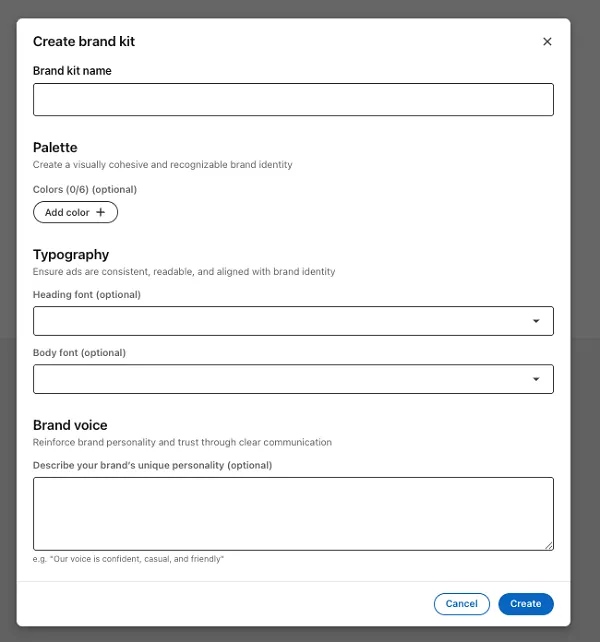
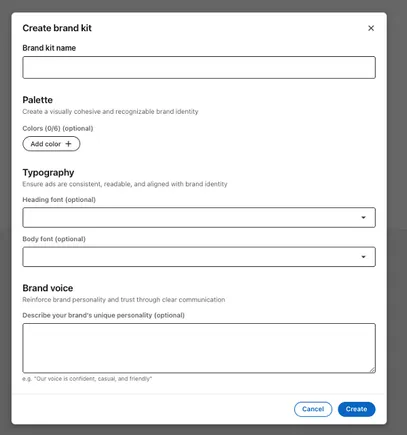
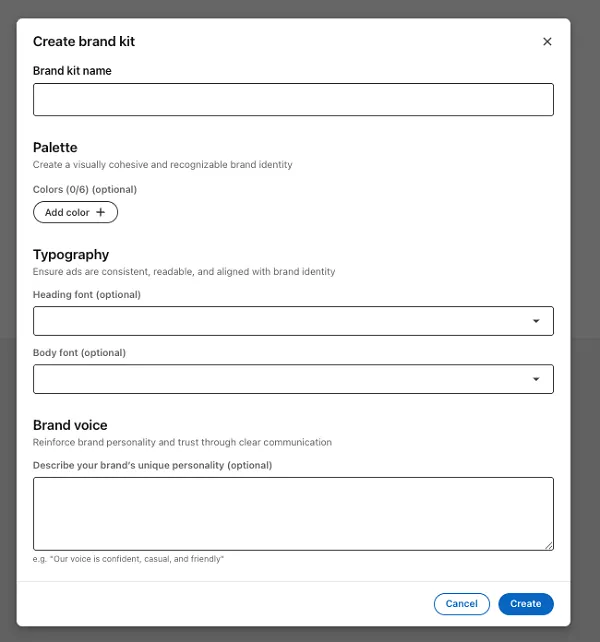
One of the cornerstone announcements is the official launch of LinkedIn’s Brand Kit. This feature empowers marketers to define and store their brand’s essential visual and textual guidelines directly within the LinkedIn advertising interface. Users can specify preferred brand colors, fonts, upload approved logos, and articulate their desired brand voice.
- Mechanism and Functionality: Once established, these guidelines serve as a foundational reference point for all subsequent AI-generated content. This ensures that any automatically created ad copy, headlines, or visual suggestions adhere strictly to the brand’s established identity. For instance, if a brand’s voice is set to “formal and authoritative,” the AI will prioritize language that reflects these characteristics. This proactive approach to brand governance is essential in an automated environment.
- Strategic Importance: The Brand Kit addresses a critical challenge for marketers, especially those managing campaigns for large enterprises or across multiple product lines: maintaining brand consistency. In an era where content creation is increasingly automated, the risk of generating off-brand messaging or visuals is significant. The Brand Kit acts as a guardrail, ensuring that even AI-powered creative remains on-message. This is particularly valuable in the B2B context, where brand reputation and trustworthiness are paramount. It streamlines the creative approval process, reduces the need for constant manual oversight, and ultimately allows marketing teams to scale their efforts without compromising brand integrity. Furthermore, for agencies managing multiple clients, the Brand Kit offers an efficient way to compartmentalize and manage diverse brand identities within a single platform, enhancing operational efficiency and compliance.
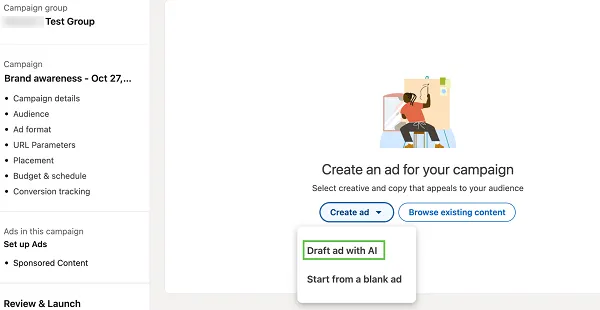
2. AI-Powered Ad Copy Generation: “Draft with AI” for Enhanced Efficiency
LinkedIn is introducing a new AI-powered ad copy generation feature, aptly named “Draft with AI,” designed to alleviate the often-laborious task of writing compelling ad text.
- Mechanism and Functionality: This tool enables marketers to generate promotional copy suggestions simply by providing the URL of the product or service being advertised. Beyond the URL, users can input specific campaign goals (e.g., lead generation, brand awareness, website visits) and add contextual notes, including references to successful past creatives they wish to emulate. LinkedIn’s underlying AI system then processes this information, analyzing the webpage content, campaign objectives, and specified parameters to produce a range of copy options. These options are tailored to resonate with LinkedIn’s professional audience, focusing on value propositions and professional relevance.
- Implications for Marketers: “Draft with AI” promises to significantly accelerate the content creation workflow. It helps marketers overcome writer’s block, generate multiple copy variations quickly for A/B testing, and ensures that the initial drafts are aligned with campaign objectives. For small and medium-sized businesses (SMBs) with limited creative resources, this tool can democratize access to high-quality ad copy, potentially leveling the playing field. While it won’t replace human creativity entirely, it acts as a powerful co-pilot, freeing up marketers to focus on strategic oversight, refinement, and nuanced messaging. The ability to reference past successful creatives is particularly insightful, allowing the AI to learn from proven performance and apply those insights to new campaigns, thereby improving the likelihood of success.
3. Advanced Ad Personalization Options: Tailoring Messages to Professionals
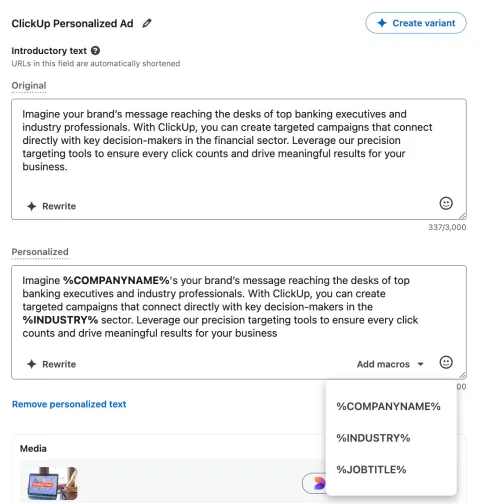
Recognizing the unique nature of its professional audience, LinkedIn has enhanced its ad personalization options, allowing for more granular targeting and message tailoring.
- Mechanism and Functionality: This feature leverages LinkedIn’s rich user data, enabling advertisers to dynamically insert attributes such as a recipient’s job title, company name, or industry directly into ad copy. For example, an ad might read, “Are you a [Job Title] at [Company Name] looking to revolutionize your [Industry] operations?” This dynamic content insertion makes ads feel highly relevant and direct.
- Strategic Importance: While the article notes that this approach might feel “more akin to old-school email marketing,” its application within LinkedIn’s highly data-rich environment elevates its impact. Unlike generic email personalization, LinkedIn’s system draws from verified professional profiles, ensuring accuracy and relevance. The core idea is to make promotions feel deeply personal and directly relevant to the individual professional’s role and context. In the B2B space, where purchase decisions are often made by specific roles within organizations, this level of personalization can dramatically increase engagement, click-through rates, and ultimately, conversion rates. It moves beyond broad segment targeting to individual-level relevance, fostering a stronger connection between the advertiser’s message and the prospect’s professional identity, which is crucial for building trust and rapport in a professional setting.
4. New Ad Variants and Flexible Ad Creation: Dynamic Creative Optimization
LinkedIn is introducing robust tools for generating and managing ad variants, significantly advancing its dynamic creative optimization (DCO) capabilities.
- Mechanism and Functionality: The platform can now generate multiple versions of an existing ad, automatically creating new headlines and introductory text variations. This is complemented by “flexible ad creation,” which takes a set of provided images, videos, and copy, and then intelligently mixes and matches them to create a multitude of unique creative combinations from a single campaign setup. This significantly reduces the manual effort traditionally associated with A/B testing and multivariate testing, allowing marketers to explore a much wider creative space. LinkedIn states, “Simply provide the images, videos, and copy you want to use in your campaign, and LinkedIn mixes and matches them for you to create more creatives.”
- Automated Optimization: Crucially, LinkedIn’s system is designed to learn from performance signals in real-time. As data emerges on which creative variations are performing best (e.g., higher click-through rates, better conversion rates, lower cost per lead), the system will automatically shift ad delivery towards these top-performing variants. This ensures that ad budgets are continuously optimized, maximizing reach and impact by focusing resources on the most effective creatives. This self-optimizing capability is a game-changer for budget efficiency and campaign performance.
- Broader Impact: This capability represents a significant leap forward in campaign management. It enables marketers to conduct sophisticated A/B and multivariate tests at scale, uncovering subtle preferences within their target audience that might otherwise be missed. The automated optimization aspect means campaigns are self-improving, leading to higher ROI and more efficient ad spend. This mirrors advancements seen in other platforms like Meta’s Advantage+ Creative and Google’s Performance Max, where AI plays a central role in dynamic creative assembly and optimization, moving towards a future where ad campaigns are perpetually fine-tuning themselves for peak performance.
Inferred Statements and Official Vision
While direct quotes from LinkedIn executives beyond the blog post are not provided in the source, the overarching message is clear: LinkedIn is committed to empowering marketers with intelligent tools that simplify complex tasks and drive superior results. The platform’s internal communications, such as the blog post announcing these features, consistently emphasize ease of use, efficiency, and maximizing ad budget effectiveness. The statement, “Simply provide the images, videos, and copy you want to use in your campaign, and LinkedIn mixes and matches them for you to create more creatives,” highlights the user-centric design philosophy aimed at reducing friction in campaign setup. Furthermore, the commitment to automatically shifting ad delivery to “the best creatives in order to maximize ad budget” underscores a performance-first approach, directly addressing advertisers’ core need for optimized spend. These initiatives reflect a vision where AI acts as a strategic partner for marketers, enabling them to achieve more with less, thereby making LinkedIn an even more indispensable tool in the digital marketing arsenal. The company’s strategy is clearly focused on leveraging its unique professional data to deliver unparalleled value to B2B advertisers.
Broader Impact and Future Outlook
The implications of LinkedIn’s new AI suite extend across several dimensions:
- For Marketers: The immediate impact will be felt in increased efficiency and productivity. Marketing teams can reallocate time from repetitive creative tasks to more strategic planning, analysis, and refinement. However, this also necessitates a shift in skill sets, with marketers needing to become proficient in “prompt engineering” – effectively guiding AI tools to generate optimal content – and developing robust oversight mechanisms to ensure AI-generated content maintains brand integrity and ethical standards. The ability to test more variables simultaneously means marketers will gain deeper insights into what resonates with their audience, fostering a more data-driven creative process.
- For LinkedIn’s Platform: These enhancements significantly bolster LinkedIn’s competitive standing in the digital advertising ecosystem. They make the platform more attractive to a wider range of advertisers, from startups to Fortune 500 companies, who are increasingly looking for sophisticated tools to navigate the complexities of online promotion. Increased advertiser satisfaction and performance will likely translate into higher ad revenue for LinkedIn, further cementing its role as a critical player in the B2B marketing space, complementing its professional networking core. Analysts predict that platforms that effectively integrate AI into their ad offerings will see a disproportionate share of digital ad spend.
- Ethical Considerations and Human Oversight: As with all advancements in generative AI, the introduction of these tools raises important considerations regarding transparency, potential biases in AI-generated content, and the imperative for human oversight. While AI can accelerate creation, human marketers remain essential for injecting nuance, ensuring cultural appropriateness, and making strategic decisions that align with broader business objectives. LinkedIn, like other platforms, will need to continually refine its AI models and provide transparent guidelines to users regarding the capabilities and limitations of these automated tools, emphasizing responsible AI usage.
- The Future of B2B Advertising: This move by LinkedIn signals a future where B2B advertising becomes even more precise, personalized, and dynamically optimized. The combination of “older marketing tactics” (like personalization via attributes) with “newer, AI-powered approaches” (like automated copy and variant generation) creates a potent synergy. LinkedIn’s unique professional data, when combined with these advanced AI capabilities, could set new benchmarks for relevance and effectiveness in B2B marketing, potentially influencing how other niche professional platforms approach their advertising offerings. The platform’s strategic direction suggests a continuous evolution towards a highly intelligent, self-optimizing advertising environment that caters specifically to the nuances of professional engagement, driving efficiency and impact for advertisers globally.
In conclusion, LinkedIn’s unveiling of its new AI-powered creative tools marks a significant milestone in its journey to empower marketers. By offering a robust Brand Kit, intelligent copy generation, granular personalization, and dynamic creative optimization, the platform is not only addressing immediate advertiser needs but also shaping the future landscape of professional advertising, promising greater efficiency, consistency, and ultimately, more impactful campaigns. The synergy between its unparalleled professional data and advanced AI capabilities positions LinkedIn at the forefront of innovation in the B2B marketing arena.