rifanmuazin
The intricate dance of pricing in the marketplace is far more than a simple calculation of cost and profit margin; it is a sophisticated ballet of psychology, perception, and human behavior. For decades, businesses have intuitively understood that how a price is presented can be as crucial as the price itself. Recent advancements in behavioral economics and consumer psychology have provided empirical evidence for these intuitions, revealing the subtle yet powerful "nudges" that can dramatically alter purchasing decisions. These insights underscore that effective pricing strategies delve deep into the cognitive processes that govern how individuals perceive value, fairness, and opportunity.
One of the foundational demonstrations of this phenomenon dates back to a 2007 study by Coulter and Coulter, published in the Journal of Consumer Research. Their experiment illuminated a counterintuitive aspect of discount perception. In their setup, two distinct groups of customers were presented with advertisements for flights to Turkey, both offering a £10 discount. The crucial difference lay in the initial and final prices. One advertisement listed tickets at £188 (discounted from £198), while the other displayed a higher original price, with tickets at £233 (discounted from £243). Logic would suggest that customers would perceive the £188 ticket as a better deal due to its lower absolute price. However, the researchers found that customers perceived the cheaper £188 tickets as offering worse value.
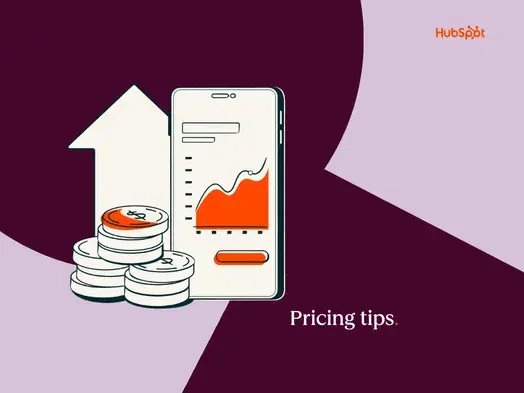
This seemingly illogical outcome is rooted in how the human brain processes numerical differences. The study posited that people differentiate smaller numbers more easily and, consequently, perceive the magnitude of a discount differently based on the numerical ending. The cognitive load associated with processing "£243 to £233" (a difference ending in smaller digits like 3 and 4) felt more salient and therefore more impactful than "£198 to £188" (a difference involving larger digits like 8 and 9). The takeaway from this pioneering research is straightforward: when implementing discounts, especially those involving a reduction from an original price, marketers should aim for the sale price to end in a digit less than five. This seemingly minor adjustment leverages the brain’s innate tendency to register smaller numerical shifts as more significant, thereby enhancing the perceived value of the discount. This principle extends beyond travel, influencing sales across various sectors where price perception is paramount.
The Power of Unit Pricing: Making Large Costs Digestible
Another potent psychological tool in pricing involves how costs are aggregated and presented. Many companies offer products in bulk or as part of a subscription, leading to a substantial overall price. However, research consistently shows that breaking down the total cost into smaller, per-unit figures can significantly enhance perceived value and increase purchase intent. This strategy taps into the concept of "mental accounting," where consumers categorize and evaluate expenditures differently based on their perceived magnitude and frequency.
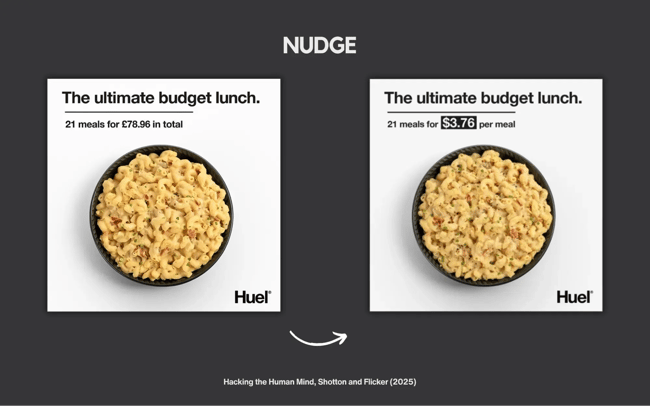
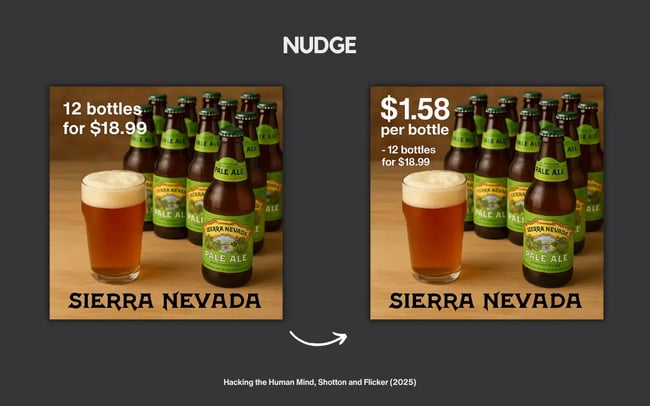
Consider the example of Huel, a meal replacement company. An advertisement showing the total cost of 21 meals at £78.96 might appear daunting to some customers. In contrast, an ad highlighting the price per lunch at $3.76 makes the offering seem far more affordable and reasonable. This principle was rigorously tested by Richard Shotton and Michael Aaron Flicker, whose findings are detailed in their book Hacking the Human Mind. In one particular study involving 282 shoppers, participants were divided into groups to evaluate Sierra Nevada Pale Ale. Half saw the price as $18.99 for 12 bottles, while the other half were informed of the per-bottle price: $1.58. The results were striking: 28.6% of those shown the per-bottle price rated it as "good or very good value," a figure more than double the 13.7% who only saw the total price.

This disparity arises because a smaller, per-unit price triggers a different mental calculation. Instead of evaluating a lump sum that might feel like a significant outlay, consumers assess a daily or single-use cost, which often aligns better with their immediate budget and perceived utility. For subscriptions, software services, or even gym memberships, framing the cost as "just X dollars a day" or "less than a coffee per morning" effectively diminishes the psychological barrier of the total annual or monthly fee, making the purchase feel more justifiable and less of a financial burden. This strategy is particularly effective for products that represent ongoing consumption or long-term commitments, transforming a large, intimidating figure into an accessible, everyday expense.
Differential Price Framing: The Art of the Upsell
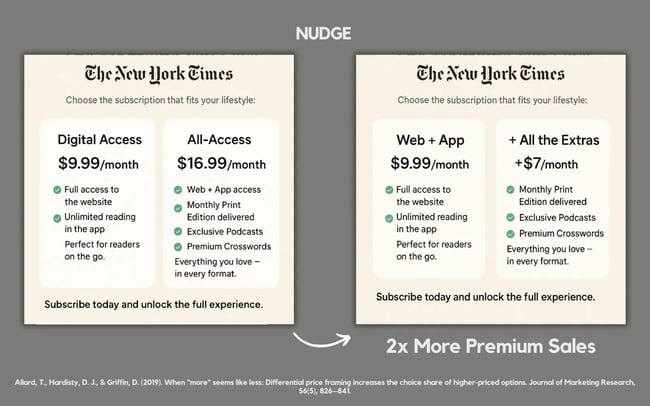
When aiming to persuade customers to opt for a premium product or service, the framing of the price difference is critical. Simply presenting two total prices, one higher than the other, can lead to consumers defaulting to the cheaper option. However, by strategically highlighting the incremental cost of the upgrade, businesses can significantly increase the adoption of higher-priced offerings. This phenomenon, known as differential price framing, was expertly demonstrated in a 2019 experiment by David Hardisty at the University of British Columbia, focusing on New York Times subscriptions.
Hardisty’s study involved two groups. Group A was presented with two distinct plans: a "Web + App" subscription for $9.99/month and a "Web + App + All the Extras" plan for $17/month. Group B, however, saw the same products framed differently. Their first option was the "Web + App" subscription for $9.99/month. The second option was described as "Web + App" plus "+ All the Extras" available for an additional $7/month. Despite the total price for the premium plan being identical in both scenarios, Group B chose the premium plan twice as often as Group A.
The psychological mechanism at play here is a potent combination of anchoring and the perception of relative value. When consumers are anchored to the base price of $9.99, an "additional $7" for extra features feels like a small, incremental cost to enhance an already decided purchase, rather than a separate, larger decision about a $17 package. The mind processes the $7 as an "add-on" to a known quantity, making it easier to justify. This approach minimizes the perceived "loss" of spending more and emphasizes the "gain" of additional features for a relatively small surcharge. This strategy is invaluable for businesses looking to upsell, from software providers offering tiered subscriptions to airlines selling seat upgrades or extra baggage. By reframing the premium option as an incremental improvement rather than a standalone, higher-priced product, companies can subtly guide consumers towards more lucrative choices, demonstrating that perception, not just absolute cost, drives premium adoption.
Radical Transparency: Building Trust Through Cost Disclosure
In an era of increasing consumer skepticism and a desire for authenticity, price transparency has emerged as a surprisingly effective strategy. While conventional wisdom often dictates keeping cost structures private, research indicates that openly disclosing the breakdown of a product’s cost, including profit margins, can foster trust, enhance perceived value, and significantly boost sales. This counterintuitive finding gained viral attention when marketing expert Phill Agnew shared an image on LinkedIn depicting two ads for chicken soup. One simply showed the price at $7.99, while the other meticulously detailed the cost of each ingredient, labor, and the profit margin before arriving at the same final price. The surprising outcome of the underlying research challenged traditional marketing assumptions.
Agnew’s post was based on a compelling 2020 study from Harvard, conducted in a university canteen. Researchers tracked actual soup purchases, observing consumer behavior after displaying different pricing information. The results were unequivocal: when the costs and profit margins for the soup were made visible to customers, soup sales surged by an impressive 21%. This dramatic increase suggests that transparency moves beyond mere information; it cultivates a sense of fairness and respect.
The psychological underpinnings of this success lie in the human desire for trust and understanding. When consumers see a detailed breakdown of costs, they gain insight into the effort, quality of ingredients, and labor involved in creating a product. This demystification of pricing can alleviate concerns about price gouging and foster a belief that the company is honest and values its customers. It shifts the transaction from a purely monetary exchange to a relationship built on trust and shared understanding. For brands committed to ethical sourcing, sustainable practices, or artisanal quality, transparent pricing becomes a powerful narrative tool, allowing consumers to appreciate the true value beyond the sticker price. In a market saturated with choices, transparency can be a decisive differentiator, building strong brand loyalty and encouraging consumers to pay a fair price for perceived integrity and quality.
Making Differences Visible: Overcoming Decision Paralysis
The paradox of choice suggests that while consumers appreciate having options, an abundance of overly similar choices can lead to decision paralysis, often resulting in no purchase at all. When faced with identical or near-identical products at the same price, the cognitive effort required to justify choosing one over the other can be overwhelming, causing consumers to abandon the decision altogether. A fascinating South Korean study vividly illustrates this principle.
Participants in the study were given the equivalent of ₩1,000 (approximately $1) and asked to choose between two identical packs of gum, each priced at ₩630. In this scenario, only 46% of participants made a purchase; more than half simply walked away, unable to make a choice between indistinguishable options. The researchers then introduced a subtle but significant alteration: they slightly adjusted the prices. One pack of gum was priced at ₩620, while the other was ₩640. This tiny 20-won difference had a profound impact: the purchase rate soared to 77%, representing a remarkable 31-point jump.
This outcome highlights the critical role of differentiation, even minor, in facilitating consumer choice. When two options are perceived as identical, there is no rational basis for selection, leading to cognitive deadlock. However, by introducing even a trivial difference, such as a slight price variation, consumers are given a "reason to choose." This small distinction provides a mental shortcut, allowing the brain to quickly identify a preference and move forward with the purchase. It alleviates the cognitive burden of having to justify an arbitrary choice between two perfectly equal alternatives.
For businesses, this insight is invaluable, particularly in competitive markets where products often appear similar. Even if the fundamental features or quality are nearly identical, finding and highlighting differentiating factors – be it a slight price variation, a minor feature enhancement, a unique packaging design, or a subtly different brand story – can significantly impact conversion rates. The goal is not necessarily to create vastly superior products, but to provide consumers with just enough distinction to make a confident and swift decision, thereby overcoming the inertia of indecision and converting browsing into buying.
The Cumulative Impact of Behavioral Pricing
The examples above collectively underscore a fundamental truth in modern commerce: pricing is not merely an economic exercise but a profound psychological one. The product itself, its inherent quality, and its absolute cost are only part of the equation. How that product and its price are presented, framed, and contextualized can wield immense influence over consumer perception and purchasing behavior. From the subtle nuances of ending digits in discounts to the clarity of unit pricing, the strategic communication of price differences for upgrades, the power of radical cost transparency, and the importance of even minimal differentiation to overcome choice paralysis, each strategy leverages a specific cognitive bias or psychological principle.
These behavioral pricing tactics demonstrate that small, intelligent "nudges" in how information is conveyed can lead to significant shifts in consumer choices, often without altering the product or the underlying value proposition. Businesses that understand and apply these psychology-backed principles are better equipped to optimize their marketing campaigns, enhance customer satisfaction, and ultimately drive sales growth. As markets become increasingly saturated and consumers more discerning, the ability to harness these psychological undercurrents will be a critical differentiator, allowing brands to stand out, make deals feel more salient, and entice shoppers to convert. The ongoing evolution of behavioral economics promises further insights, urging businesses to continuously test, learn, and adapt their pricing strategies to the intricate workings of the human mind.