CANNES, FRANCE – Amidst the vibrant discussions and cutting-edge presentations at Cannes Lions, the prevailing theme echoing through the Palais des Festivals is unequivocally artificial intelligence. This year’s gathering has been marked by the introduction of novel AI-powered advertising formats and a palpable shift from theoretical AI applications to tangible, outcome-driven solutions. A prime example of this evolution is Amazon’s unveiling of its new “Alexa+ Agentic Ads,” a groundbreaking ad format designed to seamlessly integrate commerce into conversational AI experiences. This development underscores Amazon’s strategic push to leverage AI, particularly agentic AI, to deliver measurable results for brands and redefine the customer journey.
The Alexa+ Agentic Ads format allows consumers to engage in voice-based interactions with advertisements, enabling them to explore product options, refine their choices, and complete transactions directly within the Alexa ecosystem, all without needing to navigate away from the familiar interface. This represents a significant leap forward in how brands can connect with consumers, transforming passive ad consumption into active, personalized shopping experiences.
During a compelling demonstration at Cannes Lions, Amazon showcased the potential of Alexa+ Agentic Ads through a realistic scenario. A consumer expressed interest in purchasing concert tickets for the acclaimed artist Jill Scott. Leveraging the conversational capabilities of Alexa, she was able to articulate specific needs and preferences, including the occasion – her mother’s birthday – and her willingness to invest in premium seating. Through a series of voice commands, Alexa dynamically filtered options, ultimately facilitating the purchase of front-row tickets on Ticketmaster, illustrating the efficiency and intuitiveness of the new ad format.
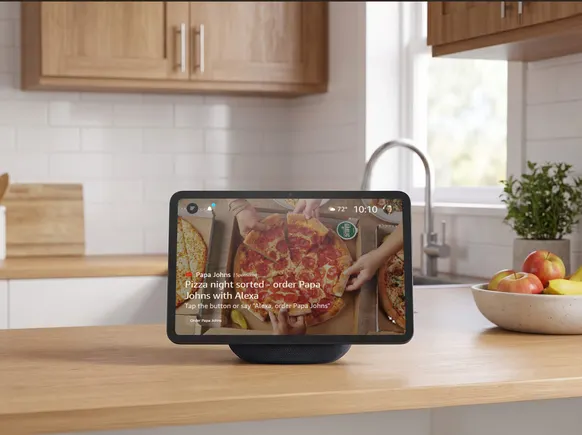
Early adopters of the Alexa+ Agentic Ads beta program include prominent brands like Papa Johns and The Orchard, a subsidiary of Sony Music Entertainment. These partnerships highlight the broad applicability of the technology across different industries. The ads are currently being tested on Amazon’s Echo Show devices, a platform that has seen significant growth in its AI capabilities. Alexa+ itself became publicly available earlier this year, following a successful beta period in 2025. By the close of last year, Amazon had confirmed that over one million individuals had access to its generative AI-powered Alexa assistant, with the voice assistant being a fixture in tens of millions of homes worldwide. This substantial user base provides a fertile ground for the widespread adoption and impact of these new advertising solutions.
Amazon’s vision for Alexa+ Agentic Ads extends beyond Echo Show devices. The company plans to integrate this format into its Fire TV platform, where it will be showcased within the carousel-like “Feature Rotator” experience on the home screen. While the current testing phase is in its nascent stages, Amazon executives are emphatic that this is not a limited experiment or a theoretical exploration.
“We have ad products that are live today. This isn’t something that we’re talking about or [saying] ‘we’re working on it,’” stated Charlotte Maines, Amazon Vice President of Devices Content and Advertising, in an interview conducted on Wednesday. This assertion signals Amazon’s commitment to deploying and refining these AI-driven advertising solutions in real-time, moving them from concept to commercial reality.
A key differentiator of Alexa+ Agentic Ads is its advanced natural language processing capabilities. Unlike traditional voice commands that often require rigid phrasing, these ads are designed to understand subtler conversational cues, enabling a more fluid and intuitive user experience. Amazon envisions this conversational approach as a pathway to delivering increasingly personalized and relevant advertisements. For instance, in the case of Papa John’s, Alexa could potentially recall a customer’s preferred pizza toppings from previous interactions, offering tailored recommendations for repeat orders. This level of personalization, driven by AI understanding of consumer preferences, promises to enhance both customer satisfaction and brand engagement.
“This is literally the first thing of so much more opportunity for innovation, because Alexa+ – just as all of these agentic AI assistants – is new,” Maines elaborated. “My job is to make sure that, as customer engagement grows, advertisers can participate in those high-intent conversations.” This statement underscores Amazon’s strategic focus on empowering advertisers to tap into moments of strong consumer intent, facilitated by the advanced capabilities of agentic AI.
Harnessing Amazon’s Extensive Technology Stack
While the AI landscape at Cannes Lions is undeniably competitive, Amazon possesses distinct advantages over newer entrants. These advantages stem from the same robust infrastructure that has propelled its advertising division into a multi-billion dollar enterprise. Central to this is Amazon’s sophisticated demand-side platform (DSP), its established measurement capabilities, and its unparalleled repository of transaction-level data.
“We’ve got this incredible Amazon advertising tech stack, infrastructure business, where we are very well positioned to pull things into the DSP, for example, [or] offer something self-service and programmatic very quickly,” Maines explained. This integrated approach allows Amazon to streamline the process of bringing new ad formats to market and make them accessible to a broad range of advertisers through programmatic channels.
Furthermore, Amazon is strategically aligning its new agentic products with a broader suite of automation tools. This includes AI-powered creative agents designed to assist advertisers in developing, creating, and deploying campaigns across the Amazon platform. This comprehensive offering aims to simplify the campaign development process, enabling advertisers to be as hands-on or hands-off as they prefer.
“Advertisers can be as involved or not involved as they want in terms of their creative teams on how they generate these assets, but we … offer a plug-and-play solution,” Maines noted. “We do have this foundation, so we’re able to offer a lot of data on how creative performs historically.” This data-driven approach to creative development, informed by years of campaign performance, offers advertisers valuable insights to optimize their ad spend and maximize return on investment.
Navigating Privacy in the Age of Conversational AI Advertising
The increasing integration of conversational AI with advertising inevitably raises questions about user privacy. As AI chatbots engage in more intimate and extended interactions with consumers, ensuring data protection and maintaining user trust becomes paramount. Industry leaders, including OpenAI, have publicly committed to stringent data privacy measures, emphasizing that conversational information will not be shared with advertisers to preserve user confidence.
Amazon acknowledges these concerns and has implemented robust safeguards. Maines illustrated a personal use case: losing her son’s water bottle. Alexa, recalling the child’s age range and preference for the color orange, was able to recommend suitable replacement options, including sponsored products. This level of personalization is enabled by information shared with the AI, but Amazon emphasizes a clear “firewall” between this personalized experience and its ad-tech stack. This structured approach to data utilization is crucial for building and maintaining customer trust.
“We are using the information to create a better first-party model, but that doesn’t change anything about the fact of how we engage with advertisers, in terms of the way that we use data to get the best ad for you,” Maines clarified. She further elaborated on Amazon’s long-standing commitment to privacy, stating, “We’re lucky that we just have decades of a foundation of building products based on both creating a very personalized and relevant experience and doing it in a way that’s safe for customers’ privacy.” This statement highlights Amazon’s strategy of leveraging its extensive experience in building privacy-conscious products to navigate the evolving landscape of AI-driven advertising.
The introduction of Alexa+ Agentic Ads at Cannes Lions signifies a pivotal moment in the convergence of artificial intelligence and advertising. By enabling seamless, conversational commerce, Amazon is not only redefining consumer engagement but also setting a new benchmark for how brands can leverage AI to achieve tangible business outcomes. As agentic AI continues to evolve, its integration into advertising promises to unlock unprecedented levels of personalization, efficiency, and customer satisfaction, while Amazon’s established infrastructure and privacy-first approach position it as a key player in this transformative era.
Editor’s Note: This article has been updated to incorporate additional context and details regarding Amazon’s AI initiatives and the broader implications of agentic AI in advertising, drawing upon information shared during the Cannes Lions festival and publicly available data.