Mobile commerce, often abbreviated as m-commerce, has rapidly ascended to become the most dynamic and critical segment of the global retail landscape. Driven by the pervasive spread of smartphones, the ubiquity of social media, and continuous innovation in user-friendly shopping technologies, m-commerce represents a fundamental transformation in how consumers discover, browse, and purchase goods and services. This shift is not merely a convenience; it is a strategic imperative for businesses aiming to thrive in an increasingly digital-first world.
The Evolution and Context of Mobile Commerce
The journey towards mobile commerce dominance has been a gradual yet accelerating process, intrinsically linked to advancements in mobile technology and internet infrastructure. The early 2000s saw the nascent stages of mobile internet, primarily through WAP (Wireless Application Protocol) browsers on feature phones, offering rudimentary access to information. However, the true inflection point arrived with the launch of the first iPhone in 2007, ushering in the era of smartphones with advanced operating systems, touch interfaces, and high-resolution screens. This technological leap laid the groundwork for richer mobile experiences, moving beyond simple browsing to complex applications and seamless online transactions.
The subsequent decade witnessed a rapid expansion of mobile network capabilities, from 3G to 4G, and now 5G, dramatically increasing internet speeds and reducing latency. This improvement in connectivity directly fueled the growth of mobile-optimized websites and dedicated shopping applications. While e-commerce had already established itself as a significant retail channel through desktop computers, the COVID-19 pandemic in 2020 served as a catalyst, propelling mobile shopping into an unprecedented era of growth. Lockdowns and social distancing measures forced consumers globally to rely almost exclusively on digital channels for their needs, accelerating the adoption of mobile devices for everything from groceries to luxury goods. This period not only highlighted the resilience and convenience of mobile shopping but also cemented its position as a primary revenue driver for countless businesses.
Defining Mobile Commerce: A Subset of E-commerce
At its core, mobile commerce is the act of conducting commercial transactions using a mobile device, such as a smartphone or tablet. While it shares the fundamental objective of buying and selling goods online with its broader parent category, e-commerce, its distinguishing feature lies in its exclusive focus on optimizing the mobile shopping experience. This optimization encompasses everything from interface design and page loading speeds to payment processing and customer engagement strategies tailored for handheld devices.
To illustrate its scale, mobile devices accounted for approximately 60% of global e-commerce sales in 2024, demonstrating its pivotal role in the broader digital economy. In the United States alone, m-commerce generated an astounding $542.73 billion in 2024, representing 44.6% of total online retail revenue. These figures underscore not only the current magnitude of mobile commerce but also its continuous trajectory of expansion.
The scope of m-commerce extends beyond simple product purchases. It intricately weaves into daily financial activities, encompassing mobile banking services (checking balances, transferring funds, bill payments) and various forms of mobile payments (digital wallets, contactless payments). Social media platforms like Facebook, Instagram, TikTok, and Pinterest have become instrumental in popularizing m-commerce, transforming casual browsing into immediate purchasing opportunities through integrated shopping features. For any e-commerce brand with a digital presence, leveraging these mobile-friendly channels and providing a streamlined user experience is paramount for converting engagement into revenue and fostering lasting brand loyalty.
The Three Pillars of Mobile Commerce
Mobile commerce operates on three foundational pillars, each critical for a comprehensive and effective strategy:
-
Mobile Shopping: This is arguably the most visible and impactful aspect, directly influencing customer attraction and conversion. It demands an intuitive, visually appealing interface that guides users effortlessly through the buyer’s journey. Leading brands like Amazon, Nike, and ASOS have invested heavily in seamless navigation, high-quality visuals, efficient guest checkout processes, and diverse payment options to create frictionless mobile shopping experiences. The emphasis here is on speed, clarity, and ease of use, recognizing the on-the-go nature of mobile users.
-
Mobile Banking: Once a purchase decision is made, reliable banking services are essential. Mobile banking refers to the use of mobile devices to conduct financial transactions and manage accounts. Fintech innovators such as Revolut and Monzo have revolutionized personal finance, making consumers comfortable with managing their money entirely through their smartphones. This comfort level directly benefits e-commerce, as consumers are increasingly accustomed to making payments and overseeing financial aspects via their mobile devices, paving the way for integrated m-commerce strategies.
-
Mobile Payments: Closely linked to mobile banking but distinct in its focus, mobile payments involve the actual completion of online transactions. This includes digital wallets like Apple Pay and Google Pay, Near-Field Communication (NFC) tap-to-pay systems, and the increasingly popular Buy Now, Pay Later (BNPL) services. For e-commerce businesses, optimizing payment gateways for mobile users is crucial. Payments must be swift, secure, and familiar, aligning with consumer expectations for instant and effortless transactions.
M-commerce vs. E-commerce: A Strategic Distinction
While often used interchangeably by consumers, the distinction between e-commerce and m-commerce is vital for businesses. E-commerce is a broad umbrella term encompassing all commercial transactions conducted over the internet, whether via desktop computers, laptops, tablets, or smartphones. M-commerce, by contrast, is a specific subset focused solely on transactions processed through wireless handheld devices.
The primary difference lies in optimization strategy. E-commerce, particularly for desktop experiences, often allows for more elaborate designs, longer load times, and multi-step checkout processes, aiming to engage users for extended periods with richer content and product displays. M-commerce, however, prioritizes speed, clarity, and thumb-friendly design. It demands sub-three-second load times, intuitive navigation, and one-tap payment options to accommodate users who are typically on the go, often with limited attention spans. For businesses, understanding this distinction is crucial for allocating resources and designing user experiences that maximize conversions across all digital touchpoints.
Why Mobile Commerce is Indispensable: Benefits and Opportunities
The undeniable shift towards mobile devices as the primary shopping tool makes m-commerce a non-negotiable strategy for modern businesses. With the global m-commerce market size valued at well over $2.2 trillion in 2025, its influence is profound and growing.
-
Exceptional User Experience (UX): A superior mobile UX is paramount. Google data indicates that even a one-second delay in mobile page load time can decrease conversions by up to 20%. Brands like Glossier exemplify excellent mobile UX with visually appealing designs, intuitive color-changing features, and clear incentives like free shipping. Reducing friction in the mobile journey is key to not only boosting conversion rates but also cultivating a loyal customer base.
-
Omnichannel Marketing and Data Insights: M-commerce facilitates a unified, seamless customer journey, allowing mobile shoppers to transition effortlessly from browsing to buying. Integrating m-commerce into an omnichannel approach ensures consistent messaging across various channels—email, SMS, push notifications—while capturing valuable behavioral data. This data, including browsing history, demographics, and email addresses, enables hyper-personalized marketing campaigns, from retargeting first-time buyers to attracting lookalike audiences. Sophisticated platforms like Omnisend highlight the effectiveness of omnichannel workflows, reporting a $79 return for every dollar spent by their customers in 2025, significantly outperforming the industry average.
-
Instant Transactions: Mobile commerce significantly reduces cart abandonment rates, which average around 70.22% for online shopping. This is achieved through the proliferation of instant payment options tailored for smartphones. Digital wallets like Apple Pay, Google Pay, Amazon Pay, and PayPal’s One-Touch allow customers to complete purchases with a click or two, bypassing tedious card detail entry. This frictionless checkout process is a critical factor in driving conversions.
-
Hyper-Personalized Content: Leveraging collected customer data allows businesses to deliver highly personalized content, making mobile shoppers feel valued and understood. Product recommendations based on past purchases, browsing history, or even newly released items can be far more effective than generic discounts. Amazon’s ability to notify users about new releases from followed authors or artists is a prime example. Personalization extends to targeted email campaigns, segmented lists, and push notifications, all contributing to increased customer engagement and loyalty.
Navigating the M-Commerce Landscape: Challenges and Solutions
Despite its immense potential, implementing a successful m-commerce strategy comes with inherent challenges that businesses must proactively address.
-
Security and Privacy: Mobile transactions involve sensitive financial and personal data, making them prime targets for fraud. Consumers are increasingly aware and cautious, demanding robust security measures. Businesses must ensure SSL certificates, PCI DSS compliance, GDPR adherence, two-factor authentication, and transparent data practices to build and maintain trust.
-
Performance and Connectivity: Mobile optimization is crucial, but inconsistent internet connectivity remains a challenge. Consumers access content via 4G, 5G, public WiFi, or varying cellular performance, often beyond a brand’s control. However, a patchy experience can negatively impact brand reputation. Adhering to Google’s Core Web Vitals (LCP, FID, CLS) helps ensure optimal performance, regardless of the user’s connection.
-
Showrooming: This phenomenon involves customers evaluating products in physical stores but purchasing them online from competitors, often using their mobile devices to compare prices and reviews instantly. Businesses with physical stores must integrate their online and offline experiences, perhaps offering in-store exclusive benefits, price matching, or enhanced personalized service to counteract showrooming.
-
App Fatigue and Acquisition Costs: Relying solely on a branded mobile app can be challenging. The app market is saturated, and convincing users to download and retain an app is difficult. Statistics show that over 90% of customers abandon mobile apps within the first 30 days. Businesses need to consider the high development and marketing costs of apps against their retention rates and explore hybrid strategies, such as highly optimized progressive web apps (PWAs) or strong mobile web experiences alongside app development.
Seamless Transactions: The Backbone of Mobile Payments
The diversity and efficiency of mobile payment options are central to the success of m-commerce.

-
Mobile Wallets: Widely adopted, mobile wallets like Apple Pay, Google Pay, and Samsung Pay offer rapid, secure checkout processes using biometric authentication (Face ID, fingerprint). With over 785 million Apple Pay users worldwide, these are not merely convenient but a fundamental expectation for customers, especially for in-store purchases where 54% of Apple Pay users engage.
-
Buy Now, Pay Later (BNPL): Services such as Klarna, Afterpay, and Affirm have become integral, allowing consumers to purchase goods and pay over time without immediate full payment. BNPL has seen rapid adoption across various e-commerce categories, particularly for higher-value items like electronics, making expensive purchases more accessible.
-
NFC/Contactless Payments: Near-Field Communication (NFC) enables tap-to-pay functionality in physical stores, offering unparalleled speed and convenience. For omnichannel brands, NFC bridges the gap between online and offline experiences, facilitating a truly integrated retail journey.
Pioneers in Practice: Leading M-Commerce Examples
Examining successful brands reveals best practices in mobile commerce:
-
Wayfair: This home decor giant, with over 22 million items, continually innovates its mobile shopping experience. Features like virtual 3D room creation and interactive photos, leveraging augmented reality (AR), allow customers to visualize products in their homes before purchasing, enhancing confidence and engagement.
-
Target: The retail behemoth has successfully extended its in-store convenience to its mobile app. Its “Circle” feature offers instant access to deals and personalized perks, fostering loyalty and driving repeat purchases by integrating value directly into the mobile experience.
-
Amazon: A perennial leader, Amazon’s mobile app is a masterclass in UX. It combines one-tap purchasing with saved payment details, AI-powered product recommendations, real-time order tracking, and voice search via Alexa. This creates a seamless loop from discovery to reorder, including integrated returns, granting customers full control.
-
Starbucks: The Starbucks app is a prime example of loyalty-driven engagement. It allows customers to order ahead, earn “Stars” for purchases, redeem rewards, and receive personalized offers. This gamified approach appeals to a broad demographic, significantly increasing engagement and repeat business.
The Horizon: Key Trends Shaping Mobile Commerce’s Future
The m-commerce landscape is dynamic, with several trends poised to redefine its future:
-
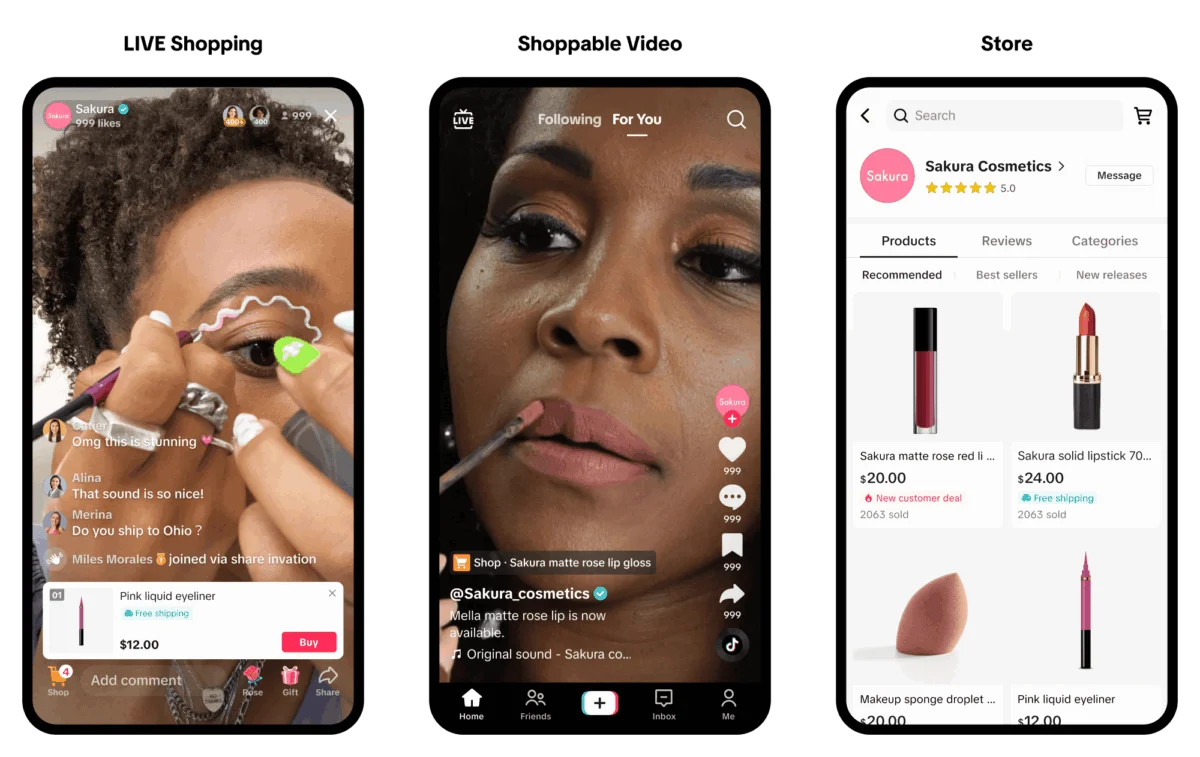
Social Commerce/In-App Shopping: The integration of shopping directly into social media platforms has exploded. With TikTok Shop’s launch in the USA in 2023, and existing features like Instagram Shopping and Pinterest’s shoppable pins, social commerce significantly shortens the buyer’s journey by placing products directly within engaging content streams, driving impulsive and informed purchases.
-
AI-Driven Recommendations and Agentic Commerce: AI-powered product recommendations are evolving with advancements in predictive AI, which analyzes behavioral data, purchase history, and customer lifetime value (CLV) to offer hyper-personalized suggestions. The emergence of AI agents capable of browsing, comparing, and purchasing goods autonomously based on user preferences (e.g., Omnisend’s MCP integration with ChatGPT) heralds a new era of “agentic commerce,” making shopping effortless.
-
QR Codes: Re-popularized during the pandemic, QR codes are versatile tools for m-commerce. They can instantly link customers to product information, videos, return processes, or social media accounts. Their utility in restaurants for ordering/paying or on business cards demonstrates their potential to enhance and streamline mobile shopping flows.
-
One-Click Ordering: Features like Shopify’s Shop Pay, Apple Pay, and PayPal Express are powerful conversion mechanisms. By eliminating multi-step checkouts, one-click ordering significantly reduces cart abandonment and boosts average order value. Stripe reports that brands using Shop Pay or Apple Pay see up to 50% higher conversion rates than standard guest checkouts, highlighting its impact.
-
5G Connectivity: The global rollout of 5G addresses a critical m-commerce challenge: slow connection speeds. With download speeds up to 100 times faster than 4G and lower latency, 5G enables richer mobile experiences, including higher-resolution images and videos, advanced real-time AR visualizations, and instant app loading, pushing the boundaries of what’s possible on mobile.
-
Voice Shopping: The proliferation of voice assistants like Alexa, Siri, and Google Assistant has opened avenues for hands-free shopping. As people speak faster than they type, voice search is becoming increasingly popular. The global voice commerce market, valued at approximately $150 billion in 2025, is projected to reach $484 billion by 2030, driven by more capable LLM-powered assistants. Optimizing product listings for voice search keywords is becoming a necessity for brands.
-
Chatbots: Providing instant, 24/7 customer service without human intervention, chatbots enhance the mobile shopping experience by answering FAQs, guiding product discovery, and resolving issues. The global chatbot market is expected to reach over $41 billion by 2033, underscoring their growing importance in mobile customer engagement.
-
Push Notifications: These pop-up messages appear on customers’ smartphones, even when they’re not actively using an app. They are highly effective for re-engagement, shipping updates, and personalized offers. Concise messages (under 10 words) often yield the best click rates, with 48% of customers making a purchase after receiving a push notification, making them a potent tool for driving conversions.
-
Augmented Reality (AR): AR allows customers to visualize products in real-time before purchasing, bridging the gap between online and physical shopping. With over 60% of U.S. consumers regularly using AR features when shopping (2025 data), its implementation for virtual try-ons (clothing, glasses), furniture placement, or makeup application significantly boosts engagement and influences buying decisions.
-
Short-Form Videos: Video content has emerged as a dominant force in content marketing. With the average person spending 51 minutes daily consuming online videos, and videos on landing pages increasing conversion rates by 86%, they are crucial for m-commerce. Short, engaging videos demonstrating product use, features, or brand mission build trust and influence purchasing decisions, with over 89% of users reporting videos impact their buying choices.
Strategic Imperatives for Businesses: Implications and Future Outlook
The trajectory of mobile commerce makes it clear that it is no longer a peripheral channel but a central pillar of retail strategy. With over 60% of global mobile traffic driven by mobile devices, businesses must recognize m-commerce as a “must-have” rather than a “nice-to-have.”
The implications for businesses are profound: a relentless focus on mobile-first design, seamless user experiences, and robust omnichannel integration is essential. Companies must prioritize swift page loads, intuitive navigation, and one-tap payment options. Simultaneously, leveraging data for hyper-personalization across all mobile touchpoints—from push notifications to AI-driven recommendations—will be key to fostering loyalty and driving repeat purchases. Addressing challenges related to security, performance, and app retention through thoughtful investment in technology and customer-centric design will differentiate market leaders.
As mobile technology continues its rapid evolution, integrating emerging trends like social commerce, agentic AI, 5G capabilities, and augmented reality will be critical for staying competitive. Brands that embrace these innovations and invest in comprehensive omnichannel solutions, such as those offered by Omnisend, will be well-positioned to capitalize on the vast opportunities presented by the mobile-first consumer. The future of retail is undeniably mobile, and success hinges on a proactive, adaptive, and customer-focused m-commerce strategy.
Frequently Asked Questions
What is mobile commerce?
Mobile commerce, or m-commerce, is a subcategory of e-commerce focused specifically on commercial transactions conducted via mobile phones and tablets.
What are the types of mobile commerce?
The three main types of mobile commerce are mobile browsing and shopping (via apps and mobile websites), mobile banking (through dedicated banking apps), and mobile payments (digital wallets, BNPL, NFC).
What’s the difference between mobile commerce and e-commerce?
E-commerce is a broad category encompassing all online transactions, whereas m-commerce is a subset specifically referring to transactions made via wireless handheld devices like smartphones and tablets. M-commerce emphasizes optimization for speed and convenience on mobile.
How do businesses measure mobile commerce success?
Key metrics for measuring m-commerce success include mobile conversion rate, mobile revenue as a percentage of total e-commerce revenue, average order value on mobile versus desktop, mobile cart abandonment rate, app download and retention rates, and mobile-specific channel performance.
Is a responsive site or a mobile app better?
Both responsive sites and mobile apps have distinct benefits. A responsive website offers immediate accessibility without downloads, making it suitable for broad reach and search engine visibility. A mobile app, while requiring more development and user effort to download, can offer deeper personalization, offline functionality, and push notifications, often leading to higher engagement from loyal customers. The optimal strategy often involves a robust responsive website complemented by a strategic mobile app for dedicated users.