The global mobile application market, currently valued at hundreds of billions of dollars, has reached a point of saturation where the difference between a successful product and a failed venture often rests on the minutiae of user experience. While the vast majority of mobile app professionals—ranging from developers to product managers—utilize some form of analytics, a significant portion of the industry continues to operate within a naturally flawed workflow. This flaw is rooted in a historical over-reliance on quantitative data, a methodology that tracks numerical outcomes but fails to diagnose the behavioral causes behind those numbers. As the digital economy shifts toward a retention-first model, the integration of qualitative analytics has emerged not merely as an optional upgrade, but as a technical necessity for maintaining a competitive edge in the app stores.
The Quantitative Limitation and the Need for Context
For years, the industry standard for app optimization has been quantitative analytics. These tools provide a robust framework for measuring “what” is happening within an application. Metrics such as Daily Active Users (DAU), churn rates, session length, and conversion funnels offer a high-level view of an app’s health. If a user drops off at the registration screen or if a shopping cart is abandoned, quantitative data will flag the event with clinical precision. However, these numbers are inherently silent regarding the “why.”
Industry experts argue that relying solely on quantitative data is akin to a doctor seeing that a patient has a fever without investigating the underlying infection. Quantitative metrics can signal that a problem exists, but they cannot provide the visual or contextual evidence required to fix it. This information gap often leads to “blind optimization,” where development teams guess at solutions, leading to wasted resources and potential degradation of the user interface. The solution, which is increasingly being adopted by top-tier tech firms, is the implementation of qualitative analytics: a suite of tools designed to capture the nuance of human interaction within a digital environment.
Technological Foundations: Touch Heatmaps and User Session Recordings
Qualitative analytics is primarily built upon two foundational technologies: touch heatmaps and user session recordings. These tools transform abstract data points into visual narratives that are easily interpreted by cross-functional teams.
Touch Heatmaps and the Science of Interaction
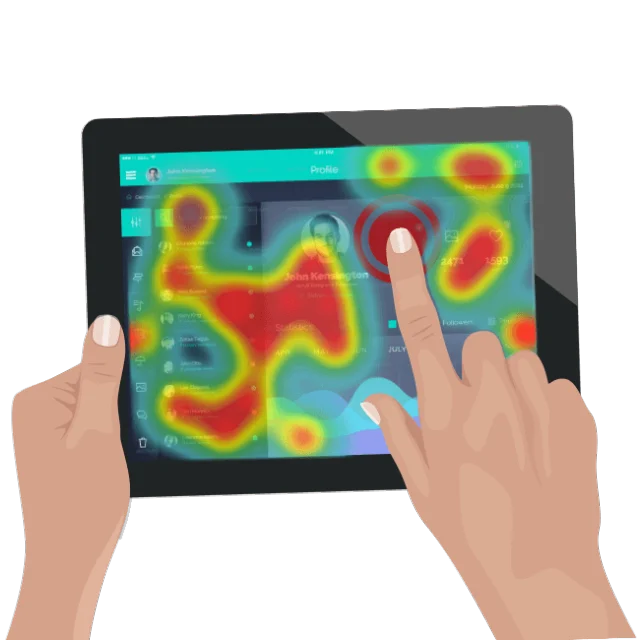
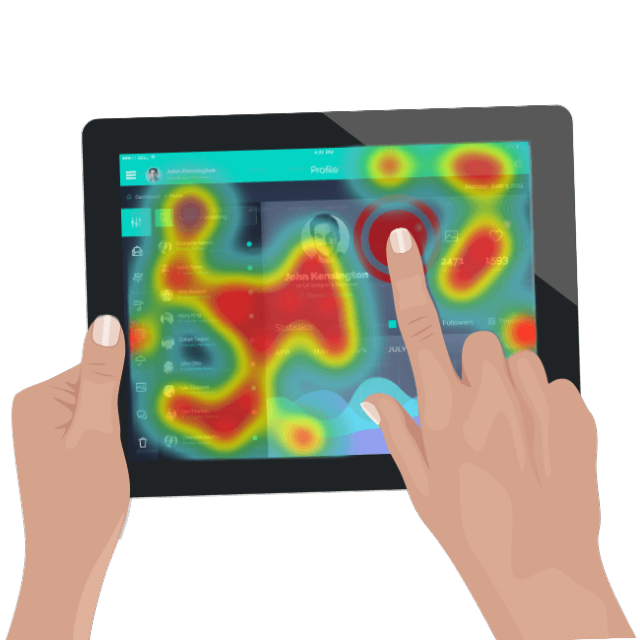
Touch heatmaps aggregate every gesture made by users—including taps, double-taps, swipes, and pinches—and overlay this data onto the app’s interface. This creates a visual representation of user engagement, where “hot” zones indicate high activity and “cold” zones indicate neglected features.
Beyond simple engagement tracking, heatmaps are critical for identifying “unresponsive gestures.” These occur when a user taps an element—such as an image they believe is a link or a button that fails to trigger an action—and receives no feedback from the app. Data suggests that unresponsive gestures are among the primary drivers of “rage clicking,” a phenomenon where frustrated users repeatedly tap a screen before Force Quitting the application. By identifying these friction points, developers can realign the app’s design with user expectations, ensuring that the interface is as intuitive as it is functional.
User Session Recordings: The “Over-the-Shoulder” Perspective
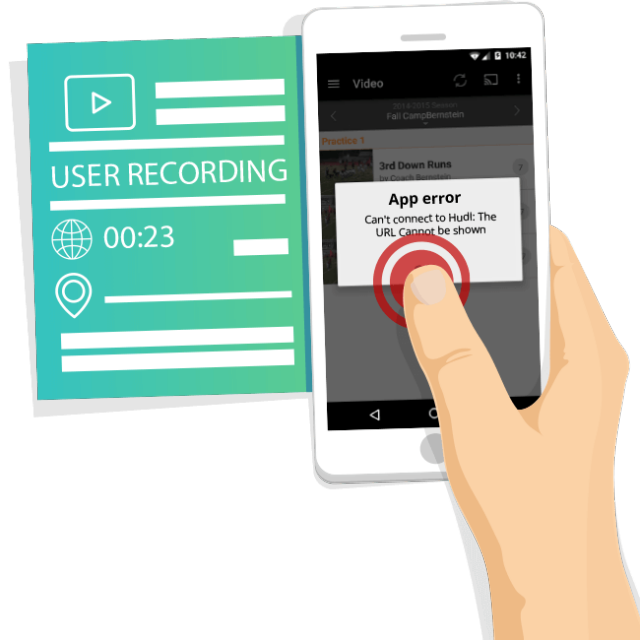
While heatmaps provide an aggregate view, user session recordings offer a granular, individual look at the user journey. This technology records the sequence of events on a user’s screen in real-time, allowing professionals to watch an unbiased replay of how a person navigates the app.
This is particularly vital for troubleshooting intermittent bugs or complex navigation issues that do not appear in laboratory testing. For instance, a recording might reveal that a user on a specific device model is unable to see a “Submit” button because it is obscured by an improperly scaled keyboard. Without a visual recording, a developer might see the drop-off in the data but remain unable to replicate the bug, leading to a prolonged and expensive resolution cycle.
Market Context: The Shift Toward Retention and LTV
The push for qualitative insights is driven by the escalating costs of user acquisition (UA). According to industry reports from firms like Sensor Tower and Statista, the cost per install (CPI) has risen steadily across both iOS and Android platforms. In this high-cost environment, losing a user due to a preventable UX flaw is a significant financial blow.
Modern app strategy has shifted its focus toward Lifetime Value (LTV) and retention. A 5% increase in user retention can lead to a profit increase of 25% to 95%, according to research by Bain & Company. Qualitative analytics facilitates this by allowing teams to identify “aha moments”—the specific interactions that lead to long-term loyalty—as well as the “friction points” that cause immediate abandonment. By observing real users, companies can move away from theoretical personas and base their development roadmaps on actual behavioral data.
Strategic Workflows: From Reactive to Proactive
The integration of qualitative tools allows for a total revamp of the standard analytics workflow, moving from a reactive stance to a proactive one. This is categorized into two main strategic approaches: Data-Fueled Optimization and Proactive Troubleshooting.
Data-Fueled Optimization: The Hybrid Approach
The most effective analytics workflows utilize quantitative and qualitative data in tandem. In this “Alert, Investigate, Resolve” loop, quantitative tools act as the alarm system. For example, if a product manager notices a 15% spike in abandonment on the checkout page via a quantitative dashboard, they can immediately pivot to qualitative recordings of those specific abandoned sessions.
By watching the recordings, the team might find that a new promotional pop-up is blocking the “Confirm Purchase” button on smaller screen sizes. The resolution is then based on evidence rather than hypothesis. This hybrid approach eliminates the trial-and-error phase of app development, significantly shortening the time-to-fix and ensuring that updates actually address user needs.
Proactive Troubleshooting: Pre-empting the Crisis
Traditional troubleshooting is reactive; it begins only after enough users have experienced a problem for it to show up in the aggregate statistics. Qualitative analytics allows for a proactive approach. By regularly auditing session recordings and heatmaps, QA (Quality Assurance) teams can spot usability issues before they escalate into a trend.
Consider a scenario where a social media integration is causing a slight lag or a minor visual glitch that hasn’t yet caused a massive spike in crashes. A developer watching a random sampling of sessions might notice users hesitating or attempting to circumvent a specific menu. By fixing this minor friction point early, the company prevents the eventual “silent churn” where users simply stop using the app without ever reporting a bug or triggering a formal crash report.
Privacy, Ethics, and Technical Implementation
A critical component of modern qualitative analytics is the balance between insight and privacy. In an era defined by GDPR, CCPA, and Apple’s App Tracking Transparency (ATT), the collection of user data is under intense scrutiny. Leading qualitative analytics providers have responded by implementing robust “privacy by design” features.
These tools typically include automated masking, which ensures that sensitive information—such as passwords, credit card numbers, or personal addresses—is never recorded or transmitted to the analytics servers. The recordings focus on the UI elements and gestures rather than the personal data entered into the fields. Furthermore, these SDKs (Software Development Kits) are designed to run in the background with minimal impact on CPU and battery life, ensuring that the act of monitoring the user experience does not, in itself, degrade that experience.
The Broader Impact on the Development Lifecycle
The move toward qualitative-heavy workflows is fundamentally changing the culture of app development. It bridges the gap between different departments. Designers can see where their layouts are being misunderstood; developers can see the exact conditions under which a crash occurs; and marketers can see which features are actually resonating with the audience.
In the competitive landscape of the 2020s, “good enough” is no longer a viable strategy for mobile apps. The “fresh twist” offered by qualitative analytics—the ability to see the human behavior behind the digital footprint—is becoming the new baseline for excellence. As machine learning and AI continue to evolve, we can expect qualitative tools to become even more sophisticated, eventually offering automated “frustration detection” and predictive UX modeling.
Conclusion: The New Standard for Mobile Excellence
The integration of qualitative insights represents a maturation of the mobile industry. By moving beyond the “what” of quantitative metrics and embracing the “why” of qualitative observation, app professionals can make decisions with unprecedented confidence. This shift leads to more stable apps, more intuitive interfaces, and ultimately, more satisfied users. In a market where the user’s attention is the most valuable commodity, the ability to truly understand and respect that user’s journey is the ultimate competitive advantage. The transition from a flawed, one-dimensional workflow to a comprehensive, data-fueled strategy is no longer just a recommendation; it is the blueprint for the next generation of mobile powerhouses.