The effective integration of Artificial Intelligence (AI) into content development is not about replacing human creativity but about augmenting it with strategic intelligence. As AI tools become more sophisticated and accessible, B2B marketers are grappling with how to leverage this technology to produce content that not only resonates but also achieves tangible business objectives. Recent insights from industry professionals suggest that the key lies not in the AI itself, but in the foundational marketing principles and strategic data integration that empower it. This approach moves beyond the initial apprehension surrounding AI-generated content, framing it as a powerful tool when wielded with purpose and precision.
The prevailing sentiment among forward-thinking B2B marketers is that AI-driven content, when executed correctly, can indeed break through the noise and deliver significant value. This was underscored in a recent conversation with a former client of Heinz Marketing, a Senior Engagement Manager, who shared his experiences with a robust AI content generation program. His emphatic affirmation that AI content “works” and “breaks through” challenged the common skepticism. The subsequent exploration of his methods revealed a blueprint for success that hinges on four critical pillars: cultivating a distinct brand positioning, meticulously feeding AI with proprietary data, refining brand voice, and establishing a recursive learning loop for continuous improvement.
The Enduring Power of Positioning in the Age of AI
In the rapidly evolving landscape of B2B marketing, the fundamental importance of positioning remains paramount. This core marketing principle, often revisited in foundational marketing education, is the bedrock upon which effective AI content strategies are built. As the former client highlighted, significant upfront investment in defining and solidifying market positioning paid dividends. This strategic clarity enabled his team to consistently generate content that was not only aligned with his brand but also demonstrably valuable to his target audience, leveraging a highly specific and well-defined market stance.
The challenge for many businesses is that their “uniques” can easily erode when confronted with competitive market pressures. AI, particularly Large Language Models (LLMs), thrives on content that offers a distinct perspective and communicates it in an engaging manner. Without a well-defined position, AI-generated content risks becoming generic, indistinguishable from the vast ocean of similar material available online. This echoes the timeless advice from marketing textbooks: understanding your audience, articulating clear value propositions, and crafting compelling offers are not outdated concepts but essential prerequisites for any content strategy, whether human or AI-driven.
The contemporary market is saturated with information. While AI can accelerate content production, it cannot inherently imbue it with unique insights or a compelling narrative. A robust positioning strategy provides the essential framework, ensuring that the AI is guided by a clear understanding of the brand’s identity, its unique selling propositions, and its target buyer’s needs and pain points. This strategic foundation ensures that AI acts as an amplifier of a pre-existing, well-articulated brand message, rather than a creator of potentially diluted or unfocused content.

Fueling the AI Engine: The Criticality of Proprietary Data
A significant differentiator for successful AI content generation lies in its ability to access and process proprietary data. The former client emphasized that feeding the AI with the company’s own sales data was arguably the most valuable action taken. This data, often aggregated within various sales tools, is typically accessible via API calls, allowing for seamless integration with content engines. The insights derived from this internal data can transform generic content into highly relevant and impactful material.
However, this integration necessitates stringent data governance and security protocols. The primary concern is preventing sensitive information from being exposed. A robust agentic content system should incorporate a dedicated layer for data gathering, analysis, and trend identification, ensuring that only anonymized insights and aggregated trends are fed into the content generation process. This proactive approach mitigates risks and maintains data integrity.
The implications of this data-driven approach are profound. By analyzing historical sales interactions, customer feedback, support tickets, and market research, AI can identify patterns, emerging customer needs, and effective communication strategies. This allows for the creation of content that directly addresses real-world challenges and opportunities faced by the target audience, thereby increasing its perceived value and efficacy. Human oversight remains a critical component, not only for strategic direction but also for ensuring the ethical and safe use of data.
Combating Information Inflation with Distinct Voice and Volume
The concept of Information Inflation, the idea that the sheer volume of easily produced content diminishes the marginal value of each individual piece, is a critical challenge in today’s digital ecosystem. With the advent of LLMs, the ability to generate content at scale has increased exponentially, making it harder than ever for any single piece of content to stand out.
To combat this, two primary strategies emerge: cultivating a unique brand voice and maintaining consistent volume.
The Power of an Authentic Brand Voice
The former client’s experience suggests that developing an interesting and authentic brand voice is a crucial countermeasure to information inflation. This directly ties back to the positioning discussion. If a brand aims to be perceived as snarky, pragmatic, or realistic, the AI must be trained and guided to embody that tone. This involves providing the AI with specific examples of the desired voice, stylistic nuances, and even preferred vocabulary. For instance, a pragmatic brand might feed its AI with extensive data sets and case studies, encouraging a data-driven and solution-oriented output. Conversely, a brand aiming for a more conversational tone would provide examples of dialogues and informal communication.

This requires a deliberate effort to define and document brand voice guidelines, ensuring consistency across all AI-generated outputs. The goal is to create content that, while AI-assisted, carries the unmistakable fingerprint of the brand, fostering a stronger connection with the audience. This approach elevates AI from a mere content generator to a sophisticated brand messaging tool.
The Strategic Advantage of Consistent Volume
The alternative strategy, though perhaps less favored by purists, is to leverage AI for consistent, high-volume content production. Similar to how central banks manage monetary supply, businesses can “print” content faster and more affordably than ever before. While this might seem like a race to the bottom, it has its merits. Fresh content, even if not groundbreaking, is generally superior to stale content, especially in a rapidly evolving market. A robust and continuously updated content library provides more data points for AI to learn from, further refining its output over time.
This strategy necessitates efficient workflows and a clear editorial calendar. The advantage lies in maintaining a constant presence in the market, ensuring that the brand remains top-of-mind for potential customers. This approach can be particularly effective for evergreen topics or for disseminating factual information, where a unique voice might be less critical than consistent availability and accuracy.
Recursive Content Generation: The Loop of Continuous Improvement
The ultimate evolution of AI in content development involves implementing a recursive content generation loop. This concept, while perhaps a catchier name than a strictly technical one, describes a crucial mechanism for intelligent content systems: the ability to learn from its own performance.
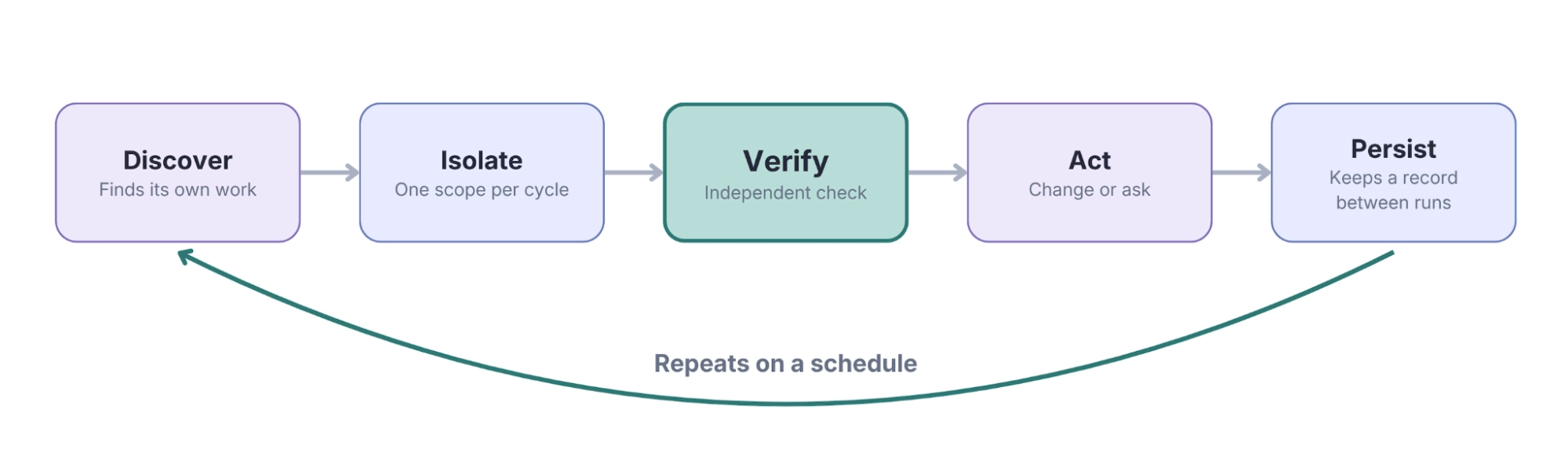
An agentic content system should incorporate a “loop-closer” that continuously monitors content performance metrics. This includes engagement rates, click-through rates, conversion data, and any other relevant indicators of content effectiveness. This performance data is then fed back into the AI writer, enabling it to understand what resonates with the audience and what does not.
This iterative process allows the AI to refine its “operating system,” adapting its output to generate more effective content over time. It’s a form of continuous learning and optimization, where past successes and failures inform future content creation. The ease with which these agents can be built, utilizing readily available tools for data collection, analysis, and integration, makes this a practical and powerful strategy.

The implications of this recursive loop are significant for long-term content strategy. It moves beyond a one-off content creation model to a dynamic, adaptive system that evolves with the audience and the market. This ensures that content remains relevant, engaging, and aligned with business objectives, even as market conditions shift. The ability to automate this feedback loop dramatically increases the efficiency and effectiveness of content marketing efforts.
Conclusion: Navigating the Future of Content Creation
The discourse surrounding AI in content development often veers into apprehension, with many viewing it as a threat to human creativity and expertise. However, the insights from seasoned B2B marketers suggest a more nuanced perspective. AI is not an inherently negative force; rather, it is a powerful tool whose impact is dictated by the strategy and execution behind its use. Just as there exists good and bad human content, so too will there be good and bad AI content.
While the potential for content commoditization and a decline in overall quality is a valid concern, this is not a new phenomenon exacerbated by AI; it is an acceleration of existing trends. The key takeaway is that the same principles that underpin successful human-led marketing efforts – clear positioning, deep audience understanding, authentic voice, and data-informed strategies – are also essential for harnessing the power of AI.
The future of content creation will undoubtedly involve a hybrid approach, where human strategic direction and creativity are augmented by the efficiency and analytical capabilities of AI. Ignoring this technological evolution is not a viable option for businesses seeking to remain competitive. Instead, a proactive and strategic embrace of AI, grounded in sound marketing fundamentals, is the path forward. Exploring various content formats, including the potentially transformative area of video content automation, will be crucial for staying ahead. For businesses looking to refine their foundational marketing strategies or explore the intelligent application of AI in their content development, engagement with experts in the field remains a vital step.


 Asep Darmawan