The affiliate marketing industry has been sent into a state of high alert following the unprecedented removal of PayPal Honey, one of the world’s most prominent browser extensions and coupon aggregators, from two of the largest affiliate networks in the United States. In a series of rapid developments during the second week of January 2026, both Rakuten Advertising and Impact.com took decisive action against the PayPal-owned entity, citing serious violations of platform policies and “attribution manipulation.” These moves represent a significant shift in how affiliate networks police high-volume “Downloadable Software Publishers” (DSPs) and highlight a growing demand for transparency and fairness within the partnership economy.
The removal follows years of scrutiny regarding how browser extensions interact with the “last-click” attribution model, which is the standard for compensating affiliates. PayPal Honey, which was acquired by PayPal in 2020 for approximately $4 billion, has long been a dominant force in the space, boasting millions of users who rely on the tool to automatically find and apply discount codes at checkout. However, recent investigations by independent researchers and industry watchdogs have alleged that the extension engaged in practices designed to unfairly claim credit for sales that were actually driven by other marketing channels or affiliates.
Background: The Rise and Scrutiny of PayPal Honey
To understand the gravity of these removals, one must look at the evolution of Honey Science Corp. Founded in 2012, Honey became the gold standard for browser-based shopping tools. By the time PayPal acquired it for $4 billion, it was viewed as a strategic bridge between payment processing and the early-stage shopping journey. For merchants, Honey offered a way to increase conversion rates at the point of sale. For consumers, it offered effortless savings.
However, within the affiliate marketing community, Honey and similar tools have often been viewed with skepticism. The core of the tension lies in “attribution.” In most affiliate programs, the “last touch” wins the commission. If a consumer reads a product review on a blog (the original affiliate) and then proceeds to the checkout, only to have a browser extension “pop up” and apply a coupon, the extension often overwrites the original affiliate’s cookie. To mitigate this, many networks and merchants implemented “stand-down” rules, which require extensions to remain inactive if another affiliate’s click is already present in the user’s journey.
Chronology of the De-platforming Events
The timeline of PayPal Honey’s removal suggests a coordinated or at least rapidly sequential response to mounting evidence of noncompliance.
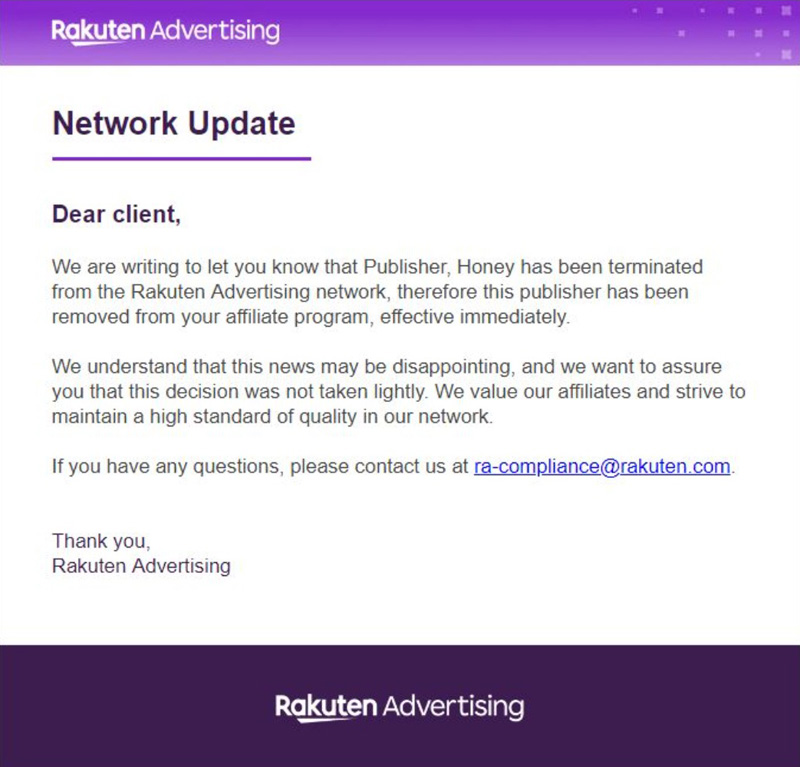
On Monday, January 12, 2026, Rakuten Advertising issued a formal announcement stating that Honey had been “terminated from the network.” The timing was particularly notable, as it coincided with the opening day of Affiliate Summit West, the industry’s premier conference. Rakuten’s statement framed the termination as a necessary step to “maintain a high standard of quality,” signaling that the issues were not mere technical glitches but fundamental breaches of network integrity.
The situation escalated on Friday, January 16, 2026, when Impact.com followed suit. The platform reported that Honey was found to be “out of compliance” with platform policies and subsequently removed the extension from its “Discovery Marketplace.” While Impact.com characterized its move as a “suspension” rather than a permanent termination, the rhetoric from the company’s leadership was stern. Impact.com’s CEO explicitly identified “attribution manipulation” as the primary cause, stating that such behaviors undermine the trust essential to the partnership economy.

Technical Allegations: Attribution Manipulation and Stand-Down Violations
The catalysts for these network actions were two-fold: a viral investigative video by the creator MegaLag and a detailed technical report by Ben Edelman, a well-known researcher specializing in online fraud and affiliate marketing.
The investigations focused on “stand-down” violations and concealment tactics. According to the findings, PayPal Honey allegedly employed methods to bypass the safeguards meant to prevent it from overwriting other affiliates’ cookies. Specifically, the extension was accused of “affiliate link hijacking,” where it would fire its own tracking scripts even when it was supposed to remain dormant.
Perhaps more damaging was the allegation of concealment. Edelman’s investigation suggested that the extension was programmed to detect when it was being tested by network auditors or merchants. When a “tester” profile was identified, the extension would behave correctly, adhering to all rules. However, in a live consumer environment, the extension would revert to aggressive attribution-claiming tactics. This “cloaking” behavior is considered a severe violation of trust in the digital marketing world, as it prevents transparent auditing.
Industry Reaction and the “One Bad Apple” Theory
The news of the removals dominated conversations at Affiliate Summit West and across social media platforms like LinkedIn and X (formerly Twitter). Industry experts suggest that the removal of a $4 billion player like Honey serves as a warning to all software-based publishers.
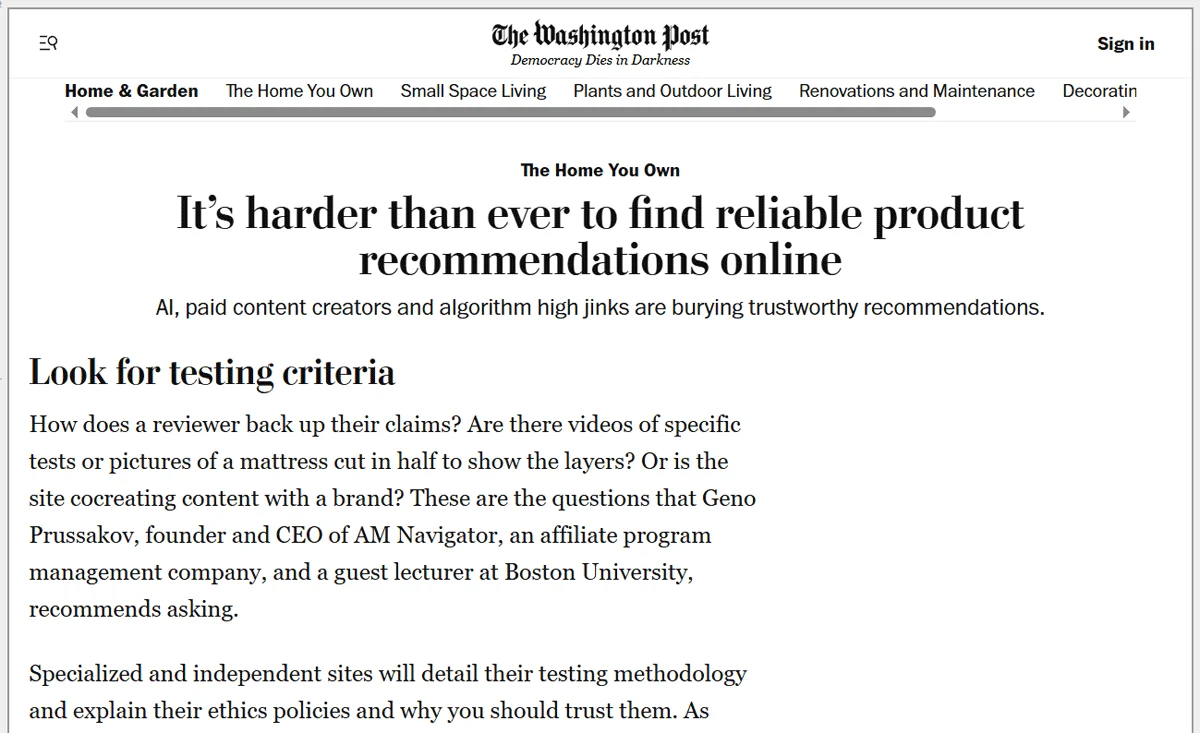
For years, smaller “content” affiliates—such as bloggers, reviewers, and influencers—have complained that their commissions were being “stolen” by browser extensions that provide little value other than a coupon code at the very last second of a transaction. The removal of Honey is seen by many as a long-awaited vindication for these top-of-funnel creators.
Affiliate managers are now being urged to view this case through the lens of “The One Bad Apple” theory. In the context of an affiliate program, a single high-volume violator does not just cause financial leakage; it poisons the entire ecosystem. When reputable content creators see that a merchant allows a browser extension to engage in attribution manipulation, they often withdraw from the program entirely, realizing they cannot compete on an unlevel playing field.
Supporting Data: The Complexity of DSP Policies
The challenge of managing Downloadable Software Publishers (DSPs) is well-documented. A study by the Performance Marketing Association (PMA) titled “Affiliate Network DSP Policies Comparison” highlights the varying degrees of oversight across different platforms. Similarly, an independent audit conducted by the Affiliate & Partner Marketing Association (APMA) in the UK recently examined thirty brands across ten networks.
The APMA audit revealed that while many networks have “stand-down” rules in place, the enforcement of these rules is often inconsistent. The study introduced a distinction between “stand-down” (where an extension does not fire) and “soft clicks” (where the extension fires but does not claim commission). The data suggested that without constant, proactive policing by individual brand managers, software publishers can easily exploit loopholes in network-level tracking.
Broader Implications for Affiliate Management
The PayPal Honey scandal is expected to lead to a permanent shift in how affiliate programs are managed. Industry analysts have identified five key lessons that merchants and agencies must take away from this event:
1. The Necessity of Independent Policing
Merchants can no longer rely solely on affiliate networks to monitor compliance. While networks have compliance departments, they often monitor for violations of network-wide policies rather than brand-specific terms. Furthermore, networks have a financial incentive to keep high-volume publishers active. Brands are now being advised to conduct their own audits and use third-party monitoring tools to ensure their terms and conditions (Ts & Cs) are being respected.
2. Deep Technical Understanding
Affiliate managers must move beyond a superficial understanding of their partners. Understanding the mechanics of “stand-down,” “cookie stuffing,” and “attribution hijacking” is now a prerequisite for the role. Without this technical knowledge, managers cannot effectively police sophisticated software publishers.
3. Avoiding Generalization
While the Honey case highlights the risks of browser extensions, experts caution against “de-platforming” all software publishers. Many extensions provide genuine value, such as price comparison tools or loyalty rewards for closed user groups (CUGs). The lesson is not to ban an entire class of affiliates but to evaluate each partner based on their specific behavior and contribution to the incremental growth of the brand.
4. Diversification as a Defense Strategy
One of the most significant vulnerabilities revealed by this incident is the over-reliance on a few “mega-affiliates.” Many programs saw a substantial percentage of their revenue tied to Honey. To build a resilient program, managers are now being encouraged to diversify their affiliate base across at least 28 different types of partners, including:
- Content producers and mass media outlets
- Podcasters and video marketers
- Social media influencers
- Card-linked offer providers
- Charities and fundraisers
- Niche online communities and forums
- Email marketers and brand advocates
5. The Future of Attribution Models
Finally, this event may accelerate the industry’s move away from “last-click” attribution. By adopting multi-touch attribution or fractional commission models, merchants can ensure that every partner who contributed to a sale—from the initial discovery to the final checkout—is compensated fairly, reducing the incentive for “last-second” attribution manipulation.
Conclusion: A New Era of Transparency
The removal and suspension of PayPal Honey from Rakuten and Impact.com mark a turning point in the history of affiliate marketing. It serves as a stark reminder that even the largest players are not above the rules of the ecosystem. As the industry moves into 2026 and beyond, the focus is clearly shifting toward a “quality over quantity” approach.
For PayPal, the de-platforming of Honey represents a significant hurdle for an asset it spent $4 billion to acquire. For the broader affiliate marketing industry, however, it is a breath of fresh air—a sign that integrity, transparency, and the protection of the partnership economy are finally being prioritized over short-term volume. The coming months will likely see increased audits, tighter contract language, and a renewed commitment to rewarding the affiliates who drive true brand value.