

The landscape of digital commerce and information retrieval has undergone a fundamental transformation, moving far beyond the era when website analysis was defined solely by tracking traffic volume and keyword rankings. By 2026, the criteria for a successful digital presence have shifted toward a multi-dimensional model that accounts for the rise of Large Language Models (LLMs), generative search, and increasingly sophisticated user expectations. Today’s buyers no longer follow a linear path; they discover brands through Google AI Overviews, compare competitors within ChatGPT interfaces, and seek validation from AI-driven recommendation engines like Perplexity before ever setting foot on a corporate homepage. Consequently, modern website analysis must evolve into a comprehensive health checkup that measures five critical dimensions: discoverability, machine readability, credibility, user behavior, and conversion friction.
The Evolution of Search and the AI Visibility Paradigm
The historical context of website analysis is rooted in the early 2010s, where Search Engine Optimization (SEO) was primarily a game of technical indexing and backlink accumulation. However, the introduction of generative AI has disrupted this chronology. According to projections from Gartner, traditional search engine volume is expected to drop by approximately 25% by 2026 as users increasingly pivot toward AI chatbots and virtual agents for immediate answers. This shift is corroborated by data from the Pew Research Center, which indicates a significant change in user behavior: when an AI summary appears in search results, the likelihood of a user clicking on a traditional web link drops from 15% to just 8%.
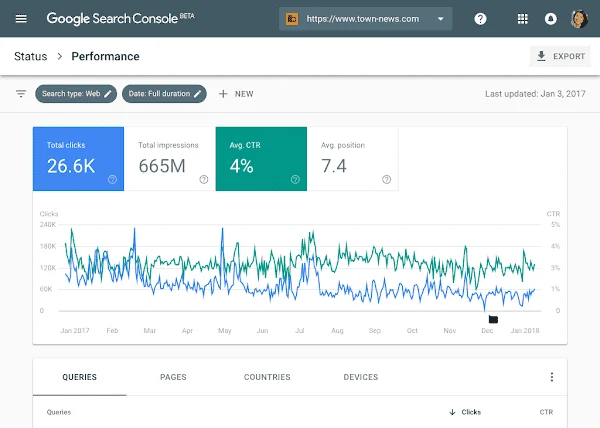
In this new environment, website analysis must answer two fundamental questions: “How visible is the brand in traditional search?” and “How is the brand being represented in AI-generated responses?” Analyzing visibility now requires a dual-track approach. While Google Search Console remains the gold standard for monitoring traditional clicks, impressions, and indexing issues, digital marketers must now perform manual and automated audits of AI interfaces. This involves querying tools like ChatGPT, Gemini, and Copilot with specific buyer intent questions—such as “What are the best conversion rate optimization tools for mid-market e-commerce?”—to determine if the brand is being cited as a credible authority or ignored by the algorithm.
Technical Health and Machine Readability
The second pillar of modern analysis focuses on the technical infrastructure that supports both human users and AI crawlers. In 2026, technical health is no longer just about fast loading speeds; it is about “machine readability.” If an AI agent cannot easily parse the structured data and semantic hierarchy of a website, the brand risks being omitted from generative summaries.
A thorough technical audit involves examining the Indexing Report within Google Search Console to identify “Crawled – currently not indexed” or “Discovered – currently not indexed” statuses. These often signal deeper issues with content quality or internal linking structures. Furthermore, the use of URL Inspection tools is critical for ensuring that high-priority pages are accessible to the bots that feed LLMs. Beyond indexing, Core Web Vitals—including Largest Contentful Paint (LCP) and Cumulative Layout Shift (CLS)—remain essential benchmarks, as they directly correlate with user retention and search engine preference.
User Behavior and the Science of Conversion Rate Optimization (CRO)
Once visibility is established, the focus of analysis shifts to what happens after a user arrives on the site. Conversion Rate Optimization (CRO) has evolved into a 360-degree discipline that combines quantitative data with qualitative insights. To understand traffic effectively, analysts must distinguish between raw numbers and behavioral patterns.
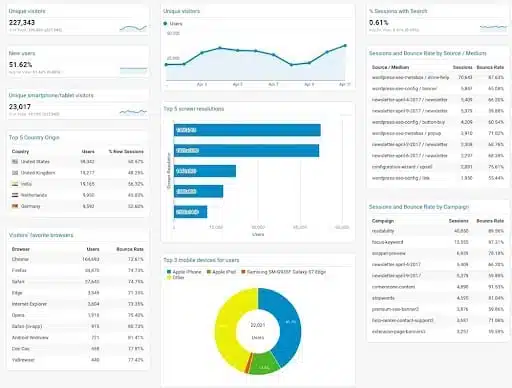
Quantitative data provides the “what”—numerical values such as session duration, bounce rates, and exit pages. Tools like Google Analytics 4 (GA4) and Similarweb are industry standards for this metric-driven approach. However, the “why” behind user actions requires qualitative analysis. This is where behavioral tools such as FigPii become indispensable. By utilizing heatmaps, scroll maps, and session recordings, businesses can visualize the user journey. For instance, a scroll map might reveal that 70% of visitors drop off before reaching a critical call-to-action (CTA), suggesting a need for better content distribution or more engaging messaging.
Messaging analysis is a crucial sub-component of CRO. In an age of information overload, a website’s copy must resonate instantly with the target audience’s intent. Analysts must ensure that the “scent” of the user’s journey—from the initial ad or search result to the landing page—remains consistent. Friction points, such as overly complex forms or ambiguous value propositions, must be identified and eliminated to facilitate a seamless path to conversion.
Usability Analysis and Jakob Nielsen’s Heuristics
A high-performing website must be more than just visible and persuasive; it must be functional. Usability analysis evaluates the interface to ensure that visitors can complete tasks with minimal cognitive load. This process is typically divided into functionality assessments and expert reviews.
A functionality assessment asks three core questions:
- Are the website’s functions easily discoverable?
- Can visitors use these functions without a steep learning curve?
- Are all interactive elements, such as buttons and links, operational?
To deepen this analysis, many organizations employ “Heuristic Evaluation,” a methodology based on the ten usability principles developed by Jakob Nielsen. These rules provide a framework for identifying design flaws that might frustrate users. Key heuristics include:
- Visibility of System Status: Keeping users informed about what is going on (e.g., progress bars).
- Match Between System and the Real World: Using language and concepts familiar to the user.
- User Control and Freedom: Providing “emergency exits” like an undo button.
- Consistency and Standards: Ensuring that users don’t have to wonder whether different words or actions mean the same thing.
- Error Prevention: Designing the site so that mistakes are difficult to make in the first place.
By systematically reviewing a site against these ten principles, developers can create an intuitive environment that encourages repeat visits.
Content Quality and Trust Signals
In the 2026 digital economy, content is the primary vehicle for establishing authority. Website analysis must involve a rigorous audit of content quality, relevance, and SEO alignment. Content is no longer judged solely by its length or keyword density, but by its “Helpfulness” and “Trustworthiness”—factors that Google’s algorithms increasingly prioritize.

Trust signals, such as clear author biographies, cited sources, customer testimonials, and visible security certifications, are essential for converting skeptical visitors. Analysts should evaluate whether the content addresses the specific pain points of the target demographic and whether it provides unique insights that cannot be easily replicated by AI-generated fluff.
Competitive Intelligence and Market Positioning
The question of whether to include competitive analysis in a website audit is often debated, but in a crowded marketplace, it is a strategic necessity. Understanding a competitor’s strategy provides a benchmark for one’s own performance. Analysts should focus on three specific areas of the competition:
- Organic Traffic and Keyword Gaps: Identifying which terms competitors rank for can reveal underserved market segments.
- Customer Demographics: Tools like Similarweb can provide insights into the global ranking and audience interests of competitors, allowing a brand to refine its own persona targeting.
- PPC and Paid Strategy: By studying a competitor’s ad creatives and landing pages through tools like iSpionage, businesses can gain insights into what messaging is currently resonating in the paid search space.
Implementation: The Roadmap to Effective Analysis
To move from data collection to actionable improvement, organizations must follow a structured analysis roadmap. This begins with defining clear objectives. An analysis without a goal—such as reducing cart abandonment or recovering lost organic rankings—is likely to produce overwhelming amounts of data without a clear path forward.
Once goals are established, the process follows a logical progression:
- Tool Selection: Deploying the right mix of SEO (Ahrefs, Semrush), CRO (FigPii), and Usability (Qualaroo) tools.
- Data Collection: Gathering both quantitative metrics and qualitative behavioral insights.
- Gap Identification: Identifying “loopholes” where the current site fails to meet user or machine expectations.
- Iterative Optimization: Making data-driven changes and monitoring the impact on performance.
Broader Impact and Industry Implications
The shift toward comprehensive website analysis reflects a broader trend in the global economy: the move toward “Experience Excellence.” As AI continues to commoditize basic information, the value of a brand’s digital presence lies in its ability to provide a trustworthy, frictionless, and highly relevant user experience.
Industry analysts suggest that companies failing to adapt their analysis techniques to include AI visibility and behavioral science will see a steady decline in market share. Conversely, those who treat website analysis as a continuous, holistic habit rather than a one-time project will be better positioned to navigate the complexities of the 2026 search landscape. Ultimately, the goal of modern website analysis is to ensure that when a human—or an AI—looks for a solution, your brand is not only found but is recognized as the superior choice.







