

The landscape of Search Engine Optimization (SEO) for small businesses is undergoing a seismic shift, moving away from the era of keyword stuffing and into a new paradigm driven by artificial intelligence. For years, the primary strategy involved guessing the specific phrases customers typed into search engines. Now, success hinges on understanding how individuals converse with advanced AI models, a fundamental change that demands a complete rethinking of content strategy and keyword research.
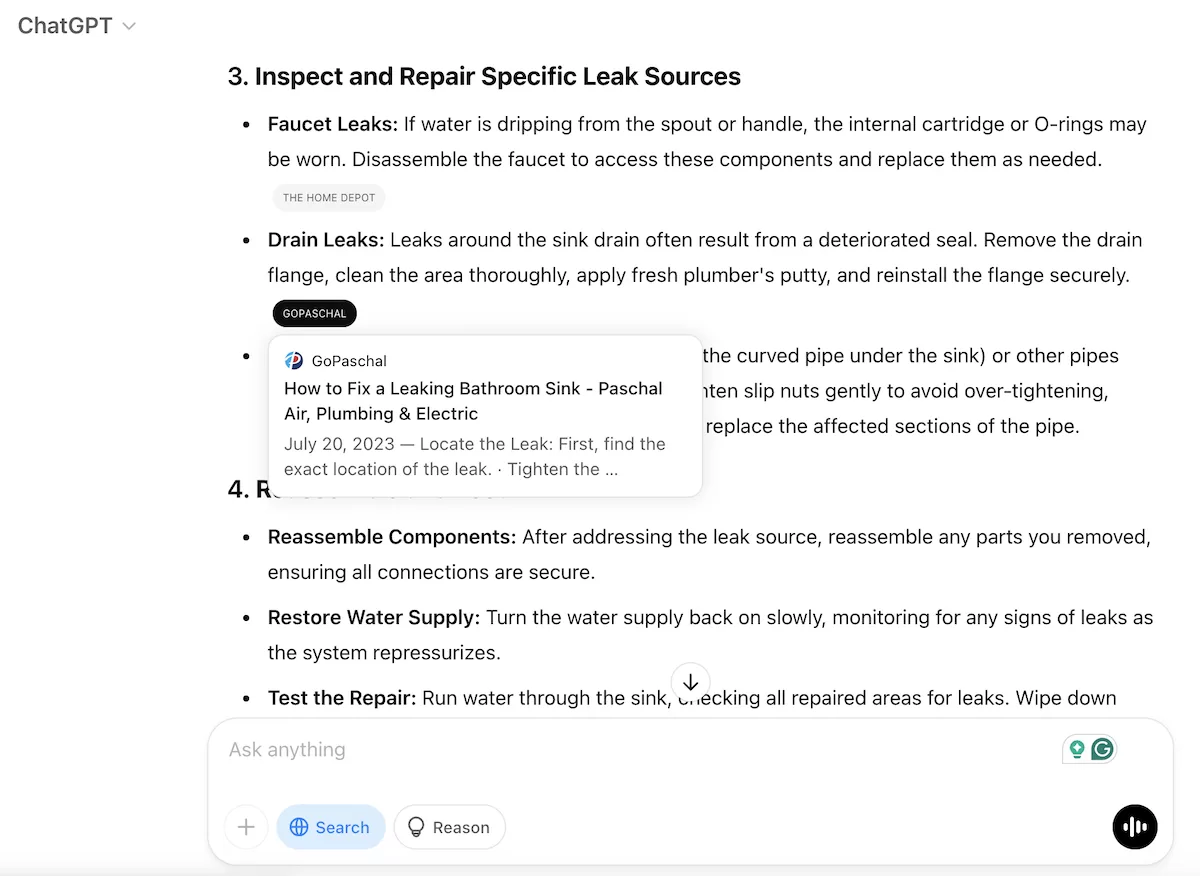
Customers are no longer submitting terse, keyword-laden queries. Instead, they are posing complex, conversational questions that reflect genuine needs and problems. For instance, a homeowner facing a plumbing emergency might not search for “plumber near me.” Instead, they are likely to ask, “Who can fix a leaking water heater this week without charging an emergency fee?” Similarly, a small business owner seeking marketing advice might move beyond “email marketing tips” to inquire, “How can I get more people to open my weekend specials without spamming them?” These prompts are characterized by their specificity, contextual richness, and direct relation to user intent.
AI models such as ChatGPT, Perplexity, and Gemini are designed to interpret these conversational queries as detailed messages, revealing not only what the user is looking for but also their underlying motivations and circumstances. This evolution has ushered in a new discovery model where answers are frequently delivered instantaneously, often bypassing the need for users to click through to individual websites. A comprehensive study by Bain and Dynata highlighted this trend, revealing that a staggering 80% of consumers now rely on “zero-click” search results for at least 40% of their queries. This shift has led to a significant impact on organic traffic, with reports indicating a potential reduction of up to 25% across various industries. The implication for businesses is clear: static, keyword-focused SEO is rapidly becoming obsolete.
To maintain visibility in this evolving digital ecosystem, marketers must now meticulously study “prompts”—the natural language that customers employ when interacting with AI—and strategically craft content that integrates seamlessly into these ongoing conversations. The goal is no longer to passively await clicks that may never materialize but to actively participate in the dialogue that AI-driven search facilitates. This article will delve into how small businesses can adapt their keyword research strategies for the AI era and optimize their content to resonate with prompt-based search queries.

Why Traditional Keyword Research is Facing an Uphill Battle
While traditional keyword research still holds value for certain marketing activities, its effectiveness in the age of AI-driven search is increasingly challenged. Several key factors contribute to this breakdown:
- Focus on Search Volume vs. Intent: Traditional tools primarily identify what people searched for based on volume. However, they often fail to capture the nuanced intent behind those searches. AI, on the other hand, excels at deciphering this intent.
- Lack of Contextual Understanding: Keywords are often isolated terms or short phrases. Prompts, by contrast, are embedded with context, revealing the user’s specific problem, goal, or situation. AI models leverage this context to provide more relevant and comprehensive answers.
- The Rise of Conversational AI: As AI chatbots become more sophisticated and widely adopted, users naturally gravitate towards more natural, human-like communication. This shift in user behavior directly impacts the type of queries being generated.
- Zero-Click Search Dominance: The increasing prevalence of AI-generated answers that directly address user queries means fewer users are clicking through to websites. This diminishes the impact of traditional SEO tactics that rely heavily on driving traffic through search engine result pages (SERPs).
Nikiya Griffith, Director of Growth at BX Studio, succinctly captures this paradigm shift: “Keyword tools tell you what people searched. Prompts tell you what they meant. That difference decides who gets seen in AI search results.” This distinction underscores the critical need for a strategic pivot.
The Mechanics of Prompt-Based Keyword Research
Prompt-based keyword research differs significantly from its traditional predecessor by emphasizing context and user intent. Prompts, when analyzed, reveal crucial information about the user, including:
- Their specific needs or problems: What are they trying to solve?
- Their goals and aspirations: What are they trying to achieve?
- The language and terminology they use: How do they articulate their needs?
- Their level of expertise or knowledge: Are they a beginner or an expert?
- The specific context of their query: What are the surrounding circumstances?
Consider the generic phrase “local marketing ideas.” In the context of AI-driven search, this might be unraveled into far more specific and actionable prompts such as:
- “How can a small bakery in a busy downtown area attract more foot traffic on weekdays?”
- “What are the most cost-effective digital marketing strategies for a new fitness studio targeting young professionals?”
- “I need creative ways to promote my handyman services locally without a large advertising budget.”
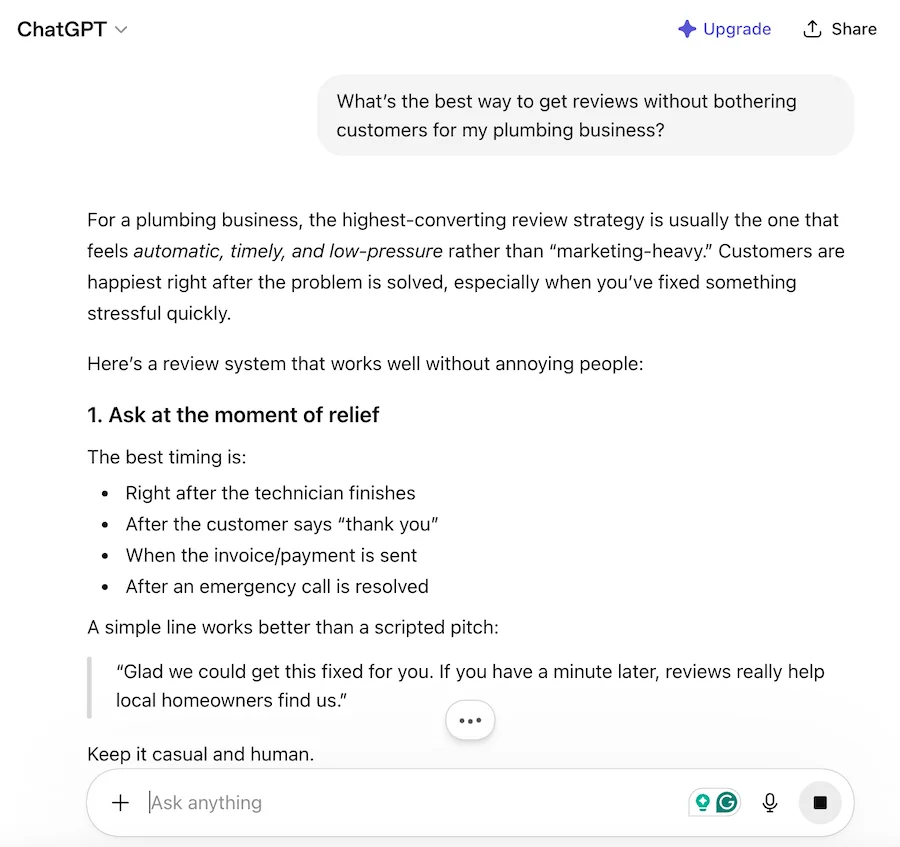
These examples expose the audience’s real challenges, aspirations, and preferred vernacular. A plumber, for instance, might be prompted to ask, “What’s the best way to get reviews without bothering customers?” A fitness studio owner might be concerned with, “How do I keep class bookings full during summer slow months?” These prompts offer a direct window into the audience’s pain points and desired outcomes, providing a significant content advantage that traditional search volume metrics cannot replicate.
Charting the Course: Five Strategies for Prompt-Based SEO Success
To thrive in the age of AI-driven search, businesses must adopt new methodologies for identifying and leveraging prompts. Here are five proven strategies to optimize content for prompt-based search and increase the likelihood of appearing in AI-generated answers:
1. Observe Real Prompts in AI Interfaces
The most direct method for understanding prompt-based language is to engage directly with AI interfaces. Treat these platforms as ethnographic research tools, observing how users interact with them.
- Engage with AI Chatbots: Input your core “seed topics” into AI models like ChatGPT, Perplexity, or Gemini. Pay close attention to the prompts that emerge in response, particularly follow-up questions and refinements.
- Identify Common Phrasing: Look for recurring patterns in how users frame their inquiries. Phrases such as “best way to,” “how can I,” or “should I” often indicate genuine user problems and a desire for solutions.
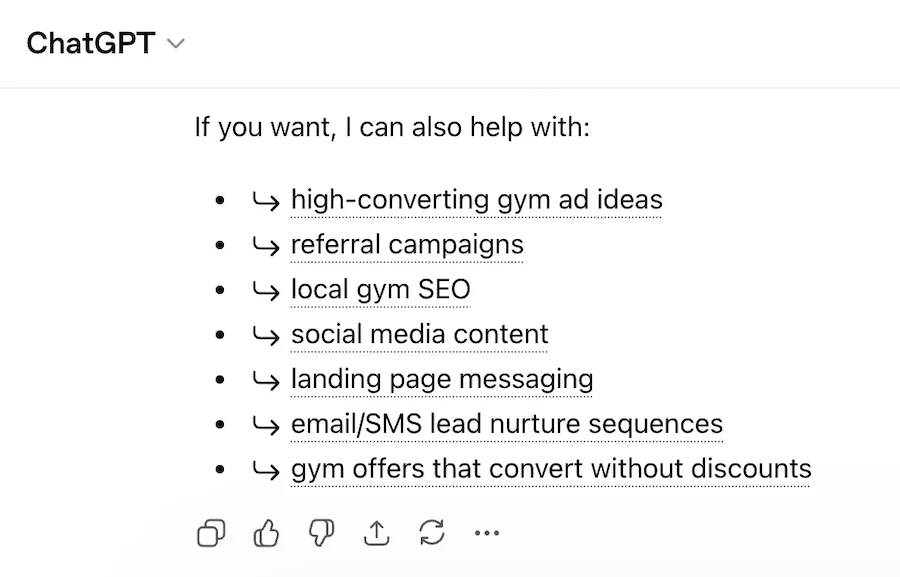
- Analyze Real-World Examples: A local gym owner might type, “How can I get more members without running discounts?” This prompt reveals not only an interest in marketing tactics but also a crucial underlying concern about profit margins. Identifying such nuanced needs allows for the creation of content that addresses the complete user intent.
By collecting a dataset of at least 20 to 30 authentic prompts related to your business or industry, you build a foundational understanding of your audience’s mindset that transcends the limitations of conventional keyword tools.
2. Visualize Conversation Flows
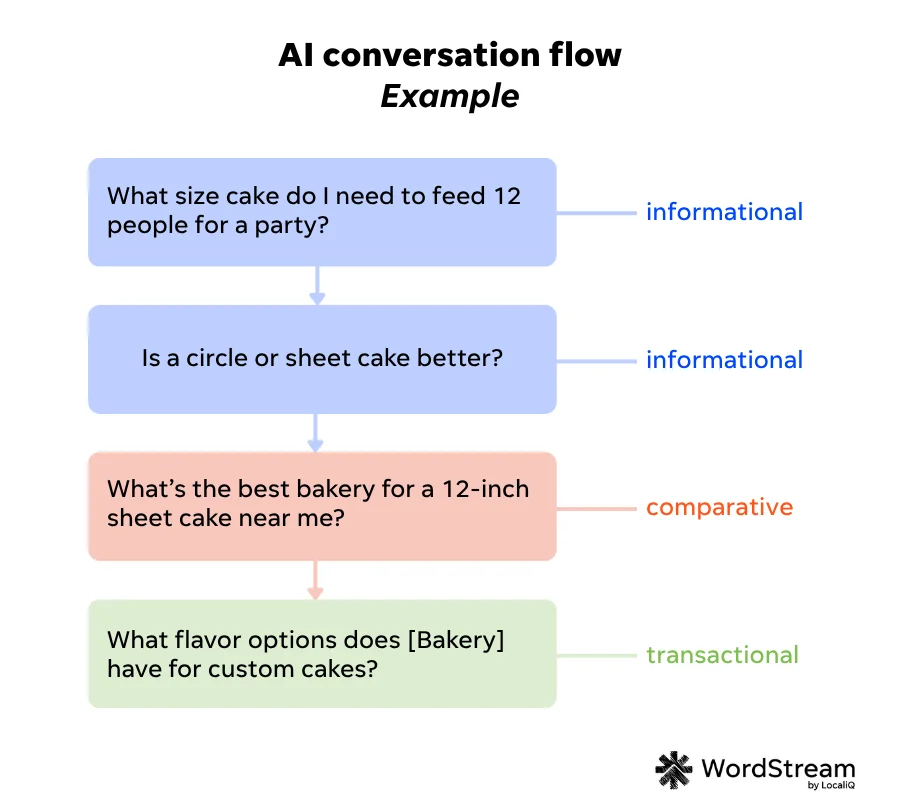
User interactions with AI are rarely linear. People often ask follow-up questions, refine their initial queries, and explore related topics, mirroring a natural conversation. Mapping these evolving question sequences is crucial for understanding the user’s journey from initial curiosity to a potential decision.
- Map the User Journey: Utilize mind-mapping tools or even simple pen and paper to diagram how a single query can branch into multiple related questions. Start with an initial prompt, such as “How can I promote my bakery locally?” and then explore potential follow-ups.
- Categorize by Intent: Label each question within the flow by its intent: informational (seeking knowledge), comparative (evaluating options), or transactional (ready to take action).
- Align Content with the Flow: Understanding this conversational flow allows you to create content that mirrors the user’s journey. When your content guides a user from awareness to consideration and ultimately to action, AI tools are more likely to recognize it as a comprehensive and valuable resource.
3. Extract Entities and Themes
Generative AI doesn’t operate on keywords in the traditional sense. Instead, it understands meaning through “entities”—people, brands, products, and abstract concepts that are interconnected within a specific context. By identifying the entities your audience frequently associates, you can structure your content in a way that AI models readily comprehend.
- Identify Recurring Entities: Review your collected prompts and highlight any repeated tools, platforms, or concepts.
- Cluster Related Concepts: Group these mentions into thematic clusters based on shared goals or industry verticals. For example, a cluster for a local bakery might include “Canva,” “Instagram Reels,” “local foot traffic,” and “customer loyalty programs.”
- Connect Entities in Content: Create content that explicitly links these identified entities. For instance, a topic like “How Local Shops Can Use Canva Templates to Create Instagram Reels That Drive Foot Traffic” directly addresses how users think and speak. This alignment makes your content more recognizable to AI systems trained to surface material that reflects these relationships. When your content consistently connects relevant entities, AI begins to associate your brand with those conversations, positioning you as a trusted authority.
4. Cross-Validate with Search Data
While prompt analysis reveals how people converse with AI, it’s essential to confirm that there is genuine search demand for these topics. This is where traditional SEO validation plays a critical role.
- Utilize SEO Tools: Input your top prompts or variations into tools like Google Search Console, Ahrefs, or Semrush.
- Analyze Key Metrics: Examine metrics such as search volume, keyword difficulty, and the presence of “People Also Ask” (PAA) boxes or featured snippets.
- Filter for Visibility: This process helps you identify prompts that, while conversational, may lack sufficient search interest to warrant dedicated content creation. For example, a highly specific prompt like “How do I get more walk-ins to my coffee shop on weekdays?” might have low impression data. In such cases, you might simplify it to a more broadly relevant prompt like “How to get more customers to a local café,” while retaining the natural tone.
This hybrid approach—combining prompt insights with SEO validation—ensures that your content is both relevant to conversational AI and discoverable through traditional search channels.
5. Leverage AI-Powered Keyword Research Tools
A growing ecosystem of tools is emerging to assist marketers in this transition. These platforms are designed to bridge the gap between human language and AI understanding.
- Perplexity AI: Excellent for observing live prompt trends and identifying common phrasing and topic clusters as users interact with the AI.
- ChatGPT with Browsing Capabilities: Allows for testing AI query reformulation and understanding how variations in question structure affect AI responses.
- AnswerThePublic and Keyword Insights: Useful for analyzing long-form phrasing and understanding the frequency of natural language questions users are asking.
- Google Search Console: Remains indispensable for validating impressions and understanding the visibility of long-tail and conversational queries in traditional search.
- Looker Studio and MindNode: Valuable for visualizing relationships between prompts and for comparing prompt clusters against legacy keyword groups.
These tools empower marketers to both uncover the language of their audience and ground their strategies in measurable search demand, creating a powerful synergy for content optimization.
Transforming Prompts into Content Wins
Once prompts have been identified and analyzed, the next step is to translate these insights into compelling content that resonates with both human readers and AI algorithms.
1. Form “Prompt Clusters”
Group related prompts that share common goals or address similar pain points. This approach allows for the creation of comprehensive “answer hubs” that cover a topic from multiple angles, mirroring the way users explore a subject with AI.
- Example Goal: Attract More Local Customers
- Prompts might include: “How can I increase foot traffic to my retail store on weekends?” “What are the best local SEO strategies for a new restaurant?” “Creative ways to promote a service-based business in a small town.”
- Structure for Depth: Each prompt can form the basis of a specific section or even an entire article. By organizing content this way, you demonstrate to search engines that your site provides a thorough and authoritative answer to a given user need.
2. Write Conversationally
The most effective AI-optimized content reads as if it were written for humans, not algorithms. This involves adopting a natural, engaging tone and providing clear, contextualized answers.
- Establish Context: Begin sections by setting the scene, such as, “If you manage a small business newsletter…”
- Directly Answer the Core Question: Provide a clear and concise answer to the prompt’s central inquiry before expanding with details.
- Encourage Further Engagement: Conclude sections with a “Next question” prompt, such as, “What’s the best day to send your weekly newsletter?” This signals related intent and encourages continued exploration, a behavior that AI models recognize and value.
3. Structure for AI Extraction
Even the most valuable content can be overlooked if it’s not formatted for easy parsing by both AI systems and human readers. Clarity and structure are paramount.
- Use Headings and Subheadings: Break down content into logical sections with clear headings (H2, H3, etc.) that correspond to specific prompts or sub-topics.
- Employ Bullet Points and Numbered Lists: Present information concisely and make it easily scannable.
- Incorporate Tables and Visuals: Use these elements to organize data and illustrate concepts, making the content more digestible and engaging.
This structured approach enhances readability for users and ensures that AI systems can efficiently extract key information, leading to better placement in AI-generated answers.
Measuring Success in Prompt-Driven Content
The advent of prompt-based SEO necessitates a recalibration of how success is measured. The focus shifts from purely click-based metrics to a more holistic evaluation of engagement and visibility within AI-driven search ecosystems.

- AI Referral Traffic: Monitor traffic originating from AI platforms, such as direct referrals from ChatGPT or Perplexity. While still nascent, this data provides early indicators of AI’s impact.
- Mentions and Citations: Track how often your content is referenced or cited in AI-generated answers. This is a direct measure of your content’s perceived authority and relevance.
- Engagement Metrics: Look beyond bounce rates. Analyze metrics like time on page, scroll depth, and the completion rate of calls-to-action within your content, which indicate genuine user engagement.
- Zero-Click Search Performance: While direct clicks may decrease, your goal is to be the source of information within the zero-click answer. Monitor rankings for key prompts and analyze the visibility of your content in AI overviews.
These signals collectively indicate whether your content is actively participating in the conversational search experience rather than merely existing as a static listing in search results.
The Road Ahead: Conversation as the Foundation of SEO
The lines between search engines and conversational AI are rapidly blurring. Users now expect immediate, personalized responses, often delivered without the need to navigate through multiple web pages. Industry projections suggest that by 2026, a significant majority of companies will leverage generative AI for marketing and research. Those that emerge as leaders will view every user prompt as a critical clue to customer intent.
Prompt-based research is no longer an experimental tactic; it is rapidly becoming the foundational element of modern SEO. Its success is predicated on understanding how people ask questions, how AI interprets those queries, and how businesses can position their content to become an integral part of that evolving dialogue.
As Oskar Duberg, Freelance Content Specialist, observes, “SEO is shifting from search to conversation. It is not about being the loudest or ranking the highest anymore, but about being the most relevant voice in the dialogue. When your content reflects how people actually speak, think, and build on ideas, AI systems start recognizing your brand as a trusted contributor. Visibility will depend on authority within context, not just keywords.”
Marketers who embrace this conversational model will transcend the traditional pursuit of clicks. They will learn to actively participate in the exchanges that are now defining the very essence of digital discovery. The future of SEO is not about optimizing for a machine; it’s about engaging in a conversation with humanity, facilitated by artificial intelligence.









