The e-commerce landscape is undergoing a significant transformation, with mobile communication emerging as a dominant force in customer engagement and sales generation. Amidst this shift, a structured SMS marketing program has become indispensable for online retailers aiming to connect directly and effectively with their audience. This strategic approach, encompassing compliant data collection, targeted campaigns, and automated messaging, is proving to be a powerful driver of revenue, as evidenced by success stories like Divatress, which amassed 70,000 subscribers in eight months, with three months of SMS sales covering a full year of platform costs. The imperative for businesses to adopt a robust SMS strategy is clear, especially as industry data indicates a 40% increase in SMS messages sent by e-commerce brands in 2025 compared to the previous year, underscoring both rising demand and the channel’s growing influence.
The E-commerce Imperative: Why SMS is Dominating Mobile Engagement
In an increasingly mobile-first world, consumers expect instant, personalized communication from the brands they interact with. This expectation has propelled SMS marketing from a supplementary tool to a core component of digital strategy. Unlike email, which can often get lost in crowded inboxes, text messages boast exceptionally high open rates, frequently exceeding 90%, and are typically read within minutes of receipt. This immediacy is critical for e-commerce, where purchase decisions can be fleeting. Brands can leverage SMS for time-sensitive offers, critical updates, and real-time engagement that captures customer attention at pivotal moments in their shopping journey.
However, many online store owners, particularly those operating on platforms like Shopify, WooCommerce, and BigCommerce, find themselves at a crossroads. They are either hesitant to venture into SMS marketing due to fears of non-compliance or are engaging in sporadic, untargeted messaging that lacks a coherent strategy. This ad-hoc approach often leads to subscriber fatigue, high opt-out rates, and diminished ROI. A structured SMS marketing program, by contrast, provides a repeatable and measurable framework for fostering long-term customer relationships and driving consistent sales. It transforms one-off blasts into purposeful interactions, ensuring every text message serves a clear objective, from welcoming new subscribers to recovering abandoned carts or promoting exclusive deals.
Navigating the Regulatory Landscape: Compliance as the Cornerstone
Before a single marketing text is sent, compliance must be the absolute priority. The legal ramifications of non-compliant SMS marketing are severe, with potential penalties ranging from $500 to $1,500 per message. This financial risk underscores the necessity of a meticulous approach to regulatory adherence. In the United States, the Telephone Consumer Protection Act (TCPA), enforced by the Federal Communications Commission (FCC) in conjunction with Federal Trade Commission (FTC) rules, mandates “express written consent” from consumers before they can receive marketing text messages. This means customers must actively and unequivocally agree to receive texts, and businesses are legally obligated to maintain clear records of this consent.
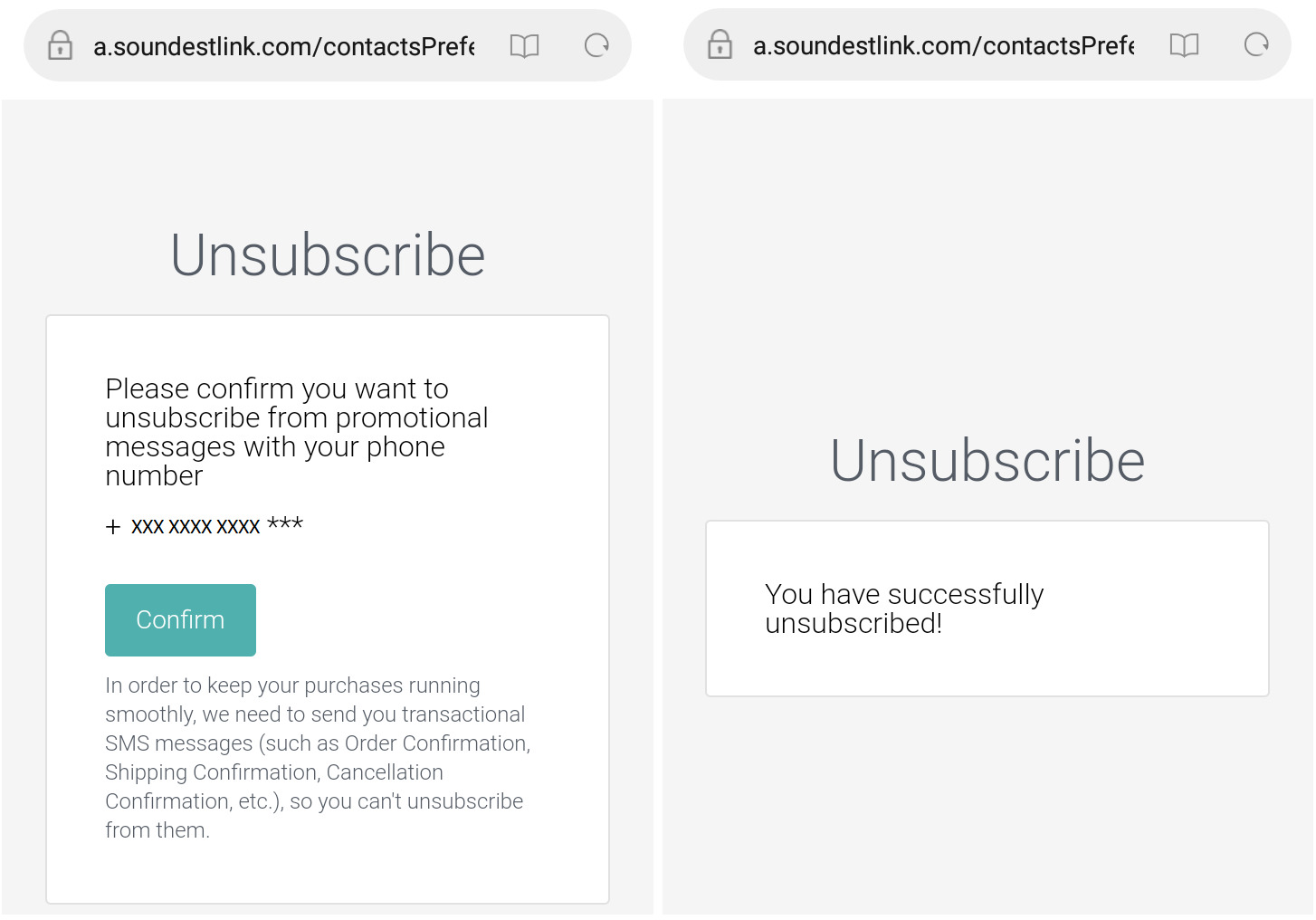
The evolution of these regulations has continually shaped best practices. Historically, consent was often captured through specific checkboxes at checkout or dedicated signup forms. However, the regulatory landscape is dynamic. For instance, a significant update in April 2025 further expanded the scope of opt-out requirements, mandating that businesses respect opt-outs communicated through any reasonable method, not just the traditional “STOP” keyword. This includes variations like “QUIT,” “CANCEL,” or “UNSUBSCRIBE,” as well as clicks on unsubscribe links. This development emphasizes the need for platforms that can automatically manage and process diverse opt-out requests, safeguarding businesses from potential violations.
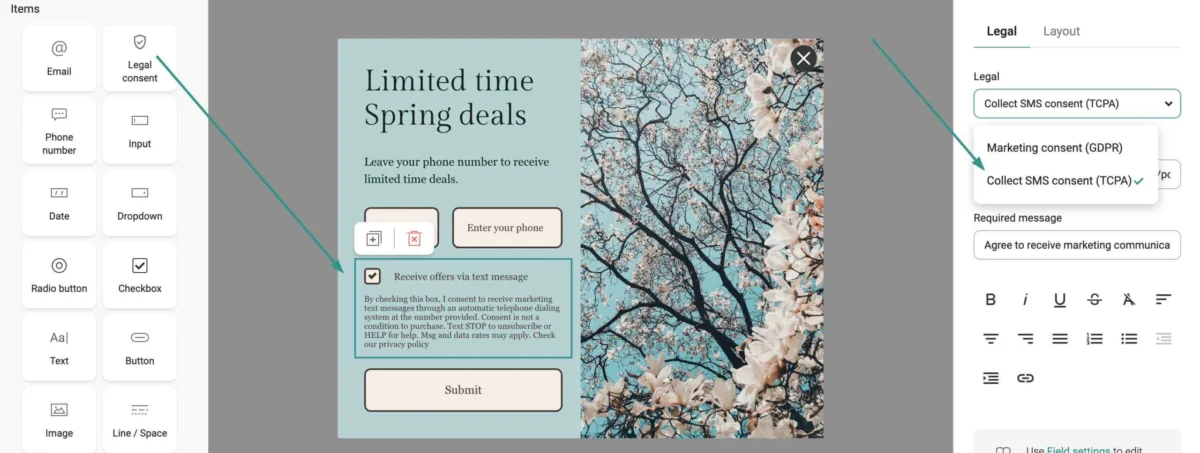
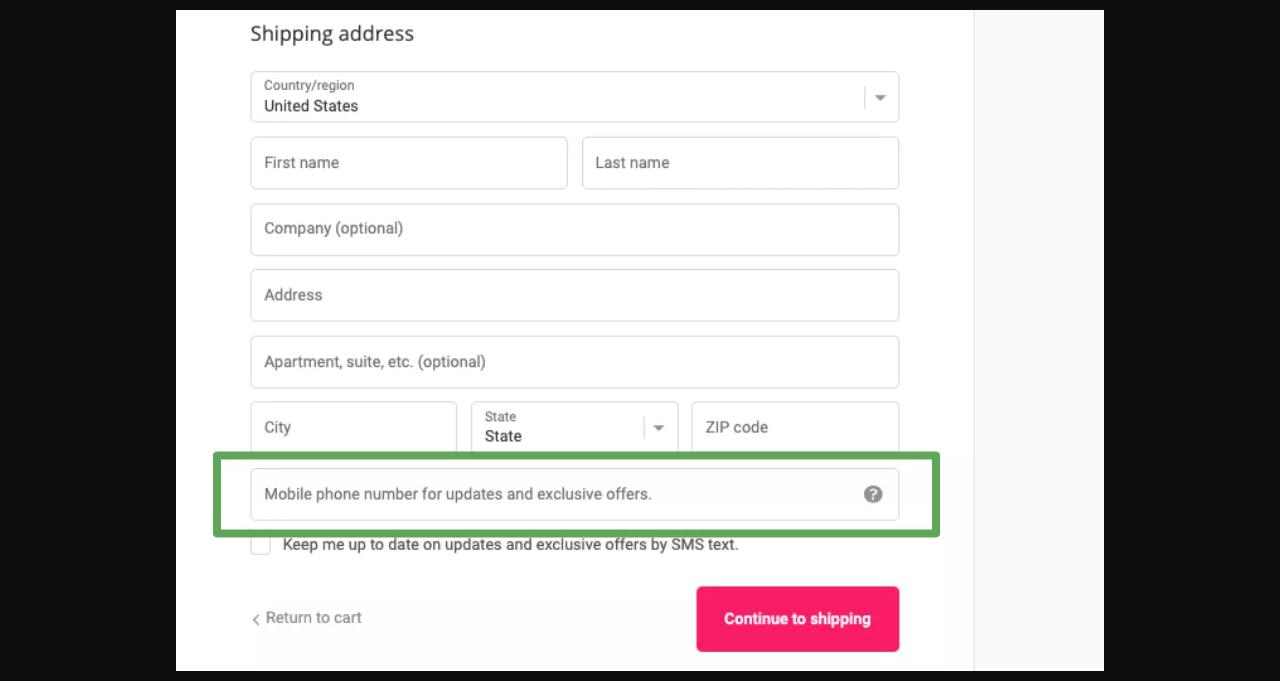
To establish a compliant SMS opt-in on major e-commerce platforms, the process typically involves integrating a phone number field with a clearly worded consent checkbox. This consent language must explicitly include four critical elements: the brand name, an indication of message frequency, clear opt-out instructions, and a link to the company’s privacy policy. A standard compliant checkbox label might read: “By checking this box, you agree to receive marketing texts from [Brand Name] at the number provided. Reply STOP to unsubscribe. Message and data rates may apply. View our Privacy Policy.” Platforms like Omnisend offer pre-built, compliant consent language templates and automatic opt-out handling, simplifying this complex legal requirement for e-commerce businesses and allowing them to send messages with confidence, all while adhering to the stipulated texting hours of 8 AM to 9 PM in the subscriber’s local time zone.
Building a Robust Subscriber Base: The Engine of Growth
A thriving SMS marketing program is fundamentally powered by a robust and engaged subscriber list. The primary goal is to ethically and compliantly collect phone numbers at every relevant customer touchpoint. A larger, high-quality list directly translates to increased revenue potential from every campaign and automation. The strategy focuses on identifying “warm” audiences—individuals already familiar with or interested in the brand—who are more likely to convert into loyal subscribers. Data consistently shows that repeat customers convert at significantly higher rates, approximately 4.5% to 6%, compared to 1% to 2% for new visitors, making existing customers an invaluable asset for list growth.
E-commerce businesses can employ several effective strategies to cultivate their SMS subscriber list:
- Integrating Phone Fields into Signup Forms: The most straightforward method involves adding a phone number field and an SMS consent checkbox to existing email signup forms, such as pop-ups or embedded forms. Shoppers already willing to provide their email address are typically a receptive audience for SMS opt-ins, incurring minimal additional acquisition cost. B-Wear Sportswear, an activewear brand, successfully implemented this by creating a single signup form that captured both email and phone numbers, ensuring compliant consent from the initial interaction.
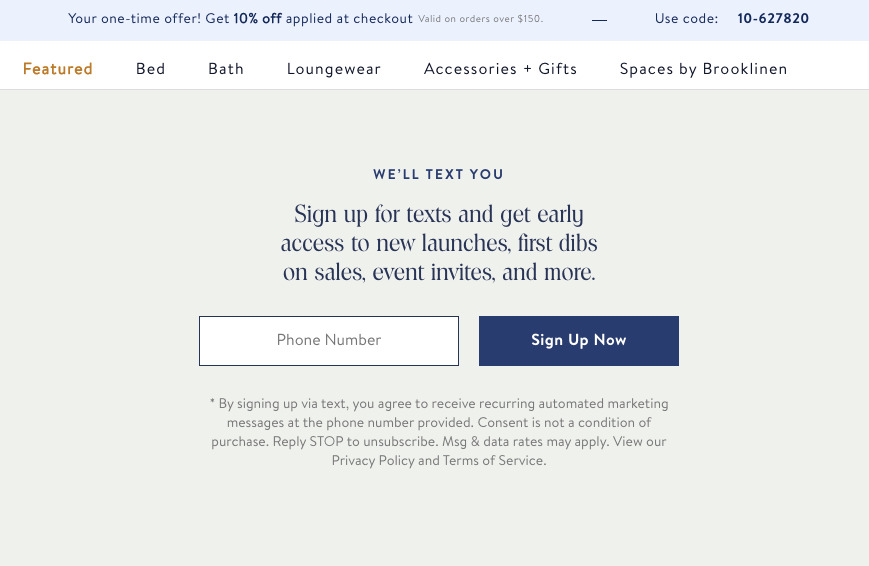
- Inviting Existing Customers: Leveraging the existing customer base is a high-yield strategy. These individuals have already demonstrated trust and interest in the brand. Targeted email campaigns can be used to invite them to join the SMS program, often by offering exclusive benefits like early access to sales or special discounts. Brooklinen, a DTC bedding brand, effectively used this by promoting early access to a major sale via email, directing interested shoppers to a dedicated landing page where they could sign up for SMS updates in exchange for first dibs.
- Collecting Numbers at Online Checkout: The checkout process is arguably the single most opportune moment to acquire SMS subscribers. At this stage, customers are actively providing their personal details and are committed to a purchase. Integrating a compliant SMS opt-in checkbox into the checkout flow allows businesses to convert buyers into subscribers seamlessly, without adding friction. Divatress, a Shopify hair-care brand, significantly grew its subscriber list by enabling a native SMS opt-in field at checkout, capitalizing on the moment of purchase.
- In-Store Signups: For brands with a physical presence, brick-and-mortar locations offer a valuable avenue for list growth. Methods include displaying QR codes at the register or on promotional materials, encouraging customers to text a keyword to a short code, or even offering digital signup forms on tablets. The key is to make the opt-in process easy, clear, and clearly optional, often incentivized by immediate discounts or loyalty program benefits.
Crafting Impactful Campaigns: From Promotion to Transaction
Once a compliant subscriber list is established, the next step is to engage that audience with timely and relevant messages. Effective SMS campaigns hinge on three core decisions: what content to send, how to craft the message, and when to deliver it. E-commerce SMS typically falls into two categories: promotional messages, designed to drive immediate action (e.g., flash sales, discount codes, product launches), and transactional messages, which confirm essential customer interactions (e.g., order confirmations, shipping updates). While promotional texts directly impact revenue, transactional messages are crucial for building trust, enhancing customer experience, and reducing support inquiries.
A critical choice for content delivery is between SMS and MMS. Standard SMS is text-only, limited to 160 characters per segment. MMS, however, supports images, GIFs, and videos, allowing for richer, more visually engaging content. While MMS can significantly boost attention and engagement, it typically incurs higher costs per send. For most campaigns, a concise SMS is sufficient, reserving MMS for instances where visual elements add undeniable value, such as showcasing a new product or illustrating a complex offer.
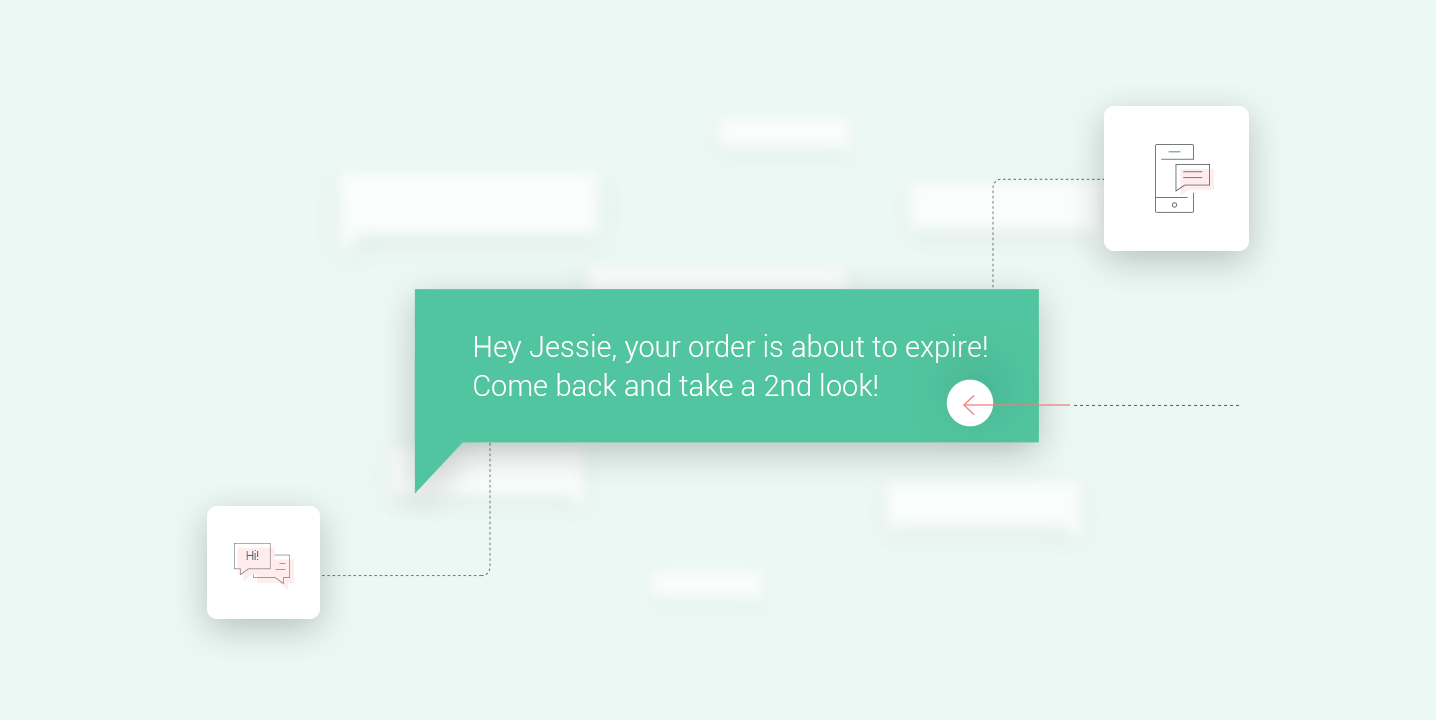
Crafting an effective marketing text requires brevity, clarity, and brand consistency. Every message should begin with the brand name, clearly state one primary offer or piece of information, include a concise link, and provide a reminder of opt-out instructions. Keeping messages under 160 characters ensures they are delivered as a single segment, optimizing cost and readability. Tools with live character counters and built-in link shorteners are invaluable for this. Allison Caufield, Senior Marketing Manager at FiGPiN, a Shopify collectibles brand, attests to the power of this channel, stating, “I started SMS several months ago just to test it out. The ROI on it has just been absolutely insane. So, we’ll continue to do it for our customer base.”
Timing is equally crucial. While general guidelines suggest weekday late mornings and early evenings often yield good results, businesses should analyze their specific audience engagement data to identify optimal send times. Regarding frequency, a starting point of two to four campaigns per month is advisable, with adjustments based on ongoing engagement and opt-out rates. Over-sending can quickly lead to subscriber fatigue and increased unsubscribes, making a data-guided approach essential for maintaining list health.
Measuring Success: Key Metrics and Industry Benchmarks
An SMS marketing strategy is incomplete without rigorous measurement and analysis of campaign performance. Focusing on a select few key metrics provides actionable insights into what resonates with subscribers and what areas require improvement. Tracking results allows for continuous refinement of future campaigns, ensuring sustained performance and a healthy return on investment. Platforms with integrated SMS analytics dashboards are vital, as they consolidate critical data, including revenue attribution, directly linking SMS activities to sales figures. Laura, CEO of Silver Street Jewellers, a Shopify jewelry brand, highlights this immediate impact: “SMS is powerful because you can see a huge traffic jump immediately after you send an SMS campaign.”
Four primary metrics offer a comprehensive overview of an SMS campaign’s health:
- Delivery Rate: This metric indicates the percentage of messages successfully delivered to recipients’ phones. A high delivery rate (e.g., 98%) suggests a clean list and proper technical setup.
- Click-Through Rate (CTR): CTR measures the percentage of recipients who clicked on a link within the message. It’s a key indicator of message relevance and call-to-action effectiveness. E-commerce benchmarks often see CTRs between 15-20%, significantly higher than email.
- Opt-Out Rate: This metric tracks the percentage of subscribers who chose to unsubscribe from the list. A low opt-out rate (ideally below 1%) signifies that messages are perceived as valuable and non-intrusive. A rising opt-out rate signals a need to re-evaluate frequency, content, or targeting.
- Conversion Rate: Perhaps the most crucial metric, the conversion rate measures the percentage of recipients who completed a desired action, such as making a purchase, after clicking through from an SMS campaign. For e-commerce, benchmarks typically fall between 10-15%, demonstrating the direct revenue impact of SMS.
These benchmarks, based on 2026 e-commerce data from over 150,000 brands, provide realistic targets for businesses to evaluate their performance against real-world store data, rather than broad industry estimates. By consistently monitoring these metrics, businesses can gain a clear understanding of campaign efficacy and make informed decisions to optimize their SMS marketing strategy over time.
Automating Engagement: The Power of Timely Interactions
The true power of SMS marketing for e-commerce is unleashed when messages are automated, triggered by specific customer behaviors rather than manual sends. Automated SMS messages are delivered at precisely the right moment in the customer journey, making them an indispensable element of any sophisticated SMS marketing strategy. The financial impact of automation is substantial: according to the Omnisend 2026 E-commerce Marketing Report, automated SMS generated approximately $0.74 per message, a stark contrast to the $0.15 generated by standard, manually sent campaigns.
The most significant advantage for e-commerce brands is the ability to integrate SMS and email within a single, unified automation workflow. This multi-channel approach ensures that customers receive timely communications via their preferred or most effective channel, maximizing engagement. Key automation types include:
- Welcome Series: This is the foundational automation, greeting new subscribers immediately after they opt-in. A short, engaging sequence of texts can introduce the brand, deliver a promised signup offer (e.g., a discount code), and set expectations for future communications, capitalizing on peak customer interest. Triggers include new SMS signups from forms, checkout, or landing pages.
- Browse and Product Abandonment Workflows: These automations target shoppers who viewed products or browsed categories but did not add items to their cart. A timely SMS nudge can remind them of their interest, potentially linking directly back to the viewed product. These “warm non-buyers” represent a high-potential segment for recovery. Triggers include viewing a product or category a certain number of times without adding to cart.
- Cart Abandonment Series: Among the highest-return automations in e-commerce, cart abandonment flows target shoppers who added items to their cart but failed to complete the purchase. A concise SMS sequence can serve as a potent reminder, often including a link back to the cart or a small incentive to complete the transaction, directly recovering lost revenue. Triggers are typically when items are added to a cart but not purchased within a specified timeframe.
- SMS Loyalty Program Automations: Leveraging SMS for loyalty programs enables brands to reward their best customers through an immediate and personal channel. Text messages are ideal for time-sensitive rewards, milestone celebrations (e.g., birthday discounts), and exclusive offers, often outperforming emails in terms of visibility and actionability. Integration with loyalty platforms like Smile.io and LoyaltyLion allows for seamless triggering of SMS based on points activity, reward redemptions, and tier changes.
Strategic Implications for E-commerce Businesses
The integration of a well-executed SMS marketing program carries profound strategic implications for e-commerce businesses. It offers a distinct competitive advantage by enabling brands to establish a direct, personal, and immediate line of communication with their customers, fostering deeper relationships and brand loyalty. This enhanced customer experience translates into higher engagement, improved retention, and ultimately, increased lifetime value per customer.
However, implementing and maintaining such a program is not without its challenges. Continuous adherence to evolving compliance regulations demands ongoing vigilance. Businesses must also navigate the delicate balance of communication frequency and content relevance to avoid subscriber fatigue, which can lead to high opt-out rates. The successful integration of SMS with other marketing channels, particularly email, requires a unified platform that can orchestrate these interactions seamlessly, preventing disjointed customer experiences. Looking ahead, the evolution of personalized communication, potentially enhanced by AI-driven content generation and predictive analytics, will further refine SMS marketing strategies, making it an even more sophisticated tool for customer engagement.
Conclusion
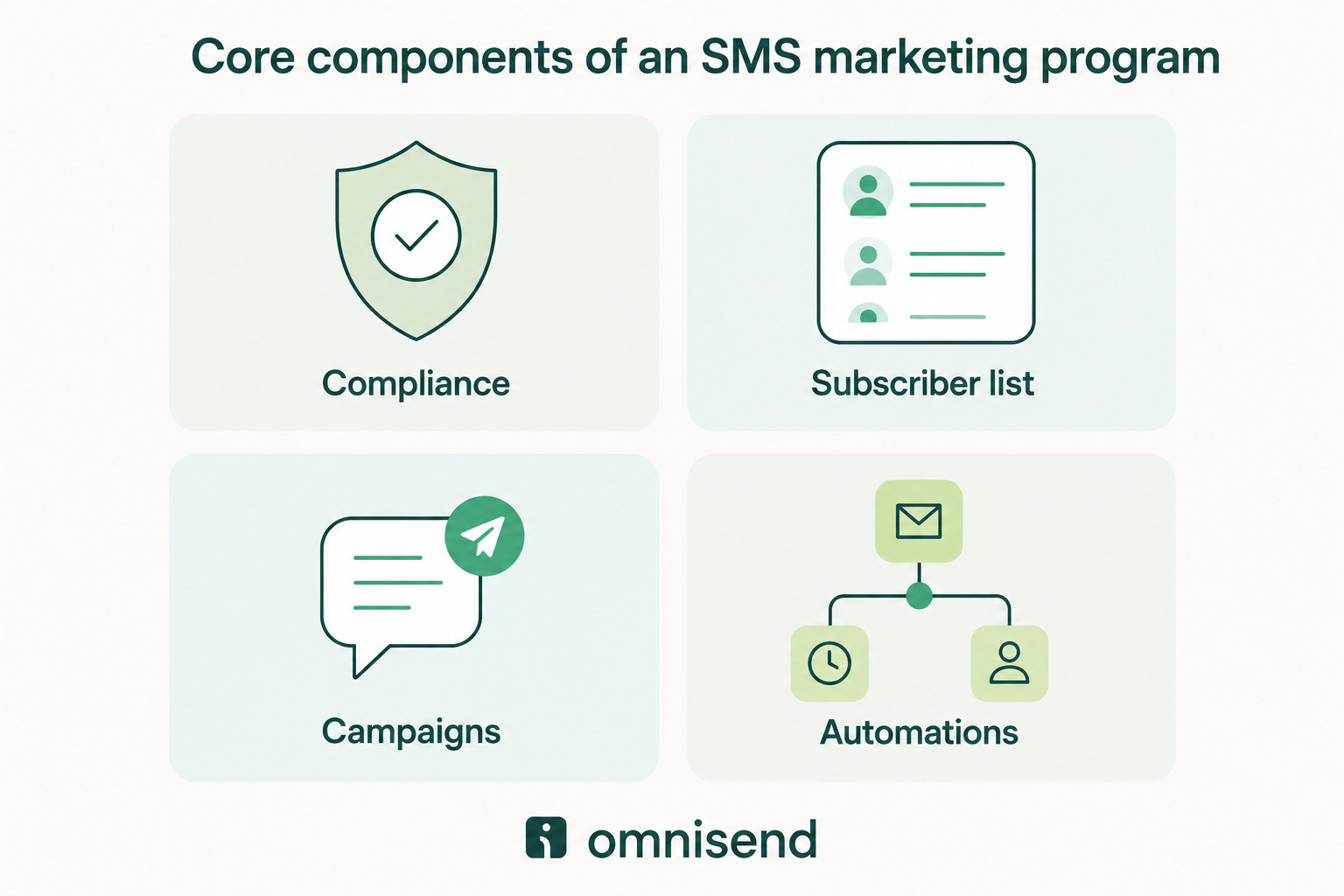
Building a successful SMS marketing program for e-commerce is a clear, five-step journey: prioritize compliance, strategically grow your subscriber list, launch targeted campaigns, rigorously track performance, and integrate SMS into your automated workflows. Adhering to this framework transforms sporadic messaging into a cohesive, revenue-driving strategy that leverages the immediacy and personal nature of text communication.
The financial rewards are compelling. Omnisend merchants, for example, average $79 in sales for every $1 spent across their integrated email, SMS, and push notification efforts. This demonstrates that SMS marketing performs optimally when it functions in synergy with other digital channels, creating a holistic and impactful customer engagement strategy. Platforms designed to bring every component of an SMS program together, offering native e-commerce integrations and robust automation capabilities, are therefore essential facilitators for online stores aiming to unlock the full potential of this powerful marketing channel. By embracing a structured approach, e-commerce brands can move beyond guesswork, establishing a sustainable system for consistent engagement and measurable growth in an increasingly competitive digital marketplace.