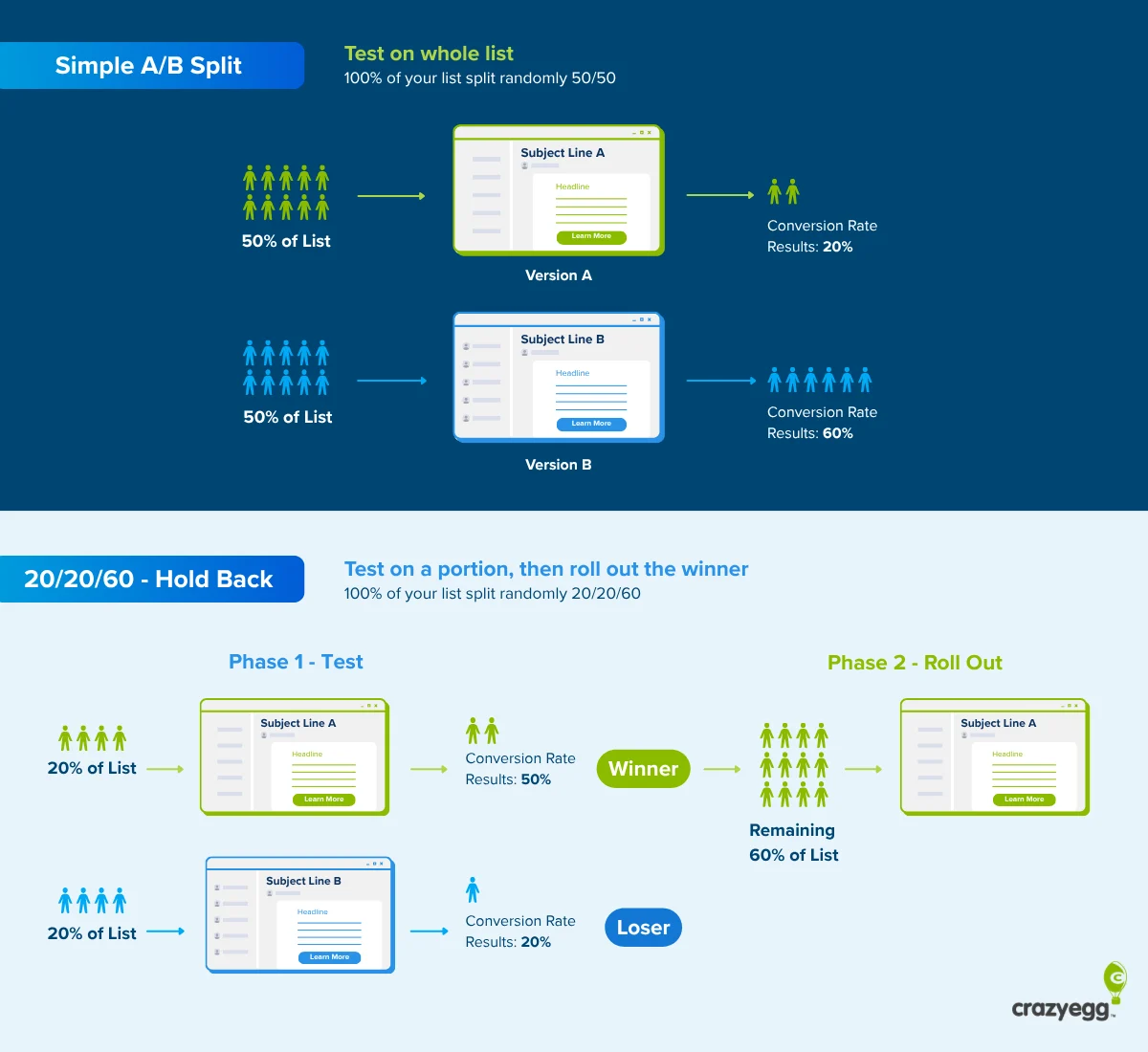
Email A/B testing, a cornerstone of data-driven digital communication, has evolved from a simple comparative tool into a sophisticated methodology for optimizing audience engagement and conversion rates. In an era where the average professional receives over 120 emails daily, the ability to discern which messaging resonates with a specific demographic is no longer a luxury but a competitive necessity. This controlled experimentation method, also known as split testing or bucket testing, involves distributing two distinct versions of a single email to randomly selected recipient subgroups. By analyzing the performance of these variants, marketing departments can identify high-performing elements and deploy the optimized version to the remainder of their contact list with a high degree of statistical confidence.
The fundamental mechanics of the process involve a “Control” (Version A), which serves as the baseline, and a “Variant” (Version B), which introduces a single strategic change. This change may range from a modified subject line to a completely different call-to-action (CTA) or offer structure. Because recipient interactions—such as opens, clicks, and unsubscribes—are binary and easily quantifiable, email remains one of the most effective channels for rigorous A/B experimentation.
The Strategic Importance of Iterative Testing
The shift toward A/B testing reflects a broader trend in the marketing industry: the move away from “gut-feeling” creative decisions toward evidence-based strategies. Industry data suggests that companies utilizing advanced testing frameworks see a significantly higher Return on Investment (ROI) compared to those that do not. According to recent marketing benchmarks, email marketing continues to provide an average ROI of $36 for every $1 spent, but this figure is heavily weighted toward organizations that prioritize optimization.
Beyond immediate conversion lifts, A/B testing provides secondary benefits that strengthen a brand’s long-term market position. It mitigates the financial and reputational risk associated with large-scale campaign failures. By testing a controversial or bold “Variant” on a small subset of the audience, marketers can gauge sentiment before a full-scale rollout. Furthermore, the cumulative data gathered from multiple tests allows organizations to build a “knowledge repository” regarding their audience’s preferences, leading to more effective content personalization over time.
Chronology of a High-Performance Email A/B Test
Executing a successful A/B test requires a disciplined, step-by-step approach to ensure the results are both actionable and scientifically valid. The following chronology outlines the standard lifecycle of a modern email experiment:
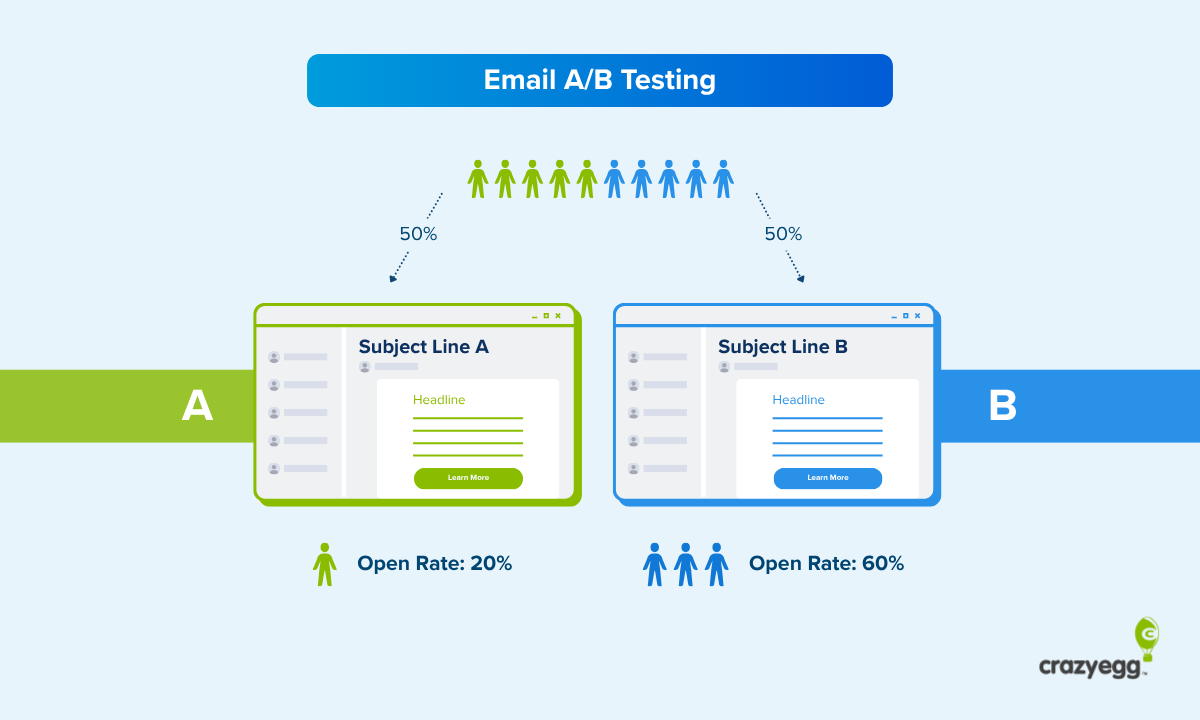
- Hypothesis Development: The process begins with identifying a specific problem or opportunity. For instance, if click-through rates (CTR) are low, the hypothesis might be: “Changing the CTA button from blue to green will increase clicks by 10%.”
- Variable Selection: To maintain the integrity of the test, only one variable should be changed between Version A and Version B. Testing multiple variables simultaneously—such as the subject line and the header image—belongs to the realm of multivariate testing, which requires much larger sample sizes to yield clear results.
- Audience Segmentation and Randomization: The mailing list is divided into two or more groups. Modern Email Service Providers (ESPs) use randomization algorithms to ensure that factors like age, location, or past purchase history are distributed evenly across both groups, preventing “selection bias.”
- Determination of Sample Size: Marketers must determine how many recipients are needed to reach statistical significance. Using a small sample size can lead to “false positives,” where a result appears successful but is actually due to random chance.
- Setting the Test Duration: The timeframe is established based on the primary metric. Subject line tests often yield results within 2 to 24 hours, whereas revenue-based tests may require several days to account for delayed purchasing behavior.
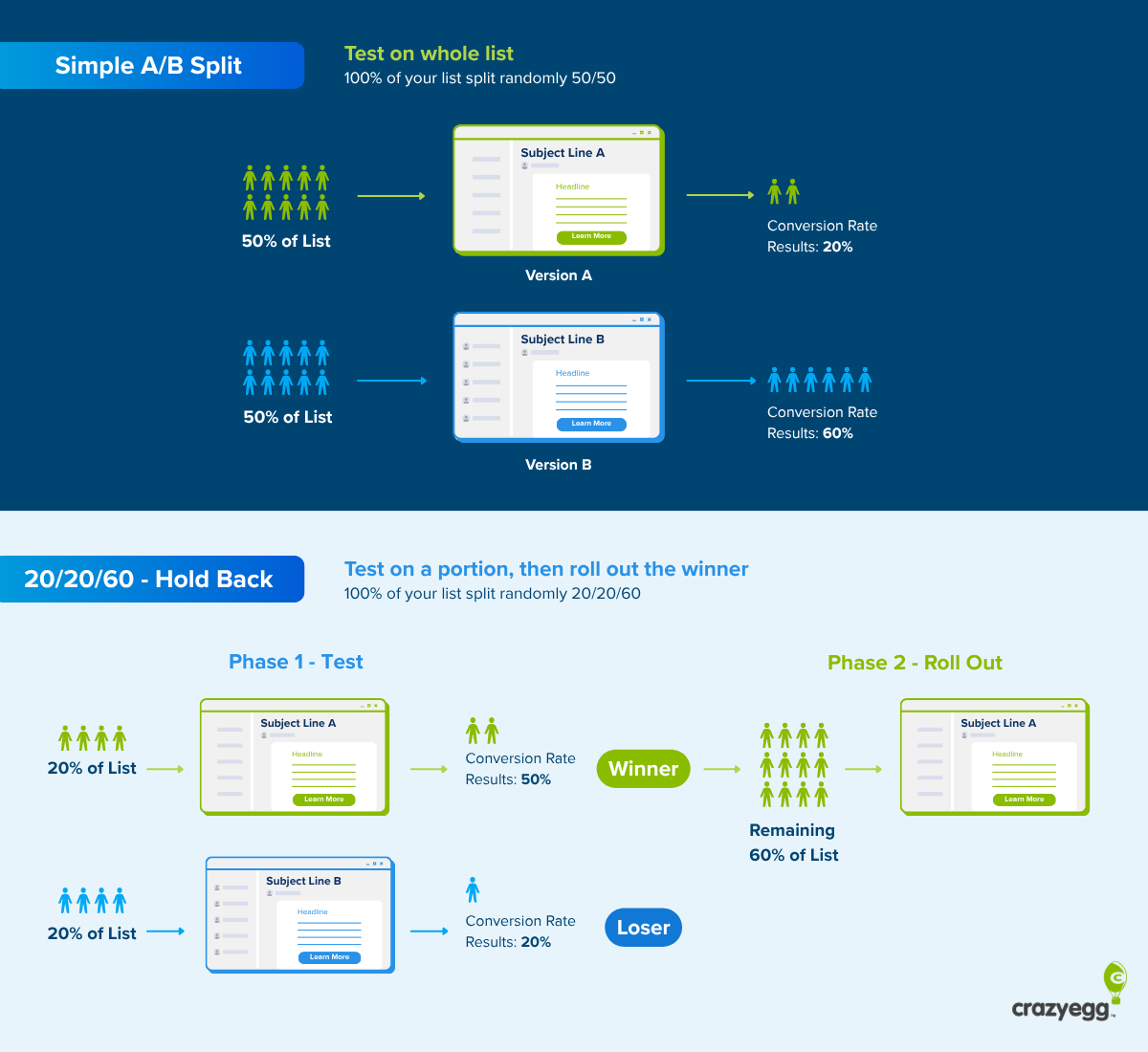
- The 20/20/60 Execution: A common industry practice is the 20/20/60 split. Version A is sent to 20% of the list, and Version B is sent to another 20%. After the predetermined duration, the winning version is automatically sent to the remaining 60% of the audience.
- Data Collection and Monitoring: During the test, real-time monitoring is essential to catch anomalies, such as technical delivery issues or an unexpected spike in spam complaints.
- Statistical Analysis: Once the test concludes, the results are analyzed for significance. In professional marketing, a “p-value” of less than 0.05 (indicating 95% confidence) is generally required to declare a definitive winner.
- Implementation and Documentation: The winning variant is deployed, and the findings are documented to inform future campaigns, ensuring the organization does not repeat the same experiments unnecessarily.
High-Impact Variables and Metric Selection
Not all email elements are created equal when it comes to testing. Strategic focus should be directed toward “high-impact levers” that directly influence user behavior.
Primary Testing Elements
Subject lines and “from” names are the most critical variables for improving open rates. An email that is not opened cannot convert. Testing a personalized subject line versus a generic one, or a question versus a statement, often yields the most immediate data. Following the open, the “offer” or the “hook” becomes the primary driver. Testing a “20% off” discount against “Free Shipping” can reveal deep insights into what the customer base values more.
Secondary and Cosmetic Elements
While visual design and button placement are important, they are often considered “low-impact” unless the brand has a massive subscriber base. Changes such as font size, social media icon placement, or image padding rarely move the needle significantly for smaller lists. Industry experts recommend focusing on the “message” before the “aesthetic.”
Key Performance Indicators (KPIs)
The success of a test is measured through specific metrics aligned with the campaign’s goals:
- Open Rate: Measures the effectiveness of the subject line and sender name.
- Click-Through Rate (CTR): Measures the relevance of the content and the clarity of the CTA.
- Conversion Rate: The ultimate metric, measuring the percentage of recipients who completed a desired action, such as a purchase or a sign-up.
- Unsubscribe/Spam Rates: These serve as “guardrail metrics.” A variant might have a high open rate because of a “clickbait” subject line, but if it also triggers a high unsubscribe rate, it is ultimately a failure for the brand.
Technical Validation: A/A Testing and Statistical Significance
To ensure results can be trusted, sophisticated marketing teams often employ “A/A testing.” In this scenario, two identical versions of an email are sent to two different groups. If the results show a significant difference in performance, it indicates a flaw in the testing methodology or the randomization process. This serves as a “calibration” for the testing environment.
Statistical significance remains the greatest hurdle for small to medium-sized enterprises. To achieve a 95% confidence level, many platforms recommend a minimum of 1,800 to 10,000 participants per variant. For brands with smaller lists, industry analysts suggest “sequential testing”—sending one version one week and a different version the next—while acknowledging that this method is susceptible to external variables like holidays or news cycles.
The Role of Artificial Intelligence in Modern Testing
The integration of Artificial Intelligence (AI) has revolutionized the speed and scale of A/B testing. Generative AI tools are now capable of drafting dozens of subject line variations and body copy angles in seconds, allowing marketers to move from testing two variants to testing dozens via multivariate models.
Predictive AI is also being used to analyze historical data to “pre-test” emails. By simulating how different segments of a list might react to certain keywords or imagery, AI can narrow down the variants to only the most promising candidates before a single email is sent. Furthermore, AI-driven “send-time optimization” ensures that Version A and Version B are both delivered at the peak activity time for each individual recipient, removing “time of day” as a confounding variable in the experiment.
Industry Outlook and Privacy Implications
The landscape of email testing has faced challenges due to evolving privacy regulations. The 2021 release of Apple’s Mail Privacy Protection (MPP) significantly impacted the reliability of “Open Rates” as a metric, as it masks IP addresses and automatically loads images, creating “false opens.”
In response, the industry has shifted its focus toward “downstream metrics” such as clicks and actual conversions. Market analysts suggest that this shift is ultimately beneficial, as it forces marketers to focus on meaningful engagement rather than “vanity metrics.”
As we look toward the future, the consensus among digital strategists is that email A/B testing will become increasingly automated and personalized. The goal is moving away from finding the “best email for the whole list” and toward finding the “best email for each individual subscriber.” Organizations that master this transition—combining rigorous statistical methods with AI-driven agility—will be the ones that thrive in an increasingly crowded digital inbox. For brands with small lists, the advice remains clear: focus on content quality and list growth until the volume supports the rigorous demands of statistical significance. For those with the volume, every email sent without a test is viewed by modern standards as a missed opportunity for optimization.