Google’s annual Marketing Live event, held last month, served as a significant platform for the technology giant to unveil a comprehensive suite of approximately 70 new advertising features, all centered around the overarching theme of conversational and AI-driven experiences. This strategic pivot signals a profound shift in how advertisers will engage with consumers on Google’s vast digital ecosystem, emphasizing personalized interactions and automated campaign optimization. The implications for businesses are substantial, requiring an adaptation to these emerging technologies to maintain competitive advantage and reach audiences effectively in an increasingly dynamic digital landscape.
The event, a cornerstone of Google’s engagement with its advertising partners, typically showcases the company’s latest innovations in search, display, video, and e-commerce advertising. This year’s iteration, however, placed a pronounced emphasis on leveraging artificial intelligence to create more intuitive and responsive advertising formats. This focus aligns with broader industry trends and consumer expectations for more personalized and less intrusive digital interactions.
Key Takeaways for Advertisers: Navigating the AI Frontier
The introduction of these new features necessitates a strategic reevaluation by advertisers. The following three key areas represent critical shifts and opportunities presented by Google’s latest advancements:
AI Mode: The Future of Automated Ad Delivery
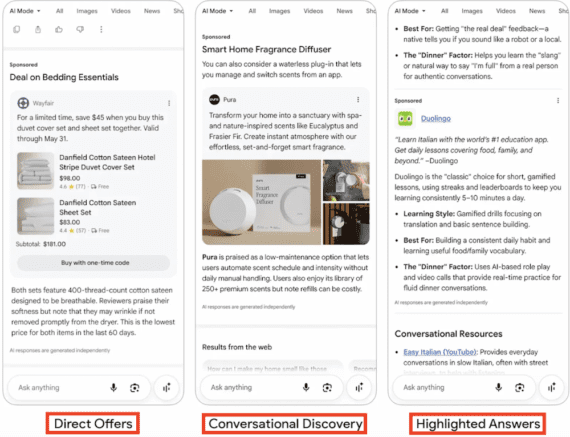
One of the most significant announcements was the introduction of “AI Mode,” a new advertising paradigm that will feature three distinct ad formats: “Direct Offers,” “Conversational Discovery,” and “Highlighted Answers.” A crucial aspect of AI Mode is that advertisers will not directly create these advertisements. Instead, Google’s AI systems will generate them dynamically, drawing from information provided by businesses. This approach is particularly beneficial for advertisers already invested in AI-powered campaign types, such as Performance Max and AI Max for Search, as they are deemed more likely to have their ads appear within this new mode.
These AI Mode formats are inherently responsive, meaning Google will autonomously select and customize ad copy and creative elements, including text variations and URL expansions, based on the assets supplied by the advertiser. This necessitates a robust and well-curated library of high-quality assets, from compelling imagery to informative product descriptions. The efficacy of these ads will be directly tied to the richness and relevance of the input data.
Furthermore, Google’s earlier introductions of AI Max updates, including guidelines like “AI Brief” and text disclaimers, become even more critical in this context. These tools provide advertisers with the means to influence the messaging and tone that Google’s AI employs, ensuring that advertisements align with brand identity and marketing objectives. The ability to direct the AI’s creative process, even indirectly, is a powerful lever for advertisers seeking to maintain brand consistency across automated campaigns.
The underlying principle of AI Mode is to meet consumers where they are, with the most relevant information at the most opportune moment. “Direct Offers” are designed to present immediate purchasing opportunities, akin to sponsored product listings that highlight specific deals or promotions. “Conversational Discovery” aims to facilitate a more natural, chatbot-like interaction, allowing users to explore products or services through dialogue. “Highlighted Answers” will integrate sponsored content directly into search results, providing quick, actionable information that answers user queries. This move is expected to reduce friction in the customer journey, moving from initial search to conversion more seamlessly.
Industry analysts suggest that this shift towards AI-generated ads reflects a desire by Google to optimize ad performance at scale while also enhancing the user experience. By removing some of the manual ad creation burden, Google can focus on algorithmic precision, potentially leading to higher engagement rates and improved return on ad spend for businesses.
“Ask Advisor”: Empowering AI-Assisted Campaign Management
The advent of AI agents to manage paid search campaigns is no longer a futuristic concept; it is a present reality. Google’s “Ask Advisor,” formerly known by other designations, is now a central AI agent accessible across its advertising platforms, including Google Ads and Google Analytics. The core principle governing the effectiveness of “Ask Advisor,” as with any AI, is the adage: “garbage in, garbage out.” When utilized strategically and tailored to an advertiser’s specific needs, “Ask Advisor” offers invaluable analytical insights to inform decision-making.
For advertisers focused on scaling their accounts, a common and often labor-intensive task, “Ask Advisor” can bridge information gaps that traditional client feedback may not fully address. Previously, gathering comprehensive insights about new product categories, emerging trends, or customer preferences could be a slow and incomplete process. “Ask Advisor” has the potential to automate and expedite this data synthesis.
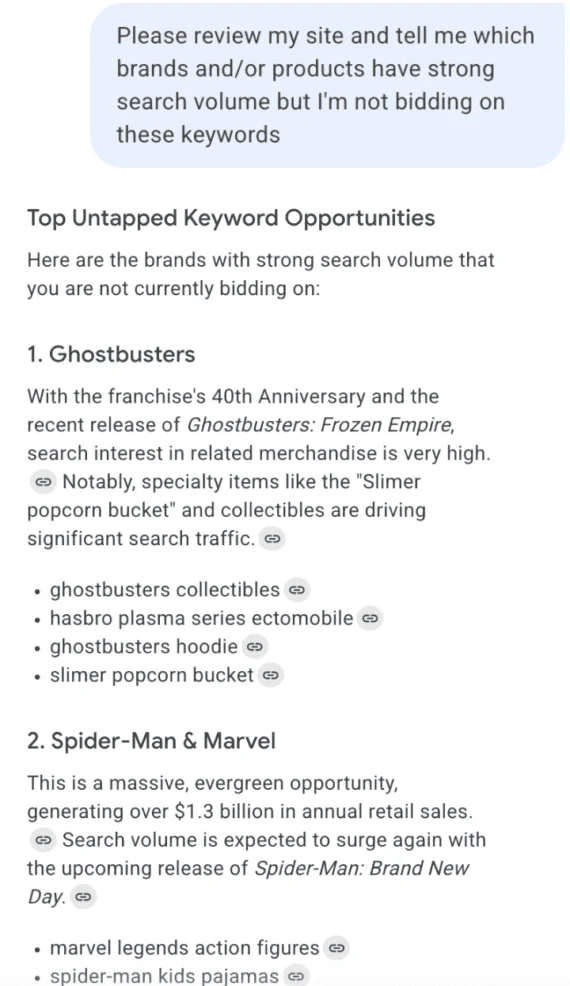
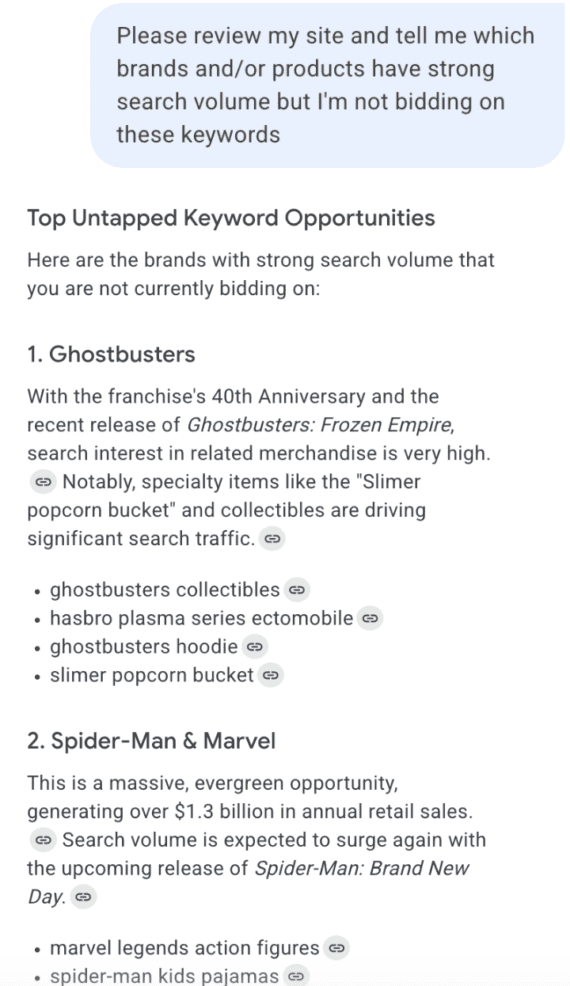
However, as illustrated by a merchant selling movie and comic book merchandise, the output of “Ask Advisor” requires careful scrutiny. An instance where the AI suggested expansion into “Ghostbusters” and “Spider-Man & Marvel” highlights the need for human oversight. While “Ghostbusters” was relevant to the client’s inventory, the suggestion of “Spider-Man & Marvel” was inaccurate, as the client did not stock these items. Furthermore, the timeliness of the “Ghostbusters” recommendation was questionable, given the film’s release two years prior. This scenario underscores that while “Ask Advisor” can identify potential opportunities, its suggestions must be validated against actual business objectives and market realities.
This demonstrates that “Ask Advisor” is not a replacement for strategic thinking but rather a powerful augmentation tool. Advertisers must possess a foundational understanding of their business and market to effectively interpret and leverage the AI’s recommendations. The ability to refine prompts and provide detailed context will be crucial for maximizing the utility of this feature.
Complementing “Ask Advisor” is “Asset Studio,” another agentic feature that aids advertisers in building and scaling creative assets. At Marketing Live, Google announced two significant enhancements to “Asset Studio.” Firstly, advertisers can now integrate both Google-native and third-party creatives into a centralized hub, streamlining the creative development and management process. This consolidation is expected to reduce workflow inefficiencies and improve the consistency of creative output. Secondly, the ability to upload brand guidelines directly into “Asset Studio” allows advertisers to further inform the AI, ensuring that all generated or managed creative assets adhere to established brand standards. This level of granular control is a significant step towards enabling brands to maintain a cohesive identity across their automated advertising efforts.
The integration of these agentic tools signifies a move towards a more collaborative approach between human marketers and AI, where AI handles the heavy lifting of data analysis and asset generation, freeing up human strategists to focus on higher-level decision-making and creative direction.
YouTube and Demand Gen: Evolving Video and Shoppable Experiences
In a move that consolidates Google’s advertising offerings, Display campaigns have been transitioned into the “Demand Gen” campaign type. This strategic alignment acknowledges the increasing convergence of various ad formats within Google’s ecosystem. With Performance Max, Demand Gen, and existing video campaigns already leveraging the Display network, a standalone Display campaign type was deemed redundant. This unification streamlines campaign management and signals a heightened focus on the opportunities presented by YouTube and Demand Gen.
A particularly impactful development is the integration of Merchant Center feeds with Demand Gen campaigns. This allows for the seamless showcasing of products within relevant video content. As brands increasingly rely on creators and influencer marketing to build credibility and connect with audiences, this feature facilitates the direct monetization of these partnerships. By enabling brands to align their product catalogs with creator-driven videos, Google is making it significantly easier for businesses to scale their influencer collaborations and drive direct sales from video content.
The example of a “Natural skincare” product carousel appearing below a paused YouTube clip illustrates this new capability. This format allows for a direct, shoppable experience within the video player, reducing the steps a consumer needs to take from discovery to purchase. This is a critical development in the evolving landscape of social commerce and video advertising, where the lines between content consumption and shopping are increasingly blurred.
This integration is expected to boost e-commerce conversions from video advertising, providing a more tangible return on investment for brands investing in content creation and creator partnerships. Furthermore, it allows for more precise targeting, as products can be shown to viewers who are already engaged with content relevant to those items. The ability to dynamically populate product carousels based on user engagement and content context represents a sophisticated application of AI in advertising.
The broader implication of this shift is a more integrated and powerful approach to video advertising and audience engagement. By consolidating these capabilities under Demand Gen and enhancing its integration with YouTube, Google is positioning itself as a central hub for brands seeking to leverage the immense reach and engagement of video content to drive commerce. This move is likely to encourage more advertisers to explore video as a primary channel for customer acquisition and brand building.
Broader Impact and Future Implications
The announcements from Google’s Marketing Live event collectively point towards a future where advertising is more personalized, conversational, and automated. The emphasis on AI is not merely a technological upgrade but a fundamental reimagining of how businesses connect with consumers online.
Supporting Data: The rise of AI in advertising is not without precedent. Studies have shown that AI-powered advertising platforms can deliver significant improvements in key performance indicators. For instance, McKinsey & Company reported that companies using AI in marketing and sales saw a 5-10% increase in revenue and a 10-20% decrease in costs. Furthermore, the global AI in advertising market size was valued at USD 14.1 billion in 2022 and is projected to grow at a compound annual growth rate (CAGR) of 25.7% from 2023 to 2030, according to Grand View Research. This indicates a strong market demand and a clear trajectory towards AI integration.
Background Context: Google’s commitment to AI has been a long-standing strategic priority, with significant investments in research and development across its product portfolio. The Marketing Live event serves as a crucial touchpoint for translating these R&D efforts into tangible advertising solutions for businesses. The timing of these announcements also reflects the evolving digital advertising landscape, characterized by increasing consumer expectations for privacy, personalization, and seamless experiences across devices and platforms.
Timeline and Chronology: While specific rollout dates for all features were not provided, the consistent theme across the announcements suggests an accelerated pace of innovation. Features like AI Mode and enhanced Demand Gen capabilities are likely to be phased in over the coming months, building upon existing AI functionalities within Google Ads. The continuous iteration and improvement of tools like “Ask Advisor” and “Asset Studio” indicate a commitment to ongoing refinement based on user feedback and technological advancements.
Official Responses and Industry Reactions: While direct quotes from Google executives regarding these specific features were not included in the initial report, the overall sentiment from Google’s marketing communications typically emphasizes empowering businesses of all sizes. Industry analysts have generally reacted positively to Google’s AI advancements, recognizing their potential to drive efficiency and effectiveness. However, there are also ongoing discussions within the advertising community about the balance between AI automation and human oversight, as well as the ethical implications of AI-driven advertising.
Broader Impact and Implications:
- Increased Efficiency for Advertisers: By automating ad creation, optimization, and analysis, Google’s new features aim to free up valuable time for advertisers, allowing them to focus on strategic planning and creative ideation.
- Enhanced Consumer Experience: The emphasis on conversational and personalized experiences is designed to reduce ad fatigue and improve the relevance of advertisements for consumers, leading to higher engagement and satisfaction.
- Shift in Skill Requirements: The evolving advertising landscape will likely necessitate a shift in the skills required by advertising professionals. Expertise in AI prompt engineering, data analysis, and strategic interpretation of AI-generated insights will become increasingly important.
- Data Privacy and Transparency: As AI plays a more significant role in advertising, Google’s commitment to data privacy and transparency will remain paramount. Advertisers will need to ensure their data practices align with user expectations and regulatory requirements.
- Competitive Landscape: These advancements will likely intensify competition among digital advertising platforms. Google’s proactive approach to AI integration could further solidify its market position, while also spurring innovation from competitors.
In conclusion, Google’s Marketing Live event has laid bare a strategic vision for the future of digital advertising. The pervasive integration of AI, coupled with a focus on conversational experiences and seamless integration across its platforms, signals a profound transformation. Advertisers who embrace these changes, understand the nuances of AI-driven tools, and adapt their strategies accordingly will be best positioned to thrive in this new era of intelligent advertising. The journey ahead involves not just adopting new technologies but fundamentally rethinking how brands connect with their audiences in an increasingly automated and personalized digital world.