rifanmuazin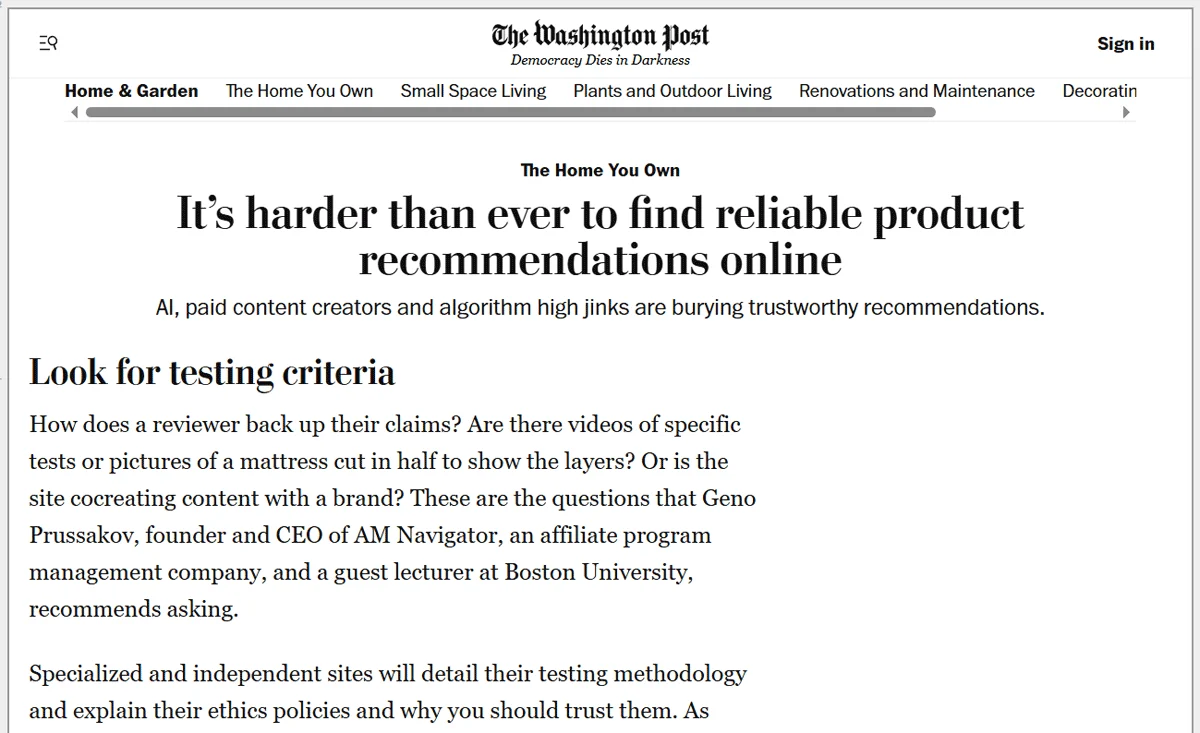
The landscape of digital consumerism underwent a significant shift in early 2025 as major media outlets faced increasing scrutiny over the objectivity of their product recommendation lists. On January 13, 2025, The Washington Post published an investigative piece exploring the mechanics behind online shopping “roundups,” a move that signaled a growing public and editorial concern regarding the intersection of journalistic authority and affiliate marketing. Central to this discussion was the input of industry experts, including Geno Prussakov of AM Navigator, who highlighted the complex financial structures that now underpin many of the “best of” lists found on the internet’s most trusted domains. As traditional advertising revenues have declined, the transition toward commerce-driven content has become a survival strategy for legacy media, raising critical questions about the transparency and reliability of the advice provided to millions of shoppers.
The Evolution of Media Monetization and the Rise of Commerce Content
The transformation of media outlets into shopping hubs did not occur overnight. For over a decade, the digital publishing industry has sought alternatives to the volatile display advertising market. The evolution began in earnest during the mid-2010s when major publications realized that their high “domain authority”—a metric used by search engines to determine the trustworthiness of a website—could be leveraged to rank for lucrative “best product” search queries. By including affiliate links within these articles, publishers could earn a commission on every sale generated through their content.
In 2016, the New York Times’ acquisition of The Wirecutter for approximately $30 million served as a watershed moment, proving that rigorous product testing could be a viable business model. Following this success, other media conglomerates followed suit. CNN launched “CNN Underscored,” Forbes established “Forbes Vetted,” and Dotdash Meredith transformed titles like Better Homes & Gardens into affiliate-heavy digital platforms. This shift created a new category of journalism known as “commerce content,” where editorial teams and marketing departments collaborate to produce articles designed specifically to drive transactions.
Chronology of the Shift in Digital Review Standards
To understand the current state of online recommendations, one must look at the timeline of how search and media have converged:
- 2011–2015: Traditional media outlets primarily rely on banner ads and sponsored posts. Affiliate marketing is largely relegated to niche blogs and coupon sites.
- 2016: The acquisition of The Wirecutter by The New York Times validates the “affiliate journalism” model, leading to a surge in dedicated commerce teams within newsrooms.
- 2018–2020: Google’s search algorithm updates begin to favor high-authority domains for product-related searches. This allows big media sites to displace smaller, specialized review sites in search results.
- 2021–2023: The “Review Update” era. Google introduces specific algorithm changes aimed at rewarding “high-quality, original reviews” that provide evidence of actual product testing.
- 2024–2025: Increased regulatory and public pressure regarding transparency. The Washington Post and other outlets begin to investigate the “pay-to-play” nature of some recommendation lists, leading to a broader discussion on consumer protection.
The Mechanics of Authority Monetization
The monetization of search engine authority relies on a concept known as SEO (Search Engine Optimization) dominance. Because a site like Forbes or The New York Times has millions of backlinks and a long history of credible reporting, Google’s algorithms are more likely to rank their “Best Vacuum Cleaners” list on the first page than a dedicated, independent vacuum repair blog. This creates a feedback loop where the largest media players capture the majority of search traffic, which they then monetize through affiliate partnerships.
Industry data suggests that the affiliate marketing industry has grown into an $8.2 billion sector in the United States alone. For many large publishers, commerce content now accounts for 20% to 40% of their total digital revenue. This financial dependency has led to the professionalization of affiliate management, where “Affiliate Program Managers” work with media partners to ensure their products are featured prominently.
How Big Media Validates Recommendations
Despite the financial incentives, many large media organizations maintain that their editorial integrity remains intact. The vetting process for a product recommendation in a major publication typically involves four primary layers of verification:
- Hands-on Testing: Many outlets maintain dedicated labs where products are subjected to standardized testing protocols. For example, kitchen appliances may be tested for energy efficiency, durability, and ease of use over several weeks.
- Expert Consultations: Editors frequently interview subject matter experts, such as medical professionals for health products or engineers for consumer electronics, to ensure that the technical specifications of a product meet industry standards.
- Brand Reputation Analysis: Before recommending a product, commerce teams often investigate the manufacturer’s history, including their track record for customer service, warranty fulfillment, and ethical manufacturing practices.
- Editorial Independence: In the most reputable organizations, a “church and state” separation exists between the editorial team choosing the products and the business team managing the affiliate relationships. This ensures that a product is chosen for its quality before its commission rate is even considered.
The Influence of Financial Arrangements
While many outlets strive for objectivity, the reality of the business model introduces potential biases. In many cases, a product’s ranking or inclusion in a list may be influenced by specific financial arrangements with advertisers. These can include:

- Placement Fees: Fixed payments made by a brand to a publisher to ensure their product is included in a specific roundup or featured in a “top 3” position.
- Inflated Commission Rates: Brands may offer a higher percentage of the sale price to specific publishers to incentivize them to prioritize their products over competitors who offer lower rates.
- EPC (Earnings Per Click) Guarantees: Some publishers prioritize products that have a proven track record of converting clicks into sales. If Product A earns the publisher $2.00 per click while Product B earns $0.50, Product A is more likely to receive prominent placement, regardless of whether it is objectively “better” for the consumer.
Consumer Protection and Literacy Strategies
As the line between editorial advice and advertising continues to blur, consumers must adopt a more analytical approach to online shopping. Experts suggest several strategies to navigate this landscape effectively.
First, consumers should look for clear disclosure statements. Federal Trade Commission (FTC) guidelines in the United States require that any article containing affiliate links must clearly state that the publisher may earn a commission from purchases. The absence of such a disclosure in a commercial-style roundup is a significant red flag.
Second, cross-referencing is essential. A product that appears as the “best” on five different major media sites is more likely to be a high-quality item than one that appears on only one site. However, consumers should also check “user-generated” platforms like Reddit or specialized forums. These platforms often contain “unvarnished” reviews from long-term users who are not incentivized by commissions.
Third, shoppers should investigate the “price history” of recommended products using tools like CamelCamelCamel or Honey. Sometimes, a product is recommended because it is currently on a “deep discount,” which triggers a higher volume of sales and commissions, even if the product itself is an older model or about to be replaced.
Broader Implications for Digital Journalism
The shift toward commerce-centric content has profound implications for the future of digital journalism. On one hand, affiliate revenue provides a lifeline for newsrooms that might otherwise face layoffs or closure. On the other hand, the “commodification of trust” risks damaging the long-term brand equity of these institutions. If a reader purchases a “top-rated” product based on a media recommendation and finds it to be of poor quality, their trust in that publication’s political or investigative reporting may also diminish.
Furthermore, the dominance of big media in search results has made it increasingly difficult for independent, niche experts to survive. When a generalist news site displaces a specialist hobbyist site in search rankings, the depth of expertise available to the public may decrease. This “homogenization” of reviews often leads to the same ten products being recommended across the entire internet, stifling innovation and making it harder for new, smaller brands to break into the market.
Conclusion and Future Outlook
The investigation by The Washington Post and the insights provided by industry veterans like Geno Prussakov highlight a pivotal moment in the digital economy. As of 2025, the industry is at a crossroads where transparency must become the standard rather than the exception. Regulatory bodies are expected to tighten rules regarding “sponsored content” and “native advertising,” potentially requiring more explicit labeling of how financial incentives influence product rankings.
For the media industry, the challenge will be to balance the need for revenue with the necessity of maintaining editorial integrity. For the consumer, the takeaway is clear: while big media recommendations can be a helpful starting point, they should be viewed as one data point in a broader research process. In an era where “authority” is a monetizable asset, the most valuable tool for any shopper is a healthy sense of skepticism and a commitment to independent verification.