rifanmuazin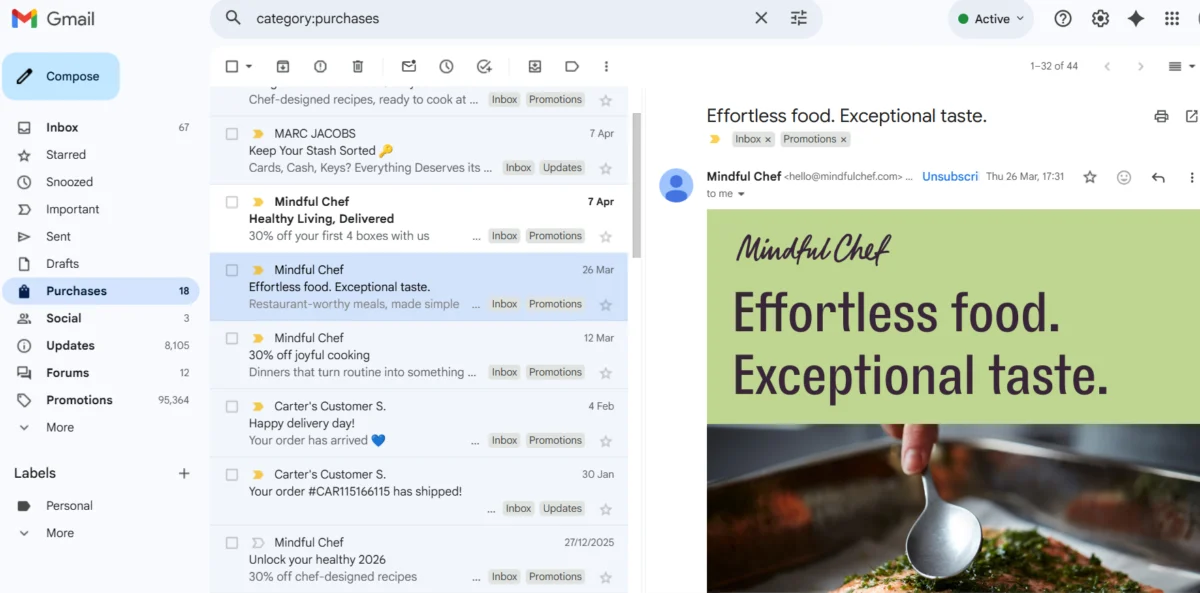
The digital marketing landscape is currently grappling with a significant upheaval as email senders report dramatic declines in Gmail open rates, with some Validity customers observing quarter-over-quarter drops exceeding 30 percent. This alarming trend, confirmed by Validity’s own engagement data showing a roughly one-third reduction in Gmail image loading activity—including crucial tracking pixels—since late November 2025, signals a profound shift in how email engagement is measured and understood. Industry experts largely attribute this decline to Gmail’s probable reduction in image prefetching, a mechanism that has historically routed content through their proxy servers since 2013. Fewer prefetched pixels inherently translate to fewer recorded opens, even if the actual readership of emails remains unchanged. While this technical explanation scratches the surface, it points to a much broader strategic evolution within Gmail, prompting a critical re-evaluation of email marketing strategies.
A Shift in the Digital Landscape: Gmail’s Strategic Evolution
Google’s moves are not isolated incidents but rather part of a larger industry trend towards prioritizing user experience, combating spam, and fostering genuine engagement within inboxes. With over 1.8 billion active users worldwide, Gmail holds a dominant position as the globe’s largest email service provider (ESP). Any change implemented by Google inevitably sends ripples throughout the entire digital marketing ecosystem, forcing brands and marketers to adapt or risk obsolescence. The current scenario echoes previous disruptions seen with other major providers, most notably Apple and Yahoo.

Last year, Validity investigated similar engagement declines at Apple and Yahoo. Apple’s dip was linked to the introduction of advanced inbox functionalities such as inbox categories, digest views, groupings, and AI summaries, all designed to curate a more personalized and less cluttered user experience. Concurrently, Yahoo’s stricter enforcement of its bulk sender requirements, aimed at curbing unsolicited email, also led to reduced engagement metrics for many senders. These historical parallels underscore a consistent theme: major email providers are increasingly taking proactive measures to clean up inboxes and empower users, often at the expense of traditional vanity metrics like open rates.
For Gmail, this evolution has been characterized by a series of strategic inbox changes over the past two years, culminating in the current declines. These changes collectively push senders to move beyond mass-mailing tactics and instead focus on cultivating relationships with active, genuinely engaged subscribers. The stricter enforcement of Gmail’s bulk sender requirements, which became effective in November 2025, further reinforces this commitment. This concerted effort from Google, combined with the lingering effects of Apple Mail Privacy Protection (MPP) introduced in 2021, paints a comprehensive picture of an industry undergoing a significant transformation. MPP, similar to Gmail’s previous prefetching, also forced “false opens” by pre-loading emails via proxy servers, artificially inflating open rates. Given that many Gmail users access their accounts through Apple Mail apps, these “false opens,” often generated by inactive subscribers, contributed to an inflated perception of engagement. The current adjustments by Gmail are effectively deflating these artificial metrics, returning a more accurate, albeit lower, representation of actual user interaction.
The Chronology of Change: A Timeline of Gmail’s Inbox Overhaul
Understanding the sequence of Gmail’s recent developments is crucial for grasping the current shifts. The cumulative impact of these features, introduced over the past few years, has created the perfect storm for the observed open rate declines.

- 2013: Gmail begins routing image loading activity, including tracking pixels, through its proxy servers. This initial step, while enhancing privacy, inadvertently introduced the potential for “false opens” as images could be prefetched regardless of user interaction.
- 2021: Apple introduces Mail Privacy Protection (MPP), significantly impacting open rate metrics across the industry by pre-loading email content, including tracking pixels, for all users who enable the feature. This further muddied the waters for email marketers relying on open rates as a primary indicator of engagement.
- Mid-2025: Gmail fully rolls out its Subscriptions Manager to personal accounts. This feature provides users with a centralized dashboard to view and manage all their email subscriptions, ranked by sending frequency, enabling one-click unsubscribes without opening individual emails.
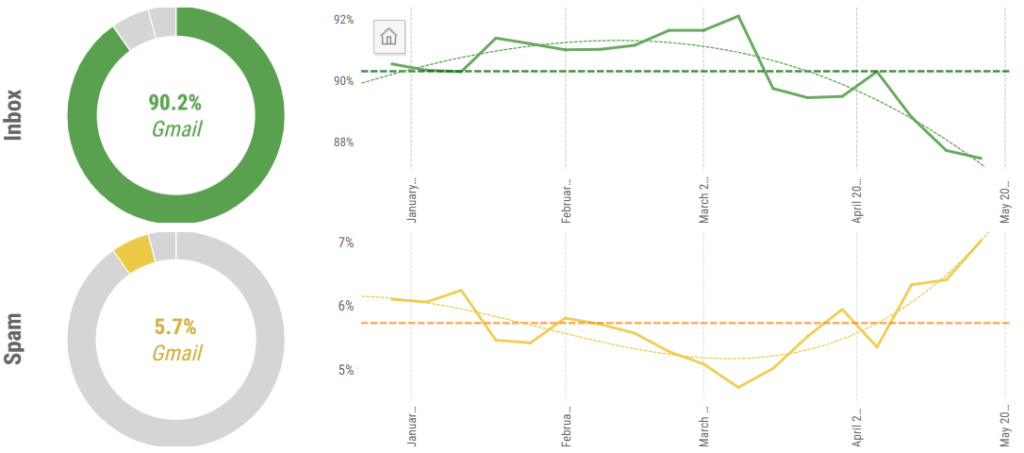
- Late 2025: Gmail introduces a dedicated Purchases tab, consolidating transactional emails like order confirmations and shipping updates. While intended to organize, some marketing emails inadvertently land here, leading to lower visibility and potential trust issues. Simultaneously, Gmail transitions from soft enforcement to active rejection of non-compliant bulk email traffic, resulting in increased hard SMTP-level rejection codes. Validity data from this period shows an approximately 3 percent drop in overall inbox placement rates. Around this time, speculation solidifies that Gmail has also reduced the frequency of image prefetching, directly impacting the recording of open tracking pixels.
- January 2026: Google begins rolling out AI-generated email summaries, which automatically display 1-2 sentences capturing the key message upon opening an email. Concurrently, the integration of Gemini introduces conversational, natural-language search capabilities across the Gmail inbox, allowing subscribers to query their email history and receive compiled answers without opening individual messages.
- Ongoing (Pre-existing, but Reinforced Impacts):
- The relevance-sorted Promotions tab continues to evolve, prioritizing emails based on user engagement rather than simple recency, pushing less engaging content further down.
- Auto-Annotations become more prevalent, where Gmail extracts deal details, images, and discount codes from promotional emails to display as previews, even without explicit sender markup.
- Message clipping (for HTML files over 1024 bytes) remains a critical factor, potentially hiding tracking pixels and unsubscribe links.
- Gmail’s email address change feature allows users to update their primary address, rendering old addresses inactive for marketing purposes.
- Google’s inactive account deletion policy (for accounts inactive for two years or more) acts as a final clean-up mechanism for dormant addresses.
Diving Deeper: The Mechanisms Behind the Decline
The core technical shift behind the immediate open rate decline lies in Gmail’s probable reduction of image prefetching. For years, email marketers have relied on a tiny, invisible image pixel embedded in emails to track opens. When an email client loads this pixel, it registers an “open.” However, Gmail’s proxy servers would often prefetch images to speed up loading times and enhance user privacy by masking IP addresses. This prefetching meant that an “open” could be registered even if the user hadn’t actively engaged with the email, leading to inflated, or “false,” open rates.
Validity’s confirmation of a one-third drop in Gmail image loading activity since late November 2025 directly correlates with industry speculation about reduced prefetching. This means that a significant portion of what was previously recorded as an “open” might simply have been an automated server action, not genuine human interaction. While this might seem detrimental to marketers, it paradoxically offers a clearer, more authentic picture of subscriber engagement. The “false open” conundrum, previously exacerbated by features like Apple’s MPP, is slowly being unwound, forcing marketers to confront the true level of interaction with their campaigns.
Key Developments and Their Impact on Email Marketing:
The confluence of these strategic and technical changes necessitates a detailed understanding for email marketers to navigate the evolving landscape successfully.
1. Enhanced Enforcement of Bulk Sending Requirements:
- Impact: Validity’s Intelligence Network observed an approximate 3 percent drop in Gmail inbox placement rates over the past few months. This decline is directly linked to Gmail’s shift in late 2025 from soft enforcement of non-compliant bulk email traffic to active rejection, leading to an increase in hard SMTP-level rejection codes. Simply put, emails that don’t meet Google’s standards are now bounced outright, never reaching the inbox, and thus generating no opens.
- Analysis: This move signifies Google’s firm stance against senders who fail to adhere to best practices for deliverability and user trust. It’s a clear signal that sender reputation, authentication (like DMARC), and low complaint rates are paramount.
- Marketer Response: Senders must meticulously review their compliance with all elements of Gmail’s bulk sender guidelines, extending beyond just DMARC, list-unsubscribe, and complaint rates. Utilizing Google Postmaster Tools V2 is essential for monitoring critical compliance indicators, and regularly reviewing bounce logs for specific Gmail error codes (e.g., 550-5.7.1) will pinpoint non-compliance issues. Proactive list cleaning and permission-based marketing are no longer optional but foundational.
2. Relevance-Sorted Promotions Tab:
- Impact: Gmail now sorts the Promotions tab based on user engagement rather than simple recency. This means that emails from lower-engagement senders are pushed further down the tab, significantly reducing their visibility and, consequently, their chances of being opened. This creates a “vicious circle” where lack of opens further diminishes relevance scores, leading to even lower placement.
- Analysis: This algorithmic shift prioritizes a personalized user experience, ensuring that subscribers see content they are most likely to interact with. For marketers, it means that generic, broadcast campaigns will struggle to gain traction.
- Marketer Response: The imperative is clear: suppress low-engagement Gmail segments. Instead of sending to inactive subscribers who will only damage relevance scores, marketers should segment Gmail recipients by engagement recency and define more aggressive suppression thresholds. Content personalization, tailored offers, and dynamic messaging are critical to generate the positive engagement signals that Gmail’s algorithm now demands.
3. Auto-Annotations and Visual Previews:
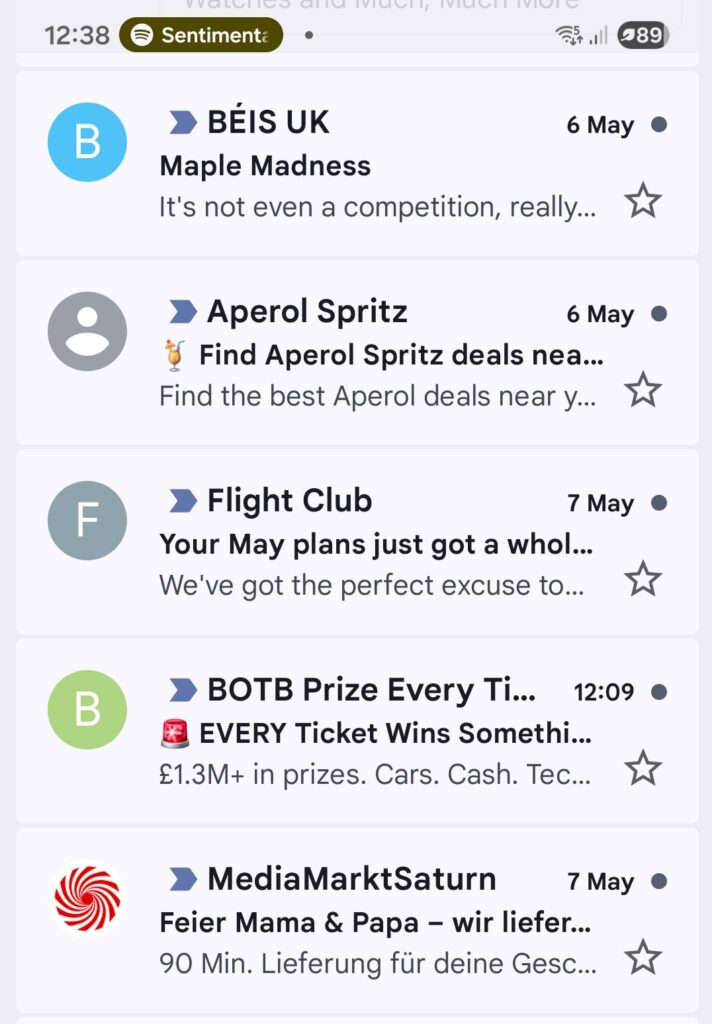
- Impact: Gmail now automatically extracts deal details, product images, and discount codes from promotional emails to display as rich previews in the Promotions tab, even if senders haven’t explicitly implemented Annotations markup schemas. While this enhances discoverability, it also means subscribers can access headline offers and promotional codes without actually opening the email, directly pressuring open rates.
- Analysis: This feature aims to provide value to users upfront, reducing the need to click into every promotional message. For marketers, it shifts the goal from “open” to “value delivered” or “conversion.”
- Marketer Response: Rather than relying on automatic extraction, marketers should implement Annotations to gain full control over the displayed previews. This allows for strategic messaging that entices a click rather than simply revealing all information. Testing offers that require an actual click-through, as opposed to just surfacing a simple discount code, becomes crucial.
4. The Subscriptions Manager:
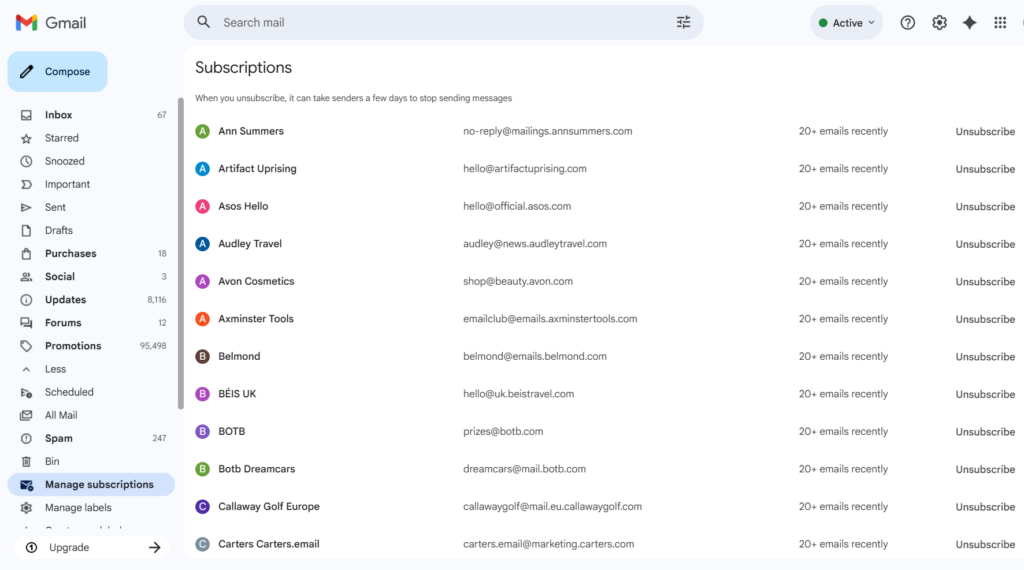
- Impact: Launched in mid-2025 and now widely available, the Subscriptions Manager lists all marketing senders in a single, frequency-ranked dashboard. Users can unsubscribe from any sender’s mail stream with a single click, without ever opening an email. This feature directly leads to list shrinkage, impacting open rates from a reduced recipient pool.
- Analysis: This is a powerful user-empowerment tool, giving subscribers unprecedented control over their inbox clutter. While it reduces list size, the remaining subscribers are likely more engaged, leading to a higher quality, albeit smaller, list.
- Marketer Response: Brands sending daily or near-daily emails should evaluate whether reducing their sending cadence would decrease visibility in the Subscriptions Manager without negatively impacting revenue. For brands utilizing multiple “From” addresses for different content streams, ensuring each address has a unique List-Unsubscribe header is vital. This allows subscribers to opt-down from specific streams rather than triggering a blanket removal, preserving some level of connection.
5. AI-Generated Email Summaries:
- Impact: Starting January 2026, Gmail began rolling out AI-generated summaries that display 1-2 sentences capturing the email’s key message when a user opens it. While the impact on “open” tracking (i.e., whether auto-summarization inflates opens) is still debated, the primary concern is that subscribers who glean sufficient information from the summary have less incentive to fully read or interact with the email content.
- Analysis: This feature reflects the broader trend of AI-driven content consumption, where users seek quick, distilled information. It challenges marketers to make their core message and call-to-action even more compelling.
- Marketer Response: Marketers must adapt their content strategy by placing the most important information, value proposition, and clear next steps in the opening lines of the email body. Since AI summaries pull from the earliest readable text, front-loading value is paramount. The goal is to turn a summary into a click, not a replacement for one, by creating intrigue or highlighting a benefit that requires further interaction.
6. Gemini Integration for Inbox Search and Management:
- Impact: The January 2026 Gemini integration introduced conversational, natural-language search across the Gmail inbox. Subscribers can now ask questions like “What discount codes do I have for sportswear?” and receive compiled answers from multiple emails without opening any of them. This fundamentally changes how users retrieve information from their inbox, further impacting open rates, particularly for promotional content.
- Analysis: Gemini transforms the inbox into a dynamic information hub, where AI acts as an intelligent assistant. This feature disproportionately affects low-engagement senders, as their content might be surfaced in a summary, but without direct human interaction, perpetuating a cycle of disengagement.
- Marketer Response: Emails containing time-sensitive content, such as discount codes or event deadlines, must be structured for optimal AI extraction. This involves using specific deadlines, named actions, structured data markup (e.g., Schema.org), and clean HTML. Marketers should closely monitor changes in the ratio of opens between highly engaged and lapsed segments to understand the feature’s specific impact on their audience.
7. Message Clipping Thresholds:

- Impact: While not new, message clipping remains a significant factor. Gmail typically clips messages with HTML file sizes exceeding 1,024 bytes, displaying only a preview and requiring users to “view entire message.” If the open tracking pixel is placed at the end of a clipped email, it may not trigger, leading to underreported opens. Furthermore, critical elements like unsubscribe links, often located in email footers, can be hidden, potentially increasing spam complaint rates.
- Analysis: This technical constraint highlights the importance of efficient email design and coding, not just for aesthetics but for fundamental deliverability and tracking.
- Marketer Response: Senders must incorporate HTML file size review into their pre-send QA processes to ensure emails don’t exceed Gmail’s 1KB clipping threshold. Additionally, strategically placing the open tracking pixel as early as possible in the HTML file, ideally within the visible portion of the email, will improve the accuracy of open rate reporting.
8. Gmail’s Email Address Change Feature:
- Impact: When users change their primary Gmail address, marketing emails sent to the previous address will no longer be delivered to an active inbox, directly reducing opens from those specific addresses. Crucially, marketers should not expect replacement opens from the new address, as the subscriber may have changed addresses precisely to disengage from marketing communications.
- Analysis: This feature signifies that email addresses are no longer static identifiers but dynamic points of contact. It underscores the fragility of relying solely on an email address for customer relationship management.
- Marketer Response: Marketers must monitor hard bounces and sustained non-engagement from previously active Gmail addresses, as these can indicate an address change. Engagement-based suppression thresholds will help catch these newly inactive addresses. Beyond email, developing strategies for relationship building that go beyond a single email address, such as loyalty programs, first-party identity resolution, and progressive profiling, becomes essential for long-term customer retention.
9. The Dedicated Purchases Tab:
- Impact: Introduced in late 2025, this tab consolidates order confirmations, shipping updates, and delivery notifications. However, instances have been observed where marketing emails, particularly those containing detailed content about delivery policies or product usage post-purchase, are inadvertently classified as purchase-related and routed to this tab. This misclassification depresses open rates from subscribers not accustomed to finding promotional messages there and can erode trust if recipients haven’t recently purchased from the brand.
- Analysis: While intended to organize transactional communications, the Purchases tab highlights the complexities of email categorization algorithms. Marketers must be hyper-aware of content signals that might trigger misplacement.
- Marketer Response: Senders must audit their promotional emails to identify any inadvertently classified as purchase-related. A critical response is to maintain clear separation between transactional and promotional email streams. This involves using distinct “From” addresses, sub-domains, subject line conventions, and content structures for each type of communication. Avoiding promotional content within transactional emails is key to maintaining correct routing, respecting subscriber trust, and ensuring legal compliance.
10. Inactive Account Deletion Policy:
- Impact: Google reserves the right to delete accounts that have been inactive for two years or more. Activity includes a broad range of Google service usage, not just email opens. It goes without saying that emails sent to deleted accounts will hard bounce and certainly won’t be opened.
- Analysis: This policy is Google’s ultimate form of list hygiene, ensuring that its platform hosts active, engaged users. It’s a reminder to marketers that maintaining a healthy, active list is not just a best practice but a fundamental necessity.
- Marketer Response: While this is a public service announcement, savvy marketers should be suppressing addresses long before they hit 24 months of inactivity. Aggressive re-engagement campaigns and timely suppression of non-responders are crucial to avoid sending to dormant accounts and protect sender reputation.
Beyond Open Rates: A New Paradigm for Email Marketing Success
The collective impact of these Gmail developments signifies a fundamental paradigm shift in email marketing. The era of optimizing solely for “open rates” as a primary success metric is effectively over. Marketers are being compelled to move beyond vanity metrics and embrace a more holistic, quality-centric approach to email engagement. The focus must now be on generating genuine interactions that lead to tangible business outcomes like clicks, conversions, and revenue, rather than simply registering an email “open.”
This evolution demands a refined understanding of the customer journey, emphasizing personalization, content relevance, and multi-channel engagement. Marketers must invest in robust data analytics to understand which content resonates with specific audience segments and how email contributes to overall customer lifetime value. It also underscores the importance of a strong sender reputation, built on consistent compliance with email service provider guidelines, low complaint rates, and a commitment to providing value to subscribers.
Conclusion: Adapting to the Evolving Gmail Ecosystem
Gmail isn’t broken; it’s evolving, and rapidly. The current declines in open rates are not a sign of failure but a clear signal for digital marketers to sharpen their strategies and adapt to a more sophisticated, user-centric inbox environment. Those who treat these changes as an opportunity to refine their approach, rather than panic about their metrics, will ultimately emerge stronger and more effective.

The imperative for email marketers is clear: prioritize engagement quality over sheer volume, meticulously maintain compliance with bulk sender requirements, and pivot away from optimizing for open rates as a standalone vanity metric. The future of email marketing success lies in delivering truly valuable, personalized experiences that foster genuine interaction and drive measurable business results. To further navigate these changes and understand their practical implications, marketers are encouraged to delve into resources that offer hands-on insights into AI summaries, testing tools, and real-world results from inbox tests, ensuring their email programs remain agile and impactful in this new era.