rifanmuazin
In the rapidly evolving digital marketing landscape for B2B and SaaS companies, a powerful yet frequently underutilized strategy is gaining prominence: Product SEO. While many organizations traditionally funnel significant resources into top-of-funnel content aimed at broad awareness, the pages that directly influence critical pipeline decisions – such as feature pages, comparison matrices, and pricing structures – often remain unoptimized, leading to suboptimal performance. This oversight represents a missed opportunity to engage buyers at their highest point of intent, a situation that is becoming increasingly untenable in a competitive market characterized by rising customer acquisition costs and the transformative impact of generative AI in search.
The Evolving B2B Buyer Journey and Digital Imperative
The modern B2B buyer journey has undergone a profound transformation over the past decade. Buyers are more self-directed than ever, conducting extensive research independently before ever engaging with a sales representative. A 2023 industry report by McKinsey & Company revealed that B2B buyers complete 70-80% of their research digitally before contacting a vendor. This shift necessitates a corresponding evolution in marketing strategy, moving beyond generic content to provide precise, readily accessible information about products and solutions where buyers are actively looking for it: search engines.
Traditionally, SEO efforts in B2B and SaaS have heavily emphasized content marketing, focusing on blog posts, whitepapers, and guides designed to attract users at the “awareness” or “consideration” stages of the funnel. While valuable, this approach often leaves a critical gap in the “decision” stage. When a prospective client searches for “[your product] vs [competitor]” or “[your product] pricing,” they are no longer exploring problems; they are actively evaluating solutions. This is the moment Product SEO becomes indispensable, positioning a company’s offerings directly in front of buyers poised to make a purchase.
Defining Product SEO: Beyond E-commerce Basics
Product SEO is the strategic practice of optimizing web pages that describe, demonstrate, or compare a company’s products and features. Its primary objective is to ensure these pages achieve high rankings in search results, converting visitors into qualified leads and, ultimately, revenue. Unlike traditional e-commerce product SEO, which often focuses on SKUs, inventory, and star ratings for physical goods, B2B and SaaS Product SEO addresses a different set of digital assets. These include:
- Individual Feature Pages: Detailed explanations of specific product functionalities.
- Integration Pages: Showcasing compatibility and synergy with other platforms.
- Solutions/Use Case Pages: Illustrating how the product addresses particular industry challenges or user needs.
- Comparison Pages: Direct comparisons against competitors.
- Pricing Pages: Transparent outlining of different plans, tiers, and associated costs.
- Documentation and Changelog Pages: Technical guides and updates that support users post-acquisition.
As leading digital marketing analyst Dr. Anya Sharma notes, “The mistake many B2B companies make is applying an e-commerce SEO playbook to SaaS. SaaS product pages aren’t about ‘add to cart’ for a physical item; they’re about demonstrating value, solving complex problems, and facilitating a long-term relationship. The optimization strategy must reflect that nuance.”
Capturing Peak Intent: Why Product SEO Matters Now
The importance of Product SEO for B2B and SaaS extends beyond mere visibility; it’s about strategic engagement at critical junctures of the buyer’s journey.
- Peak Buyer Intent Capture: Most SEO programs are heavily weighted towards top-of-funnel content, neglecting the pages where buyers are making active decisions. By the time a user searches for specific product comparisons or pricing details, they have moved past initial awareness. Product SEO places a company directly in the path of these high-intent buyers, significantly increasing the likelihood of conversion. Data suggests that search queries including terms like “vs,” “pricing,” “alternative,” or specific feature names have conversion rates that are 3-5 times higher than generic informational queries.
- Compounding Across the Full Customer Lifecycle: The benefits of Product SEO are not limited to new customer acquisition. Optimized product pages support every stage of the customer lifecycle, from initial evaluation to adoption and expansion. For instance, well-optimized integration pages, with clear use cases and structured data, can turn previously underperforming assets into meaningful pipeline generators. Similarly, accessible documentation pages reduce support queries and enhance user satisfaction, contributing to lower churn and higher retention rates.
- The AI Revolution and Answer Engine Optimization (AEO): The advent of AI Overviews and generative search features in platforms like Google has fundamentally altered the search landscape. Search engines are increasingly synthesizing direct answers from web content. For a page to be cited in an AI-generated answer, its content must be explicit, structured, and semantically rich. Vague or fluffy product descriptions are often overlooked. This means Product SEO is now intrinsically linked to Answer Engine Optimization (AEO), where clarity on “what a product does,” “who it’s for,” and “how it compares” is paramount. A HubSpot study indicates that pages with clear, structured descriptions are 40% more likely to appear in AI-generated answers.
- Reducing Dependence on Paid Acquisition: Customer Acquisition Costs (CAC) in B2B SaaS are notoriously high, often ranging from $300 to over $1,000 per qualified lead through paid channels. Product pages that achieve organic rankings for high-intent queries – such as “[feature] tool,” “[product] for [use case],” or “[product] alternative” – offer a compounding return on investment. Each top-ranking product page acts as a persistent sales asset, generating leads around the clock without incurring ongoing advertising spend, thereby improving overall marketing ROI and reducing reliance on expensive paid channels.
Architecting for Success: The Foundation of Product SEO
Effective Product SEO begins with a robust site architecture. Before optimizing individual pages, a clear structural blueprint is essential to prevent keyword cannibalization and ensure search engines understand the hierarchy of information. A typical SaaS product page architecture might look like this:
/product/: The primary product overview hub./features/[feature-name]: Dedicated pages for individual features./integrations/[tool-name]: Pages detailing specific integrations./solutions/[use-case]: Content tailored to specific use cases or industries./pricing/: The comprehensive pricing page./vs/[competitor]: Direct comparison pages./docs/[topic]: Technical documentation and support articles.
The guiding principles are clear: each URL should target a distinct keyword cluster, pages within the same category should maintain a consistent template, and the top-level product hub should consolidate internal link authority from its supporting pages. A quick site:yourdomain.com [primary product keyword] search in Google can quickly reveal cannibalization issues if multiple pages vie for the same term. Rectifying these structural issues is a foundational step before deep content optimization.
Crafting Compelling Content: Bridging Search and Buyer Intent
Once the architecture is in place, the focus shifts to content. Product page copy must satisfy both search engine algorithms and the discerning B2B buyer. It needs to be specific, benefit-driven, and substantiated.
For each product or feature page, the content should explicitly address:
- The “What”: Clearly state what the product or feature does. For example, “HubSpot’s email automation tool enables users to build behavioral drip sequences, trigger sends based on CRM activity, and A/B test subject lines at scale.” Avoid abstract value propositions.
- The “Who”: Define the target customer and their specific use case. “Designed for B2B marketing teams needing to nurture high volumes of leads efficiently without increasing headcount.”
- The “Why”: Articulate specific, quantifiable benefits. Instead of vague claims like “save time and increase revenue,” opt for concrete statements such as “reduce email setup time by 60% with pre-built workflow templates,” which are both credible and keyword-rich.
- The “How”: Provide sufficient product detail for evaluation. Screenshots, short demo videos, and step-by-step use case walkthroughs are invaluable. Integrating a concise “How it works” section, even with just 3-4 bullet points, significantly improves conversion rates and provides rich, indexable content for search engines.
Visual content also plays a crucial role. Images and videos – showcasing feature screenshots, workflow diagrams, and product tours – are essential for user understanding and engagement. For images, ensure descriptive alt text, optimized file sizes, and responsive design. For videos, provide transcripts, structured data markup, and host them on platforms that offer embed codes. Optimizing alt text with relevant product SEO keywords can even earn valuable image pack placements in SERPs, extending a company’s search real estate.
Leveraging Structured Data: A Technical Edge for SaaS

Structured data, or schema markup, is a high-leverage tactic that provides explicit context to search engines about the content on a page. While Google’s Product schema was initially designed for physical goods, it can be thoughtfully applied to SaaS.
- Product Schema: Implement this on pricing pages for specific plans. It allows for details like
name,description,brand, andoffers(includingprice,priceCurrency, andbillingIncrement). This helps search engines understand the commercial nature of the offering. - FAQPage Schema: Highly effective for product and feature pages, as buyers frequently have questions during evaluation. Embedding common questions and answers directly on the page, marked up with FAQ schema, can earn expanded SERP real estate (rich results) and enhance eligibility for AI-generated answers. Questions like “Does [product] integrate with [CRM]?” or “Is there a free trial?” are ideal candidates.
- SoftwareApplication Schema: For main product pages, this schema explicitly signals that the product is software, allowing for attributes like
applicationCategory,operatingSystem, andaggregateRating. This provides valuable context and can surface review data from third-party sources like G2 or Capterra, boosting credibility. Regular updates toaggregateRatingare crucial to maintain rich result eligibility.
SaaS executive Sarah Chen underscores the importance: “Structured data isn’t just a technical checkbox; it’s a direct communication channel with search engines, helping them present our solutions accurately and prominently to the right audience.”
Navigating SaaS-Specific Complexities: Plans, Versions, and Documentation
SaaS companies face unique SEO challenges due to pricing tiers, versioned documentation, and frequent release notes. Addressing these complexities is vital to maintaining a clean, performant site.
- Pricing Tiers: Avoid creating separate feature pages for each tier. Instead, develop one comprehensive feature page that explains the functionality, then clearly reference which tiers include it. Consolidate pricing information onto a single, well-structured pricing page, rather than fragmenting it across multiple pages that compete for the same queries.
- Version-Specific Documentation: For older versions of documentation, canonicalize them to the current version or use a
noindextag if they offer minimal unique value. Implement a prominent banner (e.g., “You’re viewing docs for v1. [View current docs →]”) to guide users and crawlers to the authoritative version. - Release Notes and Changelogs: While important for user transparency, individual, thin changelog entries often have low SEO value. Consider consolidating them into monthly or quarterly roundup formats. Apply a
noindextag to very short entries (under ~300 words) that lack unique educational content, preserving crawl budget for more impactful pages.
Building Authority: Internal Linking Strategies
Internal linking is an often-underestimated yet powerful lever for improving product page rankings. Many B2B and SaaS blogs contain dozens, if not hundreds, of posts that mention product features. If these mentions aren’t strategically linked to the corresponding product pages, significant link equity is being left on the table.
A practical internal linking strategy for Product SEO includes:
- Contextual Links from Blog Posts: Systematically audit existing blog content for opportunities to link to relevant product, feature, or integration pages. Use descriptive anchor text that includes target keywords.
- Product Hub Consolidation: Ensure the main
/product/page acts as a central hub, linking to all key feature, integration, and solution pages, thereby distributing authority effectively. - Cross-Linking Product Pages: Where logical, link related feature pages (e.g., from an “Email Automation” page to a “CRM Integration” page if the feature relies on it).
- Navigation and Footer Links: Include essential product pages in global navigation and footer links, ensuring broad accessibility and consistent authority signals.
Measuring Impact: Beyond Rankings to Revenue
Measuring the success of Product SEO must extend beyond mere search rankings to encompass its impact on pipeline and revenue. A comprehensive framework tracks performance across the entire customer lifecycle:
- Discover Stage (Visibility): Monitor organic impressions and clicks to product pages (feature, integration, comparison, etc.) via Google Search Console. Analyze visibility trends quarter-over-quarter.
- Evaluate Stage (Conversion): Track organic-sourced sessions to product pages and measure their conversion rates to primary CTAs (trial sign-up, demo request, gated content download). A high-ranking page with a low conversion rate signals a need for UX or CTA optimization, not just more SEO.
- Adopt Stage (Engagement): Track documentation and setup page views by organically acquired users. Higher engagement with these pages from organic cohorts often correlates with lower churn rates, indicating better product adoption.
- Expand Stage (Upsell/Cross-sell): Connect CRM data to organic behavior to track feature page views by existing customers who subsequently upgraded or expanded their usage. This allows for attributing upsell revenue directly to Product SEO efforts.
Setting up URL-level conversion tracking in platforms like HubSpot or Google Analytics is critical for comparing conversion rates across different product page types and identifying underperforming assets relative to their traffic volume.
Essential Tools for Product SEO Implementation
To effectively build and optimize a Product SEO program, several tools are indispensable:
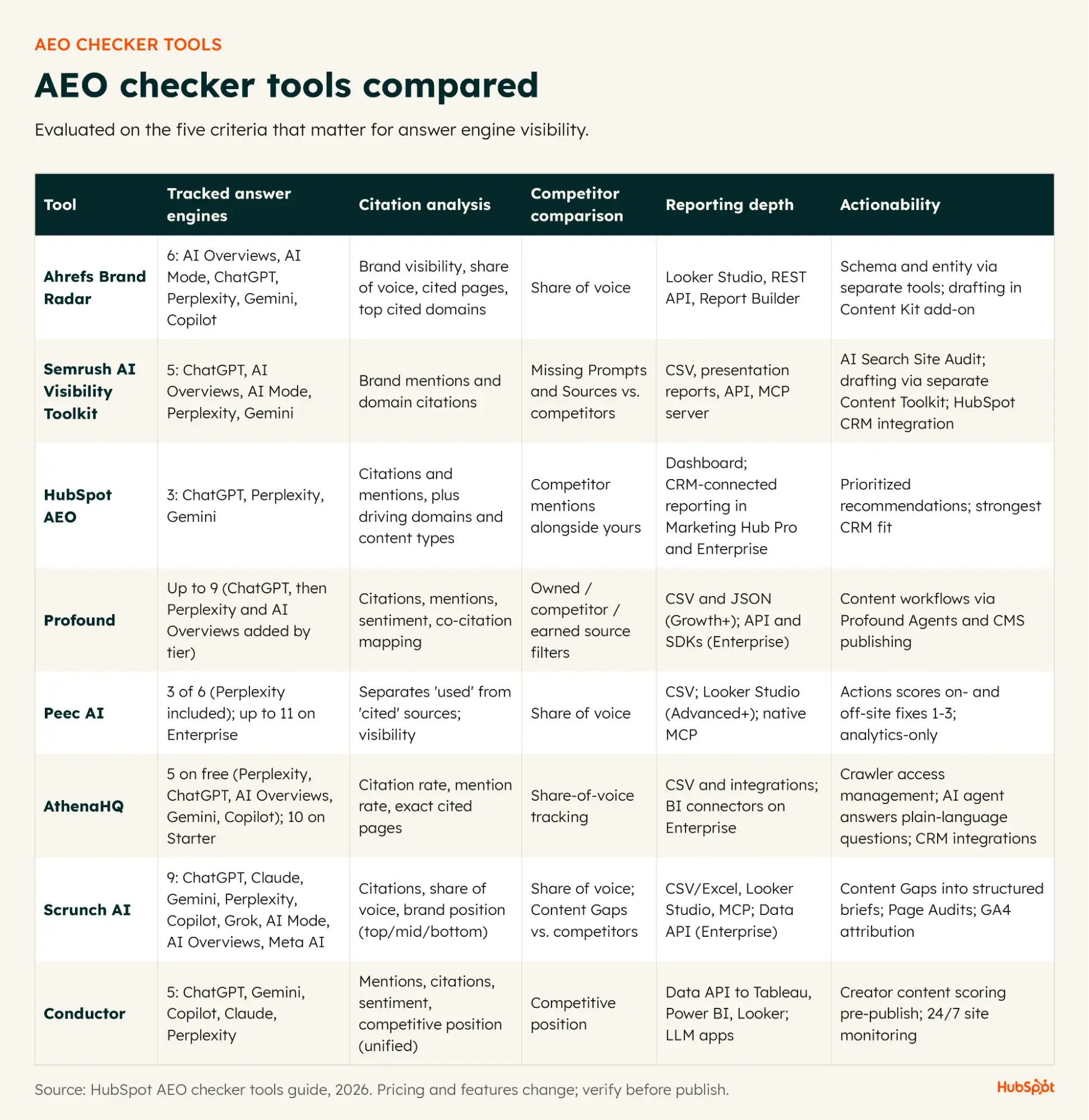
- HubSpot Content Hub: Ideal for end-to-end content and SEO management, particularly for teams already integrated with HubSpot’s CRM. It provides keyword recommendations, internal linking opportunities, and content performance data directly linked to contact and pipeline metrics, allowing for clear revenue attribution.
- Ahrefs: A powerful tool for competitive keyword research and backlink analysis. Its Keywords Explorer and Site Explorer features enable detailed analysis of competitor rankings, search volumes, and backlink profiles, especially useful for comparison page research and identifying content gaps.
- Screaming Frog: An essential technical SEO crawler for auditing site architecture. It identifies issues like duplicate title tags, broken links, thin content, and incorrect canonical tags, crucial for maintaining a clean structure, especially for large SaaS sites with many product-related pages.
- Google Search Console: A free and indispensable tool from Google itself. It provides actual impression and click data for pages in Google’s index, showing which queries trigger each page. It’s vital for identifying pages on page 2 that are ripe for optimization and for verifying structured data implementation.
- Surfer SEO or Clearscope: These tools aid in on-page content optimization by analyzing top-ranking pages for target keywords. They help identify semantically related terms, topics, and content elements that should be included to create comprehensive, authoritative product and feature pages.
Industry Perspectives and Future Outlook
The consensus among marketing leaders and industry analysts is clear: Product SEO is no longer a niche tactic but a core pillar of sustainable growth for B2B and SaaS companies. As competition for attention intensifies and buyers demand greater transparency and specificity, optimizing product-centric pages becomes a strategic imperative.
“The shift towards product-led growth (PLG) and the sophistication of today’s B2B buyers mean that your product pages are your storefront, your sales pitch, and often your first customer service interaction,” states a recent report from Gartner on digital marketing trends. “Investing in their organic visibility and effectiveness is directly investing in your bottom line.”
While initial results from Product SEO may take 3-6 months to manifest in rankings and 6-12 months for measurable pipeline impact, the compounding returns far outweigh the initial investment. Technical fixes often show faster results (4-8 weeks) than content-level changes. The key to long-term success lies in integrating Product SEO efforts with CRM and pipeline data from day one, ensuring that improved visibility directly translates into tangible business growth.
Ultimately, by prioritizing Product SEO, B2B and SaaS organizations can unlock a powerful, cost-effective channel for attracting, converting, and retaining high-value customers in an increasingly competitive digital landscape.