rifanmuazin
Crafting public relations campaigns that not only capture attention but also deliver measurable impact remains a significant challenge for industry professionals. The landscape of media engagement is increasingly saturated, demanding innovative approaches and robust validation beyond mere creative brainstorming. In an era where information overload is the norm and audience attention spans are fleeting, the ability to consistently generate top-tier campaign ideas, allocate resources effectively, and confidently predict success is paramount. This process, often perceived as an elusive blend of art and intuition, can be systemized and significantly de-risked through a meticulous, research-heavy two-step framework. This approach, leveraging advanced content analysis tools like BuzzSumo and drawing inspiration from successful precedents, empowers PR professionals to move from speculative ideation to strategically informed execution.
Foundation First: Unearthing Resonant Themes and Emotional Triggers
The cornerstone of any successful PR campaign lies in a profound understanding of what truly resonates with target audiences and the media. Before a concrete campaign idea even begins to form, PR strategists must undertake diligent research to identify themes that consistently garner attention, engagement, and links. This initial phase is not about immediate ideation but about strategic discovery. Success, in this context, is primarily defined by securing valuable media coverage and backlinks from authoritative sites, with social engagement serving as a crucial secondary Key Performance Indicator (KPI).
In an increasingly competitive digital environment, media outlets prioritize stories that align with existing audience interests and evoke strong emotional responses. To confidently assert that a PR concept will succeed, practitioners must first ascertain which content themes are:
a) Consistently discussed across relevant platforms and publications.
b) Consistently shared and linked to by audiences and other media entities.
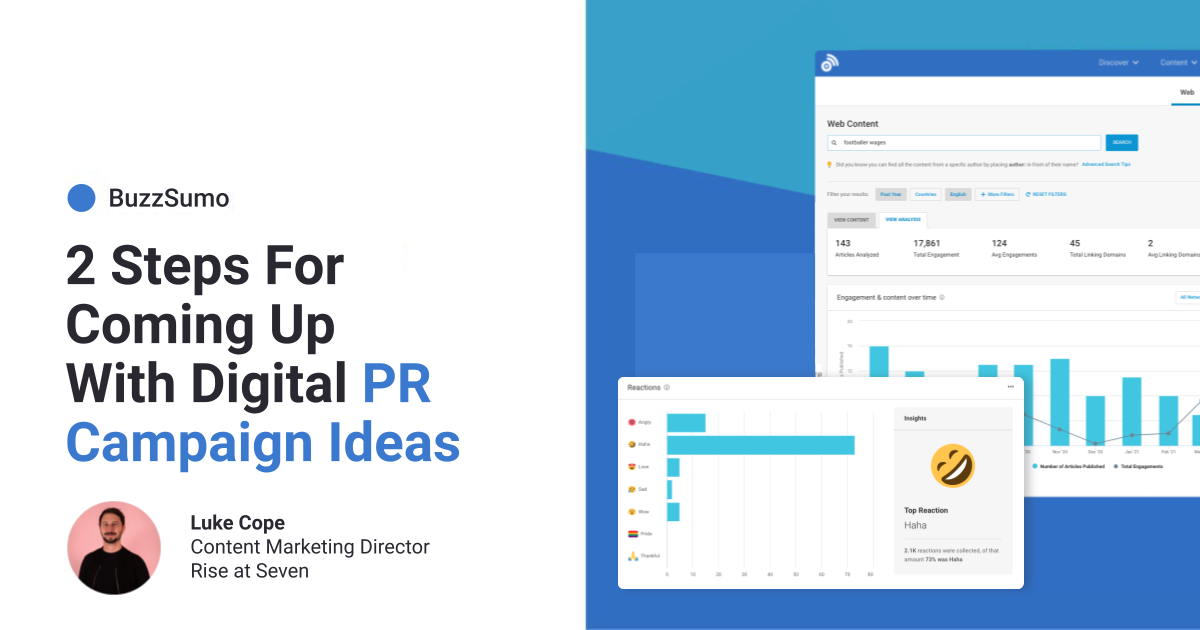
This foundational research phase alleviates the pressure to generate an immediate, fully-formed idea. Instead, it guides the creative process by illuminating pathways to proven engagement. A powerful tool in this preliminary exploration is BuzzSumo’s Content Analysis Report. This platform allows strategists to delve into vast datasets of published content, revealing patterns of engagement, popular formats, and prevailing emotional sentiments associated with specific keywords and topics.
Consider, for example, a client specializing in honeymoon packages. The initial research would naturally begin with the core product area, “Honeymoons.” However, a truly insightful analysis extends beyond this immediate offering. By branching out to related, yet broader, terms such as “Engagement rings,” “Weddings,” “Destination travel,” or “Romantic getaways,” PR professionals can uncover adjacent themes that command significant public interest. This systematic exploration continues until the thematic connections become too tangential to the client’s core offering. The objective is to map a network of interconnected topics, identifying those with high discussion volume and engagement potential.
Figures from content analysis reports, though not explicitly detailed here, typically illustrate publication trends over time, average social shares across platforms, and a breakdown of emotional reactions (e.g., joy, sadness, anger, awe) associated with content about specific themes. For instance, an analysis of “Honeymoons” might reveal consistent interest, while “Weddings” could show peak seasonal engagement. Diving into “Engagement Rings” might uncover a strong “wow” factor or aspirational sentiment among readers, indicating fertile ground for visually driven content.
Industry analysts frequently emphasize that data-driven content strategies lead to significantly higher ROI. A 2023 study by a leading marketing intelligence firm, for instance, indicated that campaigns informed by comprehensive content analysis achieved a 28% higher media pickup rate and 35% greater social shares compared to those based solely on intuition. This underscores the critical importance of this initial research phase in laying a robust foundation for campaign development.
Crafting Impact: Real-World Applications of Research-Backed Ideation
The theoretical framework of theme and emotion identification truly comes alive through practical application. Several exemplary campaigns demonstrate how this research-first approach translates into compelling, high-performing PR initiatives.
Campaign Spotlight: Illuminating “A World Without Light Pollution”
A notable campaign, “The Most Light Polluted Cities in the World Without Light Pollution,” executed for “Under Lucky Stars,” beautifully illustrates this methodology. The client’s core product was star maps, a niche offering. Initial BuzzSumo analysis revealed that “Star maps” alone lacked the broad appeal for a large-scale campaign. However, branching out revealed several promising secondary themes:
- Supermoons: High social engagement, recurring nature allowing for reactive PR opportunities.
- Night Sky: Consistently high social engagement, indicative of public fascination.
- Light Pollution: Significant social engagement, a current and growing topic with extensive scope for creative ideas.
Crucially, the “light pollution” theme was not only consistently discussed but was experiencing a surge in public discourse around the campaign’s launch. This timing was critical, coinciding with heightened public awareness driven by SpaceX’s satellite launches, which raised concerns about increasing orbital light pollution, and a general global focus on environmental pollution exacerbated by the COVID-19 pandemic. This confluence of factors signaled an opportune moment for a campaign.
Analysis: The Power of Visuals and Environmental Resonance
Further analysis of articles related to light pollution revealed two dominant emotional responses: a sense of sadness or concern over environmental degradation, and an overwhelming “wow” factor associated with imagery of pristine night skies. This insight was pivotal, dictating that the campaign needed to be highly visual and evoke a sense of wonder, contrasting the stark reality of light-polluted cities with the breathtaking potential of a clear night sky. The campaign successfully tapped into these emotions by visually de-polluting major global cities, allowing audiences to imagine a world where the Milky Way was once again visible from urban centers. This campaign not only generated significant media coverage but also sparked important conversations about urban planning and environmental conservation, demonstrating the brand’s commitment to a broader issue beyond its direct product.
Campaign Spotlight: The “Footballer Car Cost Calculator” – Tapping into Public Sentiment
Another compelling example involved a campaign centered on private number plates. While “Private number plates” offered some humorous content, it wasn’t sufficient for a major PR push. Expanding the research led to “Aspirational lifestyle themes,” specifically “Celebrity cars” and, more potently, “Footballers’ cars.” The latter revealed a trove of content and, more importantly, a significant volume of highly engaged and often impassioned comments.
Analysis: Bridging Aspiration and Reality
Analyzing these comments exposed a potent emotional cocktail: public frustration, competitiveness, and a strong tendency for self-comparison. Readers were not just observing; they were mentally juxtaposing their own financial realities with the opulent lifestyles of professional athletes. This insight birthed the “Footballer Car Cost Calculator” – an interactive tool that literally allowed users to compare how many years it would take an average person to afford a footballer’s luxury vehicle based on their weekly wage. This campaign shrewdly leveraged public sentiment, transforming a latent emotional response into an interactive, shareable experience that generated considerable debate and media attention. It wasn’t merely about luxury cars; it was about socio-economic disparity, aspiration, and the stark realities of wealth.
These examples underscore a critical truth: campaigns built on successful themes that tap into one or two strong emotions are inherently more likely to succeed. This meticulous research phase, conducted prior to creative brainstorming, acts as a scientific compass, guiding PR efforts toward maximum impact.
Strategic Execution: The Art of Format Selection and Adding Depth
Once a compelling, emotionally resonant theme is identified, the next critical step is to determine the absolute best format for the campaign and to infuse it with sufficient depth and multiple angles. A brilliant idea can fall flat if presented in an inappropriate medium. The format must amplify the message and optimize for the intended emotional response.
For instance, the “light pollution” campaign would have lost its “wow” factor if presented merely as a blog post. The interactive slider, allowing users to toggle between “before” (polluted skyline) and “after” (star-filled sky) views, was crucial. This simple piece of interactive code transformed static images into an engaging experience, directly aligning with the desired emotional impact.
The format is inextricably linked to the depth and variety of angles a campaign can offer. While a single, powerful angle can be sufficient, adding layers of information, different perspectives, or localized data significantly broadens the campaign’s appeal to diverse media outlets. In the light pollution campaign, the primary angle highlighted that 85% of Americans had never seen the Milky Way. This was a powerful hook. However, the campaign added depth by incorporating data from the Bortle scale, a measure of sky darkness, to illustrate the stark contrast between the most light-polluted cities (Bortle 10) and their appearance under ideal conditions (Bortle 1). Furthermore, while the initial focus might have been the USA, recognizing light pollution as a global issue prompted a global expansion of the project, increasing its relevance and reach across international media.
Case Study: “Touch the Germs” – Interactive Experiences for Public Awareness
Another powerful example of format driving impact is the “Touch the Germs” campaign (implied to be for a public health or hygiene client, given the visual). This campaign could have been a simple graphic or a data list about germ spread. However, the team went significantly further, building an interactive experience with a “microscope function.” This allowed users to virtually explore germ distribution, making an abstract concept tangible and impactful. This innovative format not only generated a high volume of media links but also garnered high-profile attention, with the Mayor of London reportedly commenting on the issue. This demonstrates how a well-chosen, interactive format can elevate a campaign from informative to genuinely influential, even sparking political discourse.
Case Study: The “Space Junk” Infographic – Visualizing Global Challenges
Conversely, the “Who Owns All the Space Junk?” piece from Aira, while visually appealing and conceptually strong, highlights the missed opportunities when a format isn’t fully exploited. The visualization of space junk by country is engaging, but the underlying concept held potential for far greater depth. A truly comprehensive execution might have included:
- Different types of space junk (defunct satellites, rocket stages, debris).
- Historical comparisons (space junk in the 1960s vs. today).
- Future projections (what orbital debris might look like in 100 years).
- Interactive elements showing orbits or collision risks.
While the main angle (“who owns all the space junk?”) was clear, the campaign could have benefited from additional layers of data and interactive elements, turning a good infographic into a truly immersive educational experience, thereby amplifying its media appeal and longevity.
Case Study: “iPods Visualized as Vinyl” – The Elegance of Simplicity
Not all effective formats require complex interactivity. Mark Johnstone’s (formerly of Distilled) campaign, “iPods Visualized as Vinyl,” exemplifies the power of elegant simplicity. This visual campaign creatively merged two iconic but disparate music formats, tapping into nostalgia and the ongoing debate about music consumption. The simplicity of the visual concept belied its profound cultural resonance, demonstrating that a compelling idea, presented in a clear, striking visual format, can achieve significant impact without elaborate technical development. This campaign resonated with a public fascinated by the evolution of technology and the cyclical nature of cultural trends.
Revisiting the “Footballer Car Cost Calculator,” the success was not just in the calculator itself but in the numerous angles it provided for outreach. Simple data comparing weekly wages to car costs allowed for headlines such as “How many years would it take you to afford [footballer’s car]?” or “The staggering disparity in wealth revealed by footballer car purchases.” These angles were directly derived from the campaign’s depth and its ability to draw comparisons that evoked strong emotional responses.
The confluence of the correct format, sufficient depth, and multiple outreach angles is what transforms a promising idea into a successful campaign. When married with the initial step of building campaigns around validated themes and emotions, the result is a powerful, integrated strategy poised for significant impact across digital PR and social channels.
Maximizing Reach and Buy-In: Advanced PR Tactics
Beyond ideation and execution, two additional strategic tips can significantly enhance a campaign’s overall success.
Precision Outreach: Data-Driven Seeding Lists
The initial research conducted to identify resonant themes serves a dual purpose: not only does it inform the campaign idea, but it also forms the bedrock of a highly targeted media outreach strategy. By revisiting the BuzzSumo Content Analysis Report, PR professionals can export lists of the most relevant articles and, crucially, identify the journalists and publications that have consistently covered these topics. This creates a pre-qualified, ready-made seeding list of contacts who have a proven interest in the campaign’s subject matter.
This eliminates the “spray and pray” approach, replacing it with precision targeting. As a veteran PR consultant recently stated, “In today’s media landscape, generic pitches are dead on arrival. Journalists are drowning in emails; you need to demonstrate that you understand their beat and audience before you even hit send.” BuzzSumo’s outreach tools, which allow saving journalists to projects and exporting their details, streamline this process, enabling PR teams to craft highly personalized and relevant pitches. Further guidance on crafting effective pitches and securing media coverage can be found in BuzzSumo’s comprehensive studies on journalist pitching and in expert blogs discussing effective agency PR tactics.
Securing Stakeholder Approval: De-risking Ideas with Data
One of the perennial challenges in PR is gaining internal buy-in for novel campaign ideas, especially when subjective opinions often clash. However, the data-driven methodology outlined here effectively removes much of this subjectivity. By presenting a robust body of research into consistently engaging themes and the emotional triggers they activate, PR professionals can present ideas with a strong, evidence-backed rationale.
Packaging the findings from the first stage – the content analysis reports showcasing engagement trends, emotional analysis by theme, and publisher performance – provides an objective basis for discussion. This data-backed approach transforms a “good idea” into a “strategically validated opportunity,” significantly increasing the confidence of clients and internal stakeholders and streamlining the approval process. It shifts the conversation from “Do you like this idea?” to “Here’s why this idea is positioned for success based on market data.”
BuzzSumo’s Content Analysis Report, with its ability to quickly report on the engagement and emotional sentiment of multiple themes or publisher sites, becomes an invaluable asset in preparing compelling pitch decks for internal and external stakeholders.
The Blueprint for Breakthrough PR: Key Principles for Success
The journey from a nascent idea to a high-impact PR campaign is multifaceted, yet it is consistently anchored by a few critical principles:
- Deep Dive into Themes and Engagement: Prioritize exploring engagement metrics and content consistency around multiple themes to strategically inform campaign ideas. This ensures relevance and audience interest.
- Tap into Core Emotions: Design campaigns that intentionally evoke at least one strong emotion. Emotional resonance is a powerful driver of sharing, engagement, and media pickup.
- Optimize Format for Impact: Carefully match the campaign idea with the most effective format. Whether it’s an interactive tool, a compelling data visualization, a calculator, or a simple yet striking image series, the format must amplify the message.
- Bridge Reality and Aspiration: Create content that draws compelling comparisons, often highlighting disparities or ideal scenarios (e.g., footballer wages vs. average wages, polluted skylines vs. mesmerizing views of the galaxy). Such comparisons often generate strong emotional responses and public discourse.
- Cultivate Depth and Angles: Infuse campaigns with as much detail and diverse data points as possible. This naturally generates multiple angles and narratives, significantly increasing the potential for outreach to a wider array of media outlets and ensuring longevity of coverage.
Conclusion: The Future of Persuasive Campaigns
In conclusion, the future of successful PR campaigns is inextricably linked to a data-informed, strategically executed approach. By systematically researching content themes and emotional triggers, selecting optimal formats, and enriching ideas with depth and multiple angles, PR professionals can move beyond the realm of guesswork. This methodology not only increases the likelihood of securing high-quality media coverage and fostering social engagement but also provides a clear, defensible rationale for every campaign, fostering greater confidence and collaboration with stakeholders. The era of intuition-only PR is waning; the age of analytical, emotionally intelligent, and strategically formatted campaigns is here.