rifanmuazin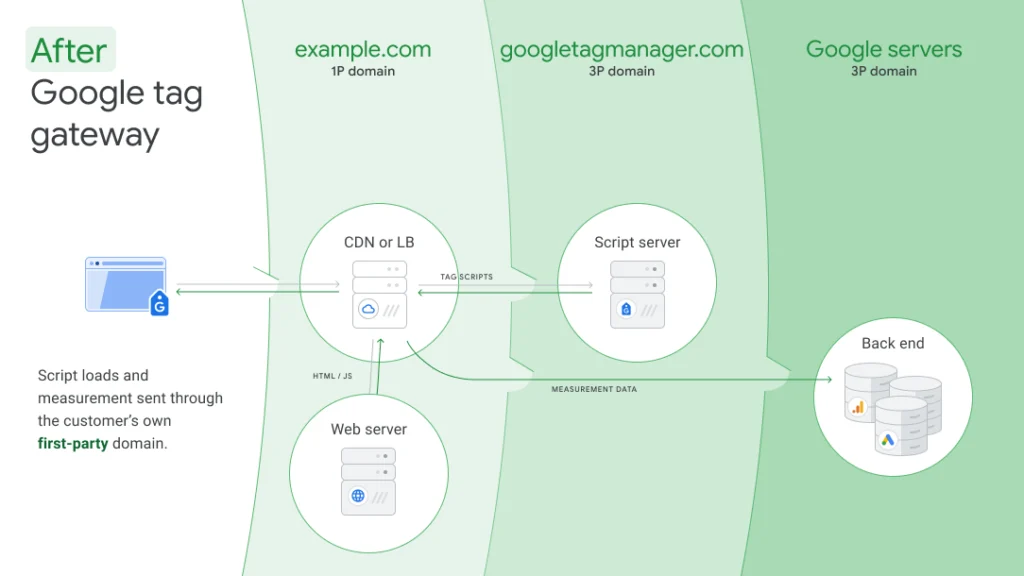
Google AI, the powerhouse behind sophisticated advertising tools like Smart Bidding, Performance Max, and Demand Gen, is fundamentally reliant on the quality and completeness of the data it receives. This is not a metaphorical dependency; it is a literal truth. When conversion signals, the very lifeblood of these AI-driven platforms, are incomplete, blocked, or entirely absent, the AI is compelled to optimize towards inaccurate objectives, or worse, towards nothing at all. This inherent vulnerability has given rise to Google’s “Data Strength” framework, an umbrella initiative designed to bolster first-party measurement products that actively work to recover lost signals, unify online and offline data, and ultimately provide Google’s AI with the comprehensive conversion picture it requires to drive meaningful growth. Advertisers who proactively invest in robust data foundations are already observing a significant uplift, reporting between 10% and 20% more conversions. Conversely, those who delay are inadvertently ceding a critical competitive advantage to their rivals.
This in-depth guide delves into the concept of Data Strength, elucidating its current imperative and outlining a strategic roadmap for its implementation. It draws upon authoritative Google research and the practical, hands-on experience of agencies in deploying these solutions. A compelling case in point is a home improvement retailer that, through a meticulously structured Data Strength program, has achieved a remarkable recovery of 27% of previously lost conversions.
The Accelerating Measurement Crisis
A significant portion of advertisers remain unaware of the sheer volume of conversion data they are presently losing. This degradation has been a gradual process, a subtle erosion that has made it deceptively easy to overlook. The digital advertising ecosystem has been progressively reshaped by privacy-centric shifts, with major browsers initiating restrictive measures that directly impact data collection.
Safari and Firefox, which collectively account for approximately 21% of global internet traffic, have implemented stringent restrictions on third-party cookies. This means that a substantial segment of the online audience is being measured with significantly less accuracy today than was possible just three years ago, and this trend is poised to continue its downward trajectory. The launch of Apple’s App Tracking Transparency (ATT) framework, while heralded with considerable fanfare, yielded a sobering reality: user opt-in rates for tracking have hovered between a mere 15% and 25%. Consequently, the vast majority of users on Apple devices are effectively rendered invisible to conventional in-app tracking mechanisms.
Compounding this challenge are the widespread adoption of ad blockers and tag blockers. These tools are designed to intercept and strip away conversion signals from a meaningful proportion of every campaign’s performance data. The Google Tag, by default, loads from a third-party domain, making it a prime target for browser privacy tools engineered to block such requests.
The ramifications extend far beyond mere inaccuracies in reporting. At the core of modern digital advertising lies Smart Bidding, an AI-driven system that learns and refines its strategies based on conversion data. When this data is incomplete or fragmented, the algorithm struggles to accurately identify which clicks, audience segments, or advertising placements are genuinely driving desired outcomes. This effectively forces the AI to operate in the dark, leading to suboptimal bidding strategies. Campaigns that should theoretically be top performers begin to falter, and the budgets allocated to these powerful AI tools underdeliver on their potential, operating far below their intended capacity.
The chasm between businesses that have proactively established resilient measurement foundations and those that have not is widening with each passing month. Every period of delay translates into a compounding loss of crucial signals, progressively starving the AI of the vital information it needs to function optimally.
Deconstructing Data Strength: A Holistic Measurement Framework
The term “Data Strength” has become increasingly prevalent in industry discussions, particularly within Google’s agency outreach initiatives over the past year. It is often accompanied by a series of acronyms – GTG, EC4W, EC4L, CM – which can create a sense of complexity. However, Data Strength represents Google’s strategic effort to consolidate these disparate products under a unified and comprehensible framework.
To understand its significance, consider it as the fuel for a high-performance engine. Google AI is the engine itself, powering Smart Bidding, Performance Max, and audience targeting. Conversion signals are the fuel that propels this engine. The more robust and complete these signals are, the more efficiently and effectively the engine can perform. Conversely, weaker signals lead to a demonstrable decrease in overall performance, leaving potential conversions on the table.
What distinguishes Data Strength from previous messaging around first-party data is its unwavering emphasis on comprehensiveness. The framework acknowledges that no single product can suffice. Instead, it advocates for a holistic approach that integrates all available data sources – both online and offline – into a single, coherent input stream. This unified data flow empowers Google’s AI with the most complete possible understanding of the customer journey.
Furthermore, there is a crucial competitive dimension to Data Strength that warrants direct acknowledgment. Google AI is engineered to optimize performance for whoever provides it with the superior data. If a competitor has invested in and implemented stronger measurement foundations, their campaigns will invariably learn faster, bid more efficiently, and gain a sustained advantage over time. An advertiser’s data strength, therefore, becomes a unique competitive moat, inaccessible to rivals, and providing a distinct advantage in the digital marketplace.
The Five Pillars of Data Strength: Building a Resilient Measurement Foundation
The Data Strength framework is built upon five core components, each playing a vital role in reconstructing a comprehensive view of the customer journey and feeding accurate signals to Google’s AI.
1. Google Tag and Google Tag Gateway (GTG)
The foundation of accurate measurement lies in the reliable deployment and execution of tracking tags. The Google Tag Gateway (GTG) is a critical enabler in this process. Advertisers who implement GTG have reported an average uplift of 14% in observed conversions. This translates to a multiplier effect across all other Google Tag features that rely on precise tagging, thereby enhancing the overall reliability of the entire measurement ecosystem.
The implementation process for GTG can vary. For clients utilizing Cloudflare as their Content Delivery Network (CDN), enabling GTG can be accomplished in fewer than five straightforward steps, requiring no code modifications or re-tagging efforts. For other CDN providers, server-side Google Tag Manager (GTM) setups, and various Content Management System (CMS) platforms, the implementation is more involved but is supported by comprehensive documentation.
2. Enhanced Conversions for Web (ECW)
Once the Google Tag is successfully loaded, the next challenge is to capture conversion events when a user’s cookie is not present for identification. Enhanced Conversions for Web (ECW) is designed to address this precise gap.
ECW operates by capturing consented first-party data at the point of conversion. This typically involves a hashed email address, which is then transmitted alongside the standard conversion event. In instances where a cookie-based match fails, Google leverages this hashed identifier to accurately attribute the conversion to the correct campaign. The entire mechanism is built with privacy at its core. Data is hashed directly within the user’s browser before it ever leaves their system, ensuring that Google only ever receives an encrypted identifier, never raw personal information.
The performance improvements attributed to ECW are substantial. It has been shown to drive an 8.5% uplift in observed Search conversions and a remarkable 15% increase in YouTube conversions. Given that YouTube has historically presented greater attribution challenges, ECW offers a significant stride in bridging this measurement gap.

3. Enhanced Conversions for Leads (ECL)
While ECW focuses on online conversions, Enhanced Conversions for Leads (ECL) tackles the crucial offline component of the customer journey, which for lead generation businesses, often represents the core commercial value.
The challenge for lead generation advertisers is a familiar one: Google Ads captures the initial form submission, but it remains blind to the subsequent stages of the customer journey – the crucial qualification call, the sales conversation, and ultimately, the closed deal. Standard Offline Conversion Import (OCI) provides a means to upload this offline data, but it comes with inherent limitations. It is strictly click-based, does not function across devices, and is entirely reliant on the GCLID (Google Click ID), an identifier that is slated for deprecation following the deprecation of Link Decoration.
ECL adopts a hybrid approach. It captures hashed Personally Identifiable Information (PII) at the point of lead form submission, alongside the GCLID. When the offline conversion is subsequently uploaded, Google utilizes multiple identifiers for matching, rather than relying on a single point of data. This results in a greater number of successful matches and, consequently, more accurately attributed conversions, feeding richer data into the bidding algorithms. The performance lift over Standard OCI is notable, with a 10% increase in Search conversions and an impressive 22% increase on YouTube. For businesses where the sales cycle for a single lead can span weeks or even months, this is not a marginal improvement; it represents a fundamentally more accurate depiction of what is truly driving revenue.
4. Customer Match
Customer Match represents a pivotal shift where the measurement layer seamlessly transitions into audience activation. By uploading consented first-party customer data – such as hashed email addresses, phone numbers, or physical addresses – advertisers can enable Google to match this information against signed-in users across its vast network, including Search, Shopping, YouTube, Gmail, and Display. This capability allows advertisers to directly reach their most valuable customers, effectively suppress them from prospecting campaigns, or utilize them as a seed audience for creating lookalike segments of individuals who share similar characteristics with their existing high-value customers.
5. Data Manager
Data Manager serves as the central nervous system of the Data Strength framework, unifying the individual components into a cohesive system. It is Google’s centralized hub for integrating all disparate data sources – including website analytics, app usage, physical store data, and CRM information – into a single, accessible location. This consolidation ensures that Google’s AI receives the most comprehensive possible view of each customer. Advertisers who successfully connect offline and app data through Data Manager have reported an average increase of 26% in incremental Return on Ad Spend (ROAS).
The 2026 update has significantly enhanced Data Manager’s universality, making it directly accessible within Google Ads, Search Ads 360, and Campaign Manager 360, with Google Analytics integration to follow. New integrations with popular platforms like Mailchimp and Klaviyo further streamline the process of feeding data from additional sources with reduced friction. For agencies managing multiple client accounts, the intuitive map view within Data Manager visualizes each client’s data journey from connection to activation, providing a clear overview of where data signals are robust and where potential gaps still exist.
Performance Case: The Data-Driven Advantage
Google’s extensive research consistently underscores a critical correlation: the more comprehensive and complete the data provided, the superior the performance of its AI-driven advertising tools. This enhanced AI performance directly translates into a greater number of conversions, often achieved without an increase in budget.
| Product | Performance Uplift |
|---|---|
| Google Tag Gateway | +14% observed conversions |
| Enhanced Conversions for Web | +8.5% Search conversions | +15% YouTube conversions |
| Enhanced Conversions for Leads (vs OCI) | +10% Search conversions | +22% YouTube conversions |
These figures represent median uplifts derived from Google’s internal data. It is important to note that individual results can vary significantly based on the specific account, the industry sector, and the advertiser’s pre-existing measurement capabilities. However, the overarching pattern remains consistent: each layer of Data Strength implementation contributes additional valuable signals, and these incremental signals compound over time to deliver exponential improvements.
The competitive landscape also plays a crucial role in this narrative. Google AI is inherently designed to optimize for the advertiser that provides it with the best data. This is not a neutral process. If a competitor within the same market category has fully implemented Data Strength while an advertiser has not, the competitor’s campaigns will learn and adapt more rapidly with each conversion cycle. This widening gap, initially silent and occurring in the background, will eventually manifest visibly in metrics such as share of impressions or overall market position.
In essence, building a robust measurement foundation is no longer a discretionary enhancement for AI-powered advertising; it has become an absolute prerequisite for sustained success.
Proven ROI: Real-World Impact and Case Studies
The tangible benefits of the Data Strength framework are being realized by businesses across various sectors. One prominent example is a home improvement retailer that, facing challenges with lead volume due to persistent signal loss, prioritized a comprehensive “Data Strength” roadmap in collaboration with Brainlabs, a leading digital marketing agency.
Approach: The retailer’s strategy involved the implementation of a seamless “one-click” Cloudflare integration for Google Tag Gateway (GTG), complemented by Consent Mode and Enhanced Conversions. This streamlined approach ensured efficient data capture and enhanced privacy compliance.
Results: The immediate impact was significant. GTG alone contributed to a 15% uplift in observed conversions. When the full suite of Data Strength components was integrated, the retailer achieved an impressive 27% total recovery of previously lost conversions. This case study exemplifies how strategic investment in data infrastructure can directly translate into measurable business growth and a more accurate understanding of marketing effectiveness.
Conclusion: The Unavoidable Future is First-Party Data
The ongoing discourse surrounding Artificial Intelligence in advertising often gravitates towards the intricacies of the AI models themselves – the optimal campaign types, the most effective bidding strategies, and the most engaging creative formats. While these are undoubtedly important considerations, they represent only half of the critical equation for success.
The other indispensable half is data. And for a vast majority of advertisers today, this data remains critically incomplete. Conversion signals are being systematically blocked, valuable conversions are going unattributed, and the AI that powers their campaigns is operating with a fragmented and incomplete picture of customer behavior. The true extent of this shortfall often goes unnoticed because the missing data, by its very nature, does not appear in dashboards. This makes it deceptively easy for advertisers to overlook and leave unaddressed.
Data Strength provides the definitive solution to this pervasive problem. It is not a quick fix or a single product that can be implemented in a single effort. Instead, it represents the meticulous construction of a measurement foundation built over time, drawing upon multiple integrated components. With each layer of this foundation that is put in place, more of the vital signal that the AI needs to learn, bid effectively, and ultimately drive growth is recovered. Businesses that commit to building this robust data infrastructure now will undoubtedly gain a compounding and sustainable competitive advantage over those that continue to delay.
For advertisers seeking to quantify the extent of their current conversion data loss and explore strategies for recovery, engaging with specialized data services teams for a comprehensive Measurement Audit is a critical next step. Understanding your current data posture is the first stride towards unlocking the full potential of your AI-driven advertising investments.