rifanmuazin
The landscape of business-to-business (B2B) marketing is undergoing a profound transformation, driven by escalating complexity, the pervasive influence of artificial intelligence, and increasingly fragmented buyer journeys. In this dynamic environment, a strategic framework known as Best Answer Marketing (BAM) is emerging as a critical approach for B2B brands seeking to differentiate themselves, cultivate deep trust, and ultimately secure customer confidence throughout the entire buyer lifecycle. This framework hinges on a simple yet powerful principle: being the most valuable and accessible solution at every touchpoint where potential customers are seeking information and making decisions.
At its core, Best Answer Marketing is designed to address the fundamental challenges B2B marketers face in 2026 and beyond. The contemporary B2B buyer is a sophisticated individual navigating a digital ecosystem that is both vast and intricate. Data reveals a stark reality: a staggering 94% of B2B buyers now leverage artificial intelligence tools during their purchasing process, according to a report by 6Sense. This reliance on AI is compounded by the proliferation of information sources, with buyers engaging with an average of over 10 distinct channels to gather insights, as noted by McKinsey. Furthermore, the decision-making process itself has become a complex, multi-stakeholder affair, involving buying committees that can comprise an average of 13 internal team members and 9 external advisors or partners, as highlighted by Forrester. This intricate web of influence and information consumption demands a marketing strategy that is not only pervasive but also exceptionally relevant and trustworthy.
The immediate response from some B2B brands to this increasing complexity has been to flood the market with more content, often with significant AI assistance in its creation. While this approach aims to increase visibility, it risks creating a homogenous sea of information that fails to resonate or differentiate. Research from Adobe indicates that 82% of B2B brands are focusing on content that answers questions. However, the efficacy of this strategy is not merely in the act of answering questions, but in the depth, context, and delivery of those answers. The questions being addressed, the manner in which they are answered, the platforms where these answers are presented, the credibility of the source, and the underlying intent are all crucial factors. While AI and advanced search engine optimization (SEO) techniques, such as adhering to Google’s E-E-A-T (Experience, Expertise, Authoritativeness, Trustworthiness) guidelines, are accessible to all, they represent a baseline. The true differentiator lies in how these tools are wielded to create genuinely exceptional and human-centric responses.
The central question for B2B marketers in this AI-augmented era becomes: When everyone has access to the same strategies and resources via AI, how does any single brand truly stand out, build genuine trust, and inspire the kind of unwavering confidence that drives purchasing decisions?

One proven avenue for differentiation is through a robust thought leadership strategy, underpinned by original research, co-created with industry influencers, and disseminated through content formats designed to deliver an engaging, omnichannel experience that meets the sophisticated expectations of today’s buying groups. To this end, TopRank Marketing, in collaboration with Ascend2, conducted research titled “The State of B2B Thought Leadership in 2026.” This study delves into the synergistic intersection of original research, influencer collaboration, and strategic content deployment. Complementing this, a “Best Answer Marketing Playbook” series offers a practical model for implementing these principles. These resources have garnered significant attention, underscoring the market’s appetite for guidance on navigating these complex B2B marketing challenges.
Research and playbooks, while invaluable for conceptual understanding, are merely tools to illustrate the broader concept of becoming the “best answer.” To effectively navigate the escalating complexity of B2B marketing in 2026 and into the future, a strategic shift is required. Marketers must move beyond thinly spread efforts focused solely on operational efficiency and instead concentrate on the core imperative: delivering the precise answers that buyers need, precisely when and where they need them. As the promise of AI and content creation evolves from mere mechanical output to meaningful human connection, B2B brands have a distinct opportunity to transcend the norm and establish themselves as definitive “Best Answer Brands.”
The Pillars of Best Answer Marketing: Visibility, Belief, and Choice
The Best Answer Marketing framework is built upon three interconnected pillars, each crucial for establishing and maintaining a dominant market position: Be Visible, Be Believed, and Be Chosen.
Be Visible: Capturing Attention in a Crowded Digital Space
The fundamental principle of visibility is straightforward: you cannot win if you are not present. However, in today’s hyper-connected world, simply increasing the volume of content is a counterproductive strategy. It leads to a deluge of undifferentiated material that buyers passively scroll past in their quest for something that truly captures their attention. When content does manage to stop the scroll, marketers typically have mere seconds to make a meaningful connection.
To achieve optimal visibility in the modern B2B landscape, which includes emerging AI-powered Large Language Models (LLMs), established search engines, and influential social platforms like LinkedIn, a Best Answer Marketing strategy must consider four key elements: relevance, reach, creativity, and integration.
-
Relevance: The cornerstone of being the best answer is a profound understanding of the questions your customers are asking. This necessitates dedicated question research, drawing from a multitude of sources. This can include analyzing search queries, monitoring social media conversations, reviewing customer support logs, and leveraging keyword research tools that identify user intent. Understanding the nuances of customer pain points and aspirations is paramount to crafting content that directly addresses their needs.
-
Reach: Visibility is intrinsically linked to presence. With the understanding that “search happens everywhere,” as identified by SparkToro, prioritizing the right channels is critical. Audience intelligence tools are instrumental in mapping where buyers discover and validate information. This is particularly important given that a significant 61% of B2B buyers now prefer a self-serve sales approach and actively avoid direct sales interactions, according to Gartner. While Google remains a primary discovery engine, the rapid adoption of AI tools like ChatGPT, Gemini, and Perplexity demands a strategic presence on these emerging platforms. A survey of 797 senior B2B marketers conducted by TopRank Marketing and Ascend2 identified the top channels for distributing B2B thought leadership. These include:
- Company Websites
- Industry Publications
- Webinars/Virtual Events
- Email Marketing
- Search Engines (Organic)
Beyond these, other crucial channels include word-of-mouth, influencer collaborations, earned media, paid media, broader social media platforms, and both virtual and in-person events. Strategic prioritization requires understanding where your audience congregates and when, aligning channel selection with specific stages of the buyer journey.
-
Creativity: In the face of overwhelming content saturation, creativity becomes a powerful differentiator. Visual appeal, compelling copywriting, originality, authentic human narratives, and emotionally resonant storytelling are often conspicuously absent in B2B marketing. This void presents a significant opportunity for brands to stand out. The adage “facts tell, stories sell” remains highly relevant. Buyers are seeking more meaningful and nuanced messaging that authentically reflects their challenges, empathizes with their constraints, and fosters genuine connection. The “Laser Bear” campaign, a past example of breaking free from conventional B2B marketing, serves as a reminder of the impact of creative risk-taking. Increasingly, B2B brands are experimenting with innovative approaches to storytelling that capture attention and forge deeper connections.
-
Integration: Creativity, while vital, must be more than a fleeting moment of entertainment. Its true power is unlocked when it is coordinated and integrated across multiple channels. In an environment where buying groups are larger and information is consumed across a multitude of touchpoints, integrated messaging and creative efforts contribute directly to building the “mental availability” necessary for a brand to be considered. A disjointed approach, even if creative, will be quickly forgotten. Seamless integration ensures that the brand’s message is consistent and reinforced, building familiarity and trust over time.

Be Believed: Cultivating Trust and Inspiring Confidence
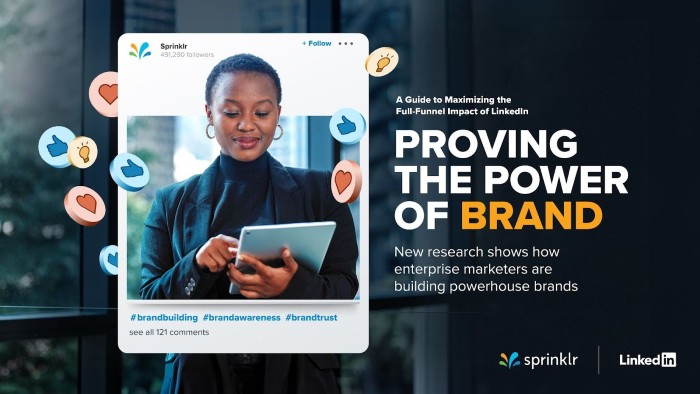
Capturing a customer’s attention is only the first step. If the message delivered lacks credibility, the engagement will be fleeting. Research from LinkedIn consistently highlights the paramount importance of trust in B2B success, with 94% of marketers agreeing that it is a key differentiator. In the fragmented discovery landscape, B2B brands face the dual challenge of not only building trust but also inspiring belief – a deeper form of conviction.
The foundation of belief is trust, and within the Best Answer Marketing framework, this is addressed through a dedicated “Trust System.” This integrated approach to messaging and creative execution can be applied in several ways:
- Content Credibility: Ensuring all content is factually accurate, well-researched, and transparently sourced. This includes citing reputable data, attributing expert opinions, and disclosing any potential conflicts of interest.
- Expert Endorsement: Leveraging the voices of internal subject matter experts, industry thought leaders, and satisfied customers to validate claims and share authentic experiences. Influencer marketing, when executed strategically, can significantly amplify this credibility.
- Consistent Messaging: Maintaining a unified and consistent brand voice and message across all platforms and touchpoints. Inconsistencies can erode trust and create confusion.
- Transparency and Authenticity: Openly communicating brand values, business practices, and product capabilities. Genuine human narratives and relatable experiences foster deeper emotional connections and build rapport.
- Customer Advocacy: Actively encouraging and showcasing positive customer reviews, testimonials, and case studies. Social proof is a powerful driver of belief.
Within B2B marketing, the paradigm is shifting from simply informing customers to making them feel something. This emotional resonance is the bridge between trust and belief. Architecting trust through consistent messaging and cultivating consensus among influential sources that your brand represents the best answer is the bedrock upon which B2B brands can inspire genuine belief. This integrated approach creates a robust foundation, enabling brands to demonstrate unequivocally that they are the optimal solution for their customers’ needs.
Be Chosen: Driving Decision Confidence and Market Leadership
The ultimate goal of Best Answer Marketing is to be chosen. This signifies a brand that is not only visible and trusted but consistently so, across the entire buyer journey. However, being chosen transcends having the right facts, delivering exceptional content experiences, and possessing credibility. It extends to building “decision confidence” within the buying group. The critical question becomes: How well can the buying committee confidently defend their decision to select your solution and company over all others?
To be chosen, a brand must embody the “best answer” by being:
- Visibly Relevant: Appearing prominently and appropriately on the channels where buyers are actively searching.
- Validated: Endorsed and corroborated by trusted sources and consensus within the industry.
- Comprehensively Answered: Delivering solutions through content experiences that effectively reach and inform every member of the buying group.
This combination of factors ensures that a brand is not only favored by search engines and AI but is also recognized and recommended by respected industry publications, influential thought leaders, and peers on platforms where critical buying decisions are discussed.
Determining when a brand is truly “chosen” in the current landscape, especially with the rise of zero-click searches and LLMs that may not always cite sources, presents a new challenge. The focus shifts from solely tracking clicks to understanding the content’s impact on buyer knowledge, trust, and subsequent actions. Key indicators of being chosen include:
-
Brand Propagation: Your unique ideas, narratives, or research are cited, summarized, or modeled by LLMs and search engines. This demonstrates that your content is actively influencing answers at the highest levels of discovery, even without a direct click. Signs to watch for include your brand’s insights appearing in AI-generated summaries, your terminology becoming prevalent in search results, and your research being referenced in authoritative online discussions.
-
Brand Consistency: You achieve disproportionate visibility across the channels that matter most to your target audience. This is evidence that your answers are being discovered consistently and are relevant throughout the buyer’s journey. Brands that publish generic content will remain invisible. Key metrics to track include consistent presence in relevant search results, high engagement rates on key social platforms, and repeated mentions in industry discussions.
-
Brand Persuasion: High-intent buyers arrive at the point of decision “pre-sold” or exceptionally well-informed about your solutions. Your “best answer” content has effectively reduced uncertainty and built decision confidence. This means your brand has achieved significant “mental availability” among the 95% of buyers who are not actively in-market, positioning you favorably as they transition into the 5% actively seeking solutions. Indicators include a higher conversion rate from initial engagement to sales-qualified leads, a shorter sales cycle, and buyers articulating a deep understanding of your value proposition.
-
Brand-Driven Pipeline: Your best answer content correlates directly with pipeline quality. Beyond influencing discovery and engagement, this content builds confidence in decision-making and the ability to defend those decisions. The impact of this confidence can be measured through pipeline metrics such as an increase in deal velocity, a higher win rate for deals influenced by your content, and a greater average deal size.
Ultimately, being chosen is not a singular event but the cumulative result of sustained presence where and when buyers are looking, amplified by the compounding value of familiarity, trust, and belief. Achieving mental availability through consistent cross-channel presence and fostering decision confidence through proof and consensus-building solidify your brand as the best answer, leading to selection. To gain a deeper understanding of how to track these multifaceted metrics, exploring frameworks like BAM Unified Analytics is recommended.
In conclusion, the evolving B2B marketing landscape demands a strategic pivot from quantity to quality, from generic content to targeted answers, and from passive presence to active influence. By embracing the principles of Best Answer Marketing – being visible, believed, and chosen – B2B brands can cut through the noise, cultivate enduring trust, and position themselves as the indispensable partners their customers seek, driving sustainable growth and market leadership in an increasingly complex world.