
 rifanmuazin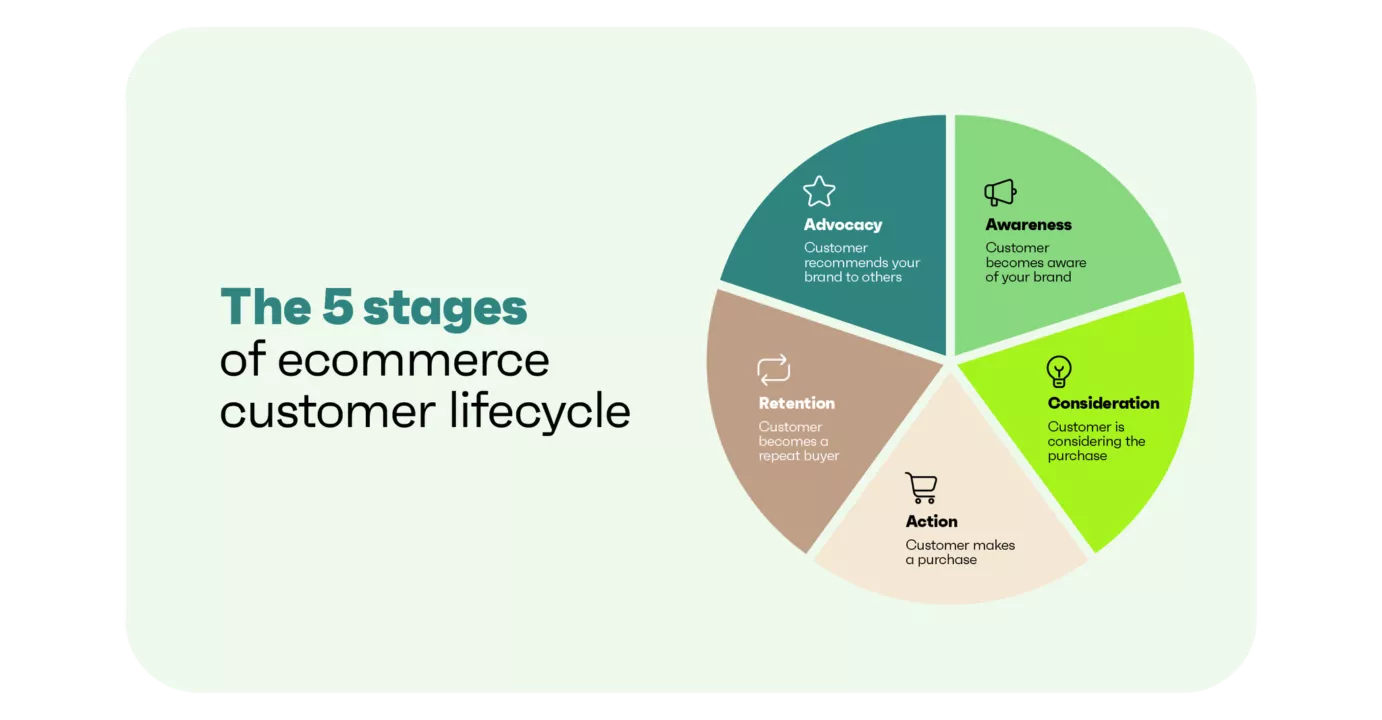
Customer lifecycle management (CLM) represents a critical strategic framework for businesses to track and optimize customer engagement across their entire journey, from initial awareness to long-term advocacy. This holistic practice ensures that customers are accurately assigned to relevant stages of their relationship with a brand, enabling the deployment of precisely timed communications and experiences. By meticulously mapping and responding to customer progression, organizations can transcend transactional interactions, fostering deeper relationships that convert one-time purchasers into repeat buyers and steadfast loyalists. The comprehensive application of CLM principles, spanning acquisition through to advocacy, is directly correlated with enhanced revenue generation, significant increases in customer lifetime value (CLTV), and a marked reduction in customer acquisition costs (CAC). This article serves as an authoritative guide to customer lifecycle management for e-commerce enterprises, delving into its fundamental definition, core stages, prevalent models, systematic processes, established best practices, and the transformative influence of artificial intelligence on its future trajectory.
The Evolution of Customer Relationship Strategies
The concept of managing customer relationships has undergone a significant transformation over the past few decades. Historically, businesses often focused on mass marketing and transactional sales, with limited understanding of individual customer journeys beyond the point of purchase. The advent of digital technology and the internet in the late 20th century began to shift this paradigm, enabling more direct and personalized interactions. The rise of Customer Relationship Management (CRM) software in the 1990s marked a pivotal moment, providing tools for collecting, organizing, and analyzing customer data. However, CRM primarily served as a data repository.
Customer Lifecycle Management emerged as a strategic evolution, moving beyond mere data storage to proactive, data-driven engagement. It recognizes that customer relationships are dynamic, not linear, and require continuous nurturing. This shift reflects a broader industry movement from a product-centric approach, where the focus was on selling goods, to a customer-centric model, where understanding and meeting individual customer needs and preferences are paramount. This evolution has been fueled by increasing competition, rising customer acquisition costs, and the undeniable value of customer retention, making CLM an indispensable component of modern business strategy.
Defining Customer Lifecycle Management
Customer Lifecycle Management (CLM) is the ongoing, strategic practice of managing and optimizing how a brand engages with its customers throughout every phase of their relationship, from their initial discovery of the brand to becoming a long-term advocate. It is a comprehensive framework that utilizes data to understand each customer’s current stage, predict their future needs, and deploy targeted actions to guide them towards deeper engagement and loyalty. Unlike a static process, CLM acknowledges that customer journeys are often fluid, with individuals potentially skipping stages or reverting to earlier ones. A once-loyal customer might lapse into inactivity, while a first-time buyer could rapidly become a brand champion. CLM provides the mechanisms to account for and respond to these movements dynamically.
It is crucial to differentiate CLM from related concepts like Customer Relationship Management (CRM) and Customer Lifecycle Marketing. A CRM system is fundamentally a software platform designed to collect, store, and manage customer data, tracking interactions and providing a unified view of customer information. CLM, conversely, is the strategic application of that information. For instance, a CRM might record that a customer has made two purchases in the last year and hasn’t opened an email in 60 days. CLM is the strategic decision to then segment this customer as “at-risk” and initiate a targeted reactivation campaign.
Customer Lifecycle Marketing, on the other hand, refers specifically to the marketing communications and campaigns deployed at each stage of the lifecycle, such as welcome emails, abandoned cart reminders, or win-back offers. While marketing is a vital tool within CLM, CLM encompasses the broader strategy of identifying stages, setting goals for each stage, and coordinating efforts across various departments—not just marketing—to optimize the entire customer journey. In essence, CRM provides the data, marketing executes the communications, and CLM provides the overarching strategy that connects them to drive desired customer behaviors.
The Five Stages of the Customer Lifecycle
The customer journey is typically broken down into five distinct, yet interconnected, stages. Understanding these stages is fundamental to developing an effective CLM strategy, as each requires specific approaches, metrics, and channels.
-
Awareness: This is the initial stage where a potential customer first becomes aware of a brand or product. They might encounter it through social media, search engine results, advertising, word-of-mouth, or content marketing. The goal here is to capture attention and introduce the brand’s value proposition.
- KPIs: Website traffic, social media reach, brand mentions, impressions.
- Channels: Content marketing (blogs, videos), social media advertising, SEO, display ads, public relations.
- Automation Triggers: First visit to website, ad clicks.
-
Consideration: At this stage, the customer has acknowledged the brand and is actively researching and evaluating its offerings against competitors. They are looking for solutions to their needs and seeking more information.
- KPIs: Engagement rates (time on site, page views), lead generation (email sign-ups), demo requests, product page views.
- Channels: Email marketing (nurture sequences), detailed product pages, comparison guides, webinars, retargeting ads.
- Automation Triggers: Email sign-up, specific product page visits, adding items to a wishlist.
-
Action (Purchase/Conversion): This is the critical stage where the customer decides to make a purchase or commit to the brand’s primary offering. It’s the culmination of the awareness and consideration phases.
- KPIs: Conversion rate, average order value, sales revenue.
- Channels: E-commerce website, clear calls-to-action, streamlined checkout process, abandoned cart recovery emails/SMS.
- Automation Triggers: Abandoned cart, successful purchase.
-
Retention: After the initial purchase, the focus shifts to ensuring the customer makes repeat purchases and remains engaged with the brand. This involves providing excellent post-purchase support, offering relevant follow-ups, and building a positive ongoing relationship.
- KPIs: Repeat purchase rate, customer retention rate, churn rate, customer satisfaction (CSAT), net promoter score (NPS).
- Channels: Post-purchase emails, loyalty programs, exclusive offers, customer support, personalized product recommendations.
- Automation Triggers: First purchase anniversary, no purchase in X days, loyalty program enrollment.
-
Advocacy: In the final stage, retained customers become brand champions, actively recommending the brand to others through reviews, social media mentions, and word-of-mouth. These advocates are invaluable for organic growth and brand credibility.
- KPIs: Referral rate, social shares, positive reviews, user-generated content.
- Channels: Referral programs, review requests, social media engagement, community forums.
- Automation Triggers: High NPS score, multiple repeat purchases, referral program sign-up.
While these stages are presented linearly, customers often loop back, skip, or re-enter stages. For instance, a loyal customer might lapse into inactivity (a retention challenge) or an advocate might consider a new product category (re-entering consideration). Effective CLM anticipates and adapts to these dynamic movements.
Key Customer Lifecycle Management Models
E-commerce businesses typically leverage different models to implement and measure their CLM strategies, often with overlapping applications.
-
The Traditional Five-Stage Model: As described above, this model segments customers into Awareness, Consideration, Action, Retention, and Advocacy. It’s particularly effective for businesses without extensive historical data or complex automation infrastructure, providing a clear framework for initial strategy development. The primary metric to monitor for this model is the customer retention rate, indicating how effectively customers are progressing past their initial purchase and becoming repeat buyers. A gap in retention, for example, signals a need to strengthen post-purchase engagement strategies.
-
The RFM Segmentation Model: RFM stands for Recency, Frequency, and Monetary value. This model ranks customers based on three key behavioral indicators:
- Recency: How recently a customer made a purchase.
- Frequency: How often a customer makes purchases.
- Monetary Value: How much money a customer spends.
High scores in all three categories identify the most valuable customers, while low scores highlight those at risk of churn. This model is invaluable for catching early signs of customer disengagement and segmenting customers into tiers (e.g., Top Tier, Mid-Value, At-Risk, Churned). It requires an established customer base with sufficient purchase history to generate meaningful scores. The key metric here is each customer’s RFM tier, which provides immediate insight into their current value and potential future behavior, enabling highly targeted segmentation and campaigns.
-
Behavioral/Event-Driven CLM Models: This model focuses on responding directly to specific customer actions or inactions. Instead of adhering to rigid stages, it uses triggers based on customer behavior to initiate automated flows. Examples include sending an abandoned cart email when a customer leaves items in their cart, or a win-back offer when a customer’s reorder window passes without a purchase. The strength of this model lies in its immediacy and relevance, reaching customers precisely when they are most engaged or in need of intervention. It heavily relies on robust marketing automation platforms. The critical metric for this model is the automation conversion rate, which measures the percentage of triggered messages that lead to a desired action, such as a purchase. Platforms like Omnisend excel in this area, offering pre-built triggers for various behaviors across multiple channels like email, SMS, and push notifications.
| Model | Best for | Metric to Watch |
|---|---|---|
| Traditional Five-Stage | Stores with no purchase history or automation needed | Customer Retention Rate |
| RFM Segmentation | Stores with an established customer base worth segmenting | Each Customer’s RFM Tier |
| Behavioral/Event-Driven | Stores already running marketing automation | Automation Conversion Rate |
The Customer Lifecycle Management Process: A Step-by-Step Guide
Implementing an effective CLM strategy involves a systematic approach, moving from data aggregation to automated engagement and continuous optimization.
Step 1: Map Your Customer Data and Touchpoints
The foundational step is to understand where your customer data resides and how customers interact with your brand. Businesses often use various tools (CRM, e-commerce platform, email service provider, analytics tools), each collecting different data points.
- Audit Your Data Sources: Identify all platforms that collect customer data (e.g., Shopify, Magento, Salesforce, Google Analytics, social media platforms).
- Identify Key Customer Touchpoints: Map out every point where a customer interacts with your brand, online and offline. This includes website visits, ad clicks, email opens, purchases, customer service inquiries, and social media comments.
- Establish Data Integration: Determine how data can be shared and synchronized between these disparate systems to create a unified customer view. This might involve APIs, integrations, or a centralized data warehouse. A fragmented data landscape makes meaningful CLM impossible.
Step 2: Segment Your Audience by Lifecycle Stage
Once data is unified, segmenting your customer base is crucial for tailoring communications. While manual segmentation is possible, advanced tools provide dynamic capabilities.
- Define Segmentation Criteria: Based on your chosen CLM model (e.g., five-stage, RFM), define clear criteria for assigning customers to specific segments. For example, “new subscribers,” “first-time buyers,” “repeat customers,” “at-risk customers,” or specific RFM tiers.
- Leverage Segmentation Tools: Utilize your marketing automation platform’s capabilities to create these segments. Platforms with built-in RFM analysis can automatically score and group customers into categories like “Recent,” “Needs Nurturing,” or “About to Lose,” and dynamically move them between groups based on their activity.
- Regularly Review and Refine Segments: Customer behavior is fluid. Ensure your segmentation is dynamic and updates automatically or is regularly reviewed to reflect current customer status.
Step 3: Activate the Right Channels at Each Stage
Customers have diverse preferences for how they receive information. A multichannel approach is vital to meet these expectations and maximize engagement.
- Email Marketing: Remains a cornerstone for nurturing relationships, delivering personalized content, transactional updates, and promotional offers across all stages.
- SMS Marketing: Ideal for time-sensitive alerts, flash sales, order confirmations, shipping updates, and quick win-back offers, especially in the action and retention stages. Its high open rates make it powerful for immediate engagement.
- Web Push Notifications: Excellent for non-intrusive reminders about abandoned carts, back-in-stock alerts, or new product launches, particularly effective in the consideration and action phases without requiring personal contact information.
- Social Media: Critical for awareness and advocacy, fostering community, and direct customer interaction.
- Customer Service Platforms: Provide crucial data and direct interaction points, particularly in the retention phase for resolving issues and building trust.
The Cruciality of Multichannel for CLM: Customers expect brands to communicate on their preferred channels. Offering opt-ins for SMS and web push alongside email caters to these diverse preferences. Industry data consistently shows that integrated multichannel strategies yield significantly higher ROI. For instance, Omnisend customers have reported achieving a $79 ROI for every $1 spent across email, SMS, and push notifications, underscoring the power of a unified approach.
Step 4: Automate Lifecycle Triggers
Manual management of customer interactions across numerous stages and segments is impractical. Automation is the backbone of efficient CLM.
- Identify Key Behavioral Triggers: Pinpoint specific customer actions or inactions that should initiate an automated response (e.g., signing up, viewing a product, abandoning a cart, making a purchase, not purchasing for X days).
- Design Automated Workflows (Flows): Build out multi-step automation sequences for each trigger. Examples include:
- Welcome Series: For new subscribers.
- Abandoned Cart Recovery: For customers who leave items in their cart.
- Browse Abandonment: For customers who view products but don’t add to cart.
- Post-Purchase Follow-up: For new buyers, including order confirmations, shipping updates, and initial product usage tips.
- Win-back Campaigns: For inactive customers or those at risk of churn.
- Birthday/Anniversary Messages: Personalized celebratory messages with offers.
- Configure Channel Integration: Ensure these automations can deploy messages across your chosen channels (email, SMS, push) seamlessly within the same workflow.
Step 5: Measure, Test, and Optimize
CLM is not a set-it-and-forget-it strategy. Continuous monitoring, testing, and optimization are vital for adapting to evolving customer behaviors and market conditions.
- Establish Key Performance Indicators (KPIs): Track metrics relevant to each stage and your overall CLM goals:
- Acquisition: Customer Acquisition Cost (CAC), lead conversion rate.
- Conversion: Conversion rate, Average Order Value (AOV).
- Retention: Repeat purchase rate, Customer Retention Rate, Churn Rate, Customer Lifetime Value (CLTV).
- Advocacy: Net Promoter Score (NPS), referral rate, social shares.
- Overall: Revenue growth, ROI of CLM initiatives.
- Implement A/B Testing: Continuously test different elements of your CLM campaigns, including subject lines, content, offers, message timing, and even the channels used. A/B testing provides data-driven insights to refine and improve performance.
- Analyze and Adapt: Regularly review your KPIs and A/B test results. Identify what’s working, what’s not, and where opportunities for improvement lie. Use these insights to refine your segmentation, optimize your automated flows, and adjust your channel strategies.
Customer Lifecycle Management Best Practices
To maximize the impact of your CLM efforts, adhere to these strategic best practices:
- Prioritize Data Quality and Integration: Accurate, comprehensive, and unified customer data is the bedrock of effective CLM. Invest in robust CRM and marketing automation platforms that facilitate seamless data flow across your tech stack.
- Personalize at Scale: Leverage data to deliver highly personalized experiences. This goes beyond just using a customer’s name; it means recommending relevant products, tailoring offers based on past behavior, and communicating through preferred channels. Studies show that 80% of consumers are more likely to make a purchase from a brand that provides personalized experiences.
- Focus on Customer Lifetime Value (CLTV): Shift your mindset from single transactions to long-term customer relationships. CLM’s primary goal is to increase CLTV, recognizing that retaining existing customers is significantly more cost-effective than acquiring new ones (often cited as five times cheaper).
- Embrace Multichannel Communication: Meet customers where they are. Integrate email, SMS, web push, and even social media into your CLM flows to provide a consistent and convenient brand experience.
- Automate Smartly: Use automation to handle repetitive tasks and trigger timely, relevant communications. However, ensure automation is intelligent and doesn’t feel generic. Balance automation with opportunities for genuine human interaction, especially for high-value or at-risk customers.
- Continuously Test and Optimize: The customer journey is dynamic. Regularly analyze performance metrics, conduct A/B tests, and iterate on your strategies to ensure they remain effective and responsive to evolving customer needs and market trends.
- Map the Emotional Journey: Beyond just logical steps, consider the emotional state of your customer at each stage. Are they excited, frustrated, curious, or loyal? Tailor your messaging to resonate with these emotions.
- Educate and Empower: Provide valuable content that helps customers use your products effectively, solve their problems, and discover new benefits. This fosters trust and positions your brand as a helpful resource, not just a seller.
- Listen to Customer Feedback: Actively solicit and respond to customer feedback through surveys, reviews, and direct interactions. This not only provides valuable insights for optimization but also shows customers that their opinions are valued.
How AI is Shaping E-commerce Customer Lifecycle Management
Artificial Intelligence (AI) is rapidly transforming CLM, moving it from data-driven to predictive and hyper-personalized. AI capabilities are embedded within modern marketing tools, allowing businesses to analyze vast datasets, identify complex patterns, and automate decision-making at an unprecedented scale.
- Predictive Analytics: AI can analyze historical purchase data, browsing behavior, and demographic information to predict future customer actions. This includes identifying customers most likely to churn, predicting the next best product to recommend, or forecasting the optimal time to send a win-back offer. This allows for proactive intervention rather than reactive responses.
- Hyper-Personalization: Beyond basic personalization, AI enables dynamic content generation, tailoring website experiences, email content, and product recommendations in real-time for individual customers. This creates a deeply relevant experience that significantly boosts engagement and conversion rates.
- Automated Segmentation and Tiering: AI algorithms can automatically segment customers into highly granular groups based on subtle behavioral nuances that human analysts might miss. For instance, RFM segmentation can be enhanced by AI to factor in additional variables, dynamically adjusting customer tiers as their behavior changes.
- Optimized Channel and Timing: AI can determine the most effective channel (email, SMS, push) and the optimal time of day to send a message to a specific customer, maximizing open rates and engagement based on individual historical interactions.
- Enhanced Customer Service: AI-powered chatbots and virtual assistants can handle routine customer inquiries, provide instant support, and guide customers through troubleshooting, freeing up human agents for more complex issues. This improves satisfaction and supports the retention stage.
- Fraud Detection: AI algorithms can analyze transaction patterns to detect and prevent fraudulent activities, protecting both the business and its legitimate customers, thereby maintaining trust in the relationship.
- Attribution Modeling: AI can provide more accurate insights into which marketing touchpoints genuinely contribute to conversions, allowing businesses to optimize their CLM investments more effectively.
Industry analysts consistently emphasize that in today’s competitive digital marketplace, a robust CLM strategy, increasingly powered by AI, is no longer optional but a fundamental requirement for sustainable growth. E-commerce leaders recognize that understanding and actively managing the customer journey is paramount to building resilient brand loyalty and achieving long-term profitability.
Conclusion: The Enduring Value of Proactive Customer Engagement
Managing your customer lifecycle is more than a marketing tactic; it is a strategic imperative for any e-commerce business seeking sustainable growth and competitive advantage. Without a deliberate CLM plan, customers can drift through their journey without targeted intervention, leading to missed opportunities, diminished customer lifetime value, increased acquisition costs, and ultimately, stagnated revenue.
By systematically assigning customers to and moving them through stages from awareness to loyalty, businesses can foster deeper relationships. The process involves mapping customer data and touchpoints, segmenting audiences based on behavior and stage, activating appropriate communication channels, automating critical lifecycle triggers, and continuously measuring, testing, and optimizing strategies. Tools like Omnisend offer comprehensive solutions for putting CLM into practice, with RFM-based segmentation and robust automation capabilities across email, SMS, and push notifications, ensuring businesses can cover high-intent customer moments effectively. In an increasingly competitive digital landscape, a proactive, data-driven approach to customer lifecycle management is the cornerstone of building lasting brand loyalty and achieving enduring success.









